
Genus · Elapidae
Notechis
The genus Notechis contains a single species. It is venomous.
About tiger snakes
Australia's banded tiger snakes are among the most dangerously venomous land snakes in the world.
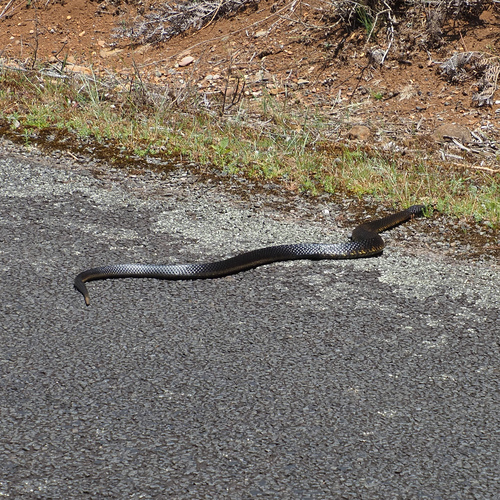
Notechis is a genus of elapid snakes native to southern Australia and its offshore islands, including Tasmania. The genus is most often treated as holding a single widespread species, the tiger snake (Notechis scutatus), though its many island and mainland populations vary so much in size and color that some have historically been split off as separate species or subspecies. As elapids, tiger snakes are front-fanged relatives of cobras, mambas, sea snakes, and the other highly venomous Australian land snakes such as browns and taipans.
Tiger snakes are named for the dark crossbands that often run along a paler body, though color is highly variable across populations: animals may be olive, brown, gray, or nearly black, and some are banded faintly or not at all. They are robust, medium to large snakes, commonly around 1 meter and reaching roughly 1.5 to 2 meters in large individuals, with a broad head only slightly distinct from the neck. Because banding is unreliable and many other harmless and dangerous snakes overlap with them in range, identification by a non-expert in the field is not dependable. They favor moist habitats near water, including creeks, wetlands, dams, and coastal scrub, where their main prey of frogs is plentiful, though they also take fish, lizards, birds, and small mammals.
Tiger snakes are highly venomous and are responsible for serious and potentially fatal bites in Australia; their venom contains potent neurotoxins along with components that affect blood clotting and muscle. They are not aggressive and will usually retreat if given the chance, but a cornered tiger snake may flatten its neck and strike. Never handle, corner, or attempt to kill a wild venomous snake. If a bite occurs, treat it as a medical emergency: keep the person still, and contact local emergency services immediately, or in the United States call Poison Control at 1-800-222-1222. Most tiger snake populations give birth to live young rather than laying eggs, sometimes in large litters, an adaptation that helps them survive the cooler southern climates where they live.
Notechis belongs to the Elapidae family (Cobras, mambas, coral & sea snakes). Front-fanged venomous snakes, many with potent neurotoxic venom. Usually slender with a head barely wider than the neck and fixed front fangs (not the folding fangs of vipers). Coral snakes are boldly ringed; sea snakes have a flattened, paddle-like tail.
Danger: All elapids are venomous and the family is responsible for a large share of fatal snakebites worldwide. Many are shy, but bites can be life-threatening. Treat any bite as a medical emergency.
All species (1)
Keep learning
- Venomous vs Nonvenomous: How to Tell the DifferenceThe folk rules for telling venomous snakes apart, where each one fails, and why location-based identification beats guessing by sight.
- Are Snakes Dangerous? The Real Risk, in PerspectiveMost snakes are harmless and avoid people. Here is the honest picture of snakebite risk worldwide and how to lower your own.
- Snake Venom Explained: How It Works and WhyWhat snake venom actually is, why it evolved, the main venom types, fang delivery, how antivenom works, and why ranking the most venomous snake is hard.
- How Snakes Move, Hunt, and EatHow snakes move without legs, hunt as ambushers or active foragers, kill by constriction or venom, and swallow prey wider than their head.