
Pythonidae
Southwestern Carpet Python
HarmlessMorelia imbricata
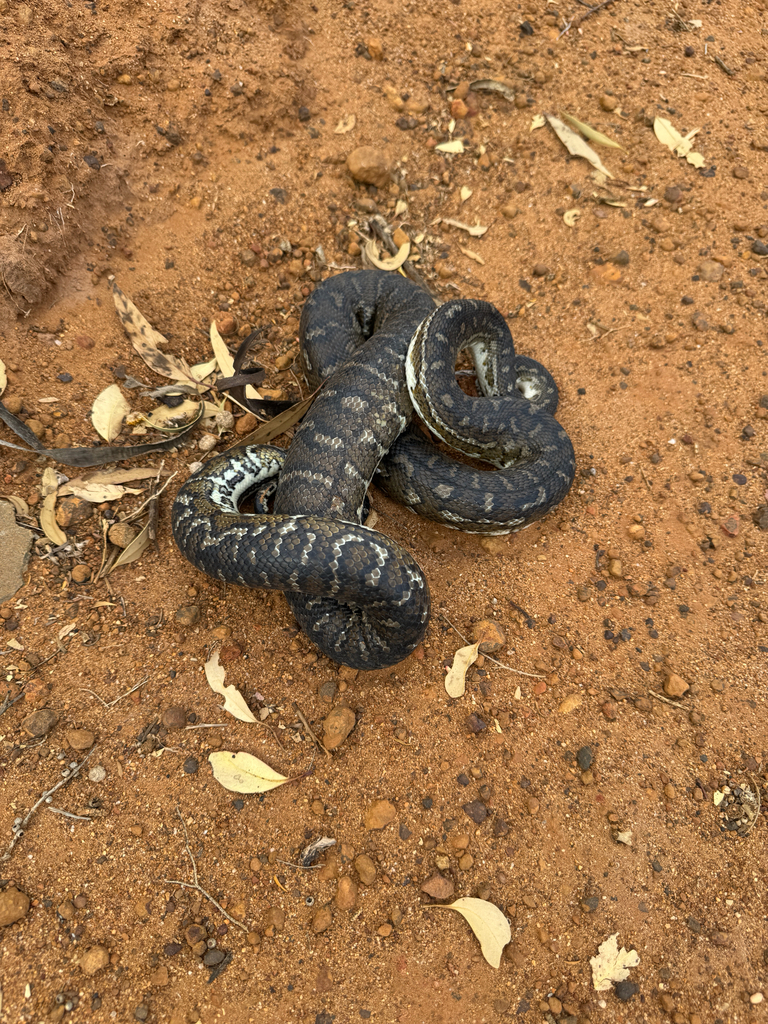
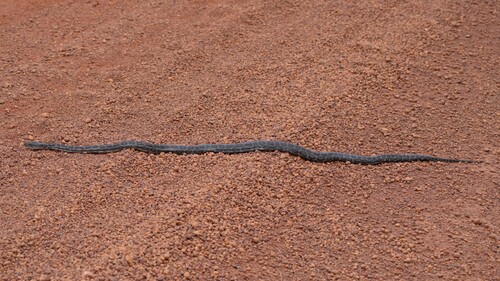
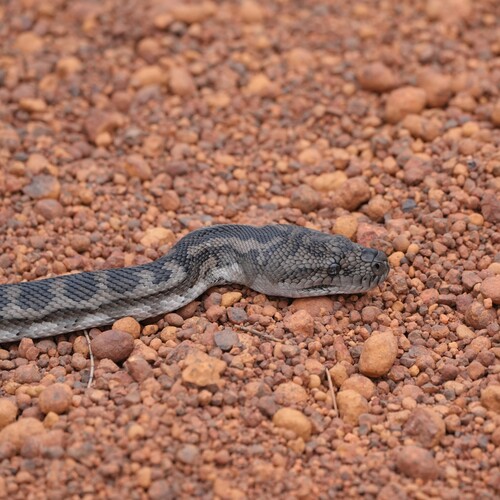
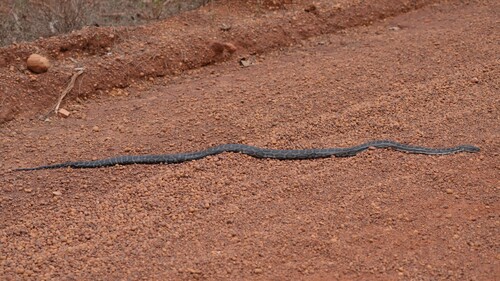
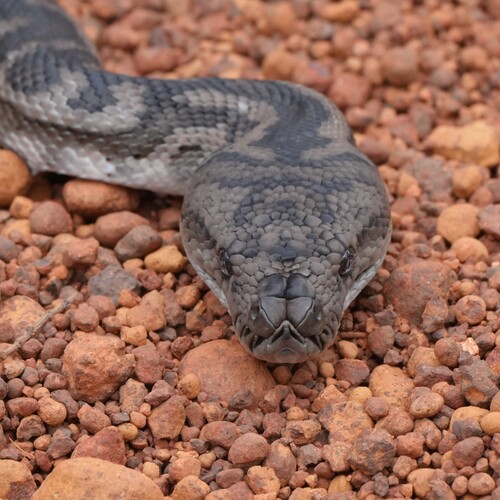
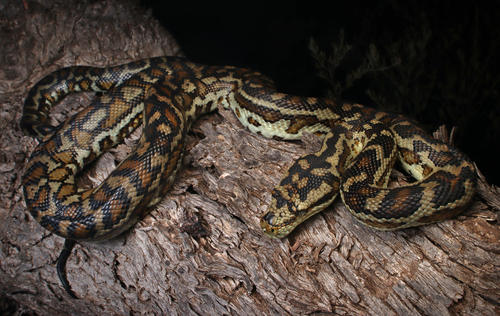
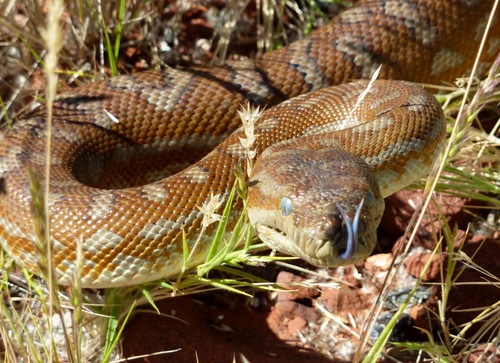
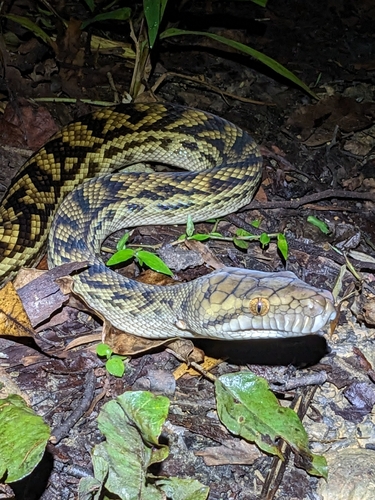
6 photographs of the Southwestern Carpet Python. © Tyler Anthony.
The Southwestern Carpet Python (Morelia imbricata) is a non-venomous snake in the Pythonidae family, recorded in 1 country.
- Family
- Pythonidae
About the Southwestern Carpet Python
Morelia imbricata, also known commonly as the southwestern carpet python, is a large species of snake in the family Pythonidae. It is a constrictor and is not venomous. The species is native to southern regions of Western Australia and western regions of South Australia.
Taxonomy
Morelia imbricata is closely related to other Australian diamond or carpet pythons (genus Morelia). The abundant and well known genus Morelia contains six species across Australia.
Description
Morelia imbricata may attain a total length (tail included) of up to 2.3 m (7.5 ft), with a snout-to-vent length (SVL) of 2.0 m (6.6 ft). This species has a well defined neck and small scales across the head. Males may be up to 1.1 kg (2.4 lb) in weight, but females may be four times heavier when fully grown. Larger individuals have been reported as being 4 m (13 ft) in total length.
Several other similar pythons occur in its range. The woma, Aspidites ramsayi, lacks the obvious neck of M. imbricata, and the western Stimson's python, Antaresia stimsoni stimsoni, has a higher number of ventral scales.
Habitat
The preferred natural habitat of Morelia imbricata is coastal areas, woodland, heathland, and semiarid areas. It is often found in woodlands of Eucalypt and Banksia, or amongst grasses or low growing shrubs.
Behavior
Morelia imbricata is discreet and slow moving, spending most of its time hidden, though occasionally it is seen attempting to cross roads. Typically this python is sedentary, but females in a survey at Garden Island were noted to be active most of the year. M. imbricata takes up residence in deep crevices or holes in limestone, on granite, in dense heath, and animal burrows.
Diet
Morelia imbricata eats geckos, house mice, birds, and marsupials, including the tammar wallaby.
The young of brooding red-eared firetails, Stagonopleura oculata, were taken from a nest being observed. A numbat was also observed to be captured and eaten by the southern carpet python.
Home range
An individual Morelia imbricata may have a large home range, occupying hollow logs in cooler months and wandering across areas up to 20 ha (49 acres). Males tend to have a larger home range. They appear to return to the same sites, even after long absences, which may contribute to a threat of extinction.
Conservation
Morelia imbricata is widespread and thought to have large populations, but is exposed to the threatening processes of its distribution range. Noted in the assessment of its conservation status are land clearing and altered fire regimes, as it typically occupies a large undisturbed habitat. The impact of introduced predators, known to be foxes and cats, have not been assessed. Population densities have declined in the Esperance region. The various threat assessments have described it as near threatened (Red list 2000) and "specially protected fauna" under its region's Wildlife Conservation Act. The hollow logs favored by the species are not produced by altered fire regimes or cleared in plantations.
Geographic range
Adapted from Wikipedia, available under CC BY-SA.
Frequently asked: Southwestern Carpet Python
- Is the Southwestern Carpet Python venomous?
- No. The Southwestern Carpet Python (Morelia imbricata) is non-venomous and is not considered dangerous to humans. Like most snakes, it will retreat rather than bite when given the chance.
- Is the Southwestern Carpet Python poisonous?
- Snakes are venomous, not poisonous. "Poisonous" means harmful to eat or touch; "venomous" means injecting toxins through a bite. The Southwestern Carpet Python is neither poisonous nor venomous.
- Is the Southwestern Carpet Python dangerous?
- The Southwestern Carpet Python is not dangerous to humans. It has no medically significant venom and bites only defensively if cornered or handled.
- Where does the Southwestern Carpet Python live?
- The Southwestern Carpet Python has verified records in 1 country, including Australia. See the distribution section below for its full range.
- What does the Southwestern Carpet Python eat?
- Morelia imbricata eats geckos, house mice, birds, and marsupials, including the tammar wallaby. The young of brooding red-eared firetails, Stagonopleura oculata, were taken from a nest being observed. A numbat was also observed to be captured and eaten by the southern carpet python.
Where it is found
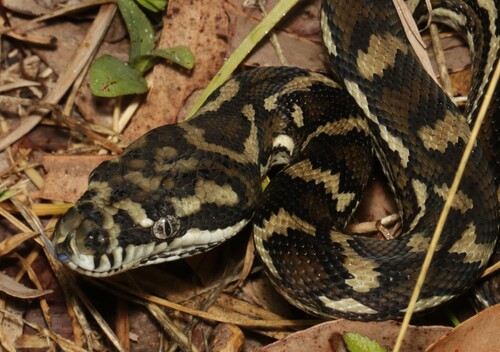
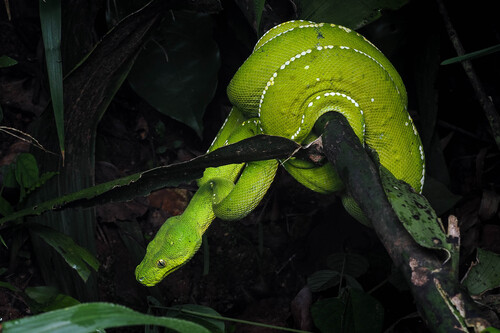
More Pythonidae snakes
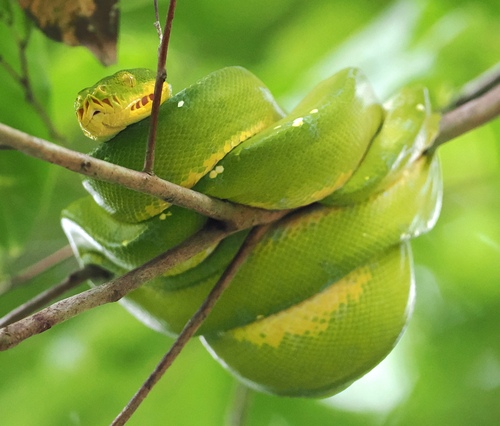

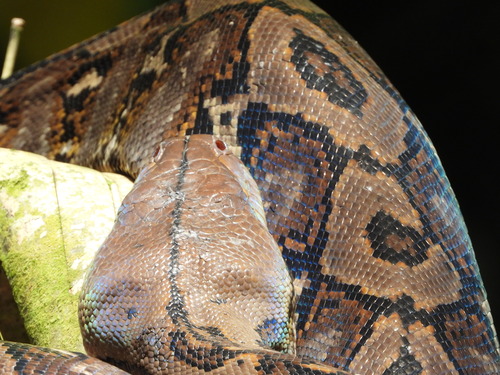
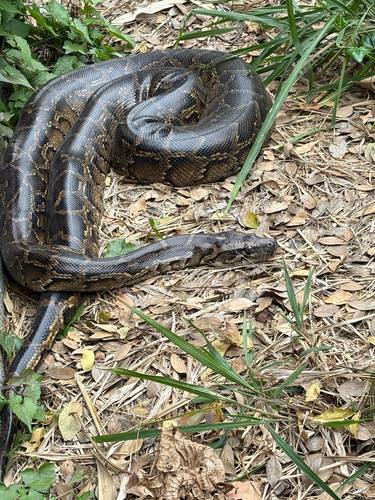
Classification
How scientists group this snake, from the broadest category down to the exact species. Each step narrows to its closest relatives.
- OrderThe broad group of scaled reptiles: all snakes and lizards
- Squamata
- FamilyA group of related snakes that share key traits
- Pythonidae
- GenusA close-knit group of very similar species
- Morelia
- SpeciesThis exact snake, named in the two-part scientific name
- Morelia imbricata
Keep learning
- What to Do If You Find a SnakeFound a snake at home or on a trail? Here is how to stay calm, give it space, identify it safely, and know when to call a professional.
- Venomous vs Nonvenomous: How to Tell the DifferenceThe folk rules for telling venomous snakes apart, where each one fails, and why location-based identification beats guessing by sight.
- What Is a Snake? Anatomy and the BasicsA clear overview of what makes a snake a snake: limbless body plan, anatomy, evolution from lizards, species diversity, and why they are ectothermic.
- How to Keep Snakes Out of Your Yard and HomeA practical guide to keeping snakes out of your yard and home using habitat changes that work, plus what to skip and what to do if one shows up.
Distribution from GBIF & iNaturalist. Venom status per CDC. Background: Wikipedia. Informational only. Never handle a snake to identify it.