
Genus · Pythonidae
Types of pythons
6 species make up the genus Morelia, the snakes commonly called pythons. None are considered dangerous to humans.
About carpet and tree pythons
Morelia is a genus of slender, often arboreal Australasian pythons, non-venomous constrictors famous for the intricate carpet-like patterns and vivid colors of their members. Our database lists 6 species, none of them venomous.
Morelia belongs to the family Pythonidae, the Old World lineage of constricting snakes. Like all pythons, members of the genus are non-venomous and kill prey by constriction: the snake seizes an animal, throws coils around it, and tightens with each breath until circulation stops. There is no venom involved at any stage. What sets Morelia apart from the heavier ground-dwelling pythons is build and lifestyle. These tend to be longer, more slender snakes well suited to climbing, and many spend much of their lives in trees and shrubs rather than on open ground. Our database holds 6 species in the genus.
The genus is centered on Australia and New Guinea, extending into nearby islands of the Indo-Australian region. Different species occupy rainforest, woodland, scrub, and rocky country, and several are strongly tied to forest and vegetation where their climbing ability pays off. This regional concentration in Australasia, combined with a range of habitats, is part of why the group is so varied in pattern and color, from the muted browns and creams of the carpet pythons to the brilliant green of the tree-dwelling members.
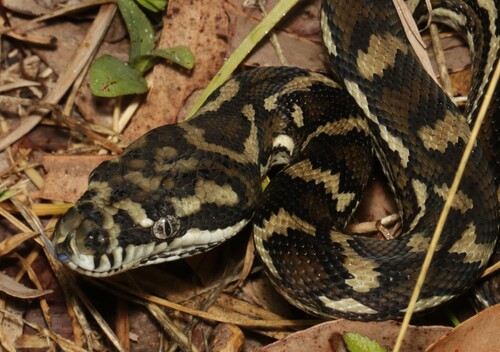
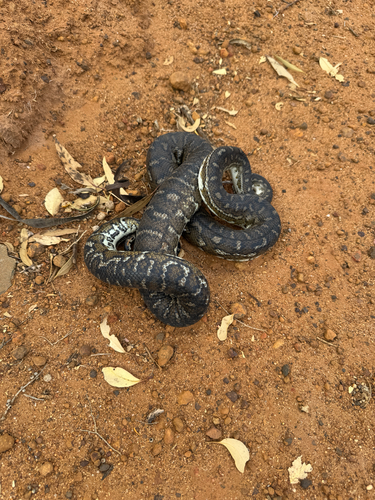
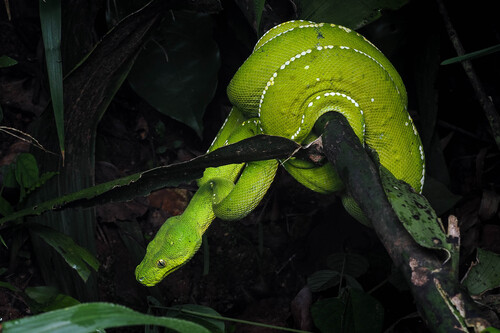
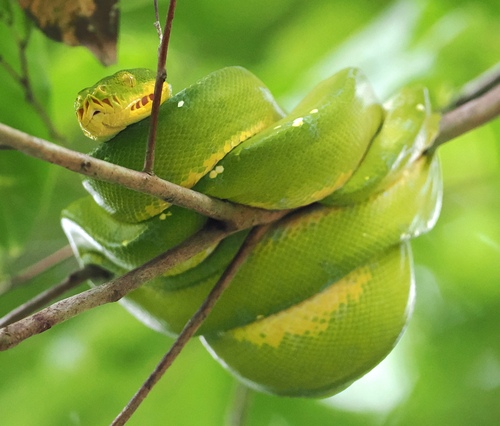
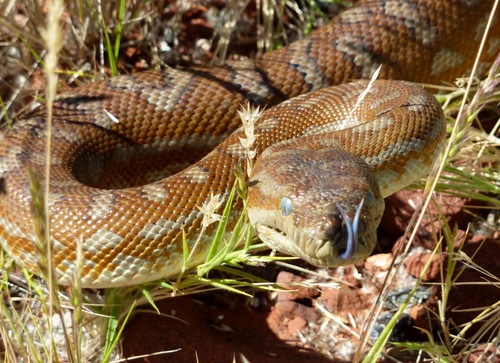
In general terms, members of Morelia can be recognized by a relatively long, laterally compressed body built for climbing, a distinct head set off from the neck, and heat-sensing pits along the lips that let them detect the body warmth of nearby animals and hunt in low light. Patterning is a hallmark of the genus. The carpet pythons carry the ornate blotched and banded markings that give them their name, a design that breaks up their outline against bark and leaf litter, while the green members are a vivid leaf green, often patterned with white or yellow, that hides them among foliage. Locality, body shape, and pattern together are the most reliable clues, since color alone can vary widely even within a species.
These are egg-laying snakes, and like other pythons the females show notable parental care. After laying a clutch, the female coils around her eggs and broods them through incubation, and in some pythons she can warm the clutch by rhythmic muscle contractions, a shivering motion that keeps the developing eggs warmer than the surrounding air. Behavior across the genus reflects the arboreal leaning of many species: the green tree-dwelling members are known for resting draped in tight loops over a horizontal branch, an ambush posture from which they strike at passing prey. Several Morelia are popular in captivity, where the carpet pythons in particular are widely kept.
Ecologically, Morelia pythons are carnivores that feed on mammals, birds, and other vertebrates, helping control prey populations within their native ranges. On the honest safety question: these snakes are not venomous, so there is no venom risk from a bite. They are still wild animals with teeth and the strength of a constrictor, and a frightened snake can bite, so they deserve respect and distance rather than handling. As with any wild snake, the right response to encountering one is to give it space and let it move on. If anyone is bitten by a snake they cannot confidently identify and symptoms develop, treat it as a medical situation and contact emergency services or US Poison Control at 1-800-222-1222.
Morelia belongs to the Pythonidae family (Pythons). Old-World egg-laying constrictors, including the longest snakes on Earth. Large and heavy-bodied with blotched or banded patterns, smooth scales, and heat-sensing pits along the lips. No rattle or fangs.
Danger: Non-venomous. Only the very largest species could be a physical danger, and bites are defensive, not venomous.
All species (6)

Keep learning
- What Is a Snake? Anatomy and the BasicsA clear overview of what makes a snake a snake: limbless body plan, anatomy, evolution from lizards, species diversity, and why they are ectothermic.
- How Snakes Move, Hunt, and EatHow snakes move without legs, hunt as ambushers or active foragers, kill by constriction or venom, and swallow prey wider than their head.
- What Do Snakes Eat?All snakes are carnivores. Learn what snakes eat, how diet changes with size and age, how often they feed, and how they hunt and swallow prey.
- Venomous vs Nonvenomous: How to Tell the DifferenceThe folk rules for telling venomous snakes apart, where each one fails, and why location-based identification beats guessing by sight.