
Garter / Ribbon snake
Sierra Garter Snake
HarmlessThamnophis couchii
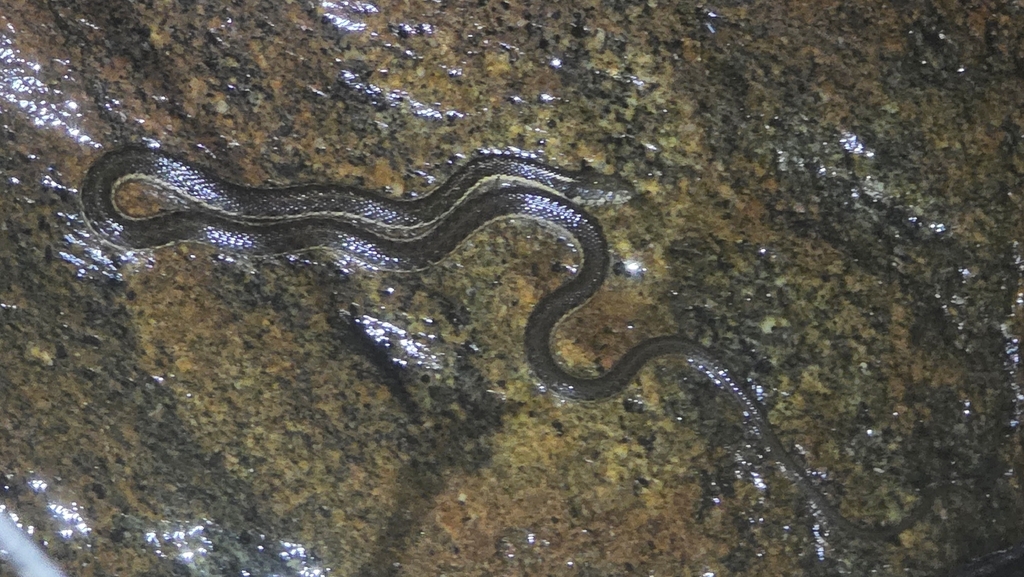
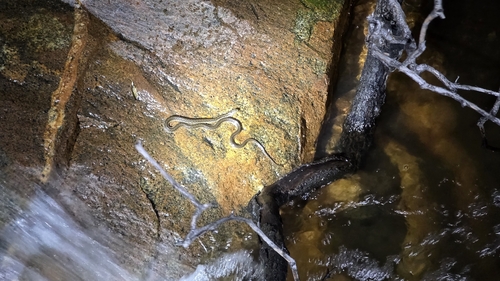
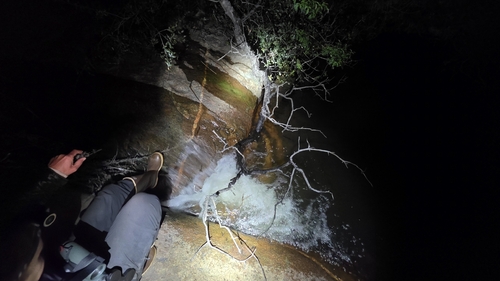
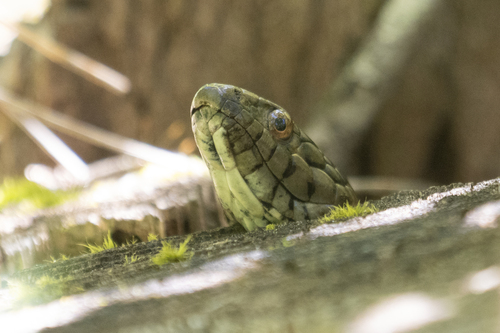
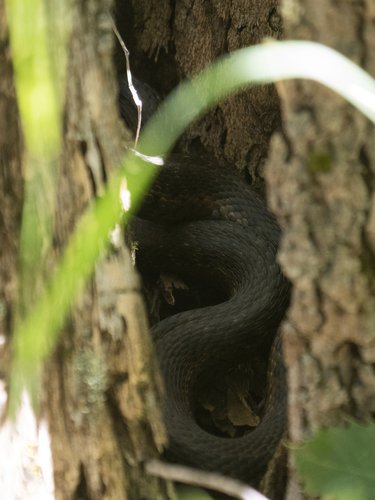
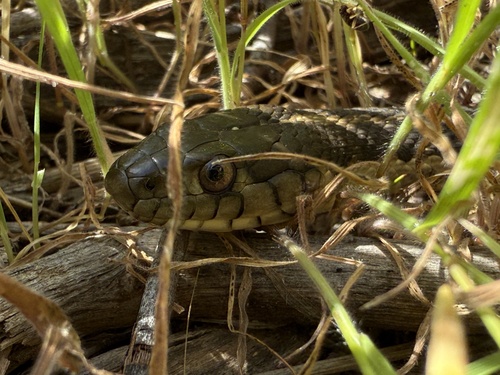
6 photographs of the Sierra Garter Snake. © Chris Winchell.
The Sierra Garter Snake (Thamnophis couchii) is a non-venomous snake in the Colubridae family, recorded in 2 countries.
- Also called
- Garter / Ribbon snake
- Family
- Colubridae
- Size
- Slender, 1.5–3 ft.
- Habitat
- Almost anywhere with moisture — gardens, fields, wetlands, and streamsides.
- Behavior
- Harmless and active by day; may release musk if handled. The most commonly seen snakes across most of the U.S.
- Identify
- Slender body with three light stripes running the length of a darker back.
About the Sierra Garter Snake
Thamnophis couchii, commonly known as Couch's garter snake, the Sierra garter snake, or the western aquatic garter snake, is a highly aquatic species of snake in the family Colubridae. The species is endemic to the western United States, specifically the Sierra Nevada mountain range.
Etymology
The specific name couchii is in honor of Darius Nash Couch, a U.S. Army officer and naturalist who collected specimens during the Mexican-American War and subsequent expeditions.
Description
The Sierra garter snake is a medium-sized, slender snake adapted for an aquatic lifestyle. They possess a somewhat pointed head, which aids in underwater foraging in fast-flowing currents. Like many garter snakes, they have a mild venom produced in the Duvernoy's gland that is harmless to humans but effective at subduing small, cold-blooded prey. Furthermore, because their diet frequently includes highly toxic newts, the snakes can sequester the tetrodotoxin in their own tissues, making them poisonous to potential predators like birds and mammals.
Geographic range and habitat
T. couchii is native to California with a small population in west-central Nevada and the Owens Valley. It is predominantly found in the Sierra Nevada mountains, ranging from the Pit and Sacramento rivers south to the Tehachapi Mountains.
The preferred natural habitats of T. couchii are freshwater wetlands, clear rapid-flowing rivers, creeks, mountain ponds, and small lakes. They occur at elevations ranging from roughly 300 to 8,000 ft (91 to 2,438 m) in diverse environments including montane coniferous forests, oak woodlands, chaparral, and sagebrush. They are almost always found in close proximity to water, often utilizing rocks and riparian vegetation for cover and basking.
Behavior and ecology
T. couchii is highly aquatic and diurnal. It spends much of its time in the water or basking on rocks and vegetation at the water's edge. They are capable of crawling on stream bottoms and hunt actively underwater, relying heavily on their eyesight.
When threatened, the Sierra garter snake will often attempt to flee into the water. If captured or cornered, it defends itself by striking repeatedly and releasing a foul-smelling musk and cloacal contents. During winter months, especially at higher elevations in the Sierra Nevada, the snakes undergo brumation (hibernation) in communal dens for several months.
Diet
The diet of the Sierra garter snake consists almost entirely of aquatic prey, primarily fish and amphibians, including frogs, tadpoles, and aquatic salamander larvae. They are notable for their ability to safely consume highly toxic Pacific newts (genus Taricha), such as the California newt (Taricha torosa), having evolved a genetic resistance to their deadly tetrodotoxin.
Adapted from Wikipedia, available under CC BY-SA.
Frequently asked: Sierra Garter Snake
- Is the Sierra Garter Snake venomous?
- No. The Sierra Garter Snake (Thamnophis couchii) is non-venomous and is not considered dangerous to humans. Like most snakes, it will retreat rather than bite when given the chance.
- Is the Sierra Garter Snake poisonous?
- Snakes are venomous, not poisonous. "Poisonous" means harmful to eat or touch; "venomous" means injecting toxins through a bite. The Sierra Garter Snake is neither poisonous nor venomous.
- Is the Sierra Garter Snake dangerous?
- The Sierra Garter Snake is not dangerous to humans. It has no medically significant venom and bites only defensively if cornered or handled.
- Where does the Sierra Garter Snake live?
- The Sierra Garter Snake has verified records in 2 countries, including United States of America, Mexico. See the distribution section below for its full range.
- How do I identify the Sierra Garter Snake?
- Slender body with three light stripes running the length of a darker back.
- How big does the Sierra Garter Snake get?
- Slender, 1.5–3 ft.
- What does the Sierra Garter Snake eat?
- The diet of the Sierra garter snake consists almost entirely of aquatic prey, primarily fish and amphibians, including frogs, tadpoles, and aquatic salamander larvae. They are notable for their ability to safely consume highly toxic Pacific newts (genus Taricha), such as the California newt (Taricha torosa), having evolved a genetic resistance to their deadly tetrodotoxin.
- Why is it called the Sierra Garter Snake?
- The specific name couchii is in honor of Darius Nash Couch, a U.S. Army officer and naturalist who collected specimens during the Mexican-American War and subsequent expeditions.
Where it is found
More Colubridae snakes
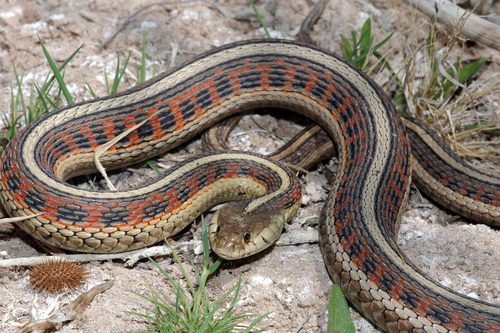 Common Garter SnakeThamnophis sirtalis
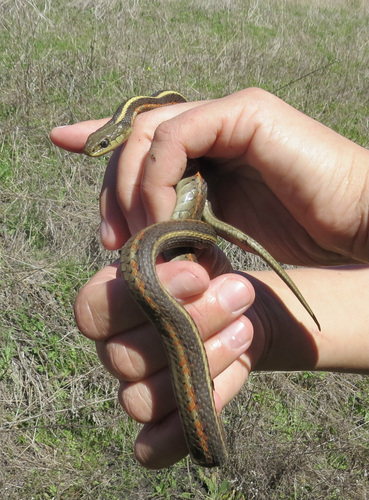 Western Terrestrial Garter SnakeThamnophis elegans
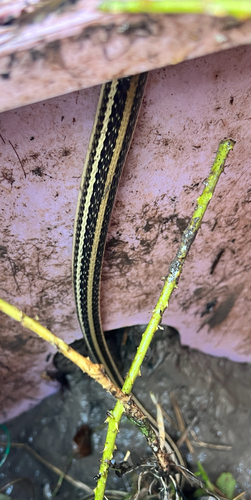 Western Ribbon SnakeThamnophis proximus
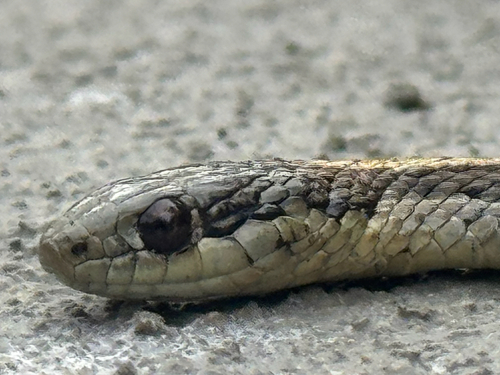 Northwestern Garter SnakeThamnophis ordinoides
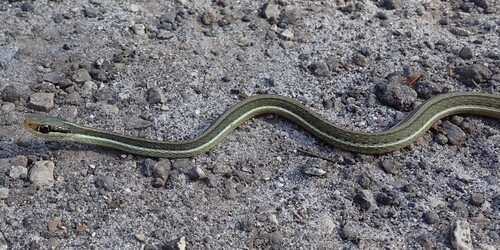 Common Ribbon SnakeThamnophis saurita
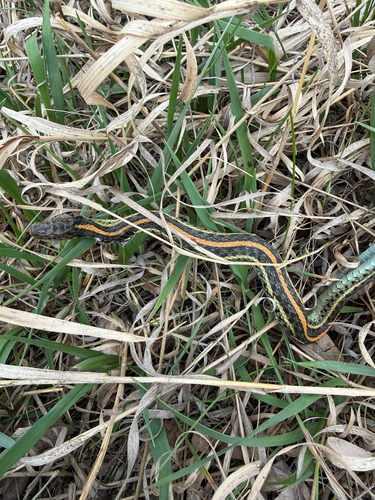 Plains Garter SnakeThamnophis radix
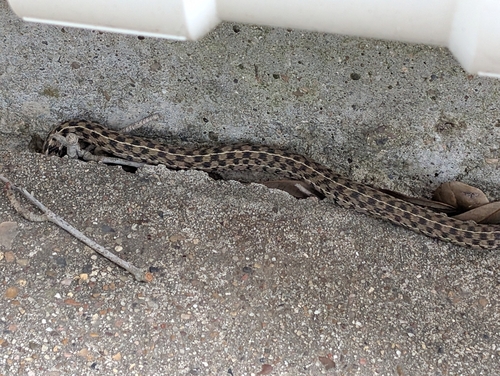 Checkered Garter SnakeThamnophis marcianus
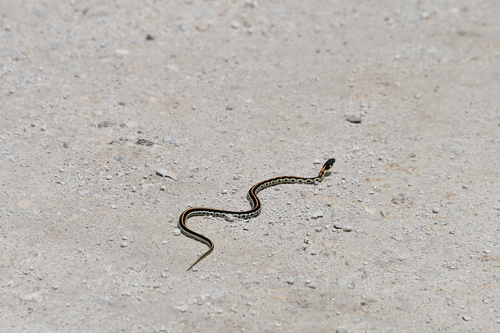 Black-necked Garter SnakeThamnophis cyrtopsis
Classification
How scientists group this snake, from the broadest category down to the exact species. Each step narrows to its closest relatives.
- OrderThe broad group of scaled reptiles: all snakes and lizards
- Squamata
- FamilyA group of related snakes that share key traits
- Colubridae
- GenusA close-knit group of very similar species
- Thamnophis
- SpeciesThis exact snake, named in the two-part scientific name
- Thamnophis couchii
Keep learning
- What to Do If You Find a SnakeFound a snake at home or on a trail? Here is how to stay calm, give it space, identify it safely, and know when to call a professional.
- Venomous vs Nonvenomous: How to Tell the DifferenceThe folk rules for telling venomous snakes apart, where each one fails, and why location-based identification beats guessing by sight.
- What Is a Snake? Anatomy and the BasicsA clear overview of what makes a snake a snake: limbless body plan, anatomy, evolution from lizards, species diversity, and why they are ectothermic.
- How to Keep Snakes Out of Your Yard and HomeA practical guide to keeping snakes out of your yard and home using habitat changes that work, plus what to skip and what to do if one shows up.
Distribution from GBIF & iNaturalist. Venom status per CDC. Background: Wikipedia. Informational only. Never handle a snake to identify it.