
Kingsnake / Milksnake
Mole Kingsnake
HarmlessLampropeltis rhombomaculata
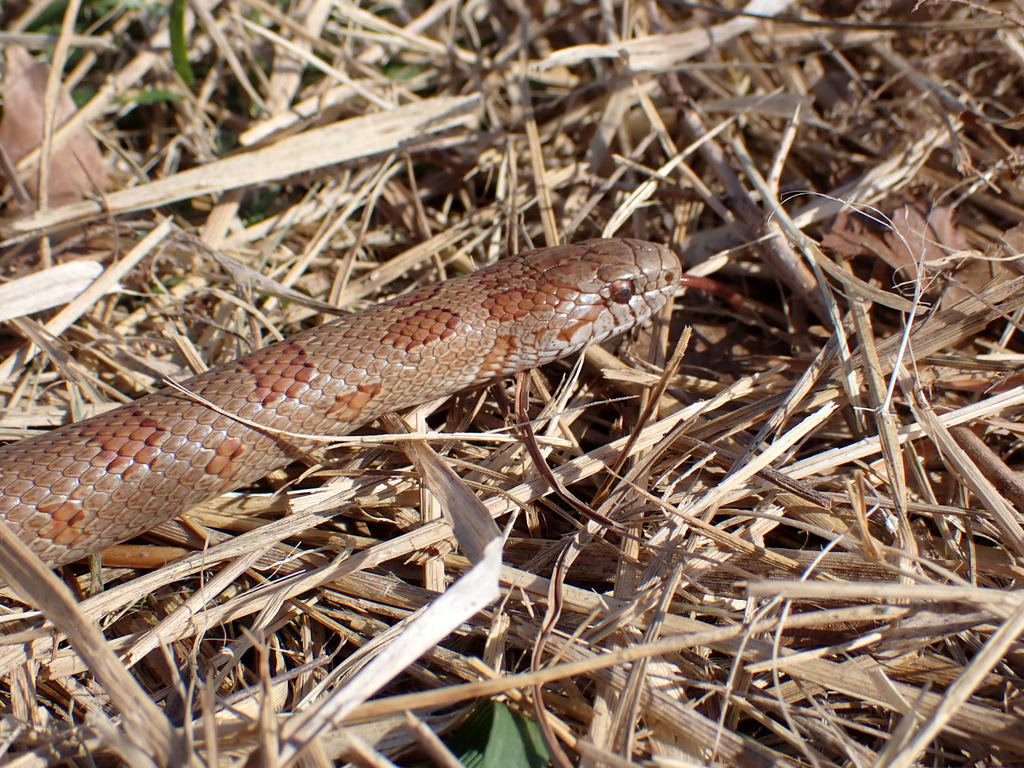
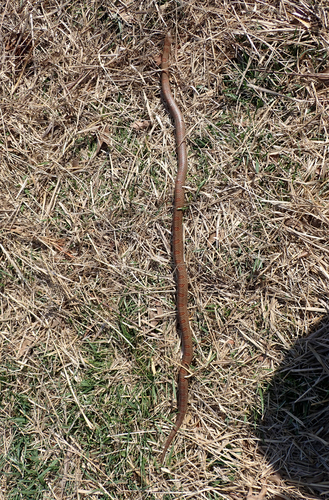
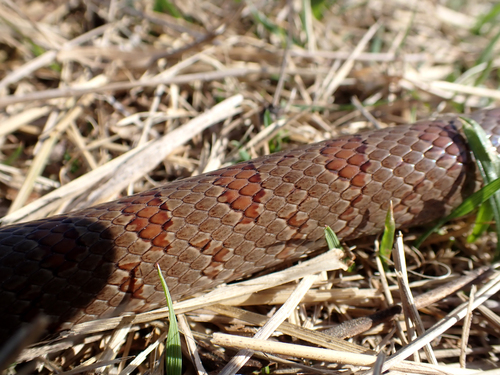
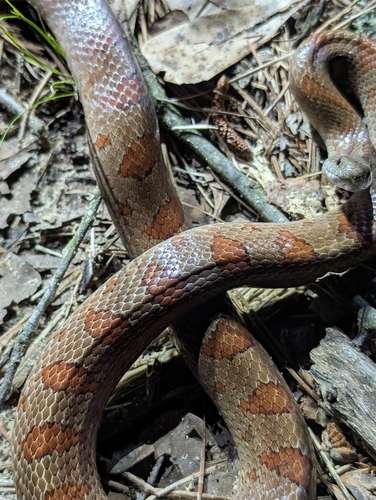
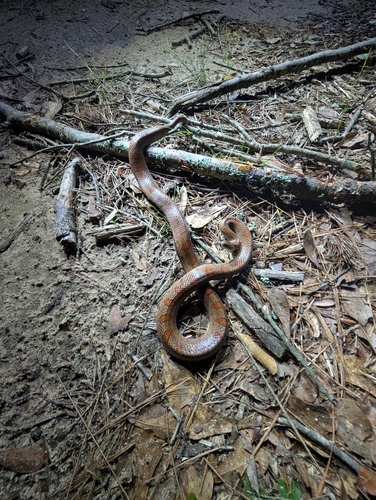
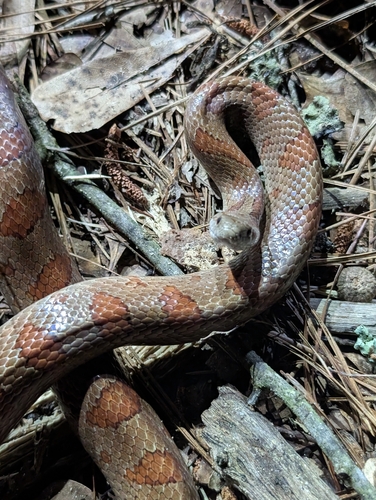
6 photographs of the Mole Kingsnake. © Marshall Cleveland.
The Mole Kingsnake (Lampropeltis rhombomaculata) is a non-venomous snake in the Colubridae family, recorded in 1 country.
- Also called
- Kingsnake / Milksnake
- Family
- Colubridae
- Size
- 2–5 ft.
- Habitat
- Forests, farmland, grasslands, and suburbs.
- Behavior
- Powerful constrictors that eat other snakes — including venomous ones; gentle but may musk or vibrate the tail.
- Identify
- Smooth, glossy scales with bold bands or chain-like patterns. Milksnakes mimic coral snakes, but red touches black.
About the Mole Kingsnake
Lampropeltis rhombomaculata, commonly known as the mole kingsnake or the brown kingsnake, is a species of snake in the family Colubridae. It is a relatively medium-sized snake that occupies a variety of habitats from Baltimore, Maryland, south through the Florida Panhandle and west into Mississippi and Tennessee.
Geographic range
The mole kingsnake is found in the southeastern United States, but is absent from the Appalachian Mountains. Their home-range stretches from Maryland down to Florida and west to Mississippi.
Etymology
The generic name, Lampropeltis, is derived from Greek Lampros, meaning "shiny", and pelta, meaning "shield", likely in reference to the genus' smooth and shiny dorsal scales. The specific name, rhomomaculata, is a combination of the Greek word rhombos and Latin maculata to form "rhombus spotted", referring to the 52 rhomboidical dorsal blotches described in the species.
Description
Lampropeltis rhombomaculata is generally light brown or gray in color, with dark brown, orange, or reddish-brown blotching down the length of its body. It is capable of growing to a total length (including tail) of 30–40 inches (76.2–101.6 cm). It is easily mistaken for the milk snake and the venomous copperhead, which both share the same type of habitat, and can have similar markings. Some specimens have their markings faded, to appear almost a solid brown color. Juveniles are generally more vivid in markings and coloration, with small reddish-colored markings on the head.
Habitat and behavior
The preferred habitat of the mole kingsnake is open fields with loose, dry soil, typically on the edge of a forested region. Its diet consists primarily of rodents, but it will also consume lizards, frogs and occasionally other snakes. It is nonvenomous, and typically docile. Like most colubrids, if harassed it will vibrate its tail rapidly. This snake is very secretive and very fossorial and rarely seen above ground during the day unless it is forced out by heavy rains. The mole kingsnake is mainly nocturnal and commonly seen on paved roads at night.
This species has been observed to ingest prey whole and headfirst, even prey with a diameter over 90% of the diameter of the snake's head. This is thought to be an inherited behavior.
Reproduction
Male and female mole kingsnakes mate around May–June during late spring to early summer. Females leave behind pheromone trails for males to sense through their forked tongues. They have been seen to use their tongues to signal to mates by flicking them at up to one time per second and by jerking their bodies. Mating events in a laboratory setting were recorded to have lasted over two hours. Males have been seen biting females during copulation most likely so that their hemipene stays in place. After mating, females choose their nesting sites underground or in rotting logs and leave their 10–12 eggs to hatch in the summer. The mother does not stay behind to nurture her offspring, usually leaving right after she laid the eggs. It takes about ten days for the hatched snakes to be fully independent.
Adapted from Wikipedia, available under CC BY-SA.
Frequently asked: Mole Kingsnake
- Is the Mole Kingsnake venomous?
- No. The Mole Kingsnake (Lampropeltis rhombomaculata) is non-venomous and is not considered dangerous to humans. Like most snakes, it will retreat rather than bite when given the chance.
- Is the Mole Kingsnake poisonous?
- Snakes are venomous, not poisonous. "Poisonous" means harmful to eat or touch; "venomous" means injecting toxins through a bite. The Mole Kingsnake is neither poisonous nor venomous.
- Is the Mole Kingsnake dangerous?
- The Mole Kingsnake is not dangerous to humans. It has no medically significant venom and bites only defensively if cornered or handled.
- Where does the Mole Kingsnake live?
- The Mole Kingsnake has verified records in 1 country, including United States of America. See the distribution section below for its full range.
- How do I identify the Mole Kingsnake?
- Smooth, glossy scales with bold bands or chain-like patterns. Milksnakes mimic coral snakes, but red touches black.
- How big does the Mole Kingsnake get?
- 2–5 ft.
- Why is it called the Mole Kingsnake?
- The generic name, Lampropeltis, is derived from Greek Lampros, meaning "shiny", and pelta, meaning "shield", likely in reference to the genus' smooth and shiny dorsal scales. The specific name, rhomomaculata, is a combination of the Greek word rhombos and Latin maculata to form "rhombus spotted", referring to the 52 rhomboidical dorsal blotches described in the species.
Where it is found
More Colubridae snakes
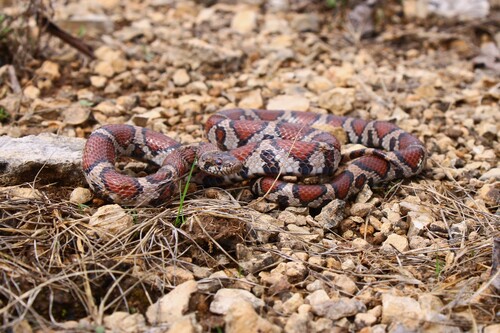 Eastern MilksnakeLampropeltis triangulum
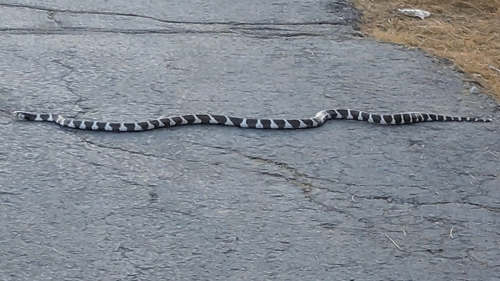 California King SnakeLampropeltis californiae
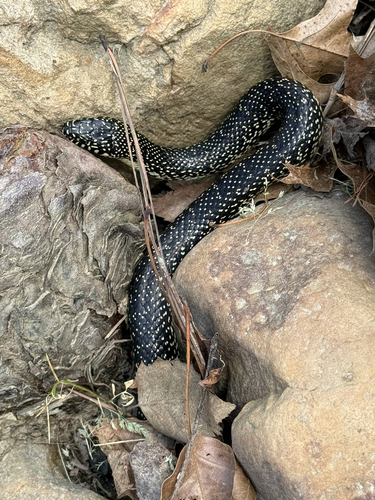 Speckled KingsnakeLampropeltis holbrooki
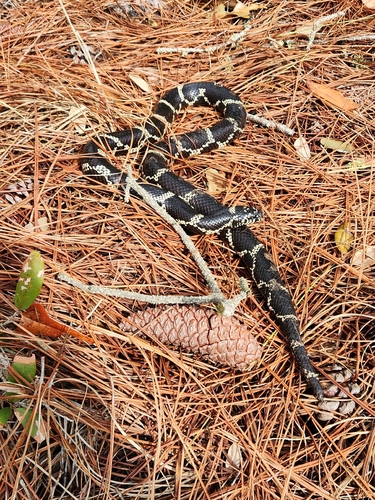 Eastern KingsnakeLampropeltis getula
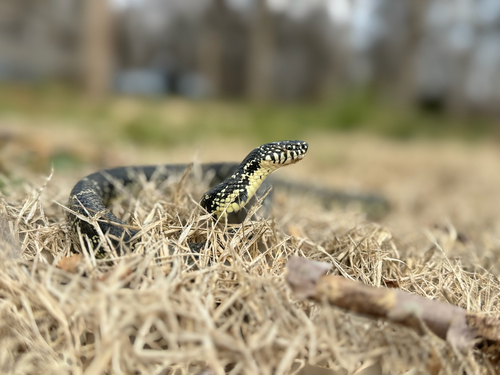 Black KingsnakeLampropeltis nigra
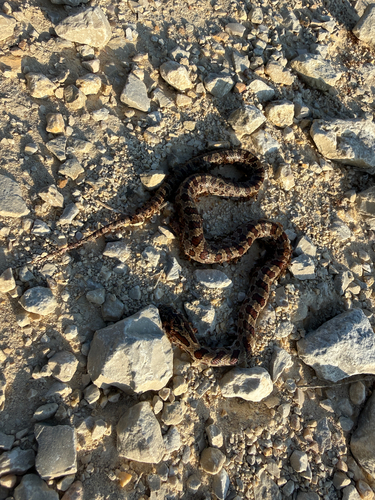 Prairie KingsnakeLampropeltis calligaster
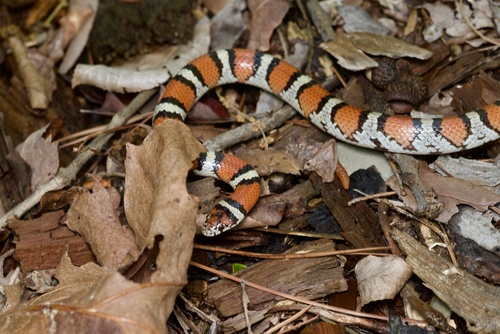 Western MilksnakeLampropeltis gentilis
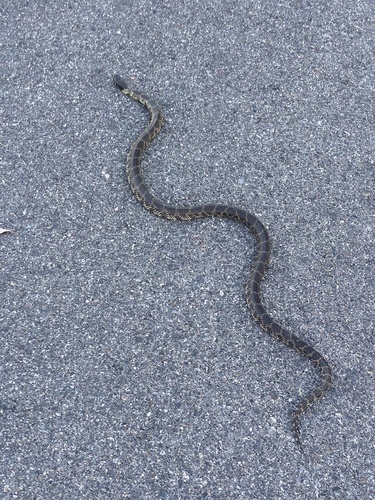 Desert KingsnakeLampropeltis splendida
Classification
How scientists group this snake, from the broadest category down to the exact species. Each step narrows to its closest relatives.
- OrderThe broad group of scaled reptiles: all snakes and lizards
- Squamata
- FamilyA group of related snakes that share key traits
- Colubridae
- GenusA close-knit group of very similar species
- Lampropeltis
- SpeciesThis exact snake, named in the two-part scientific name
- Lampropeltis rhombomaculata
Keep learning
- What to Do If You Find a SnakeFound a snake at home or on a trail? Here is how to stay calm, give it space, identify it safely, and know when to call a professional.
- Venomous vs Nonvenomous: How to Tell the DifferenceThe folk rules for telling venomous snakes apart, where each one fails, and why location-based identification beats guessing by sight.
- What Is a Snake? Anatomy and the BasicsA clear overview of what makes a snake a snake: limbless body plan, anatomy, evolution from lizards, species diversity, and why they are ectothermic.
- How to Keep Snakes Out of Your Yard and HomeA practical guide to keeping snakes out of your yard and home using habitat changes that work, plus what to skip and what to do if one shows up.
Distribution from GBIF & iNaturalist. Venom status per CDC. Background: Wikipedia. Informational only. Never handle a snake to identify it.