
Colubridae
Kirtland's Snake
HarmlessClonophis kirtlandii
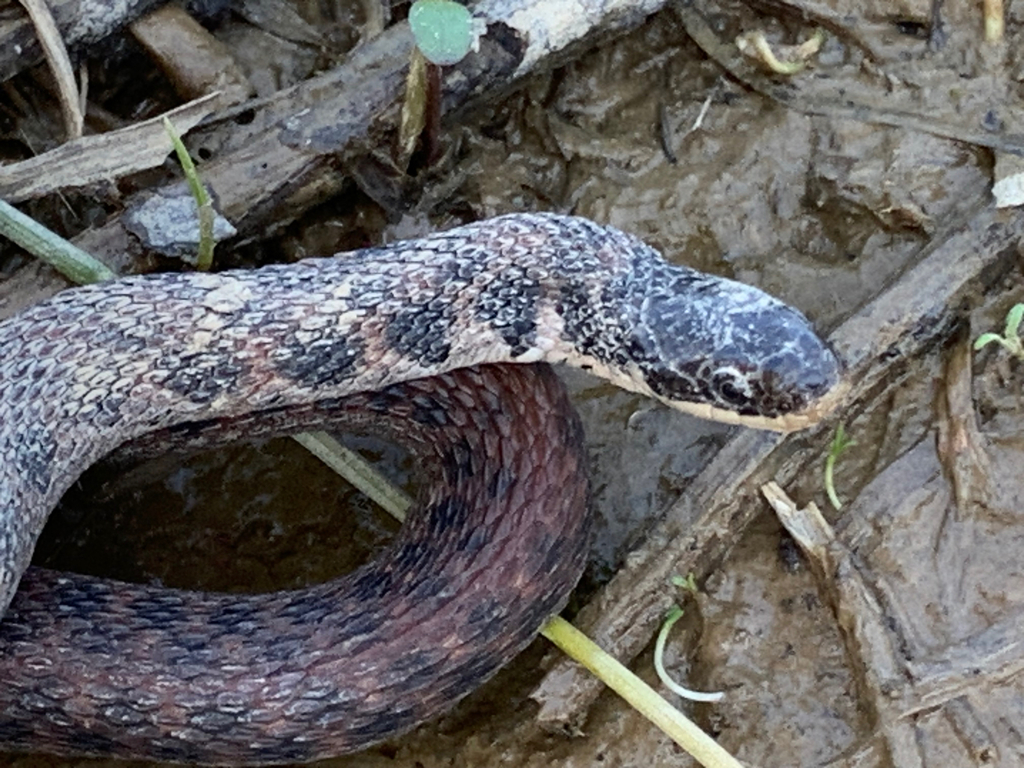
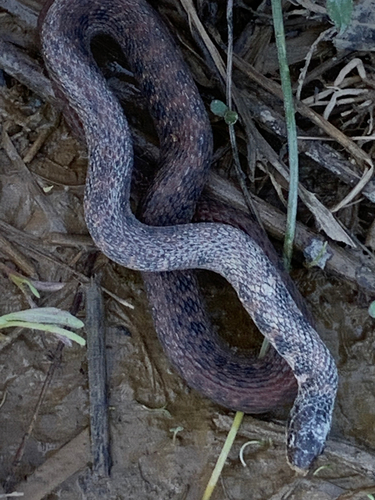
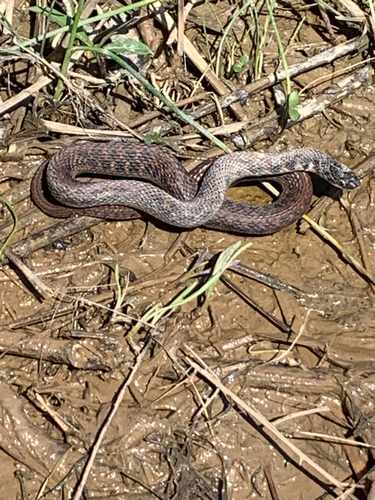
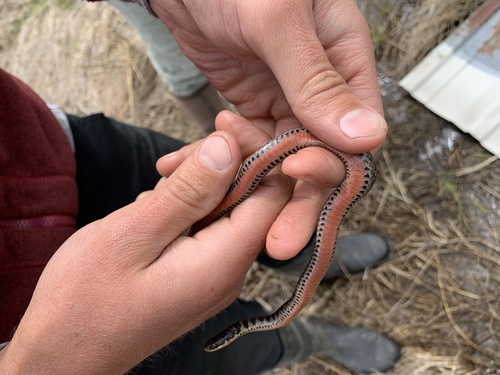
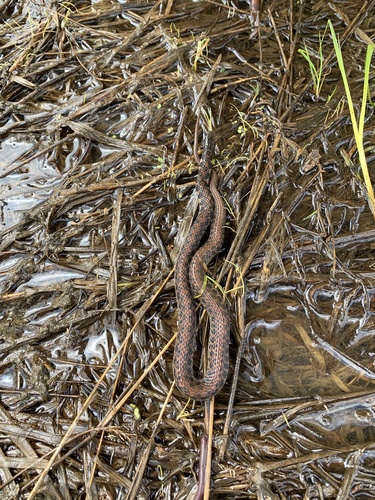
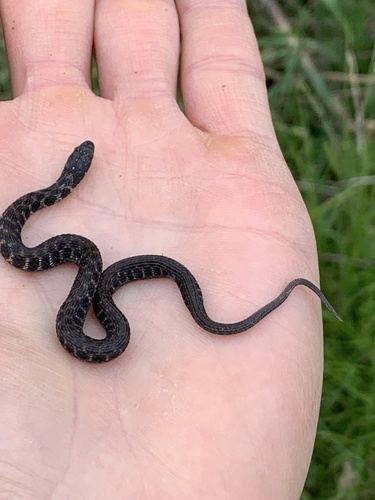
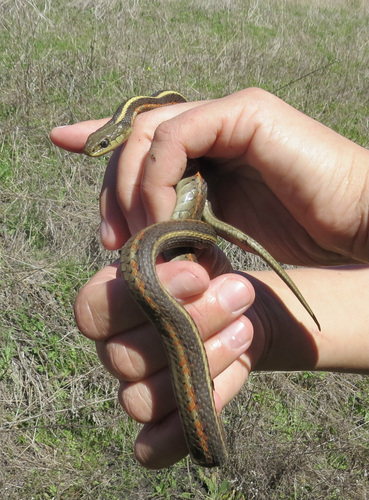
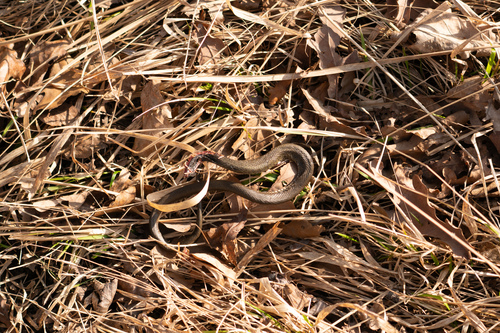
6 photographs of the Kirtland's Snake. © Daniel J. Layton.
The Kirtland's Snake (Clonophis kirtlandii) is a non-venomous snake in the Colubridae family, recorded in 2 countries.
- Family
- Colubridae
About the Kirtland's Snake
Kirtland's snake (Clonophis kirtlandii) is a threatened or endangered (depending on location) North American species of nonvenomous snake of the subfamily Natricinae, of the family Colubridae. It is the only species in the genus Clonophis.
Etymology
The specific name, kirtlandii, is in honor of Dr. Jared Potter Kirtland, an American naturalist of the nineteenth century. The snake was first identified by Robert Kennicott in 1855. Kennicott sent a specimen to Spencer Fullerton Baird, the assistant secretary of the Smithsonian Institution, who offered to publish a description of the animal in Kennicott's name. Baird suggested Regina kirtlandii as a scientific name, as Kirtland had been a mentor to Kennicott.
Common names
Common names for C. kirtlandii include: Cora Kennicott's snake, Kirtland's red snake, Kirtland's water snake, little red snake, Ohio Valley water snake, and spread head.
Description
Kirtland's snake is small and slender. Adults reach a total length (including tail) of 12-18 inches (30–46 cm). It is grayish brown with a double series of large black spots down the back, and alternating smaller spots running down each side. The ventral scales are brick red with a prominent round black spot at each outer end. It has 19 rows of keeled dorsal scales at midbody, and the anal plate is divided.
Geographic range
Clonophis kirtlandii is currently known to occur in Illinois, Indiana, Kentucky, southern Michigan, northeastern Missouri, Ohio, and northwestern Tennessee. Clonophis kirtlandii was historically known from Western Pennsylvania, but it has not been documented in the state since 1966.
Habitat
The preferred natural habitats of C. kirtlandii are forest, grassland, and wetlands such as swamps and marshes. It is almost always found very close to a water source, even though it is less aquatic than water snakes of the genus Nerodia which share its geographic range. Field studies have shown that populations are found within areas with abundant grass, herbaceous vegetation, and shrubs during the spring season.
Conservation status
The species Clonophis kirtlandii is listed as endangered in Indiana, Michigan, and Pennsylvania. It is listed as threatened in Illinois and Ohio, though current research in Ohio is leaning towards the snake being listed as vulnerable.
Diet
Kirtland's snake preys primarily on earthworms, slugs, minnows, salamanders, frogs, and toads. It has also been found to prey on juvenile crayfish, earthworms, slugs, small minnows, and leeches.
Defensive behavior
When alarmed C. kirtlandii flattens its entire body to a remarkable thinness, and becomes rigid. Kirtland's snake will also coil up into a disc the size of about a quarter in an attempt to hide from potential threats. If this does not succeed, it will then flee instead of fight.
Adapted from Wikipedia, available under CC BY-SA.
Frequently asked: Kirtland's Snake
- Is the Kirtland's Snake venomous?
- No. The Kirtland's Snake (Clonophis kirtlandii) is non-venomous and is not considered dangerous to humans. Like most snakes, it will retreat rather than bite when given the chance.
- Is the Kirtland's Snake poisonous?
- Snakes are venomous, not poisonous. "Poisonous" means harmful to eat or touch; "venomous" means injecting toxins through a bite. The Kirtland's Snake is neither poisonous nor venomous.
- Is the Kirtland's Snake dangerous?
- The Kirtland's Snake is not dangerous to humans. It has no medically significant venom and bites only defensively if cornered or handled.
- Where does the Kirtland's Snake live?
- The Kirtland's Snake has verified records in 2 countries, including United States of America, Argentina. See the distribution section below for its full range.
- What does the Kirtland's Snake eat?
- Kirtland's snake preys primarily on earthworms, slugs, minnows, salamanders, frogs, and toads. It has also been found to prey on juvenile crayfish, earthworms, slugs, small minnows, and leeches.
- Why is it called the Kirtland's Snake?
- The specific name, kirtlandii, is in honor of Dr. Jared Potter Kirtland, an American naturalist of the nineteenth century. The snake was first identified by Robert Kennicott in 1855. Kennicott sent a specimen to Spencer Fullerton Baird, the assistant secretary of the Smithsonian Institution, who offered to publish a description of the animal in Kennicott's name. Baird suggested Regina kirtlandii as a scientific name, as Kirtland had been a mentor to Kennicott.
Where it is found
More Colubridae snakes
Classification
How scientists group this snake, from the broadest category down to the exact species. Each step narrows to its closest relatives.
- OrderThe broad group of scaled reptiles: all snakes and lizards
- Squamata
- FamilyA group of related snakes that share key traits
- Colubridae
- GenusA close-knit group of very similar species
- Clonophis
- SpeciesThis exact snake, named in the two-part scientific name
- Clonophis kirtlandii
Keep learning
- What to Do If You Find a SnakeFound a snake at home or on a trail? Here is how to stay calm, give it space, identify it safely, and know when to call a professional.
- Venomous vs Nonvenomous: How to Tell the DifferenceThe folk rules for telling venomous snakes apart, where each one fails, and why location-based identification beats guessing by sight.
- What Is a Snake? Anatomy and the BasicsA clear overview of what makes a snake a snake: limbless body plan, anatomy, evolution from lizards, species diversity, and why they are ectothermic.
- How to Keep Snakes Out of Your Yard and HomeA practical guide to keeping snakes out of your yard and home using habitat changes that work, plus what to skip and what to do if one shows up.
Distribution from GBIF & iNaturalist. Venom status per CDC. Background: Wikipedia. Informational only. Never handle a snake to identify it.