
Elapidae
Coastal Taipan
VenomousOxyuranus scutellatus
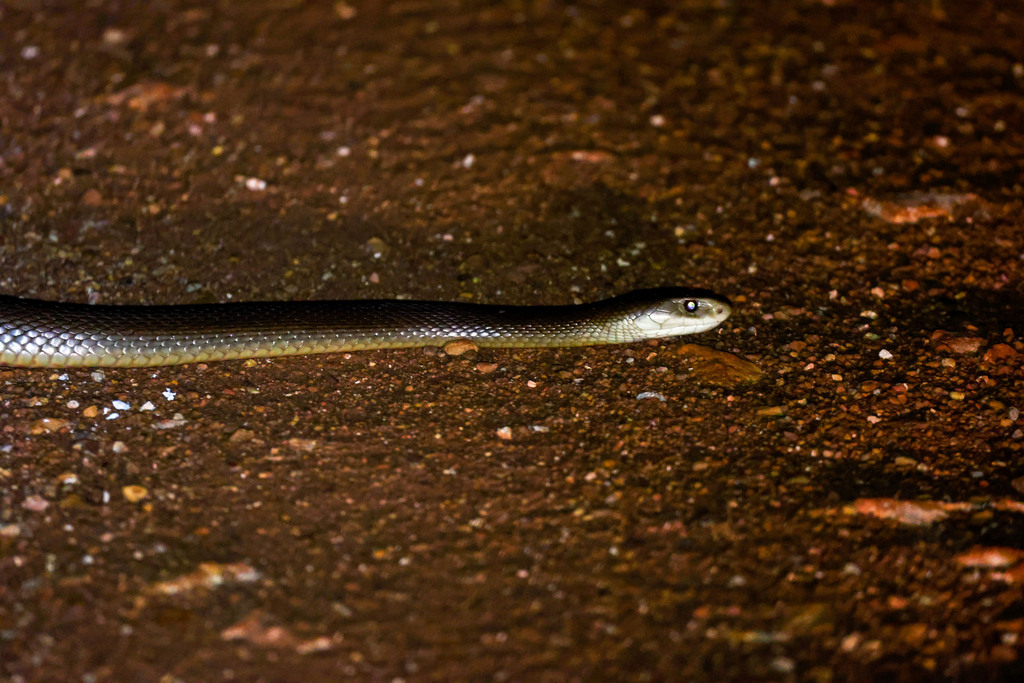
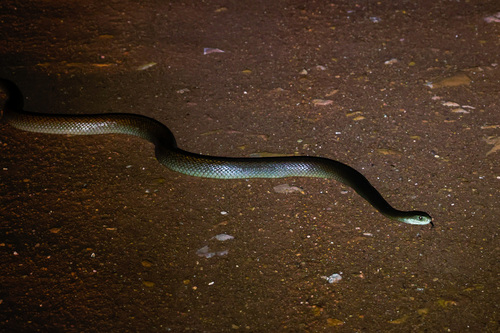
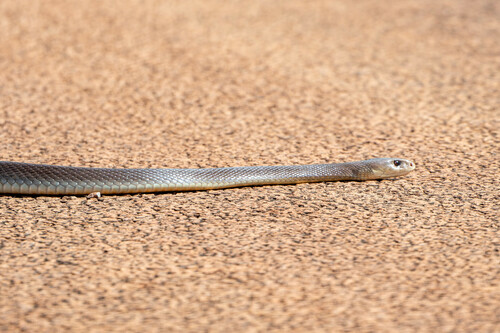
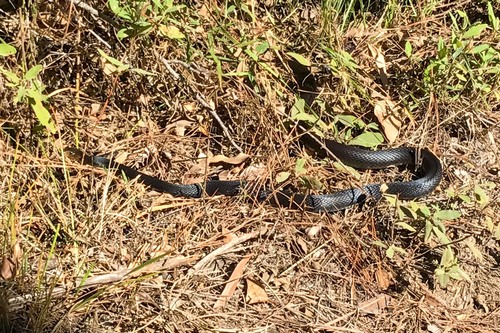
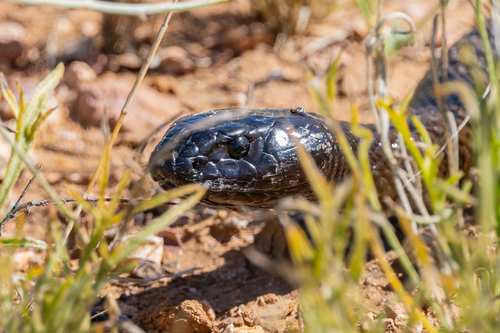
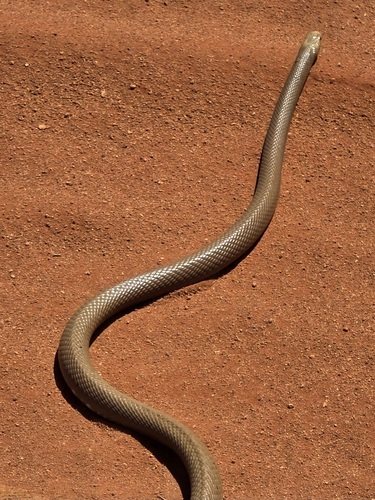
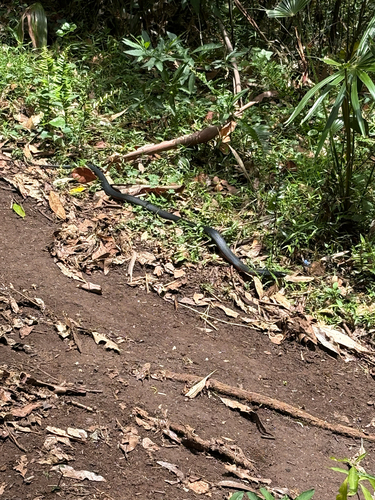
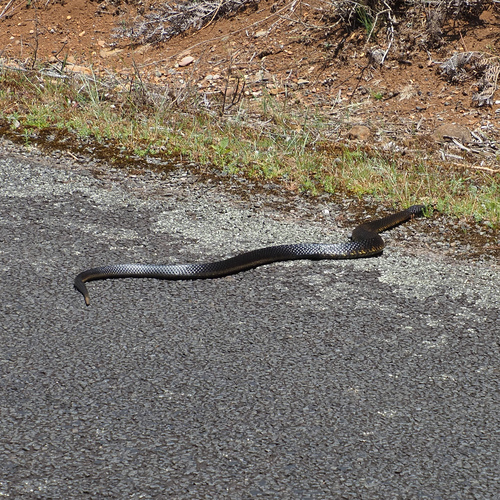
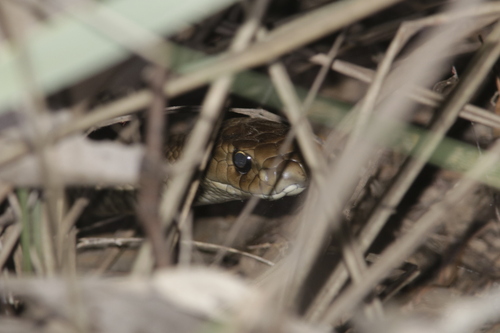
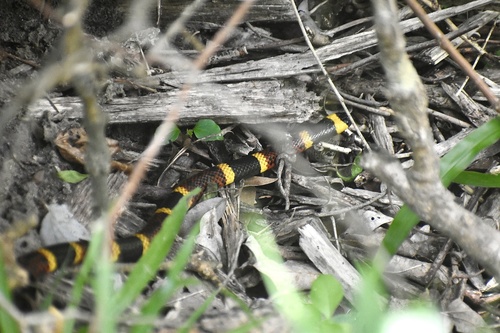
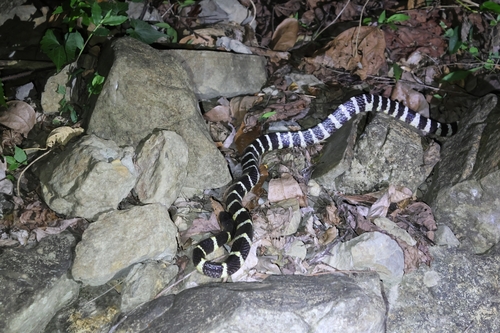
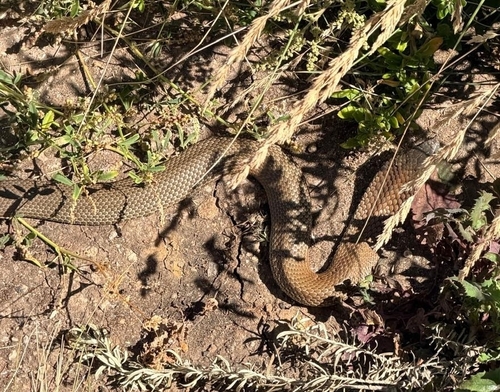
4 photographs of the Coastal Taipan. © Tom Field.
The Coastal Taipan (Oxyuranus scutellatus) is a venomous snake in the Elapidae family, recorded in 2 countries.
If you are bitten
This is a venomous snake. Treat any bite as a medical emergency: stay calm, keep the bitten limb still and roughly level with the heart, remove rings and tight clothing, and get to emergency care immediately. Do not apply a tourniquet, cut the wound, apply ice, or try to suck out venom. Call your local emergency number or poison center.
- Family
- Elapidae
- Danger
- high
About the Coastal Taipan
The coastal taipan (Oxyuranus scutellatus), or common taipan, is a species of extremely venomous snake in the family Elapidae. Described by Wilhelm Peters in 1867, the species is native to the coastal regions of northern and eastern Australia and the island of New Guinea. The second-longest venomous snake in Australia, the coastal taipan averages around 2.0 m (6.6 ft) long, with the longest specimens reaching 2.9 m (9.5 ft) in length. It has light olive or reddish-brown upperparts, with paler underparts. The snake is considered to be a least-concern species according to the International Union for Conservation of Nature.
The coastal taipan is found in a wide range of habitats, from monsoon forests to open woodland, as well as human-modified habitats such as sugarcane fields. It mainly hunts and eats small mammals, and opportunistically takes bird prey. The species is oviparous.
According to most toxicological studies, this species is the third-most venomous land snake in the world after the inland taipan and eastern brown snake. Its venom is predominantly neurotoxic and coagulopathic.
Taxonomy
German naturalist Wilhelm Peters described the coastal taipan as Pseudechis scutellatus in 1867, from material collected in Rockhampton, Queensland. Charles Walter De Vis described Pseudechis wilesmithii from Walsh River in north Queensland in 1911. In 1922, scientific bird collector William McLennan killed two snakes near Coen in far north Queensland. Impressed by their size—up to 2.76 m, he sent the skins and skulls to the Australian Museum in Sydney. Australian naturalist Roy Kinghorn established the genus Oxyuranus in 1923, describing a specimen from Coen as O. maclennani after its collector. He noted the distinctness of the palatine bone necessitated the new genus as distinct from all other elapid snakes. In 1930, Kinghorn announced it as the second largest venomous snake in the world, with 3/4 inch fangs. In 1933, Australian zoologist Donald Thomson concluded that Pseudechis scutellatus and Oxyuranus maclennani were the same species; this meant that Peters' specific epithet had priority, as did Kinghorn's genus as the species was highly distinct. Hence, the coastal taipan became Oxyuranus scutellatus. Thomson had spent some years in Cape York peninsula with the indigenous people, who told tales of a giant snake they greatly feared.
Australian herpetologist Ken Slater described Oxyuranus scutellatus canni, commonly known as the Papuan taipan, in 1956, on the basis of its distinctive coloration. He named it after George Cann, longtime Snake Man of La Perouse. It is found throughout the southern portion of the island of New Guinea.
Adapted from Wikipedia, available under CC BY-SA.
Local and regional names
The Coastal Taipan is known by these names across the regions where it lives:
- Chinese
- 太攀蛇
- Czech
- taipan velký
- English
- Common Taipan, New Guinea Taipan, Taipan
- French
- Taïpan côtier
- German
- Taipan
- Hungarian
- tajpán
- Italian
- Taipan comune, Taipan costiero, Taipan delle coste
- Japanese
- タイパン
- Russian
- Тайпан
Frequently asked: Coastal Taipan
- Is the Coastal Taipan venomous?
- Yes. The Coastal Taipan (Oxyuranus scutellatus) is venomous and belongs to the Elapidae family (cobra, mamba, coral or sea snake). Its bite is considered high risk to people. Treat any bite as a medical emergency.
- Is the Coastal Taipan poisonous?
- Snakes are venomous, not poisonous. "Poisonous" means harmful to eat or touch; "venomous" means injecting toxins through a bite. The Coastal Taipan is venomous, delivering venom through a bite.
- Is the Coastal Taipan dangerous?
- This is a venomous snake. Treat any bite as a medical emergency: stay calm, keep the bitten limb still and roughly level with the heart, remove rings and tight clothing, and get to emergency care immediately. Do not apply a tourniquet, cut the wound, apply ice, or try to suck out venom. Call your local emergency number or poison center.
- Where does the Coastal Taipan live?
- The Coastal Taipan has verified records in 2 countries, including Australia, Papua New Guinea. See the distribution section below for its full range.
- What does the Coastal Taipan eat?
- The coastal taipan's diet consists predominantly of rats, mice, and bandicoots, with various species of birds taken opportunistically. In 2010, a dead coastal taipan was found to have ingested a cane toad. Whether the snake had been poisoned by the toad and died, or had resisted the poison and been killed by a vehicle (as it was found on a road with neck trauma) was unknown. When hunting, it appears to actively scan
If you are bitten by the Coastal Taipan
Do
- Get away from the snake and stay calm. Most bites worsen when people panic or try again to handle the snake.
- Call 911 or Poison Control (1-800-222-1222) right away. Antivenom works best when given early.
- Note the time of the bite and, from a safe distance, the snake's color and pattern, a phone photo is enough. Do not chase it.
- Keep the bitten limb still and at roughly heart level. Sit or lie down and limit movement.
- Remove rings, watches, and tight clothing near the bite before swelling starts.
- Gently wash the bite with soap and water and cover it with a clean, dry dressing.
Do not
- Do not cut the wound or try to suck out the venom.
- Do not apply a tourniquet or ice.
- Do not drink alcohol or caffeine.
- Do not take aspirin or ibuprofen, they can worsen bleeding. Acetaminophen is safer for pain.
- Do not try to catch or kill the snake. A dead snake can still bite by reflex.
First-aid guidance adapted from the U.S. Centers for Disease Control and Prevention (CDC NIOSH), Venomous Snakes. Educational only; always follow the instructions of emergency responders.
Where it is found
More Elapidae snakes
Classification
How scientists group this snake, from the broadest category down to the exact species. Each step narrows to its closest relatives.
Keep learning
- Are Snakes Dangerous? The Real Risk, in PerspectiveMost snakes are harmless and avoid people. Here is the honest picture of snakebite risk worldwide and how to lower your own.
- Snakebite First Aid: What to Do (and What Never to Do)A clear, CDC-based guide to snakebite first aid: the steps that help, the popular myths that hurt, and how to tell a serious bite from a minor one.
- Venomous vs Nonvenomous: How to Tell the DifferenceThe folk rules for telling venomous snakes apart, where each one fails, and why location-based identification beats guessing by sight.
- What to Do If You Find a SnakeFound a snake at home or on a trail? Here is how to stay calm, give it space, identify it safely, and know when to call a professional.
Distribution from GBIF & iNaturalist. Venom status per CDC. Background: Wikipedia. Informational only. Never handle a snake to identify it.