
Colubridae
Calamaria Reed Snake
HarmlessLiopeltis calamaria
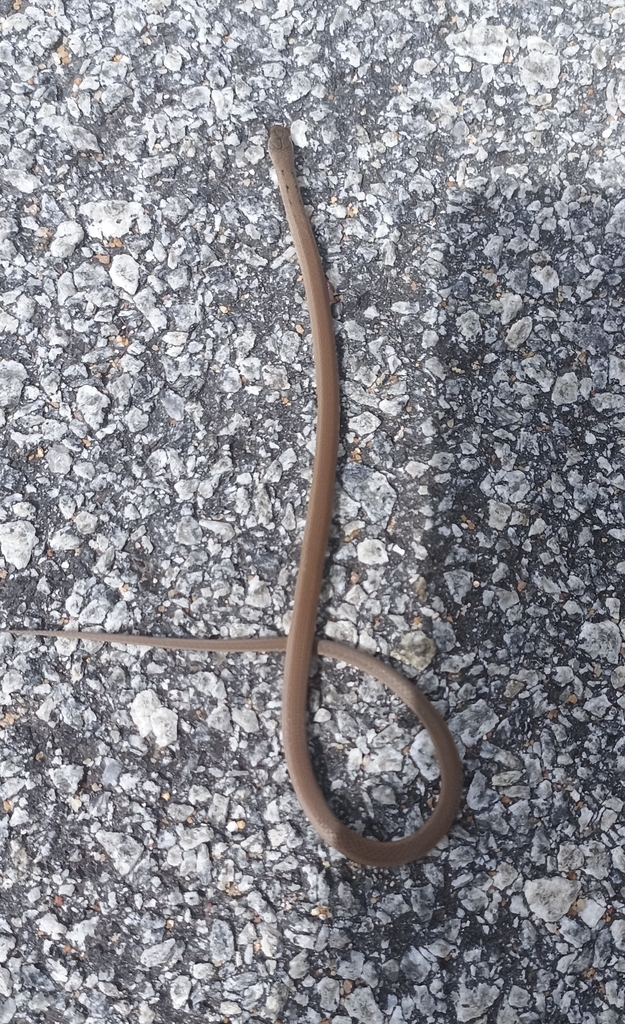
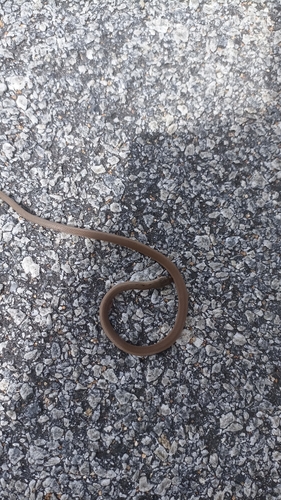
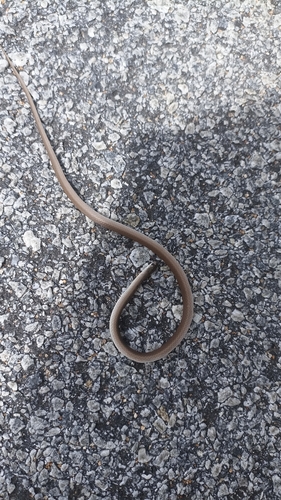
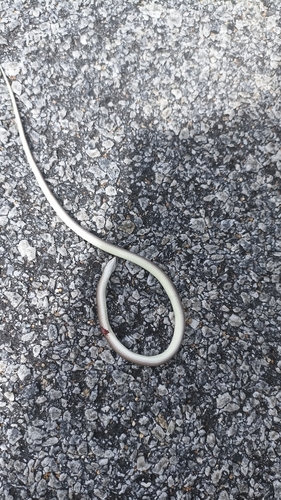
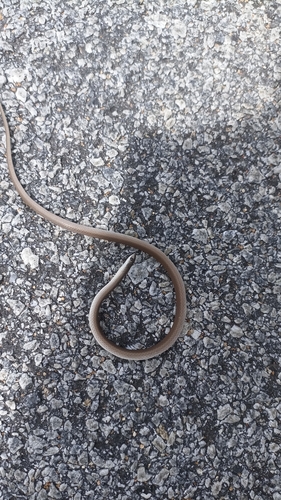
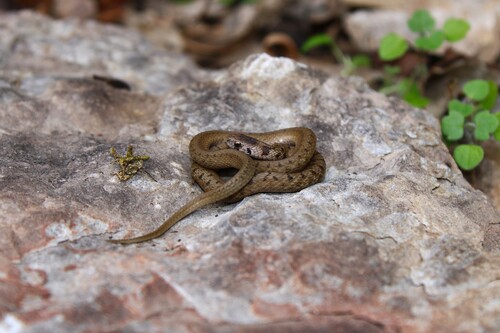
5 photographs of the Calamaria Reed Snake. © Raja bandi.
The Calamaria Reed Snake (Liopeltis calamaria) is a non-venomous snake in the Colubridae family, recorded in 4 countries.
- Family
- Colubridae
About the Calamaria Reed Snake
The calamaria reed snake (Liopeltis calamaria) is a species of snake found in some parts of South Asia.
Description
The following description is from Malcolm Arthur Smith's The Fauna of British India, Including Ceylon and Burma. Reptilia and Batrachia volume, (page 184–185).
Maxillary teeth 24–26; head not depressed and fairly distinct from the neck; snout not projecting, not twice as long as the eye; nostril very small and in a long undivided nasal, which is united with the loreal; normally 7 supralabials, rarely only 6, 3rd and 4th touching the eye; anterior genials a little longer than the posterior. Scales in 15:15:15 rows. Ventrals 126–142 in the male and 130–154 in the female. Caudals 68–78 in males and 53–72 in the females.
Hemipenis like that of frenatus in general construction, but the calyces smaller, more deeply scalloped, and packed so closely together that only the papillae are visible on the surface; the spines are shorter, thicker and more numerous; there is a fold.
Light brown, greyish-brown or greenish, above, the scales usually edged with black, showing as more or less distinct longitudinal lines, the most conspicuous being one on each side of the vertebral region; they are separated from each other by five rows of scales. The area enclosed between them may be of a darker colour than that of the rest of the body; lower parts whitish (yellow in life); a series of dark spots on each side of the head, the remnants of the temporal stripes.
Total length of male 335 mm (tail 108 mm); females 390 mm long with the tail of 100 mm.
Geographic range
Found in Sri Lanka, Bangladesh, India {the Western Ghats as far north as Matheran; Tirunelveli Hills, Mysore Plateau, Bangalore, Almora district, Chhota Nagpur (Surguja)}, Nepal (Chitwan) and possibly in Bhutan.
Adapted from Wikipedia, available under CC BY-SA.
Frequently asked: Calamaria Reed Snake
- Is the Calamaria Reed Snake venomous?
- No. The Calamaria Reed Snake (Liopeltis calamaria) is non-venomous and is not considered dangerous to humans. Like most snakes, it will retreat rather than bite when given the chance.
- Is the Calamaria Reed Snake poisonous?
- Snakes are venomous, not poisonous. "Poisonous" means harmful to eat or touch; "venomous" means injecting toxins through a bite. The Calamaria Reed Snake is neither poisonous nor venomous.
- Is the Calamaria Reed Snake dangerous?
- The Calamaria Reed Snake is not dangerous to humans. It has no medically significant venom and bites only defensively if cornered or handled.
- Where does the Calamaria Reed Snake live?
- The Calamaria Reed Snake has verified records in 4 countries, including India, Sri Lanka, Indonesia. See the distribution section below for its full range.
Where it is found
More Colubridae snakes
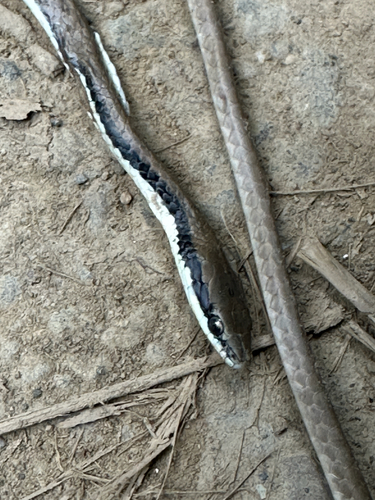 Malayan RingneckLiopeltis tricolor
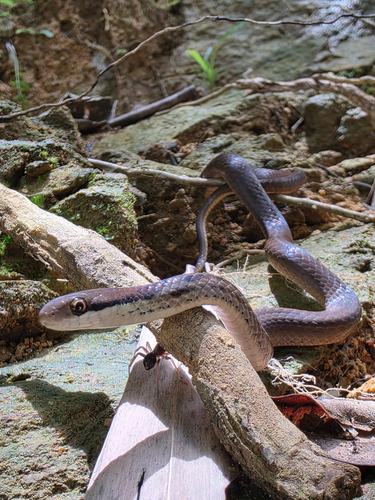 Liopeltis pallidonuchalisLiopeltis pallidonuchalis
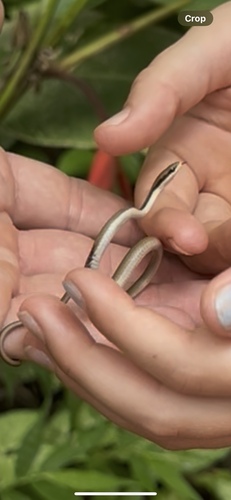 Liopeltis stoliczkaeLiopeltis stoliczkae
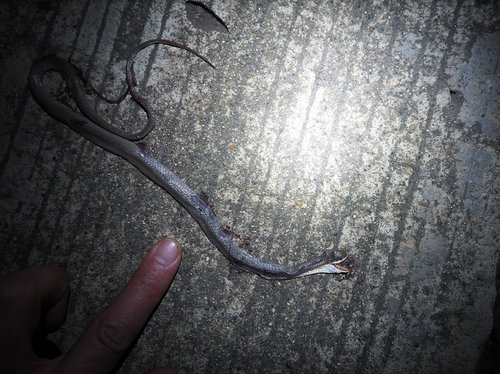 Philippine Liopeltine SnakeLiopeltis philippina
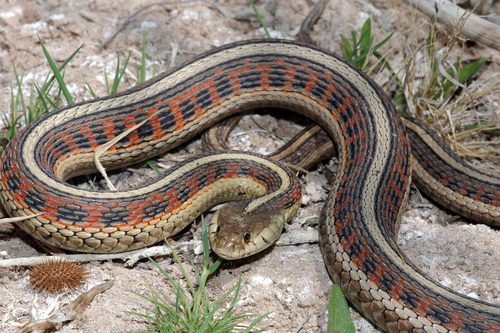 Common Garter SnakeThamnophis sirtalis
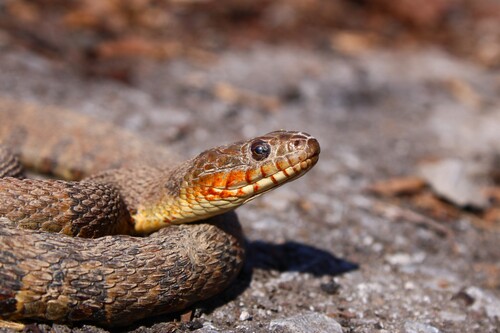 Common WatersnakeNerodia sipedon
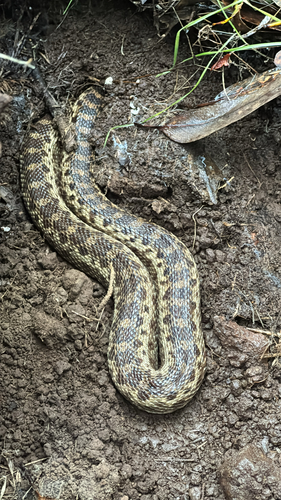 Gopher SnakePituophis catenifer
 DeKay's BrownsnakeStoreria dekayi
Classification
How scientists group this snake, from the broadest category down to the exact species. Each step narrows to its closest relatives.
- OrderThe broad group of scaled reptiles: all snakes and lizards
- Squamata
- FamilyA group of related snakes that share key traits
- Colubridae
- GenusA close-knit group of very similar species
- Liopeltis
- SpeciesThis exact snake, named in the two-part scientific name
- Liopeltis calamaria
Keep learning
- What to Do If You Find a SnakeFound a snake at home or on a trail? Here is how to stay calm, give it space, identify it safely, and know when to call a professional.
- Venomous vs Nonvenomous: How to Tell the DifferenceThe folk rules for telling venomous snakes apart, where each one fails, and why location-based identification beats guessing by sight.
- What Is a Snake? Anatomy and the BasicsA clear overview of what makes a snake a snake: limbless body plan, anatomy, evolution from lizards, species diversity, and why they are ectothermic.
- How to Keep Snakes Out of Your Yard and HomeA practical guide to keeping snakes out of your yard and home using habitat changes that work, plus what to skip and what to do if one shows up.
Distribution from GBIF & iNaturalist. Venom status per CDC. Background: Wikipedia. Informational only. Never handle a snake to identify it.