
Colubridae
American Snail-eater
HarmlessDipsas articulata
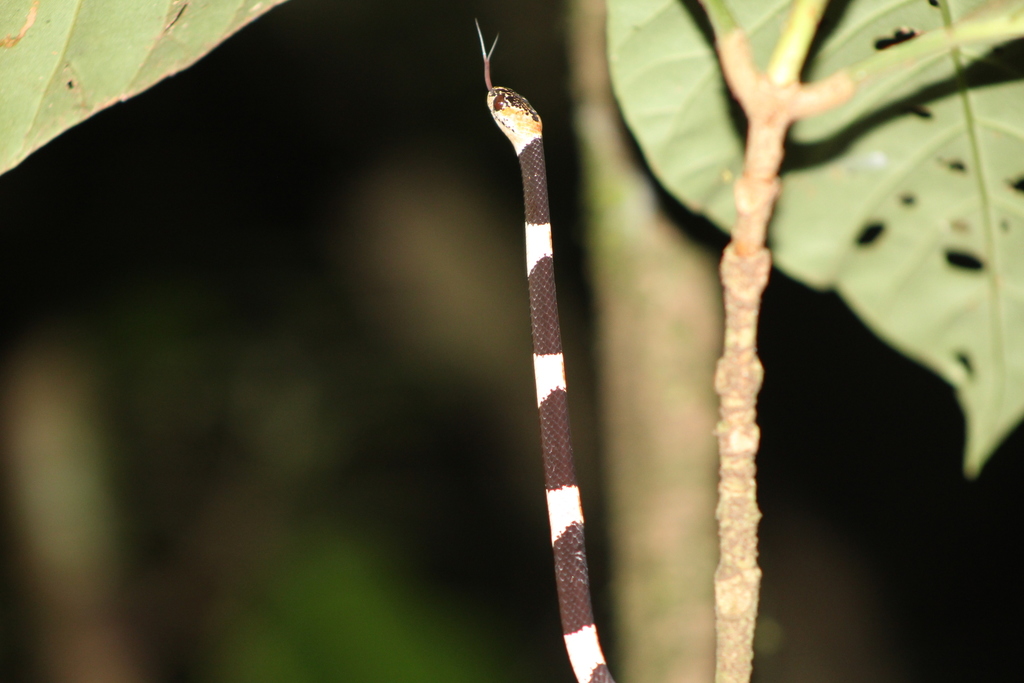
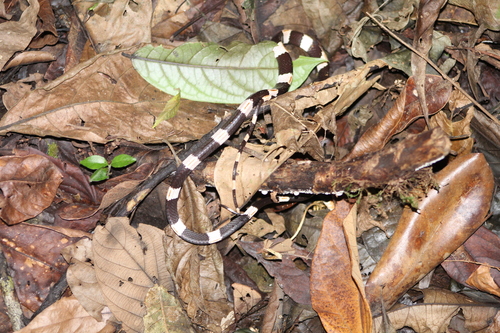
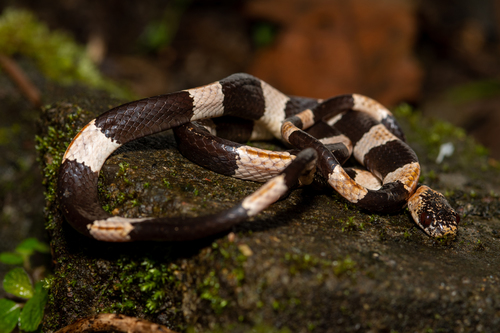
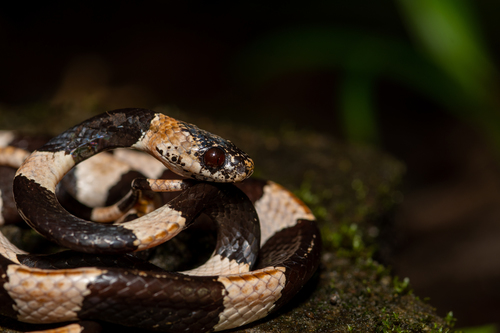
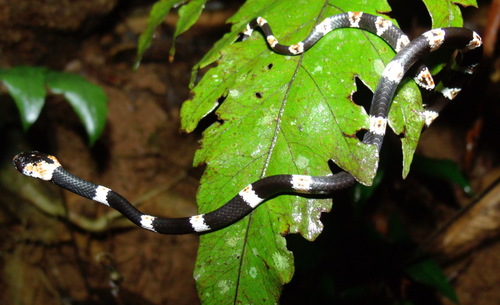
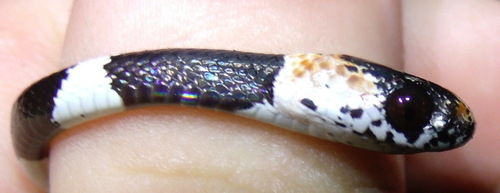
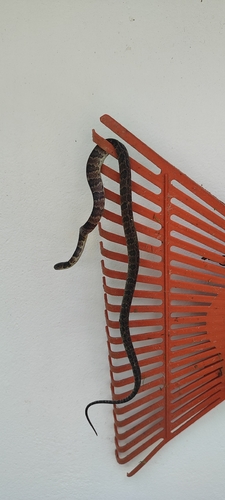
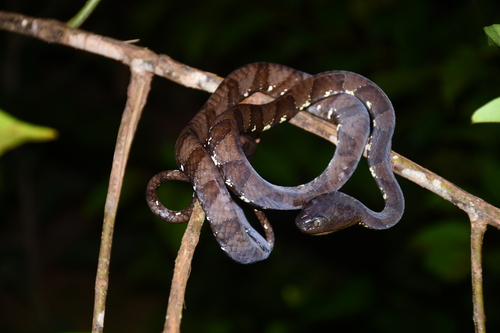
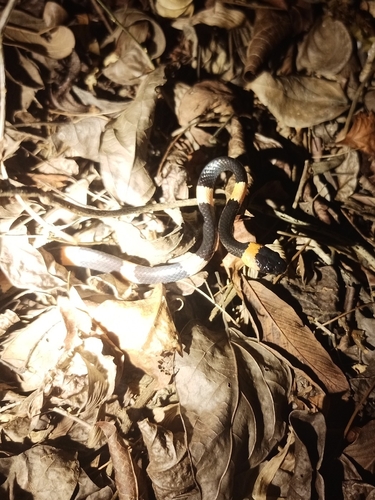
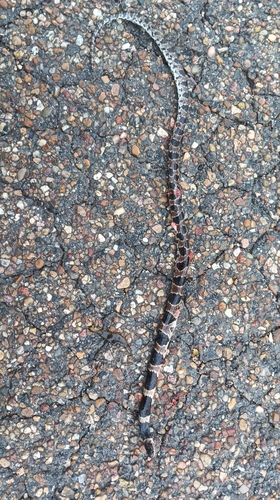
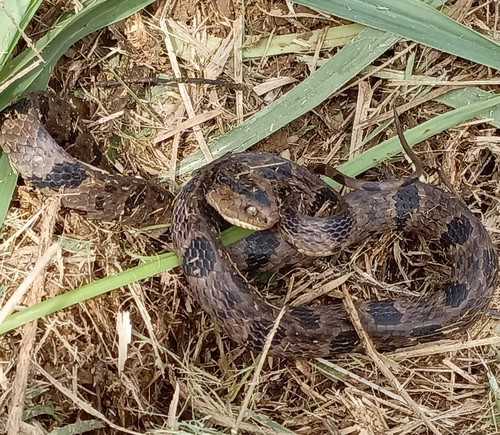
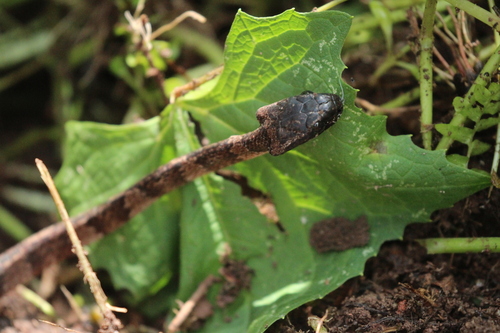
6 photographs of the American Snail-eater. © John Abrams.
The American Snail-eater (Dipsas articulata) is a non-venomous snake in the Colubridae family, recorded in 6 countries.
- Family
- Colubridae
About the American Snail-eater
Dipsas articulata, commonly known as the American snail-eater, is a non-venomous species of snake found in Nicaragua, Costa Rica and Panama.
Common names
D. articulata is known by a few names including the American snail-eater, but also the red-striped thirst snake and the Central American snail-eater.
Distribution and habitat
The distribution of this species extends from the lowlands of southeastern Nicaragua to northwestern Panama. It has been identified mostly in parks, reserves, and other natural areas, like the Tirimbina Biological Reserve in Costa Rica and Portobelo National Park in Panama. The first record in Nicaragua was in 2002 during a herpetofaunal survey in Refugio Bartola when a male individual was found coiled up partially obscured by a vine on a tree trunk. A new record in Coclé, Panama in 2014 in a mid-elevation cloud forest extended its known geographic range slightly.
This arboreal species of snake has been found in lowland tropical wet forests. It is commonly found perched on trees or in vegetation low to the ground, likely searching for its main diet of terrestrial snails. There is a record of an individual found in a bromeliad attached to a fallen tree in Trinidad.
Description
This species has a dorsal ground color of white with 14-17 reddish-brown to black bands that are approximately equal in length throughout the body. It is considered a coral snake mimic based on its pattern of light and dark rings. D. articulata resembles other Dipsas species with large eyes, but also has several small black spots on the head and lacks the classic mental groove characteristic of other species in this genus. This species is unique in that the sublabial scales usually are adjacent to the third pair of chin shields and the preventral scales or ventral scales.
Individuals of this species can range in body length from 460 to 483 mm (18.1 to 19.0 in), but a large male specimen was documented to have a 501 mm (19.7 in) snout-vent-length with 218 mm (8.6 in) tail length that weighed 16 g (0.035 lb). In 2011, this became the longest known record of this species, exceeding the previously published record of 712 mm (28.0 in) total length.
Many of the Dipsas snakes are very similar in appearance, and scientists have attempted to describe the main differences between them, especially between D. articulata, and D. viguieri, D. gracilis, D. brevifacies, and D. tenuisima. These species are strikingly similar to the eye and there is debate about their taxonomy and evolutionary relationship to each other. Because of this, there appears to be an "articulata group" of Dipsas in which multiple species fall, not to be confused with the distinct species D. articulata. These species within the articulata group include D. articulata, D. bicolor, D. brevifacies, D. gaigae, D. gracilis, D. maxillaris, D. tenuissima, and D. viguieri, and are considered a monophyletic group within the genus Dipsas.
Diet and behavior
Adapted from Wikipedia, available under CC BY-SA.
Frequently asked: American Snail-eater
- Is the American Snail-eater venomous?
- No. The American Snail-eater (Dipsas articulata) is non-venomous and is not considered dangerous to humans. Like most snakes, it will retreat rather than bite when given the chance.
- Is the American Snail-eater poisonous?
- Snakes are venomous, not poisonous. "Poisonous" means harmful to eat or touch; "venomous" means injecting toxins through a bite. The American Snail-eater is neither poisonous nor venomous.
- Is the American Snail-eater dangerous?
- The American Snail-eater is not dangerous to humans. It has no medically significant venom and bites only defensively if cornered or handled.
- Where does the American Snail-eater live?
- The American Snail-eater has verified records in 6 countries, including Costa Rica, Panama, Nicaragua. See the distribution section below for its full range.
- What does the American Snail-eater eat?
- Dipsas articulata is considered a relatively rare, nocturnal snake. Like other Dipsas and as its name suggests, this snake primarily eats snails, especially land snails. In terms of behavior, other members of the genus Dipsas are known for relatively docile defensive behaviors, but can range from a particular posturing to mimicry of some vipers through head triangulation and body orientation. Defensive behavior of an adult D.
- Why is it called the American Snail-eater?
- D. articulata is known by a few names including the American snail-eater, but also the red-striped thirst snake and the Central American snail-eater.
Where it is found
More Colubridae snakes
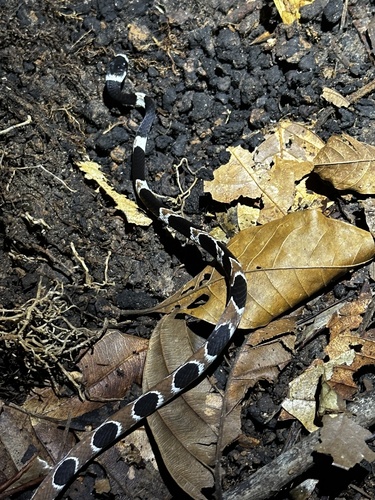
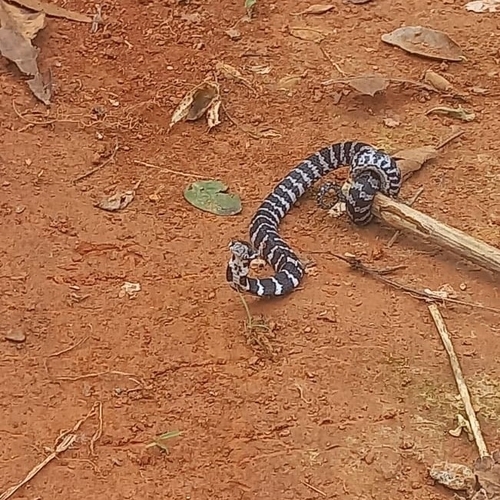
Classification
How scientists group this snake, from the broadest category down to the exact species. Each step narrows to its closest relatives.
- OrderThe broad group of scaled reptiles: all snakes and lizards
- Squamata
- FamilyA group of related snakes that share key traits
- Colubridae
- GenusA close-knit group of very similar species
- Dipsas
- SpeciesThis exact snake, named in the two-part scientific name
- Dipsas articulata
Keep learning
- What to Do If You Find a SnakeFound a snake at home or on a trail? Here is how to stay calm, give it space, identify it safely, and know when to call a professional.
- Venomous vs Nonvenomous: How to Tell the DifferenceThe folk rules for telling venomous snakes apart, where each one fails, and why location-based identification beats guessing by sight.
- What Is a Snake? Anatomy and the BasicsA clear overview of what makes a snake a snake: limbless body plan, anatomy, evolution from lizards, species diversity, and why they are ectothermic.
- How to Keep Snakes Out of Your Yard and HomeA practical guide to keeping snakes out of your yard and home using habitat changes that work, plus what to skip and what to do if one shows up.
Distribution from GBIF & iNaturalist. Venom status per CDC. Background: Wikipedia. Informational only. Never handle a snake to identify it.