
Colubridae
Neuwied's Tree Snake
HarmlessDipsas neuwiedi
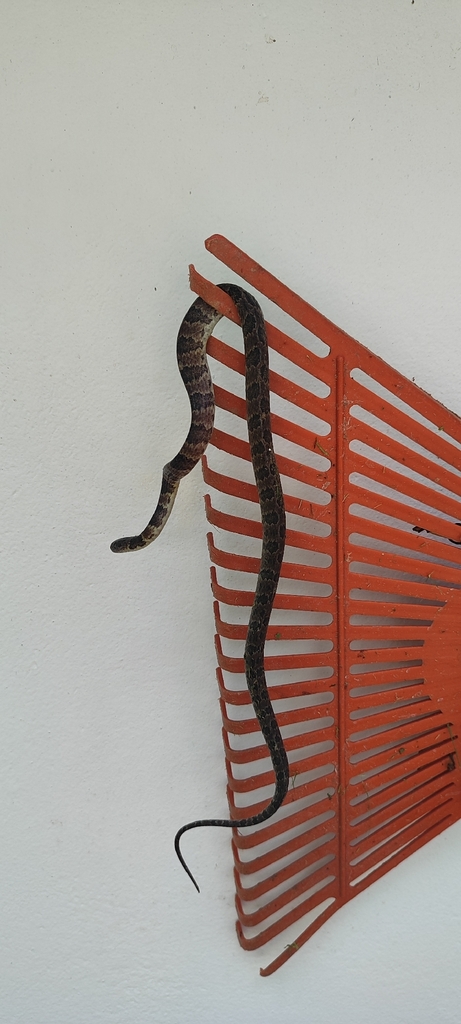
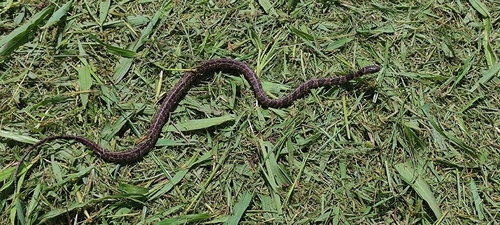
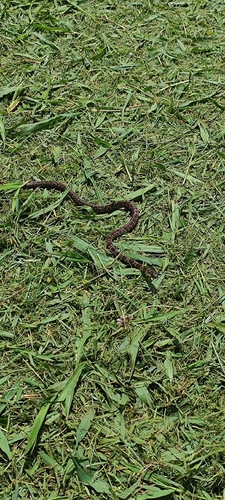
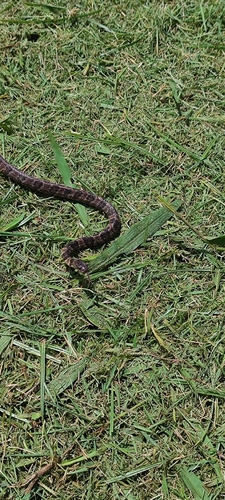
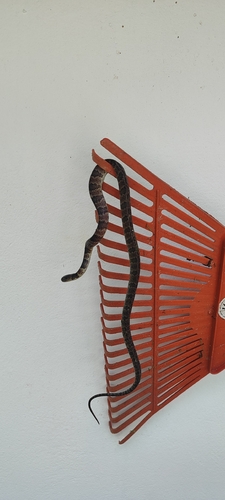
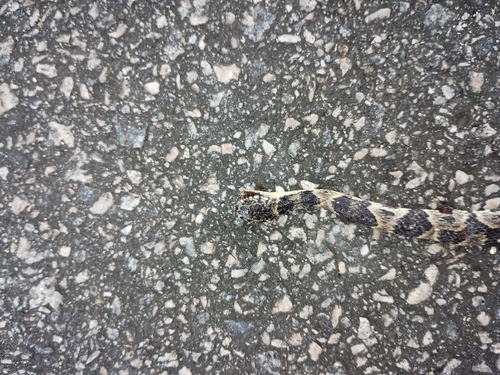
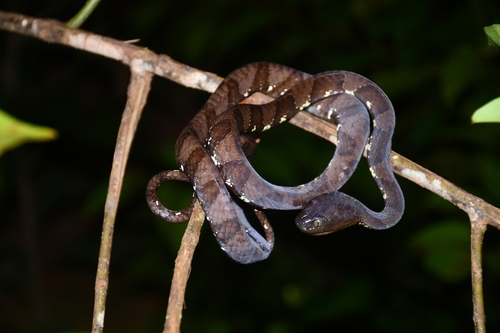
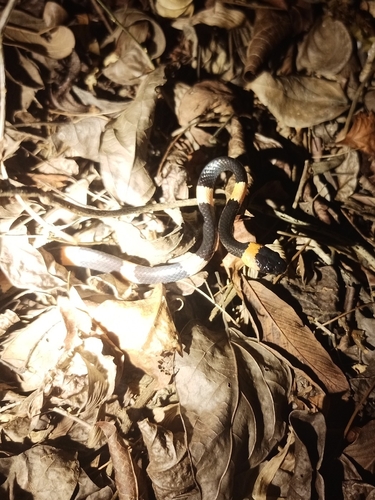
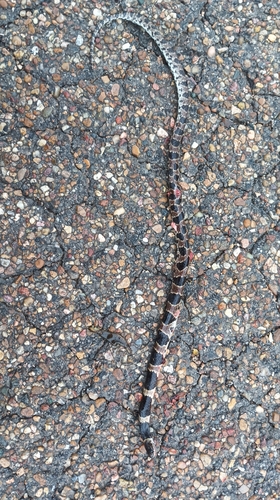
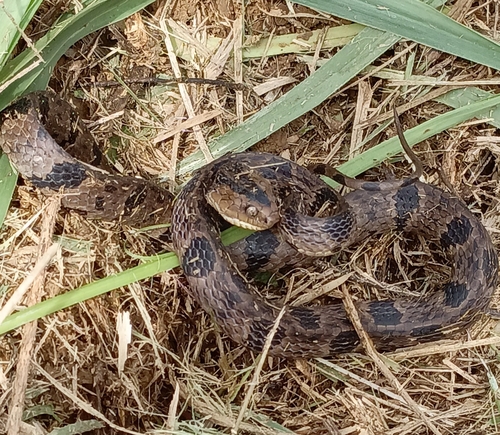
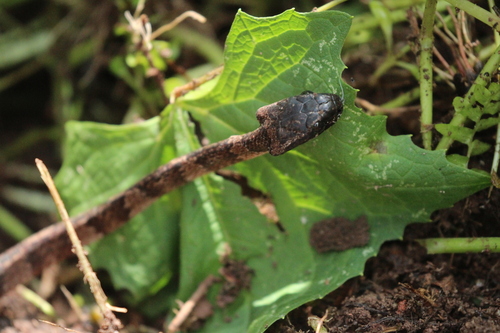
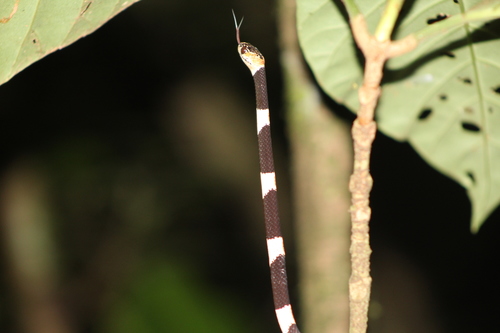
6 photographs of the Neuwied's Tree Snake. © Lauro Moura.
The Neuwied's Tree Snake (Dipsas neuwiedi) is a non-venomous snake in the Colubridae family, recorded in 2 countries.
Neuwied's Tree Snake (Dipsas neuwiedi) is a slender snail-eating snake found mainly in southeastern Brazil, with verified records also from Uruguay. It is non-venomous and not dangerous to people.
- Family
- Colubridae
How to identify the Neuwied's Tree Snake
Look for a slim, medium-sized snake with a short, blunt head and large eyes, moving through vegetation at night. Its Brazilian name, dormideira-cinzenta (gray sleepyhead), points to its often grayish color.
- Size
- A medium-sized snake that reaches about 66 cm (26 in) from snout to vent.
- Head
- The head is short and blunt, with a rounded snout, and is clearly wider than the thin neck.
- Eyes
- The eyes are large for the size of the head, which suits a snake that hunts at night.
- Body
- The body is slender and built for climbing through shrubs and low trees.
- Color
- Many individuals look gray or grayish brown, as its Portuguese common name suggests.
- Setting
- Most sightings are at night in forest or savanna vegetation, often where snails and slugs are plentiful.
Have a photo? Identify it from your photo and location.
Is the Neuwied's Tree Snake dangerous?
Not venomous
Neuwied's Tree Snake is non-venomous and poses no real risk to people. Its small mouth and gentle temperament make even a bite unlikely and minor.
If you find one
- Keep your distance and let it move away on its own.
- Do not pick it up or handle it, even though it is harmless.
- Check the head shape and look for heat pits before assuming any snake in its range is harmless, because lanceheads live in the same areas.
Habitat and behavior
- Habitat
- It lives in forest and savanna from sea level up to about 1,450 m (4,760 ft). It spends much of its time off the ground in vegetation.
- Behavior
- This snake is arboreal and nocturnal, climbing through plants at night to look for prey. When disturbed it is generally docile and rarely attempts to bite, and it is more likely to coil up or try to hide.
- Diet
- It feeds on snails and slugs.
- When active
- It is active at night.
Further reading: Neuwied's Tree Snake on Wikipedia.
Frequently asked: Neuwied's Tree Snake
- Is Neuwied's Tree Snake venomous?
- No. It is a non-venomous snake and is not considered dangerous to people. It rarely tries to bite even when disturbed.
- What does Neuwied's Tree Snake eat?
- It specializes in snails and slugs. This makes it a useful neighbor in gardens and farms where those pests are common.
- Where does Neuwied's Tree Snake live?
- It is found mainly in southeastern Brazil, with verified records also from Uruguay. It lives in forest and savanna from sea level to about 1,450 m.
- How can I tell Neuwied's Tree Snake from a lancehead?
- Lanceheads have a broad, triangular head, a heavy body and a heat-sensing pit between each eye and nostril. Neuwied's Tree Snake has a small, blunt head, large eyes, a slim body and no pits.
- Is the Neuwied's Tree Snake venomous?
- No. The Neuwied's Tree Snake (Dipsas neuwiedi) is non-venomous and is not considered dangerous to humans. Like most snakes, it will retreat rather than bite when given the chance.
- Is the Neuwied's Tree Snake poisonous?
- Snakes are venomous, not poisonous. "Poisonous" means harmful to eat or touch; "venomous" means injecting toxins through a bite. The Neuwied's Tree Snake is neither poisonous nor venomous.
- Is the Neuwied's Tree Snake dangerous?
- The Neuwied's Tree Snake is not dangerous to humans. It has no medically significant venom and bites only defensively if cornered or handled.
Where it is found
More Colubridae snakes
Classification
How scientists group this snake, from the broadest category down to the exact species. Each step narrows to its closest relatives.
- OrderThe broad group of scaled reptiles: all snakes and lizards
- Squamata
- FamilyA group of related snakes that share key traits
- Colubridae
- GenusA close-knit group of very similar species
- Dipsas
- SpeciesThis exact snake, named in the two-part scientific name
- Dipsas neuwiedi
Keep learning
- What to Do If You Find a SnakeFound a snake at home or on a trail? Here is how to stay calm, give it space, identify it safely, and know when to call a professional.
- Venomous vs Nonvenomous: How to Tell the DifferenceThe folk rules for telling venomous snakes apart, where each one fails, and why location-based identification beats guessing by sight.
- What Is a Snake? Snake Facts, Body Plan and How They Differ From LizardsA clear overview of what makes a snake a snake: limbless body plan, anatomy, evolution from lizards, species diversity, and why they are ectothermic.
- How to Keep Snakes Out of Your Yard and HomeA practical guide to keeping snakes out of your yard and home using habitat changes that work, plus what to skip and what to do if one shows up.
Distribution from GBIF & iNaturalist. Venom status per CDC. Background: Wikipedia. Informational only. Never handle a snake to identify it.