
Garter / Ribbon snake
Yellow-throated Garter Snake
HarmlessThamnophis pulchrilatus
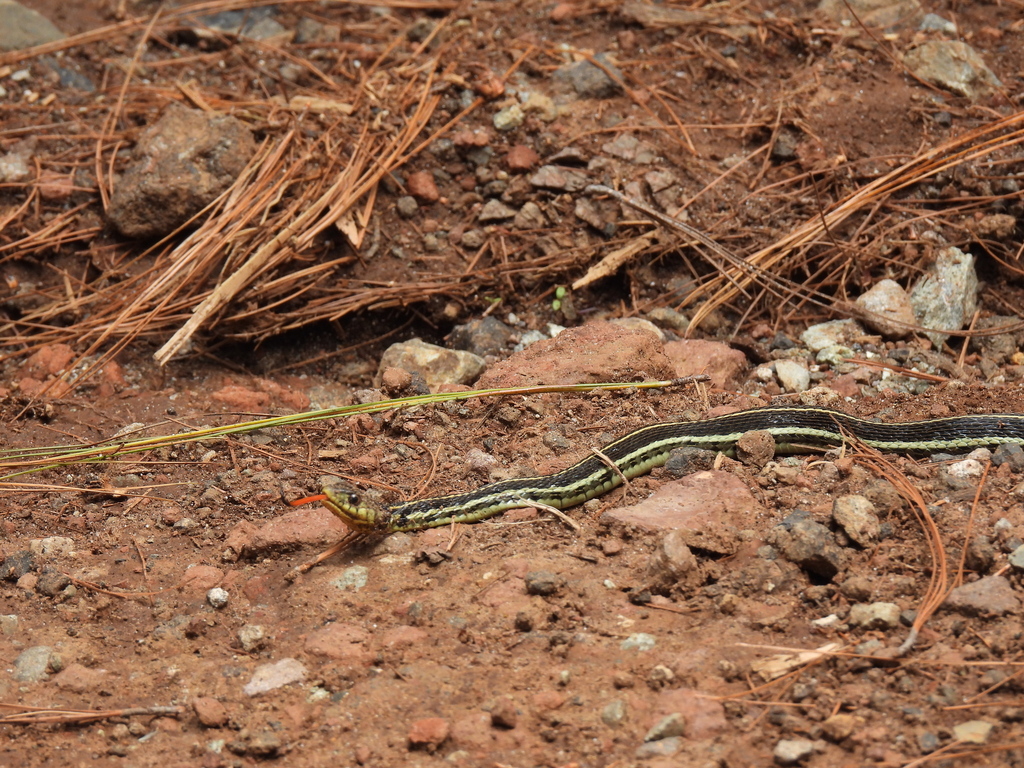
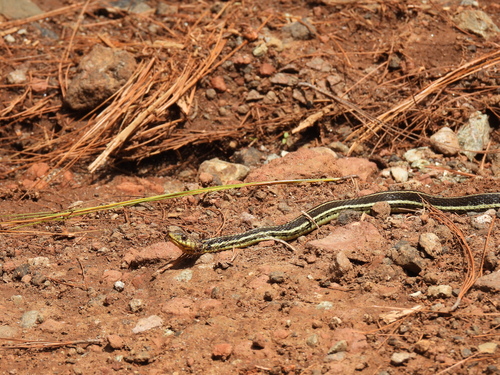
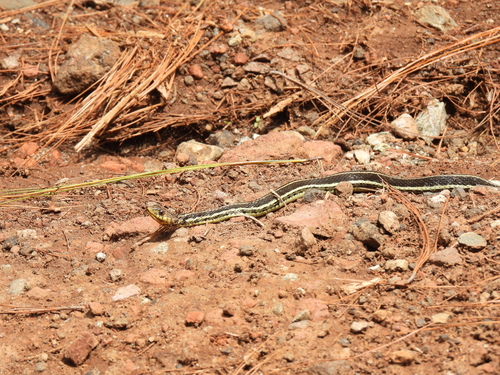
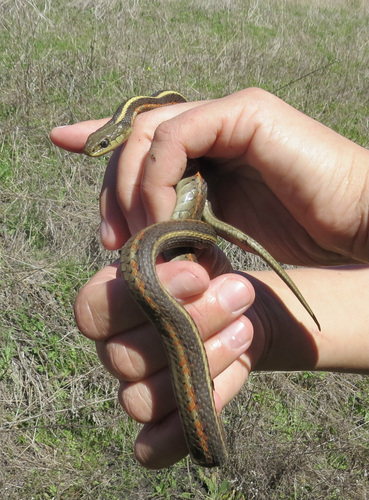
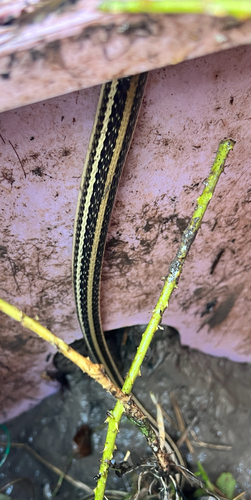
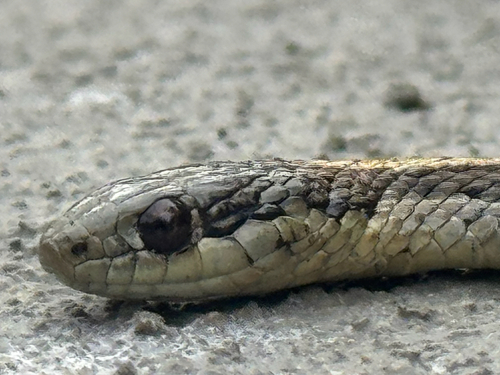
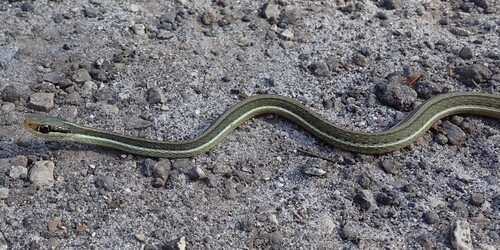
3 photographs of the Yellow-throated Garter Snake. © Liliana Ramírez-Freire.
The Yellow-throated Garter Snake (Thamnophis pulchrilatus) is a non-venomous snake in the Colubridae family, recorded in 1 country.
- Also called
- Garter / Ribbon snake
- Family
- Colubridae
- Size
- Slender, 1.5–3 ft.
- Habitat
- Almost anywhere with moisture — gardens, fields, wetlands, and streamsides.
- Behavior
- Harmless and active by day; may release musk if handled. The most commonly seen snakes across most of the U.S.
- Identify
- Slender body with three light stripes running the length of a darker back.
About the Yellow-throated Garter Snake
The yellow-throated garter snake (Thamnophis pulchrilatus) is a species of snake in the family Colubridae. It is found in Mexico. Very little is known for certain about this snake, but it has been observed to reach lengths of 18–36 in (46–91 cm). They are distinguishable by their characteristic coloring, having a dark brown or black dorsal side accented with a yellow to light green stripe along the spine. A checkered yellow and black pattern can be observed along the sides, and the throat of the snake is bright yellow. Thamnophis pulchrilatus are relatively slender and light snakes.
Taxonomic history
This species has been considered a synonym of Thamnophis cyrtopsis or of Thamnophis eques. It was first described by Cope in 1885 as Eutaenia pulchrilatus.
Distribution and habitat
It is found mainly in wooded areas, specifically oak and pine forests at high elevations, but has occasionally been found in grassy fields as well. Some sources report that they inhabit the southwestern United States, but no sightings have ever been confirmed outside of Mexico, and these U.S. reports are likely T. cyrtopsis or T. eques.
Biology
Diet
These snakes are believed to eat small fish, lizards, frogs, toads, and even worms. There have been two confirmed cases of predation: the first involved a captured female that regurgitated a mountain tree frog (Dryophytes eximius), and the second was a captured snake that was discovered to have eaten a Bell's false brook salamander (Isthmura belli).
Behavior
Two different defensive behaviors have been observed in yellow-throated garter snakes in a study conducted in Mexico. Two individuals exhibited defensive behavior when prevented from escaping, which involved forming rings with the body and tucking the head away, while moving the tip of the tail back and forth in the air. A third individual flattened its body to the ground for around thirty seconds before making a dash for escape.
Reproduction
Very little is known about the reproductive behaviors of the yellow-throated garter snake. They are known to be ovoviviparous, meaning the young hatch from their eggs inside the mother and are birthed live. One brief field study was able to capture a pregnant female and determine that her clutch consisted of 15 eggs, which expanded the known amount of young hatched at a time to reach from 7-15.
Threats
The main threat that the yellow-throated garter snake faces is habitat loss through a variety of different avenues. One way is urban development of the woodlands and grasslands where they live. Another is deforestation and logging of their ecosystem. Agricultural development can also cause issues for these snakes, however they are currently listed as Least Concern by the IUCN.
Adapted from Wikipedia, available under CC BY-SA.
Frequently asked: Yellow-throated Garter Snake
- Is the Yellow-throated Garter Snake venomous?
- No. The Yellow-throated Garter Snake (Thamnophis pulchrilatus) is non-venomous and is not considered dangerous to humans. Like most snakes, it will retreat rather than bite when given the chance.
- Is the Yellow-throated Garter Snake poisonous?
- Snakes are venomous, not poisonous. "Poisonous" means harmful to eat or touch; "venomous" means injecting toxins through a bite. The Yellow-throated Garter Snake is neither poisonous nor venomous.
- Is the Yellow-throated Garter Snake dangerous?
- The Yellow-throated Garter Snake is not dangerous to humans. It has no medically significant venom and bites only defensively if cornered or handled.
- Where does the Yellow-throated Garter Snake live?
- The Yellow-throated Garter Snake has verified records in 1 country, including Mexico. See the distribution section below for its full range.
- How do I identify the Yellow-throated Garter Snake?
- Slender body with three light stripes running the length of a darker back.
- How big does the Yellow-throated Garter Snake get?
- Slender, 1.5–3 ft.
- What does the Yellow-throated Garter Snake eat?
- These snakes are believed to eat small fish, lizards, frogs, toads, and even worms. There have been two confirmed cases of predation: the first involved a captured female that regurgitated a mountain tree frog (Dryophytes eximius), and the second was a captured snake that was discovered to have eaten a Bell's false brook salamander (Isthmura belli).
Where it is found
More Colubridae snakes
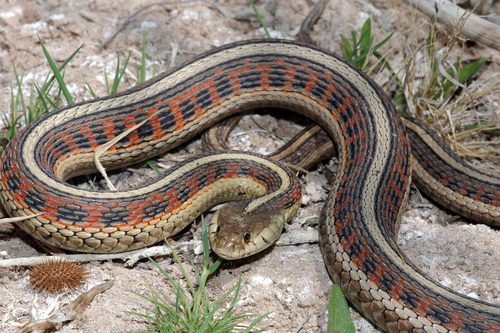 Common Garter SnakeThamnophis sirtalis
 Western Terrestrial Garter SnakeThamnophis elegans
 Western Ribbon SnakeThamnophis proximus
 Northwestern Garter SnakeThamnophis ordinoides
 Common Ribbon SnakeThamnophis saurita
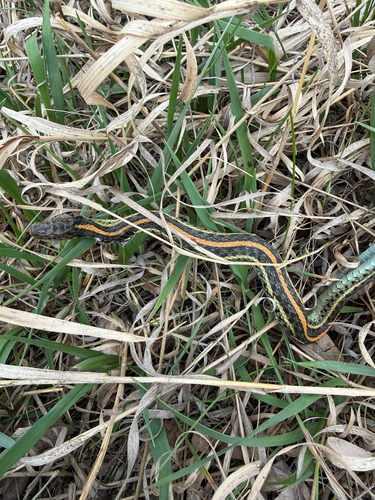 Plains Garter SnakeThamnophis radix
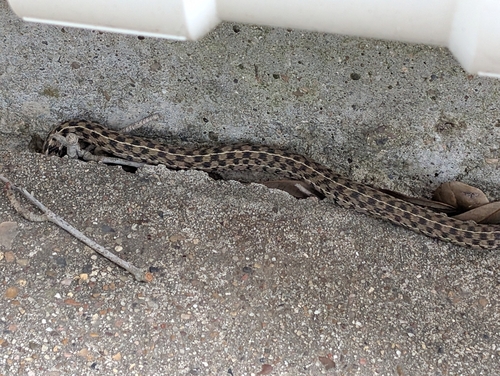 Checkered Garter SnakeThamnophis marcianus
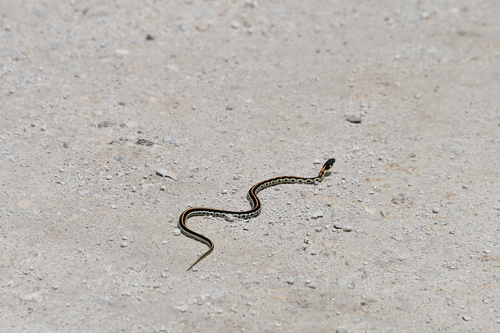 Black-necked Garter SnakeThamnophis cyrtopsis
Classification
How scientists group this snake, from the broadest category down to the exact species. Each step narrows to its closest relatives.
- OrderThe broad group of scaled reptiles: all snakes and lizards
- Squamata
- FamilyA group of related snakes that share key traits
- Colubridae
- GenusA close-knit group of very similar species
- Thamnophis
- SpeciesThis exact snake, named in the two-part scientific name
- Thamnophis pulchrilatus
Keep learning
- What to Do If You Find a SnakeFound a snake at home or on a trail? Here is how to stay calm, give it space, identify it safely, and know when to call a professional.
- Venomous vs Nonvenomous: How to Tell the DifferenceThe folk rules for telling venomous snakes apart, where each one fails, and why location-based identification beats guessing by sight.
- What Is a Snake? Anatomy and the BasicsA clear overview of what makes a snake a snake: limbless body plan, anatomy, evolution from lizards, species diversity, and why they are ectothermic.
- How to Keep Snakes Out of Your Yard and HomeA practical guide to keeping snakes out of your yard and home using habitat changes that work, plus what to skip and what to do if one shows up.
Distribution from GBIF & iNaturalist. Venom status per CDC. Background: Wikipedia. Informational only. Never handle a snake to identify it.