
Elapidae
Stephens' Banded Snake
VenomousHoplocephalus stephensii
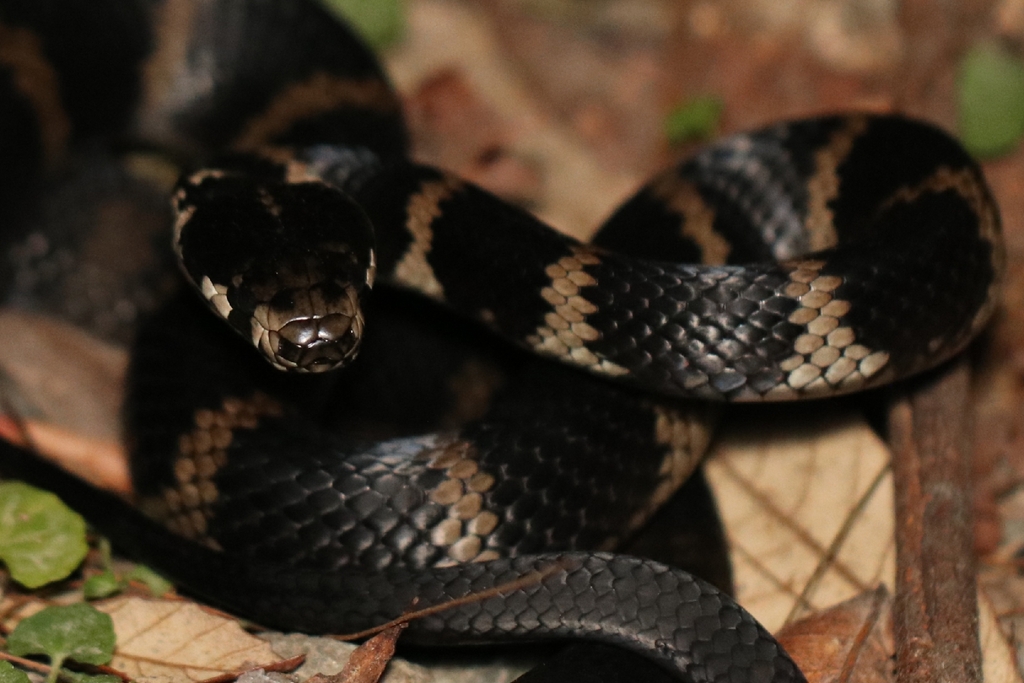
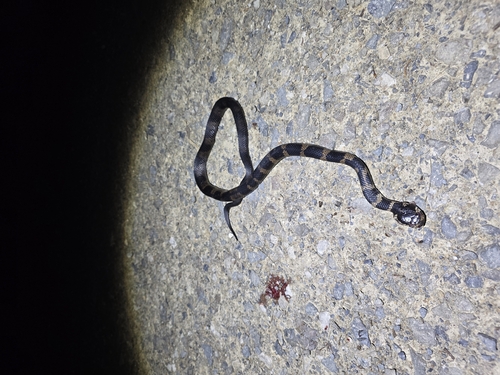
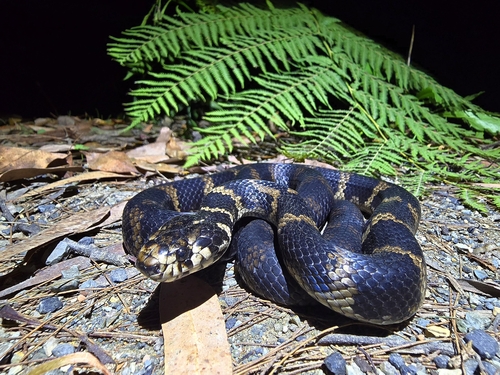
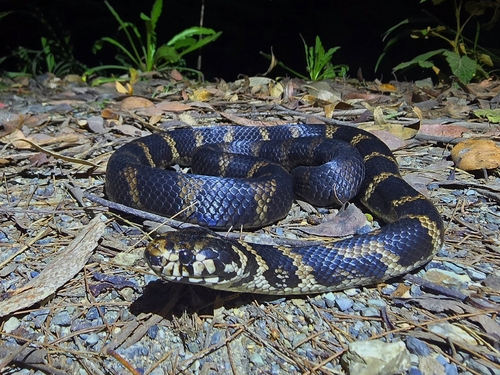
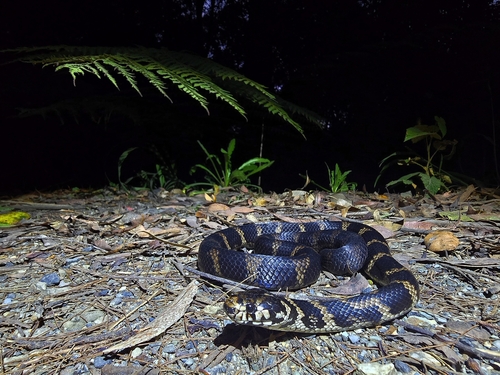
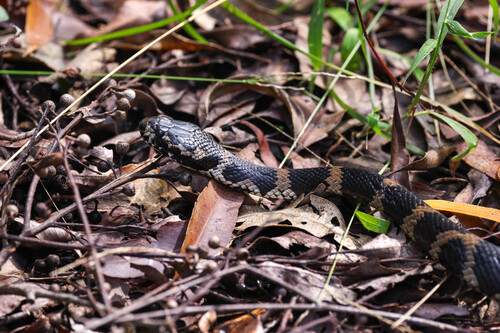
6 photographs of the Stephens' Banded Snake. © Max Tibby.
The Stephens' Banded Snake (Hoplocephalus stephensii) is a venomous snake in the Elapidae family, recorded in 1 country.
If you are bitten
This is a venomous snake. Treat any bite as a medical emergency: stay calm, keep the bitten limb still and roughly level with the heart, remove rings and tight clothing, and get to emergency care immediately. Do not apply a tourniquet, cut the wound, apply ice, or try to suck out venom. Call your local emergency number or poison center.
- Family
- Elapidae
- Danger
- high
About the Stephens' Banded Snake
Stephens's banded snake (Hoplocephalus stephensii) is a species of highly venomous tree snake in the family Elapidae. The species is endemic to Australia.
Taxonomy
Gerard Krefft described Hoplocephalus stephensii as a species new to science in 1869. The specific name stephensii, is in honour of Australian academic William John Stephens.
Description
H. stephensii grows up to 1 meter (39 inches) in total length (including tail), with some specimens having been recorded as having a total length upwards of 120 cm (47 in). The Stephens' banded snake is the largest species within the genus Hoplocephalus, weighing up to 250 g (8.8 oz) as an adult. On average, females of this species are larger than males. This slight sexual dimorphism is an adaptation that likely improves the reproductive capabilities of females.
The anterior scalation of Stephens's banded snake consists of 21 rows of midbody dorsal scales, and 220 to 250 ventral scales. Posteriorly, its singular subcaudal scales can range between 50 and 70 scales from the anal plate to the tip of the tail. This species has a singular (undivided) anal plate that covers its cloacal opening. The ventral scales of the genus Hoplocephalus differ from other elapids as they have lateral notches along the caudal border of each of these scales. This adaptation aids with gripping onto branches whilst climbing. Additionally, the occipital scales on the head of this snake are elongated.
The body of the Stephens's banded snake is adorned with alternating grey or black and dirty-white bands of colouration on the dorsal side of the snake. These snakes may have over 40 of each colour band from the back of the head to the tip of the tail. Whilst the flat and quadrangular belly of the snake is mostly dirty-white with occasional splotches of grey towards the head and tail end of the snake. The top of this species' head is typically dark brown in colouration, and it has pale blotches or bars of patterning along the lips.
The morphological composition of a slender body and broadened arrow-shaped head also allows for more agile locomotion in an arboreal habitat whilst also having the capability of predating on a large range of species within the ecosystem. This unique body plan essentially reduces metabolic costs, allowing the snake to retain energy for longer periods of time.
Distribution and habitat
The Stephens's banded snake is endemic to the east coast of Australia. The distribution of this snake spans from its northern most range in the Kroombit tops of south-eastern Queensland down to the Gosford Area of New South Wales. Within this coastal range, the species is typically restricted to high-rainfall remnant forest regions, secluded from human intervention. The Stephens's banded snake can be found up to an altitude of 950 m (3,120 ft) above sea level within its geographical range. Studies on the habitat preferences of this species have found that it prefers to reside around 20 m (66 ft) high in canopy trees.
Adapted from Wikipedia, available under CC BY-SA.
Local and regional names
The Stephens' Banded Snake is known by these names across the regions where it lives:
- Chinese
- 黃環盔頭蛇
- English
- Stephen's Banded Snake, Stephens's Banded Snake
- Italian
- Serpente a bande di Stephens
- Japanese
- ヒロオビミナミオオズヘビ
- Russian
- Желтобрюхий гоплоцефал
Frequently asked: Stephens' Banded Snake
- Is the Stephens' Banded Snake venomous?
- Yes. The Stephens' Banded Snake (Hoplocephalus stephensii) is venomous and belongs to the Elapidae family (cobra, mamba, coral or sea snake). Its bite is considered high risk to people. Treat any bite as a medical emergency.
- Is the Stephens' Banded Snake poisonous?
- Snakes are venomous, not poisonous. "Poisonous" means harmful to eat or touch; "venomous" means injecting toxins through a bite. The Stephens' Banded Snake is venomous, delivering venom through a bite.
- Is the Stephens' Banded Snake dangerous?
- This is a venomous snake. Treat any bite as a medical emergency: stay calm, keep the bitten limb still and roughly level with the heart, remove rings and tight clothing, and get to emergency care immediately. Do not apply a tourniquet, cut the wound, apply ice, or try to suck out venom. Call your local emergency number or poison center.
- Where does the Stephens' Banded Snake live?
- The Stephens' Banded Snake has verified records in 1 country, including Australia. See the distribution section below for its full range.
- What does the Stephens' Banded Snake eat?
- Stephens's banded snake is a nocturnal predator. It is an infrequent feeder and has a generalist approach to hunting methods. By implementing a combination of active searching and ambush strategies, it is able to obtain a wide range of prey including frogs, small lizards, bush rats, mice and pygmy possums. Studies have observed that H. stephensii prefers to inhabit tree hollows that are frequented by small mammalians, oftentimes coiling amongst rodent nests waiting for its potential prey to return.
If you are bitten by the Stephens' Banded Snake
Do
- Get away from the snake and stay calm. Most bites worsen when people panic or try again to handle the snake.
- Call 911 or Poison Control (1-800-222-1222) right away. Antivenom works best when given early.
- Note the time of the bite and, from a safe distance, the snake's color and pattern, a phone photo is enough. Do not chase it.
- Keep the bitten limb still and at roughly heart level. Sit or lie down and limit movement.
- Remove rings, watches, and tight clothing near the bite before swelling starts.
- Gently wash the bite with soap and water and cover it with a clean, dry dressing.
Do not
- Do not cut the wound or try to suck out the venom.
- Do not apply a tourniquet or ice.
- Do not drink alcohol or caffeine.
- Do not take aspirin or ibuprofen, they can worsen bleeding. Acetaminophen is safer for pain.
- Do not try to catch or kill the snake. A dead snake can still bite by reflex.
First-aid guidance adapted from the U.S. Centers for Disease Control and Prevention (CDC NIOSH), Venomous Snakes. Educational only; always follow the instructions of emergency responders.
Where it is found
More Elapidae snakes
 Broad-headed SnakeHoplocephalus bungaroides
 Pale-headed SnakeHoplocephalus bitorquatus
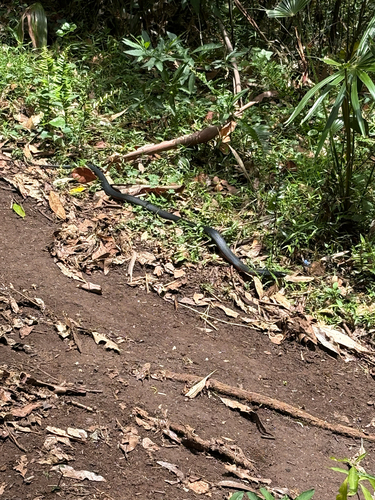 Red-bellied Black SnakePseudechis porphyriacus
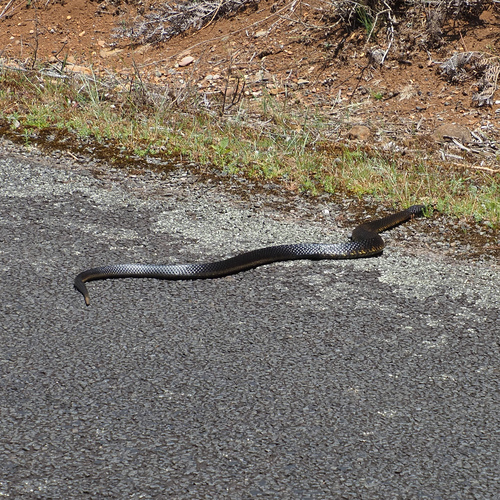 Tiger SnakeNotechis scutatus
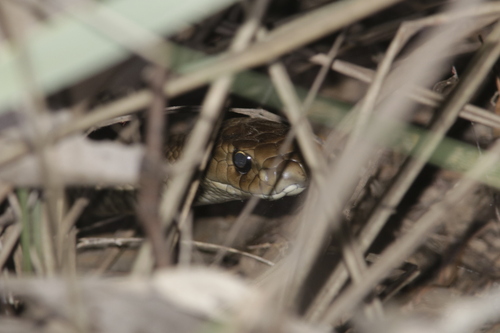 Eastern Brown SnakePseudonaja textilis
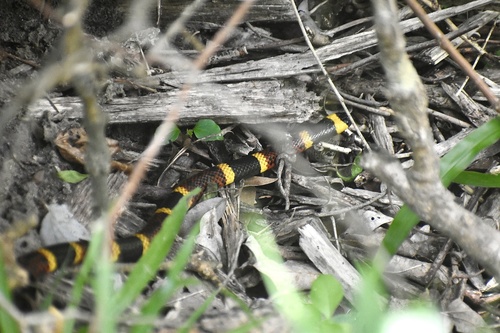 Texas CoralsnakeMicrurus tener
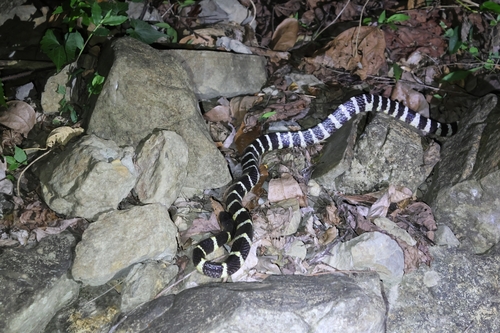 Many-banded KraitBungarus multicinctus
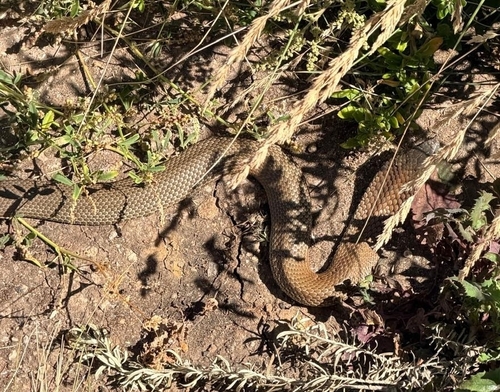 Lowlands CopperheadAustrelaps superbus
Classification
How scientists group this snake, from the broadest category down to the exact species. Each step narrows to its closest relatives.
- OrderThe broad group of scaled reptiles: all snakes and lizards
- Squamata
- FamilyA group of related snakes that share key traits
- Elapidae
- GenusA close-knit group of very similar species
- Hoplocephalus
- SpeciesThis exact snake, named in the two-part scientific name
- Hoplocephalus stephensii
Keep learning
- Are Snakes Dangerous? The Real Risk, in PerspectiveMost snakes are harmless and avoid people. Here is the honest picture of snakebite risk worldwide and how to lower your own.
- Snakebite First Aid: What to Do (and What Never to Do)A clear, CDC-based guide to snakebite first aid: the steps that help, the popular myths that hurt, and how to tell a serious bite from a minor one.
- Venomous vs Nonvenomous: How to Tell the DifferenceThe folk rules for telling venomous snakes apart, where each one fails, and why location-based identification beats guessing by sight.
- What to Do If You Find a SnakeFound a snake at home or on a trail? Here is how to stay calm, give it space, identify it safely, and know when to call a professional.
Distribution from GBIF & iNaturalist. Venom status per CDC. Background: Wikipedia. Informational only. Never handle a snake to identify it.