
Lyresnake
Sonoran Lyre Snake
HarmlessTrimorphodon lambda
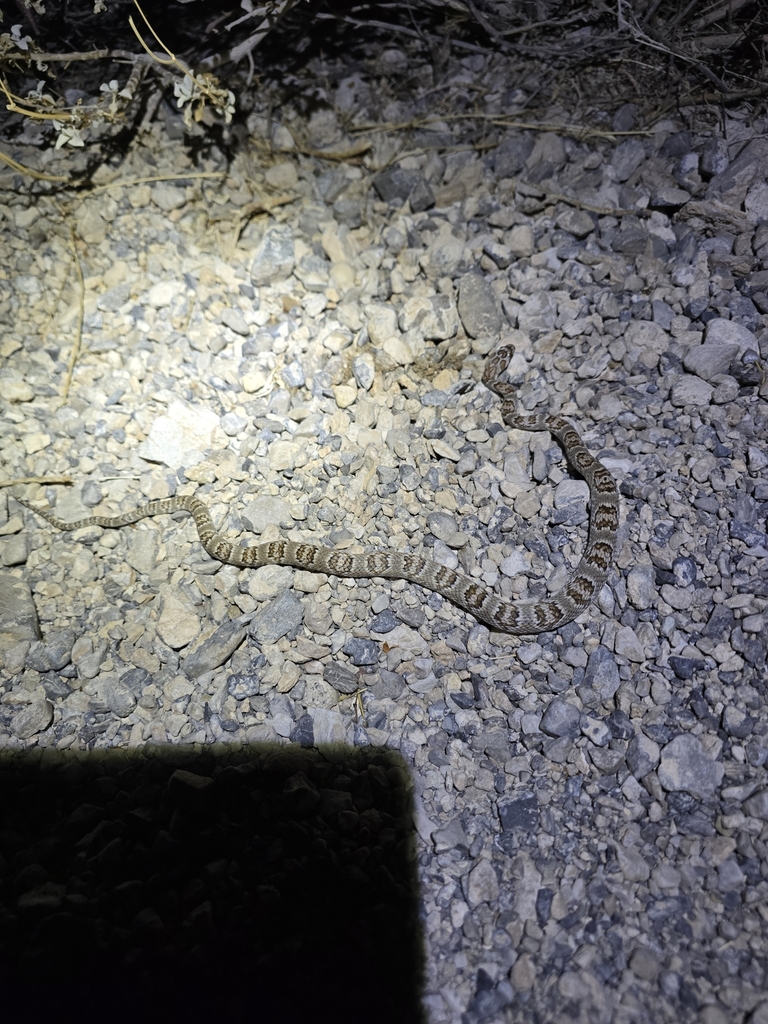
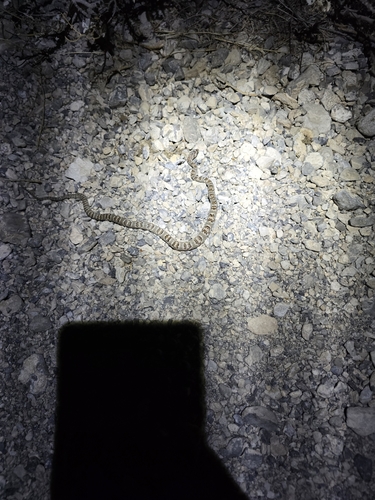
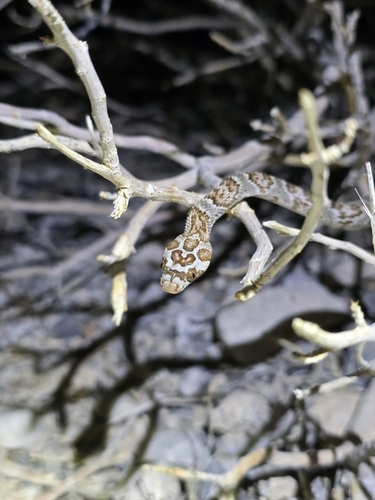
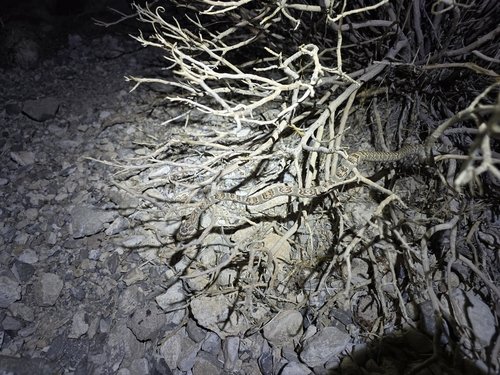
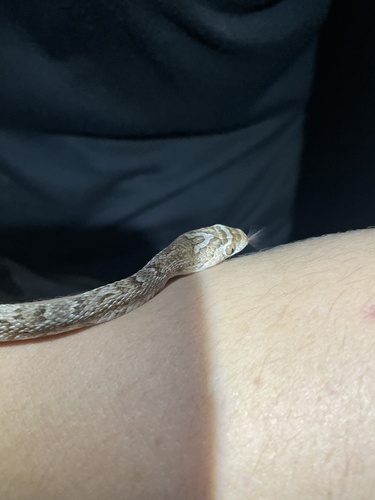
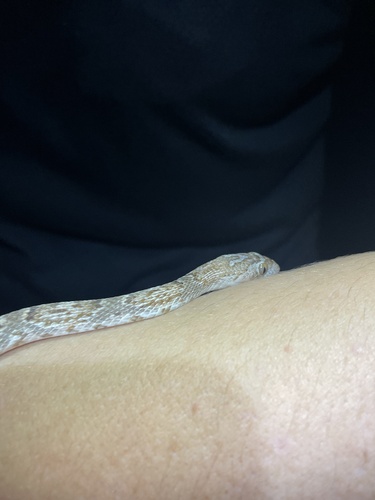
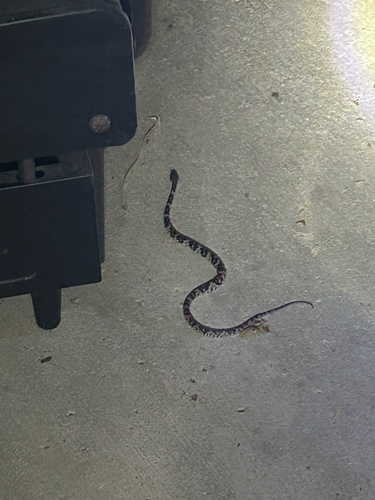
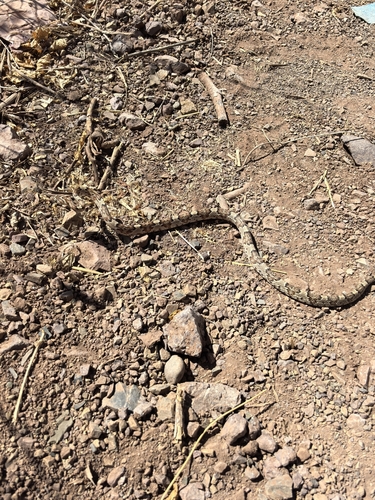
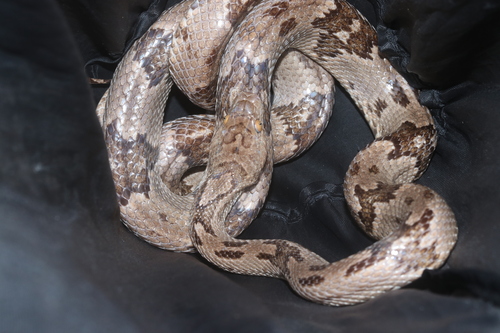
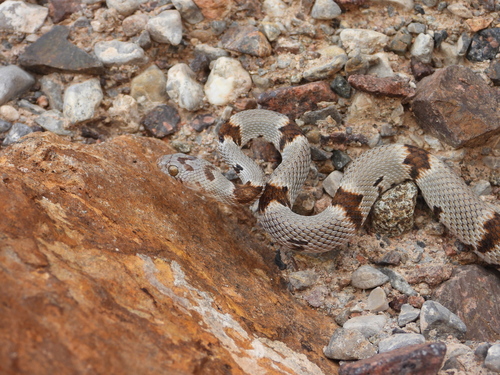
6 photographs of the Sonoran Lyre Snake. © Jon Eilers.
The Sonoran Lyre Snake (Trimorphodon lambda) is a rear-fanged, mildly venomous snake in the Colubridae family, recorded in 2 countries.
- Also called
- Lyresnake
- Family
- Colubridae
- Size
- Slender, 2–3.5 ft.
- Habitat
- Rocky desert slopes and canyons.
- Behavior
- Nocturnal, cat-eyed lizard hunters; rear-fanged but harmless to humans.
- Identify
- Slender with a lyre-shaped mark on the head and vertical pupils.
About the Sonoran Lyre Snake
Trimorphodon lambda, the Sonoran lyre snake, is a species of rear-fanged snake in the family Colubridae. Native to the southwestern United States and northwestern Mexico, the species is best known for the distinctive V-shaped or lyre-like marking on the top of its head. Previously classified as a subspecies of the western lyre snake (Trimorphodon biscutatus), it is now widely recognized as a distinct species.
Taxonomy and etymology
The generic name, Trimorphodon, is derived from Greek and translates to "three-shaped teeth". This refers to the distinct variations of teeth found in the upper jaw: long and recurved front teeth, shorter middle teeth, and elongated, grooved fangs located at the rear of the mouth.
The specific epithet, lambda, refers to the prominent chevron-shaped mark on the snake's head, which resembles the uppercase Greek letter lambda (Λ).
Historically, T. lambda was considered a subspecies of Trimorphodon biscutatus (However, modern multivariate statistical analyses of geographic variation and phylogenetic studies resulted in the elevation of the Sonoran lyre snake to full species status.
Description
The Sonoran lyre snake is a medium to large, slender snake. Snout-to-vent length (SVL) generally ranges from 23 to 88 cm (9 to 34 in), with maximum total lengths occasionally exceeding 1 meter (39 in). It features a broad, flat head that is highly distinct from its comparatively slim neck, and its large eyes possess vertical pupils, characteristic of many nocturnal or crepuscular reptiles.
The snake's ground coloration is typically pale gray, tan, or light brown. Its back is patterned with 18 to 31 dark brown saddles or blotches that feature pale edges and light, divided centers. These dorsal saddles are widest at the midline and taper as they extend down the snake's sides. The tail typically exhibits an additional 8 to 17 blotches. The underside is generally tan, pale yellow, or light gray, with scattered dark flecks near the edges. In addition to the defining "lambda" mark on the crown of the head, individuals usually exhibit a dark bar stretching across the snout between the eyes.
Distribution and habitat
The geographic range of Trimorphodon lambda covers portions of the American Southwest and northwestern Mexico. In the United States, it is found throughout Arizona, southern Nevada, southwestern Utah, southern New Mexico, and in extreme southeastern California along the Colorado River. In Mexico, its range extends into the states of Sonora and northwestern Chihuahua.
Sonoran lyre snakes are heavily associated with rocky environments. They are typically found in rocky canyons, hillsides, and arroyos up to elevations of about 2,250 m (7,380 ft). The species inhabits a variety of biomes, including Mojave Desert scrub, Sonoran and Chihuahuan desert scrub, semidesert grasslands, and pinyon-juniper woodlands.
Adapted from Wikipedia, available under CC BY-SA.
Frequently asked: Sonoran Lyre Snake
- Is the Sonoran Lyre Snake venomous?
- The Sonoran Lyre Snake (Trimorphodon lambda) is rear-fanged and only mildly venomous. It is not considered dangerous to humans (its venom is weak and its fangs sit at the back of the mouth) but a bite can cause local swelling or irritation, so it should not be handled.
- Is the Sonoran Lyre Snake poisonous?
- Snakes are venomous, not poisonous. "Poisonous" means harmful to eat or touch; "venomous" means injecting toxins through a bite. The Sonoran Lyre Snake is neither poisonous nor venomous.
- Is the Sonoran Lyre Snake dangerous?
- The Sonoran Lyre Snake is not dangerous to humans. It has no medically significant venom and bites only defensively if cornered or handled.
- Where does the Sonoran Lyre Snake live?
- The Sonoran Lyre Snake has verified records in 2 countries, including United States of America, Mexico. See the distribution section below for its full range.
- How do I identify the Sonoran Lyre Snake?
- Slender with a lyre-shaped mark on the head and vertical pupils.
- How big does the Sonoran Lyre Snake get?
- Slender, 2–3.5 ft.
- What does the Sonoran Lyre Snake eat?
- Trimorphodon lambda is primarily nocturnal. The bulk of its diet consists of lizards, which it actively hunts among rocks and crevices. However, as an opportunistic predator, it will also consume small mammals (including mice and bats), nestling birds, and occasionally other small snakes.
- Why is it called the Sonoran Lyre Snake?
- The generic name, Trimorphodon, is derived from Greek and translates to "three-shaped teeth". This refers to the distinct variations of teeth found in the upper jaw: long and recurved front teeth, shorter middle teeth, and elongated, grooved fangs located at the rear of the mouth. The specific epithet, lambda, refers to the prominent chevron-shaped mark on the snake's head, which resembles the uppercase Greek letter lambda (Λ). Historically, T.
Where it is found
By U.S. state
More Colubridae snakes
 Mexican Lyre SnakeTrimorphodon tau
 California LyresnakeTrimorphodon lyrophanes
 Central American LyresnakeTrimorphodon quadruplex
 Sinaloan LyresnakeTrimorphodon paucimaculatus
 Western Lyre SnakeTrimorphodon biscutatus
 Texas Lyre SnakeTrimorphodon vilkinsonii
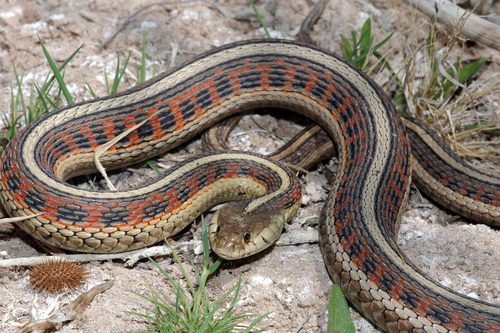 Common Garter SnakeThamnophis sirtalis
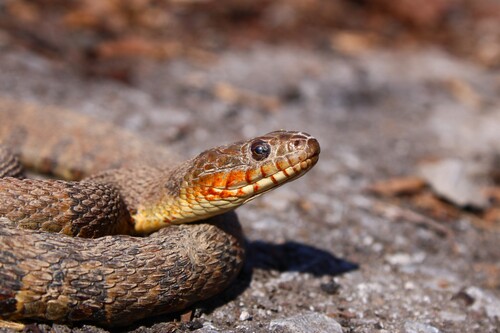 Common WatersnakeNerodia sipedon
Classification
How scientists group this snake, from the broadest category down to the exact species. Each step narrows to its closest relatives.
- OrderThe broad group of scaled reptiles: all snakes and lizards
- Squamata
- FamilyA group of related snakes that share key traits
- Colubridae
- GenusA close-knit group of very similar species
- Trimorphodon
- SpeciesThis exact snake, named in the two-part scientific name
- Trimorphodon lambda
Keep learning
- What to Do If You Find a SnakeFound a snake at home or on a trail? Here is how to stay calm, give it space, identify it safely, and know when to call a professional.
- Venomous vs Nonvenomous: How to Tell the DifferenceThe folk rules for telling venomous snakes apart, where each one fails, and why location-based identification beats guessing by sight.
- What Is a Snake? Anatomy and the BasicsA clear overview of what makes a snake a snake: limbless body plan, anatomy, evolution from lizards, species diversity, and why they are ectothermic.
- How to Keep Snakes Out of Your Yard and HomeA practical guide to keeping snakes out of your yard and home using habitat changes that work, plus what to skip and what to do if one shows up.
Distribution from GBIF & iNaturalist. Venom status per CDC. Background: Wikipedia. Informational only. Never handle a snake to identify it.