
Lyresnake
Mexican Lyre Snake
HarmlessTrimorphodon tau
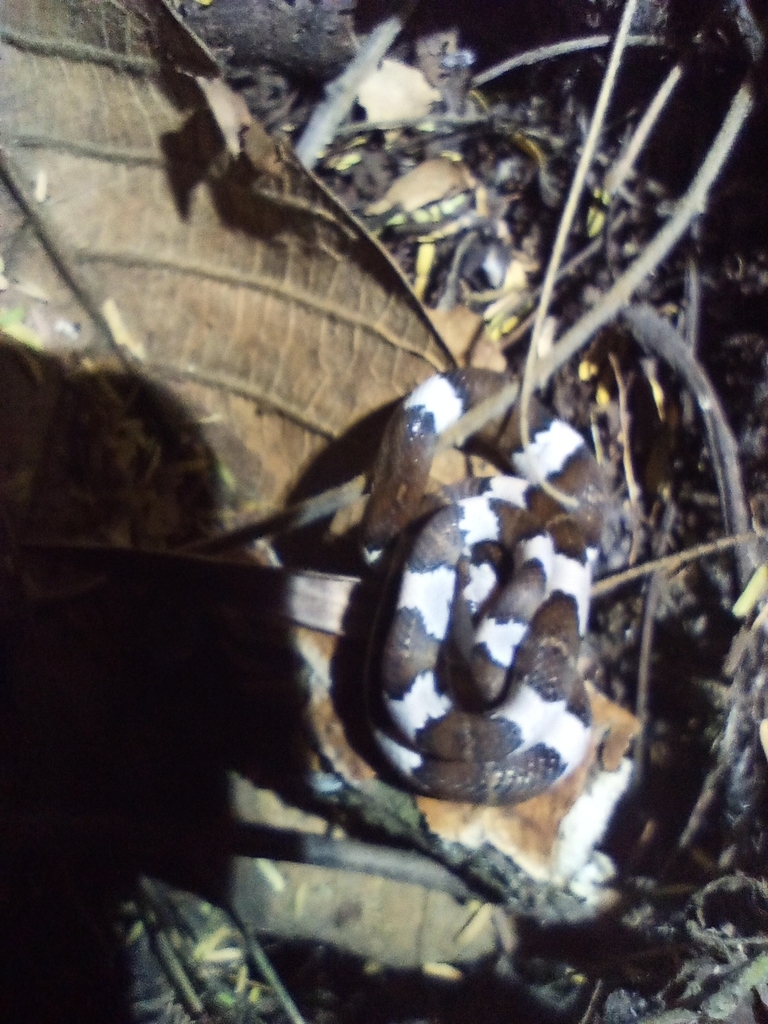
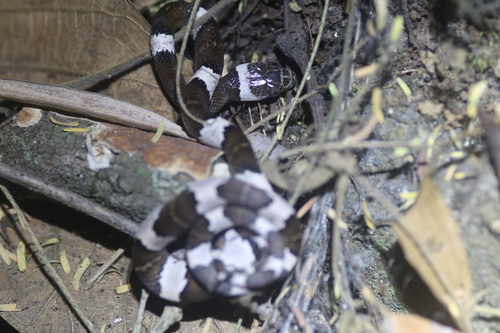
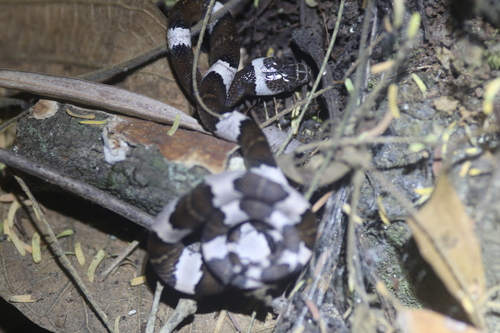
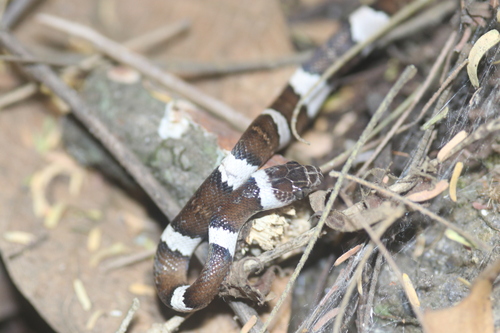
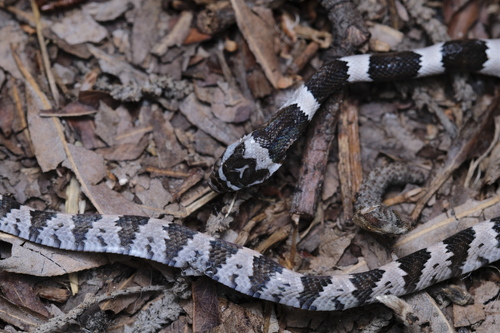
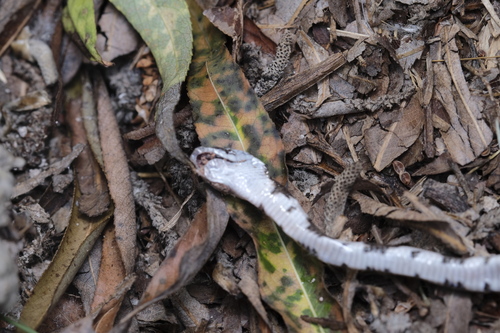
6 photographs of the Mexican Lyre Snake. © Juan Cruzado Cortés.
The Mexican Lyre Snake (Trimorphodon tau) is a rear-fanged, mildly venomous snake in the Colubridae family, recorded in 2 countries.
- Also called
- Lyresnake
- Family
- Colubridae
- Size
- Slender, 2–3.5 ft.
- Habitat
- Rocky desert slopes and canyons.
- Behavior
- Nocturnal, cat-eyed lizard hunters; rear-fanged but harmless to humans.
- Identify
- Slender with a lyre-shaped mark on the head and vertical pupils.
About the Mexican Lyre Snake
Trimorphodon tau, the Mexican lyre snake, is a species of snake of the family Colubridae. The snake is found in Mexico.
Etymology
The epithet tau comes from the inverted T shape upon the top of its head and was described by Cope in 1870.
Distribution and habitat
T. tau is found on the coastal side of the Sierra Madre Occidental, as well as in the Sierra Madre Occidental, Sierra Madre Del Sur, Mexican Plateau and Mesa de Oaxaca.
The Mexican lyre snake's preferred habitats include semi-arid to seasonally dry habitats. They can be found in vegetation or rocky locations within these environments.
Description
The Mexican lyre snake is a nocturnal, medium size snake with maximum lengths of up to 1m from snout to tail. It has light brown markings with darker brown saddle like markings on its back. This species, like other Lyre snakes, has a diet consisting primarily of lizards.
Subspecies
Trimophodon tau has two subspecies described, T. tau tau and T. tau latifascia. T. t. latifascia is only found in Puebla, Mexico. latifascia can be distinguished from T. t. tau through its dark grey head cap and dark snout along with lacking prefrontal and interocular bars compared to T. t. tau's pale to grey head cap and light snout with their complete interocular bar.
Adapted from Wikipedia, available under CC BY-SA.
Frequently asked: Mexican Lyre Snake
- Is the Mexican Lyre Snake venomous?
- The Mexican Lyre Snake (Trimorphodon tau) is rear-fanged and only mildly venomous. It is not considered dangerous to humans (its venom is weak and its fangs sit at the back of the mouth) but a bite can cause local swelling or irritation, so it should not be handled.
- Is the Mexican Lyre Snake poisonous?
- Snakes are venomous, not poisonous. "Poisonous" means harmful to eat or touch; "venomous" means injecting toxins through a bite. The Mexican Lyre Snake is neither poisonous nor venomous.
- Is the Mexican Lyre Snake dangerous?
- The Mexican Lyre Snake is not dangerous to humans. It has no medically significant venom and bites only defensively if cornered or handled.
- Where does the Mexican Lyre Snake live?
- The Mexican Lyre Snake has verified records in 2 countries, including Mexico, Panama. See the distribution section below for its full range.
- How do I identify the Mexican Lyre Snake?
- Slender with a lyre-shaped mark on the head and vertical pupils.
- How big does the Mexican Lyre Snake get?
- Slender, 2–3.5 ft.
- Why is it called the Mexican Lyre Snake?
- The epithet tau comes from the inverted T shape upon the top of its head and was described by Cope in 1870.
Where it is found
More Colubridae snakes
 Sonoran Lyre SnakeTrimorphodon lambda
 California LyresnakeTrimorphodon lyrophanes
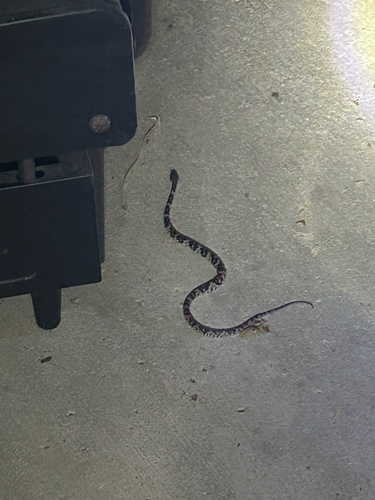 Central American LyresnakeTrimorphodon quadruplex
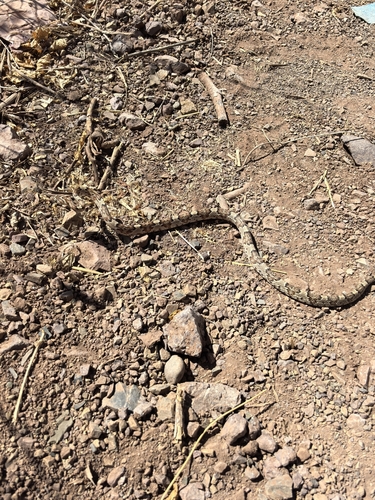 Sinaloan LyresnakeTrimorphodon paucimaculatus
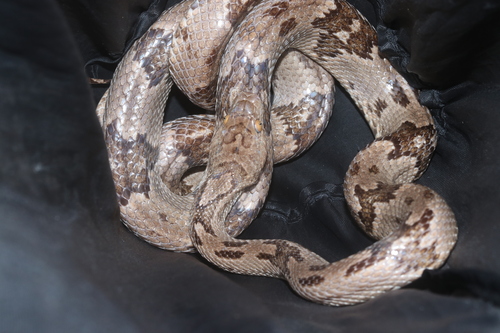 Western Lyre SnakeTrimorphodon biscutatus
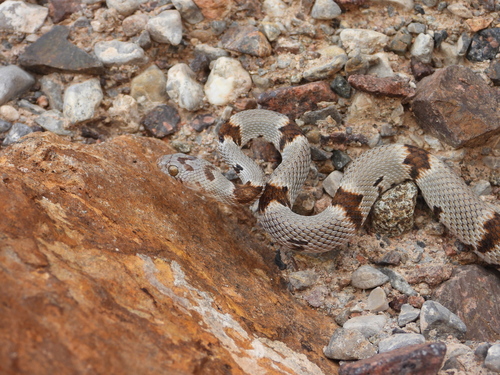 Texas Lyre SnakeTrimorphodon vilkinsonii
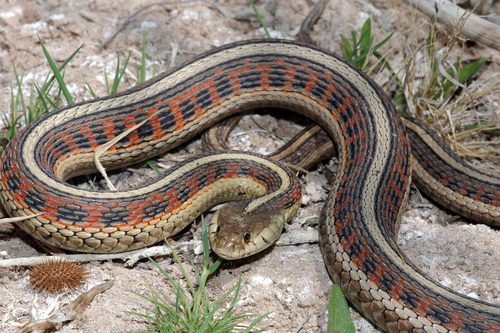 Common Garter SnakeThamnophis sirtalis
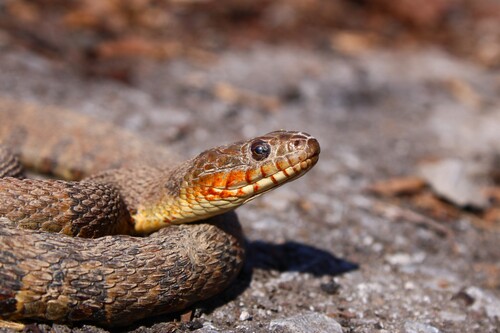 Common WatersnakeNerodia sipedon
Classification
How scientists group this snake, from the broadest category down to the exact species. Each step narrows to its closest relatives.
- OrderThe broad group of scaled reptiles: all snakes and lizards
- Squamata
- FamilyA group of related snakes that share key traits
- Colubridae
- GenusA close-knit group of very similar species
- Trimorphodon
- SpeciesThis exact snake, named in the two-part scientific name
- Trimorphodon tau
Keep learning
- What to Do If You Find a SnakeFound a snake at home or on a trail? Here is how to stay calm, give it space, identify it safely, and know when to call a professional.
- Venomous vs Nonvenomous: How to Tell the DifferenceThe folk rules for telling venomous snakes apart, where each one fails, and why location-based identification beats guessing by sight.
- What Is a Snake? Anatomy and the BasicsA clear overview of what makes a snake a snake: limbless body plan, anatomy, evolution from lizards, species diversity, and why they are ectothermic.
- How to Keep Snakes Out of Your Yard and HomeA practical guide to keeping snakes out of your yard and home using habitat changes that work, plus what to skip and what to do if one shows up.
Distribution from GBIF & iNaturalist. Venom status per CDC. Background: Wikipedia. Informational only. Never handle a snake to identify it.