
Genus · Colubridae
Types of lyre snakes
7 species make up the genus Trimorphodon, the snakes commonly called lyre snakes. None are considered dangerous to humans.
About lyre snakes
Slender, big-eyed, cat-pupiled night snakes of the arid Americas, named for the lyre-shaped mark on the head.
Trimorphodon is a genus of rear-fanged snakes in the family Colubridae, the largest snake family. The common name lyre snake comes from the V-shaped or lyre-shaped marking many species carry on the top of the head, behind the eyes. They are sometimes also called night snakes for their strongly nocturnal habits, though that name is more often applied to the related genus Hypsiglena.
The genus ranges across the warmer, drier parts of the Americas, from the southwestern United States, including Arizona, New Mexico, California, Nevada, and west Texas, south through Mexico and into parts of Central America. Members favor arid and semi-arid terrain: rocky hillsides, canyons, desert scrub, boulder piles, and similar broken ground where crevices give them daytime shelter. Our database lists 7 species, including the Sonoran Lyre Snake, the Mexican Lyre Snake, the California Lyresnake, and the Central American Lyresnake.
In general terms, lyre snakes are slim-bodied with a distinctly broad, somewhat triangular head set off from a narrow neck, large eyes, and vertical cat-like pupils that suit a nocturnal life. Body color is usually gray, tan, or brown overlaid with a pattern of darker saddles or blotches, and the head often bears the namesake lyre mark. The vertical pupil and that head shape are the easiest field cues, though they can prompt people to mistake a harmless-to-humans snake for a viper.
Lyre snakes are mildly venomous and rear-fanged: they have grooved teeth toward the back of the upper jaw and a mild venom used to subdue small prey, delivered by chewing rather than a fast frontal strike. They are not considered dangerous to people, and bites are rare and typically cause only minor local effects, but rear-fanged does not mean harmless. Do not handle wild snakes. If a bite occurs and any reaction develops, do not attempt to treat it yourself; contact US Poison Control at 1-800-222-1222 or local emergency services.
Ecologically, these are nocturnal predators that hunt among rocks and crevices, where they prey heavily on lizards along with small rodents, bats, and occasionally other small vertebrates. The mild venom helps immobilize active prey such as lizards. Like most colubrids in this part of the world, lyre snakes are egg-laying, producing small clutches. They are secretive and non-aggressive, relying on hiding and a nocturnal schedule rather than confrontation to avoid predators.
Trimorphodon belongs to the Colubridae family (Colubrids). The largest snake family, and the one most snakes you meet belong to. Typically round pupils, a head only slightly wider than the neck, and no heat-sensing facial pit or rattle. Scales may be smooth and glossy or keeled and matte depending on the species.
Danger: Almost all colubrids are harmless. A small number are rear-fanged with medically significant venom, the boomslang and the twig (vine) snakes of Africa being the dangerous exceptions. Most colubrids will flee or bluff rather than bite.
All species (7)
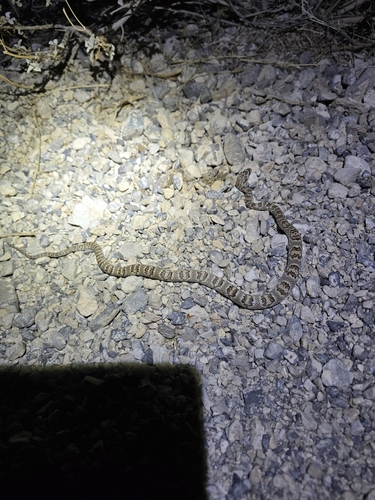 Sonoran Lyre SnakeTrimorphodon lambdaHarmless
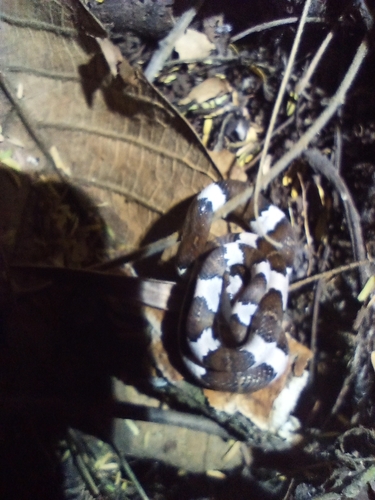 Mexican Lyre SnakeTrimorphodon tauHarmless
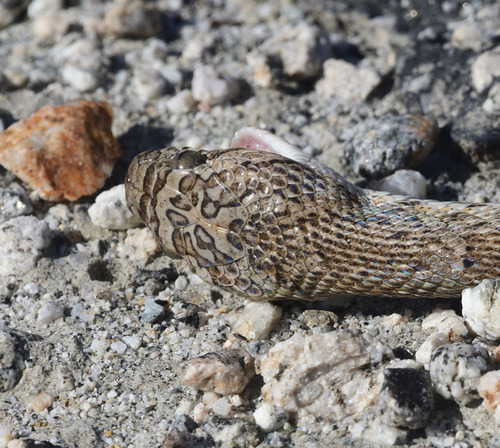 California LyresnakeTrimorphodon lyrophanesHarmless
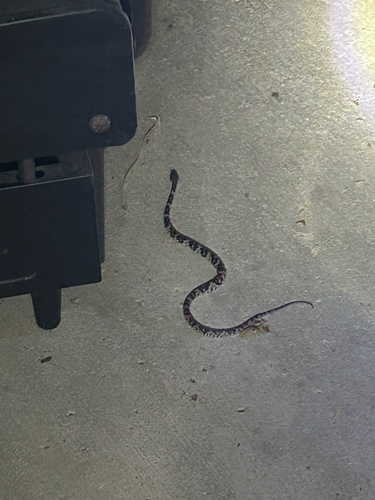 Central American LyresnakeTrimorphodon quadruplexHarmless
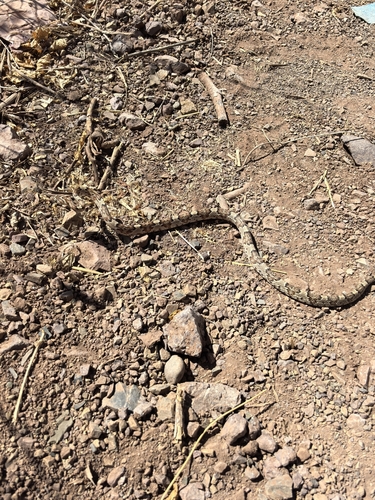 Sinaloan LyresnakeTrimorphodon paucimaculatusHarmless
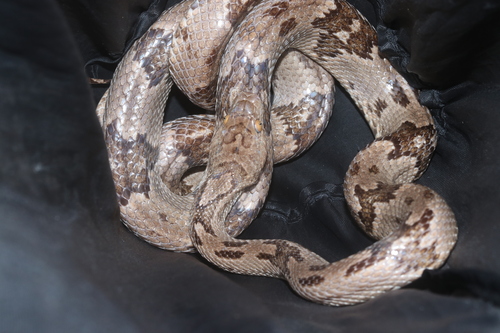 Western Lyre SnakeTrimorphodon biscutatusHarmless
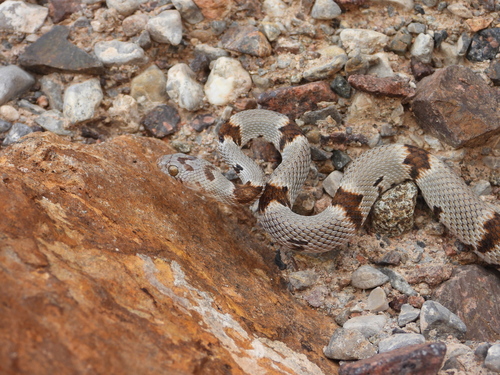 Texas Lyre SnakeTrimorphodon vilkinsoniiHarmless
Keep learning
- What Is a Snake? Anatomy and the BasicsA clear overview of what makes a snake a snake: limbless body plan, anatomy, evolution from lizards, species diversity, and why they are ectothermic.
- How Snakes Move, Hunt, and EatHow snakes move without legs, hunt as ambushers or active foragers, kill by constriction or venom, and swallow prey wider than their head.
- What Do Snakes Eat?All snakes are carnivores. Learn what snakes eat, how diet changes with size and age, how often they feed, and how they hunt and swallow prey.
- Venomous vs Nonvenomous: How to Tell the DifferenceThe folk rules for telling venomous snakes apart, where each one fails, and why location-based identification beats guessing by sight.