
Elapidae
Samar Cobra
VenomousNaja samarensis
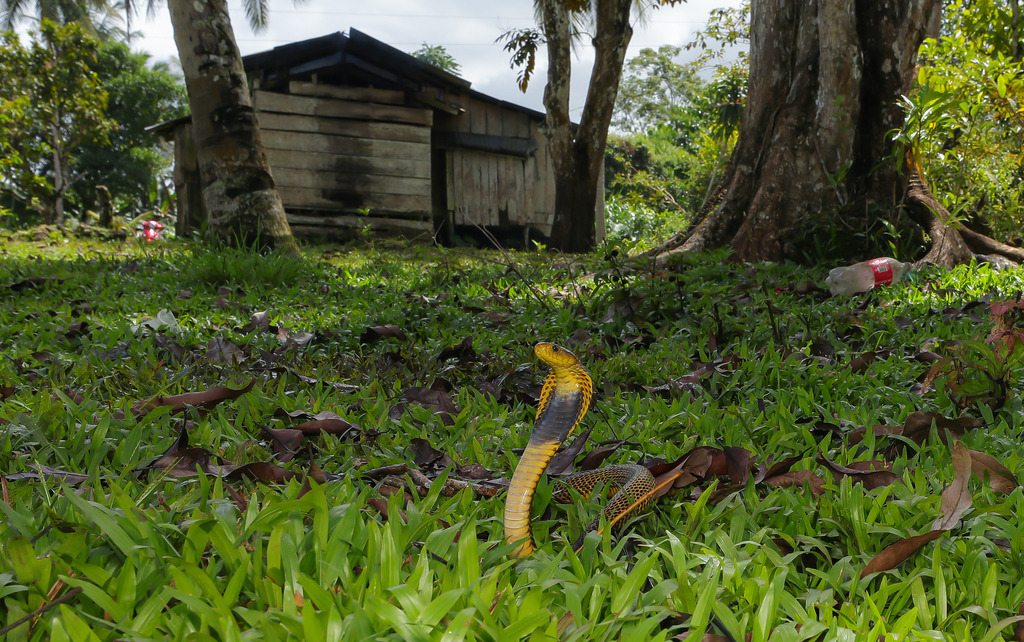
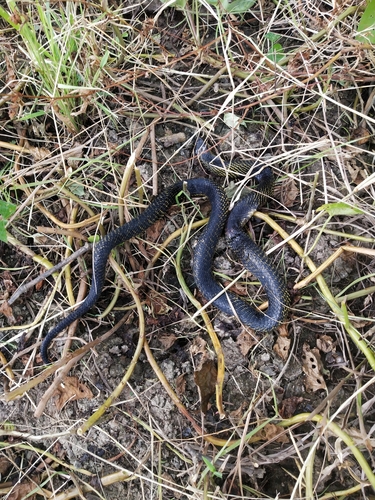
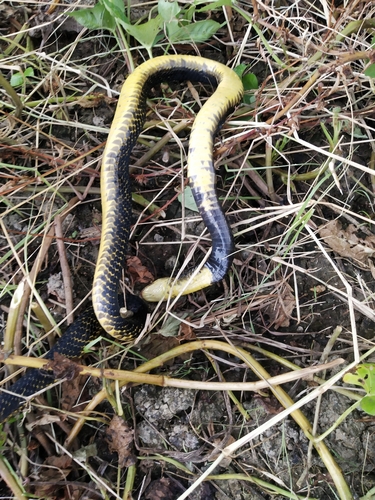
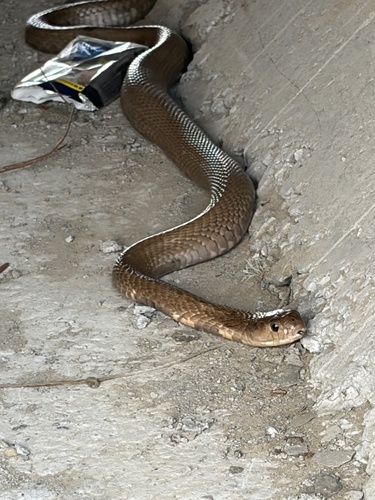
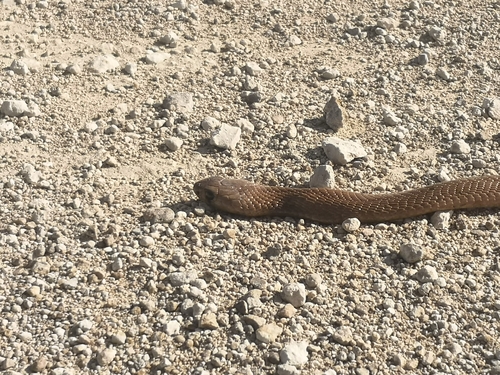
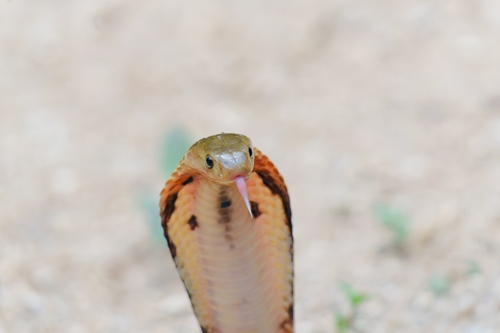
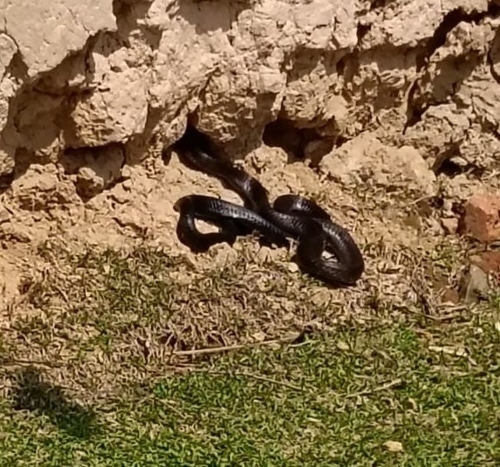
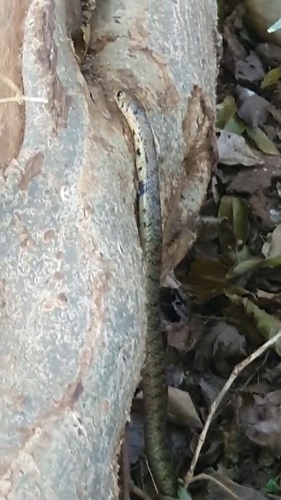
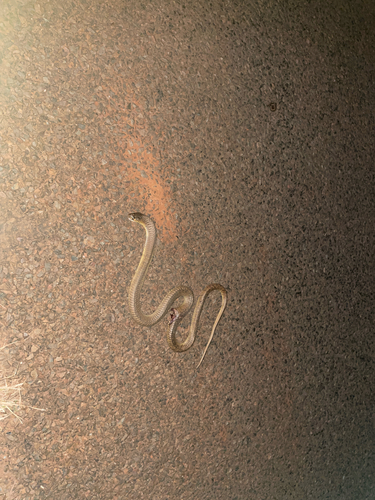
3 photographs of the Samar Cobra. © Ioannis Magouras.
The Samar Cobra (Naja samarensis) is a venomous snake in the Elapidae family, recorded in 1 country.
If you are bitten
This is a venomous snake. Treat any bite as a medical emergency: stay calm, keep the bitten limb still and roughly level with the heart, remove rings and tight clothing, and get to emergency care immediately. Do not apply a tourniquet, cut the wound, apply ice, or try to suck out venom. Call your local emergency number or poison center.
- Family
- Elapidae
- Danger
- high
About the Samar Cobra
The Samar cobra (Naja samarensis) also called Peters' cobra, southern Philippine cobra or Visayan cobra, is a highly venomous species of spitting cobra native to the Visayas and Mindanao island groups of the Philippines.
Description
The Samar cobra is a species of spitting cobra that can grow up to 1.4 meters (4.6 ft) in length. Their coloring varies from a black and yellow to green.
Scalation
There are 17–25 scale rows around the hood, 17–19 ahead of mid-body; 161–184 ventrals, 41–52 subcaudals, basal pairs sometimes undivided.
Reproduction
The Samar cobra, or southeastern Philippines cobra, is oviparous, laying clutches of up to eight eggs.
Distribution and habitat
The Samar cobra is endemic to the southern Philippines, specifically to the Visayas and Mindanao island groups.
Habitat can vary widely from mountainous jungle to tropical plains. They can live close to human settlements.
The Samar cobra typically lives at an elevation of 0–1,000 metres (0–3,300 ft) above sea level.
Behavior and diet
Like the Philippine cobra (Naja philippinensis), the Samar cobra feeds mostly on small rodents such as rats and mice. They will also prey upon frogs and smaller reptiles. Since their main food source is attracted to rice paddies and human settlements, this species often comes into conflict with people.
Venom
A proteomic study revealed a unique venom phenotype of the Samar cobra, which represents the easternmost dispersal of Naja cobra species. Like other Naja spp., Three-finger toxins (3FTx) dominate the venom proteome. 3FTx constituted 90% of the total venom proteins, recording by far the highest 3FTx abundance in snake venom. Other proteins in the venom comprised snake venom metalloproteinases (SVMP, 4.17%) and phospholipases A2 (PLA2 3.76%). The rest of minor toxins collectively accounted for <2% of total venom proteins; these were toxin families of cysteine-rich secretory protein (CRiSP, 1.06%), L-amino acid oxidase (LAAO, 0.26%), venom nerve growth factor (vNGF, 0.13%) and vespryn (VES, 0.13%). The crude venom of N. samarensis has LD50 of 0.2mg/kg via intravenous injection (IV). They are noted for their nervous behavior, and are quick to strike as well as to spray venom, which they generally aim towards the face and eyes. However, the cobra is more reluctant to spit venom than its northern relative, the Northern Philippines cobra. If venom gets in the eyes, it causes extreme pain and mechanical damage to the eyeball. If not properly flushed out, it can result in permanent blindness due to its tissue destroying properties.
Adapted from Wikipedia, available under CC BY-SA.
Local and regional names
The Samar Cobra is known by these names across the regions where it lives:
- Arabic
- الناشر الساماري
- Chinese
- 薩馬眼鏡蛇
- Czech
- kobra Petersova
- Danish
- Sydøstfilippinsk Spyttekobra
- Dutch
- Samar-brilslang
- English
- Peters' Cobra, Southeastern Philippine Cobra, Southern Philippine Cobra
- German
- Samar-Kobra, Visayas Kobra
- Italian
- Cobra di Peters
Frequently asked: Samar Cobra
- Is the Samar Cobra venomous?
- Yes. The Samar Cobra (Naja samarensis) is venomous and belongs to the Elapidae family (cobra, mamba, coral or sea snake). Its bite is considered high risk to people. Treat any bite as a medical emergency.
- Is the Samar Cobra poisonous?
- Snakes are venomous, not poisonous. "Poisonous" means harmful to eat or touch; "venomous" means injecting toxins through a bite. The Samar Cobra is venomous, delivering venom through a bite.
- Is the Samar Cobra dangerous?
- This is a venomous snake. Treat any bite as a medical emergency: stay calm, keep the bitten limb still and roughly level with the heart, remove rings and tight clothing, and get to emergency care immediately. Do not apply a tourniquet, cut the wound, apply ice, or try to suck out venom. Call your local emergency number or poison center.
- Where does the Samar Cobra live?
- The Samar Cobra has verified records in 1 country, including Philippines. See the distribution section below for its full range.
- What does the Samar Cobra eat?
- Like the Philippine cobra (Naja philippinensis), the Samar cobra feeds mostly on small rodents such as rats and mice. They will also prey upon frogs and smaller reptiles. Since their main food source is attracted to rice paddies and human settlements, this species often comes into conflict with people.
If you are bitten by the Samar Cobra
Do
- Get away from the snake and stay calm. Most bites worsen when people panic or try again to handle the snake.
- Call 911 or Poison Control (1-800-222-1222) right away. Antivenom works best when given early.
- Note the time of the bite and, from a safe distance, the snake's color and pattern, a phone photo is enough. Do not chase it.
- Keep the bitten limb still and at roughly heart level. Sit or lie down and limit movement.
- Remove rings, watches, and tight clothing near the bite before swelling starts.
- Gently wash the bite with soap and water and cover it with a clean, dry dressing.
Do not
- Do not cut the wound or try to suck out the venom.
- Do not apply a tourniquet or ice.
- Do not drink alcohol or caffeine.
- Do not take aspirin or ibuprofen, they can worsen bleeding. Acetaminophen is safer for pain.
- Do not try to catch or kill the snake. A dead snake can still bite by reflex.
First-aid guidance adapted from the U.S. Centers for Disease Control and Prevention (CDC NIOSH), Venomous Snakes. Educational only; always follow the instructions of emergency responders.
Where it is found
More Elapidae snakes
Classification
How scientists group this snake, from the broadest category down to the exact species. Each step narrows to its closest relatives.
Keep learning
- Are Snakes Dangerous? The Real Risk, in PerspectiveMost snakes are harmless and avoid people. Here is the honest picture of snakebite risk worldwide and how to lower your own.
- Snakebite First Aid: What to Do (and What Never to Do)A clear, CDC-based guide to snakebite first aid: the steps that help, the popular myths that hurt, and how to tell a serious bite from a minor one.
- Venomous vs Nonvenomous: How to Tell the DifferenceThe folk rules for telling venomous snakes apart, where each one fails, and why location-based identification beats guessing by sight.
- What to Do If You Find a SnakeFound a snake at home or on a trail? Here is how to stay calm, give it space, identify it safely, and know when to call a professional.
Distribution from GBIF & iNaturalist. Venom status per CDC. Background: Wikipedia. Informational only. Never handle a snake to identify it.