
Elapidae
Red-naped Snake
VenomousFurina diadema
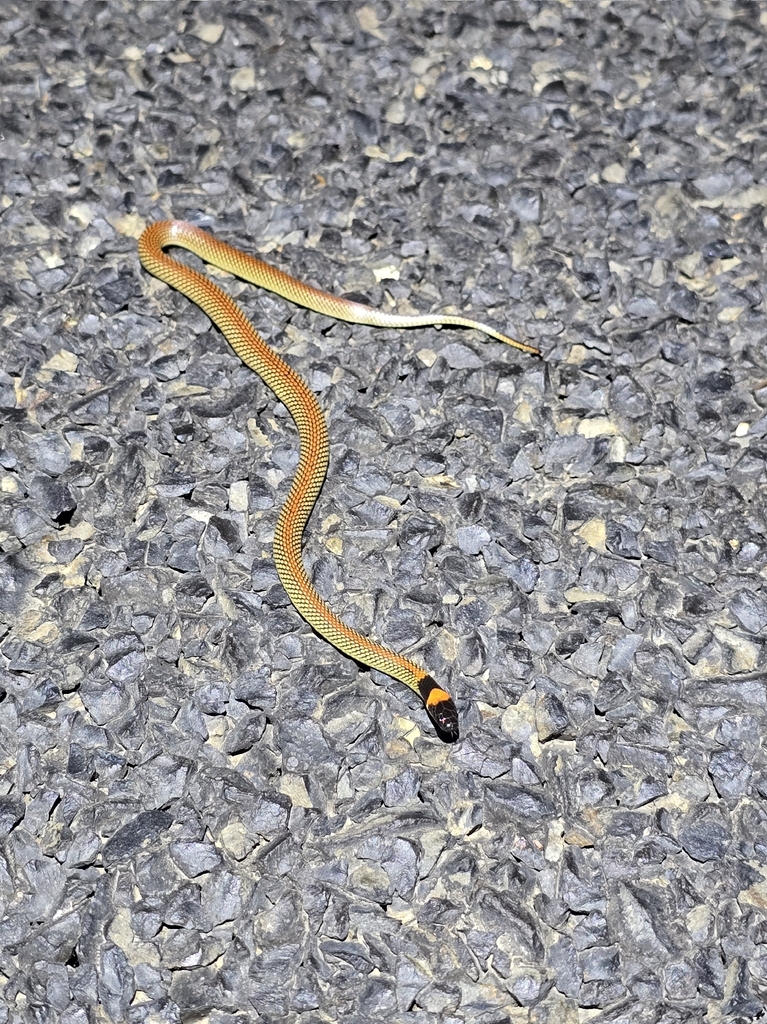
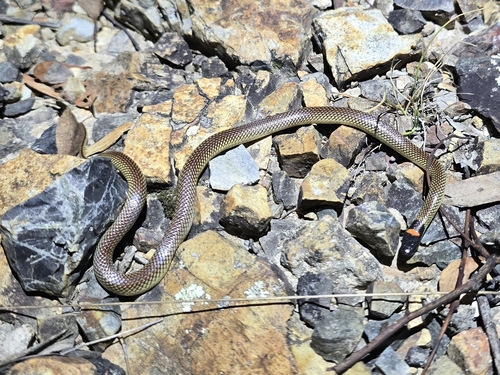
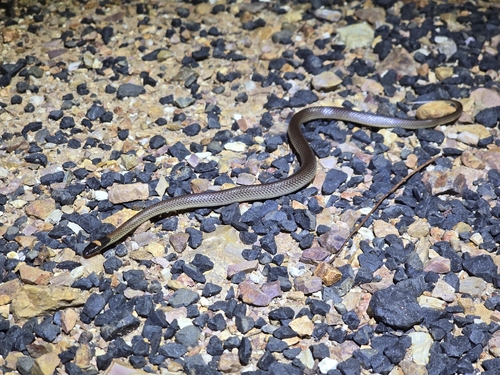
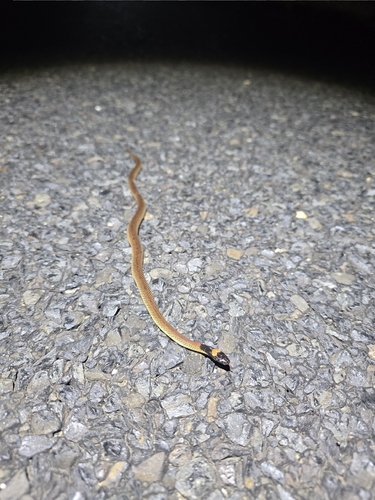
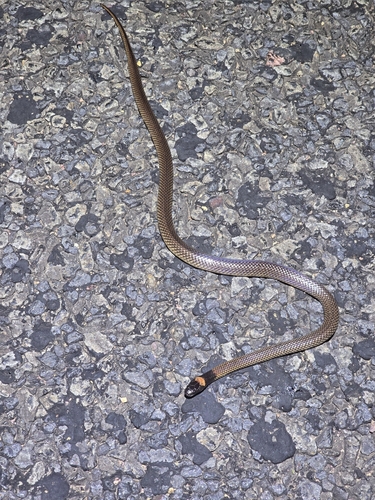
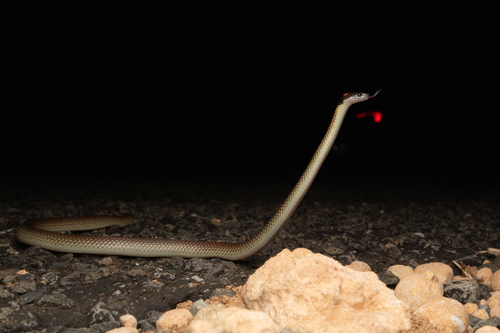
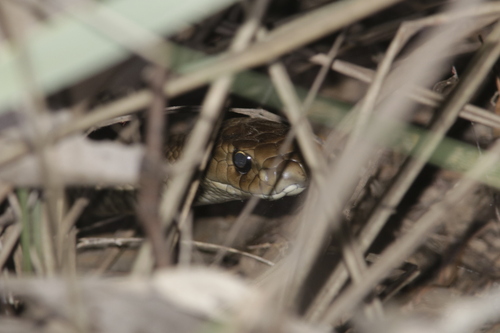
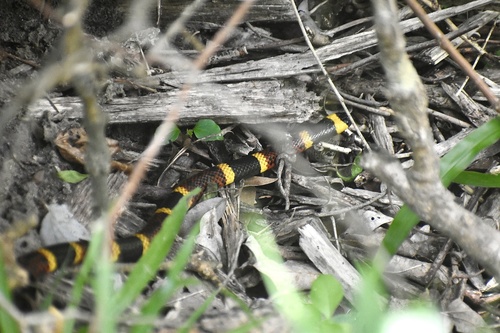
6 photographs of the Red-naped Snake. © Max Tibby.
The Red-naped Snake (Furina diadema) is a venomous snake in the Elapidae family, recorded in 2 countries.
If you are bitten
This is a venomous snake. Treat any bite as a medical emergency: stay calm, keep the bitten limb still and roughly level with the heart, remove rings and tight clothing, and get to emergency care immediately. Do not apply a tourniquet, cut the wound, apply ice, or try to suck out venom. Call your local emergency number or poison center.
- Family
- Elapidae
- Danger
- high
About the Red-naped Snake
The red-naped snake (Furina diadema) is a small venomous reptile from the family Elapidae. The snakes are found in four Australian states and are listed as 'threatened' in Victoria'.
They are nocturnal and feed on small skinks. The young eastern brown snake is similar in appearance.
Description
The red-naped snake has small black eyes, a shiny black head, and neck. Its head appears to be partially flattened. On the upper lip is a streak of white. On the back of the neck there is a well defined patch of orange or red in the shape of a diamond, crescent or oval. The belly can be either a cream colour or white. The remainder of the body is a red-brown colour. The edges of these dorsal scales are either black or dark brown and this makes the scales look like a net.
Furina diadema have a slim body and are considered a small snake. They have been reported to reach a maximum length of 45 cm. Other sources have reported them as reaching a maximum total length of 40 cm. The males are the smaller sex.
Theses snakes have between 160 and 210 ventral scales, a divided anal scale, between 35 and 70 subcaudal scales and generally 15 rows of mid-body scales.
Venom
Although red-naped snakes are venomous, they are considered harmless to humans. If threatened they will strike out several times with their forebody held in the air, most often with a closed mouth. They can bite and will do so if they are provoked enough.
Habitat
The red-naped snake is a terrestrial species that is found in many parts of eastern Australia: in dry woodlands and forests, coastal forests and heaths, tussock grasslands and shrublands. It generally stays away from wet areas, like rainforests. They shelter under rocks and fallen timber, in ant or termite nests, under wood piles, leaves, old sheets of iron, in crevices and abandoned burrows.
Geographic range
The red-naped snake is in four Australian states of Australia; Victoria, NSW, Queensland, South Australia and also the Northern Territory. It is found in arid to humid parts, from Port Augusta in South Australia to Cairns in northern Queensland. Some areas in which they have been sighted include the Coongie Lakes Ramsar Site in South Australia; Woomargama National Park and Mullengandra in NSW Murray Catchment; in the Lower Murray darling basin, NSW; around Alice Springs in the Northern Territory; the Museum of Victoria notes this species is in the far north-west of the state, in riverine areas; 18 National Parks in Queensland.
Diet
Furina diadema prey upon little skinks.
Reproduction
The red-naped snake is oviparous, Records for clutch sizes vary: 2–5, 1–10, 3–6, 1–5, 8 and an average of 3. In subtropical regions red-naped snakes have more than one clutch in a year. They hatch out of their eggs in January, unless in a cooler region, where they hatch in February. The recorded lengths for snakes when they are first born vary, 12 cm (4.7 in) and 15 cm (5.9 in). They become adults within a year.
Behaviour
Adapted from Wikipedia, available under CC BY-SA.
Local and regional names
The Red-naped Snake is known by these names across the regions where it lives:
- Danish
- Rødnakket Giftsnog
- German
- Rothalsotter
- Italian
- Serpente dalla nuca rossa, Serpente nuca rossa
- Russian
- Диадемовая фурина
Frequently asked: Red-naped Snake
- Is the Red-naped Snake venomous?
- Yes. The Red-naped Snake (Furina diadema) is venomous and belongs to the Elapidae family (cobra, mamba, coral or sea snake). Its bite is considered high risk to people. Treat any bite as a medical emergency.
- Is the Red-naped Snake poisonous?
- Snakes are venomous, not poisonous. "Poisonous" means harmful to eat or touch; "venomous" means injecting toxins through a bite. The Red-naped Snake is venomous, delivering venom through a bite.
- Is the Red-naped Snake dangerous?
- This is a venomous snake. Treat any bite as a medical emergency: stay calm, keep the bitten limb still and roughly level with the heart, remove rings and tight clothing, and get to emergency care immediately. Do not apply a tourniquet, cut the wound, apply ice, or try to suck out venom. Call your local emergency number or poison center.
- Where does the Red-naped Snake live?
- The Red-naped Snake has verified records in 2 countries, including Australia, Fiji. See the distribution section below for its full range.
- What does the Red-naped Snake eat?
- Furina diadema prey upon little skinks.
If you are bitten by the Red-naped Snake
Do
- Get away from the snake and stay calm. Most bites worsen when people panic or try again to handle the snake.
- Call 911 or Poison Control (1-800-222-1222) right away. Antivenom works best when given early.
- Note the time of the bite and, from a safe distance, the snake's color and pattern, a phone photo is enough. Do not chase it.
- Keep the bitten limb still and at roughly heart level. Sit or lie down and limit movement.
- Remove rings, watches, and tight clothing near the bite before swelling starts.
- Gently wash the bite with soap and water and cover it with a clean, dry dressing.
Do not
- Do not cut the wound or try to suck out the venom.
- Do not apply a tourniquet or ice.
- Do not drink alcohol or caffeine.
- Do not take aspirin or ibuprofen, they can worsen bleeding. Acetaminophen is safer for pain.
- Do not try to catch or kill the snake. A dead snake can still bite by reflex.
First-aid guidance adapted from the U.S. Centers for Disease Control and Prevention (CDC NIOSH), Venomous Snakes. Educational only; always follow the instructions of emergency responders.
Where it is found
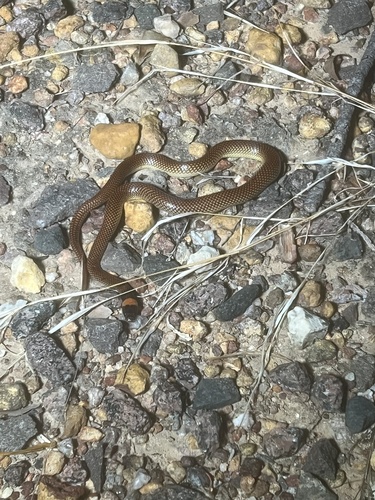
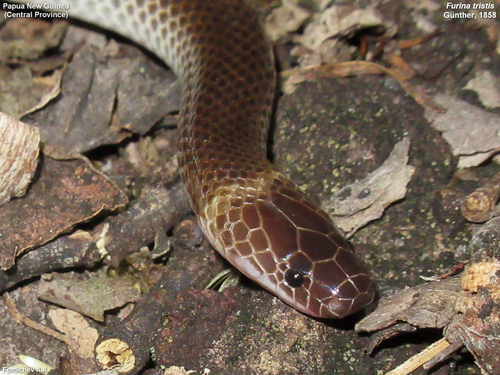
More Elapidae snakes
Classification
How scientists group this snake, from the broadest category down to the exact species. Each step narrows to its closest relatives.
Keep learning
- Are Snakes Dangerous? The Real Risk, in PerspectiveMost snakes are harmless and avoid people. Here is the honest picture of snakebite risk worldwide and how to lower your own.
- Snakebite First Aid: What to Do (and What Never to Do)A clear, CDC-based guide to snakebite first aid: the steps that help, the popular myths that hurt, and how to tell a serious bite from a minor one.
- Venomous vs Nonvenomous: How to Tell the DifferenceThe folk rules for telling venomous snakes apart, where each one fails, and why location-based identification beats guessing by sight.
- What to Do If You Find a SnakeFound a snake at home or on a trail? Here is how to stay calm, give it space, identify it safely, and know when to call a professional.
Distribution from GBIF & iNaturalist. Venom status per CDC. Background: Wikipedia. Informational only. Never handle a snake to identify it.