
Genus · Elapidae
Furina
5 species make up the genus Furina. All of them are venomous.
About naped snakes
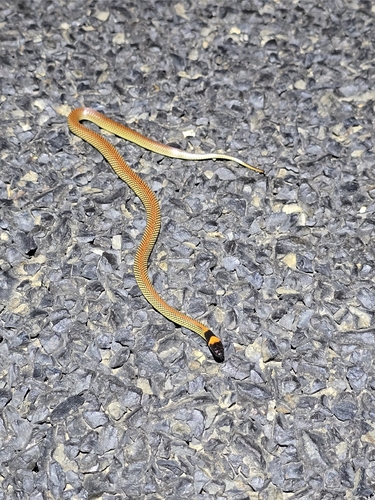
Naped snakes are small, secretive Australian elapids best known for the bright band or collar across the back of the neck that gives the group its name.
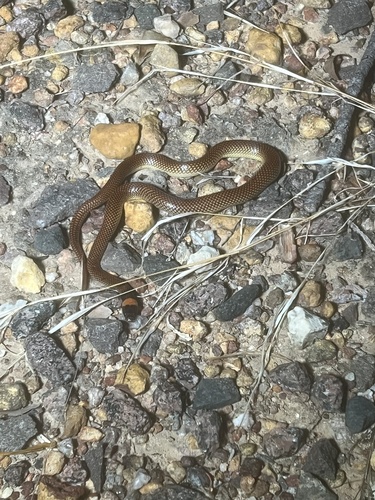
Furina belongs to the family Elapidae, the front-fanged lineage that also includes cobras, mambas, taipans and the Australian brown snakes. Within that family Furina sits among the small, slender terrestrial elapids native to Australia. Our database lists 5 species, including the Red-naped Snake, Orange-naped Snake, Brown-headed Snake and Yellow-naped Snake. The common names point straight at the most useful field mark: a darker head followed by a contrasting pale or brightly colored patch or collar across the nape, the area just behind the head.
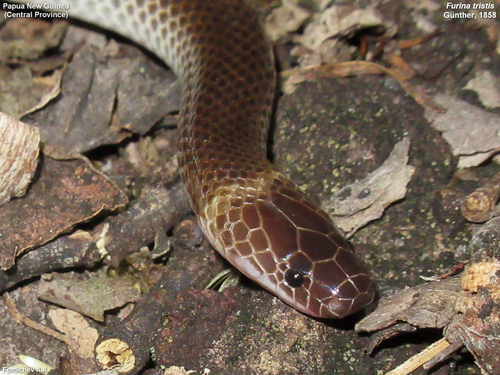
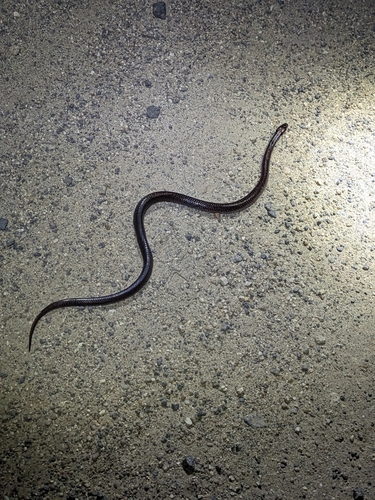
These are small snakes with smooth scales and a slim build, a body plan typical of the burrowing and ground-dwelling elapids rather than the large active hunters in the same family. The genus is found across much of Australia, where different species occupy a range of dry and seasonally dry environments including woodland, scrub, grassland and arid country. They tend to shelter by day under rocks, logs, leaf litter and soil cracks, and become active at night, so people encounter them far less often than their actual numbers would suggest.
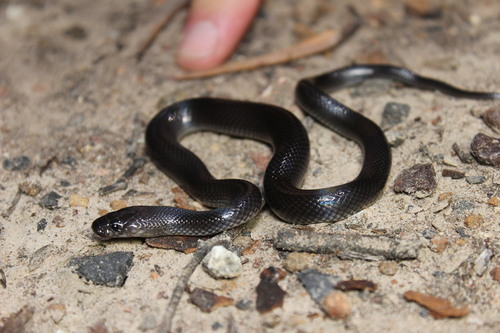
To recognize a member of Furina in general terms, look for a small, smooth-scaled snake with a head that is darker than the body and a distinct paler or colored band across the neck. Exact coloration varies by species, from reddish to orange to yellow tones over a browner body. Because several small Australian snakes look broadly similar, a confident identification of any individual usually depends on locality and close examination of scale details rather than color alone.
Like all elapids, Furina species are venomous and front-fanged. In practice they are regarded as harmless to people: they are small, their fangs and venom yield are tiny, and they are reluctant to bite. Their diet reflects this scale, made up largely of small reptiles, especially lizards and the eggs of reptiles, which their mild venom is suited to subdue. Several species in the genus lay eggs rather than giving birth to live young, and they are generally inoffensive, nocturnal animals that rely on hiding rather than confrontation.
Even though bites from this genus are not considered medically significant, the safe rule with any wild snake is the same. Do not handle it. Small size and a calm reputation are not a reason to pick one up, and field identification can be wrong, so a snake assumed harmless could be something else. Observe from a distance and let it move on. If a bite does occur and there is any doubt about the species or any concerning symptoms, do not improvise first aid in the field; seek professional medical care. In the United States contact Poison Control at 1-800-222-1222 or call local emergency services, and in Australia call 000.
Furina belongs to the Elapidae family (Cobras, mambas, coral & sea snakes). Front-fanged venomous snakes, many with potent neurotoxic venom. Usually slender with a head barely wider than the neck and fixed front fangs (not the folding fangs of vipers). Coral snakes are boldly ringed; sea snakes have a flattened, paddle-like tail.
Danger: All elapids are venomous and the family is responsible for a large share of fatal snakebites worldwide. Many are shy, but bites can be life-threatening. Treat any bite as a medical emergency.
All species (5)
Keep learning
- Venomous vs Nonvenomous: How to Tell the DifferenceThe folk rules for telling venomous snakes apart, where each one fails, and why location-based identification beats guessing by sight.
- Are Snakes Dangerous? The Real Risk, in PerspectiveMost snakes are harmless and avoid people. Here is the honest picture of snakebite risk worldwide and how to lower your own.
- Snake Venom Explained: How It Works and WhyWhat snake venom actually is, why it evolved, the main venom types, fang delivery, how antivenom works, and why ranking the most venomous snake is hard.
- How Snakes Move, Hunt, and EatHow snakes move without legs, hunt as ambushers or active foragers, kill by constriction or venom, and swallow prey wider than their head.