
Garter / Ribbon snake
Giant Garter Snake
HarmlessThamnophis gigas
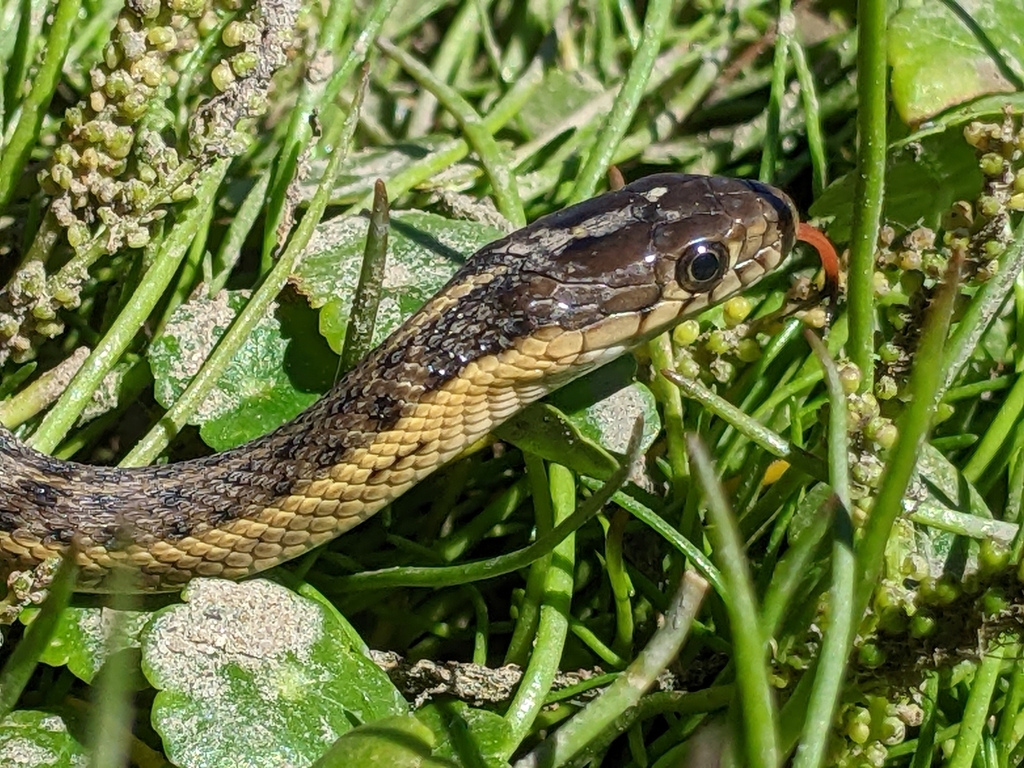
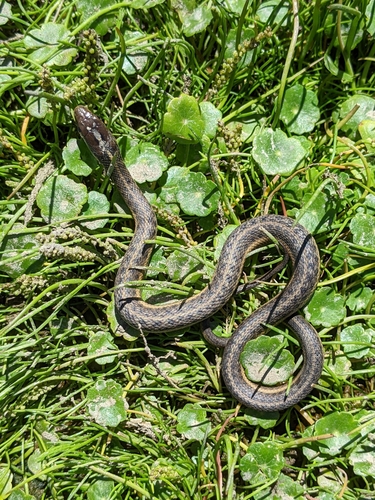
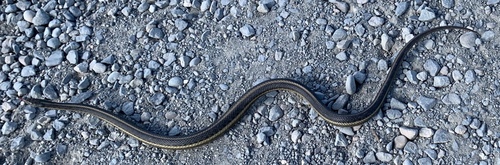
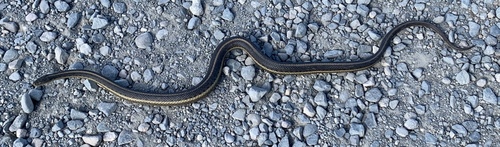
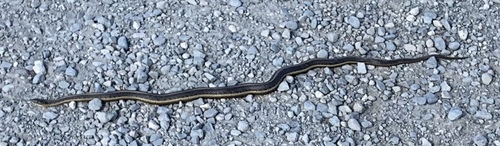
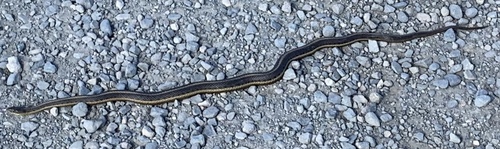
6 photographs of the Giant Garter Snake. © Ken-ichi Ueda.
The Giant Garter Snake (Thamnophis gigas) is a non-venomous snake in the Colubridae family, recorded in 1 country.
- Also called
- Garter / Ribbon snake
- Family
- Colubridae
- Size
- Slender, 1.5–3 ft.
- Habitat
- Almost anywhere with moisture — gardens, fields, wetlands, and streamsides.
- Behavior
- Harmless and active by day; may release musk if handled. The most commonly seen snakes across most of the U.S.
- Identify
- Slender body with three light stripes running the length of a darker back.
About the Giant Garter Snake
The giant garter snake (Thamnophis gigas) is the largest species of garter snake. Relatively rare, it is a semi-aquatic snake with a limited distribution in the wetlands of central California.
Description
The giant garter snake is the largest species of garter snake, with the adult snakes ranging from 94–165 cm (37.0–65.0 in) in length. As with many snakes, the female giant garter snakes tend to be longer and larger than the males. The snakes have keeled scales, with a yellow dorsal stripe against two additional yellow stripes on either side that run the length of its body. Although, some unstriped checkered patterns have been observed. It is venomous, but harmless to humans; it possesses a very mild neurotoxic venom that helps subdue its prey. A bite to a human will at most give a red itchy rash around the area of the bite.
Distribution
The giant garter snake is found in Central California. Its historic range extends through much of Central California's Sacramento and San Joaquin valleys but has been reduced to a few fragmented areas in the Sacramento Valley. Due to its semiaquatic nature, it is rarely found more than a few meters from water during the active season. This reliance on water has prevented the giant garter snake from dispersing to new habitats effectively and is also responsible for fragmenting populations of the snake, as the areas between habitats are often inhospitable for it. Because of this, giant garter snakes are typically found in areas that they inhabited previously, even if those areas were destroyed or converted. The snake historically inhabited wetland habitats, particularly tule marshes, but due to the destruction of these habitats, it is now predominantly found in artificial wetlands associated with rice agriculture.
Giant garter snakes prefer to inhabit stagnant or slow-moving water bodies with emergent vegetation; they use water to thermoregulate and deep and fast-moving water bodies are too cold, while emergent vegetation protects them from predators. Despite their dependence on water, giant garter snakes spend most of their time on land during the active season and all their time in brumation on land during the winter. They spend most of their time on land underground. When not underground, they seek litter or vegetation (particularly tules) to use as cover from predators and environmental extremes, and they avoid rocky or otherwise open areas. Giant garter snakes associated with rice agriculture use rice field canals during the spring and autumn and use rice fields throughout the active season, as they provide good habitat for the snakes with plentiful food, water, and cover. Due to habitat destruction, most giant garter snakes live in rice agricultural wetlands, and thus most live on private property, which provides a barrier to their study and conservation.
Behaviour and ecology
Adapted from Wikipedia, available under CC BY-SA.
Frequently asked: Giant Garter Snake
- Is the Giant Garter Snake venomous?
- No. The Giant Garter Snake (Thamnophis gigas) is non-venomous and is not considered dangerous to humans. Like most snakes, it will retreat rather than bite when given the chance.
- Is the Giant Garter Snake poisonous?
- Snakes are venomous, not poisonous. "Poisonous" means harmful to eat or touch; "venomous" means injecting toxins through a bite. The Giant Garter Snake is neither poisonous nor venomous.
- Is the Giant Garter Snake dangerous?
- The Giant Garter Snake is not dangerous to humans. It has no medically significant venom and bites only defensively if cornered or handled.
- Where does the Giant Garter Snake live?
- The Giant Garter Snake has verified records in 1 country, including United States of America. See the distribution section below for its full range.
- How do I identify the Giant Garter Snake?
- Slender body with three light stripes running the length of a darker back.
- How big does the Giant Garter Snake get?
- Slender, 1.5–3 ft.
- What does the Giant Garter Snake eat?
- Due to their predominately aquatic lifestyle, giant garter snakes prey upon fish, frogs, and tadpoles. Historically they would prey upon local species such as the Sierran treefrog, but in current times their diet predominately consists of introduced species, most notably the American bullfrog.
Where it is found
By U.S. state
More Colubridae snakes
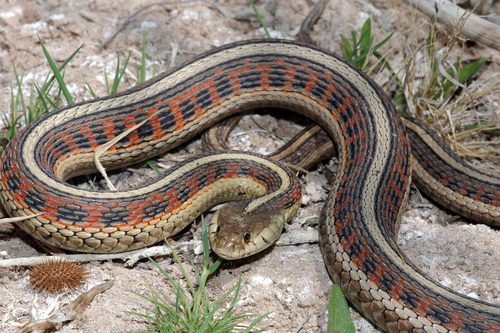 Common Garter SnakeThamnophis sirtalis
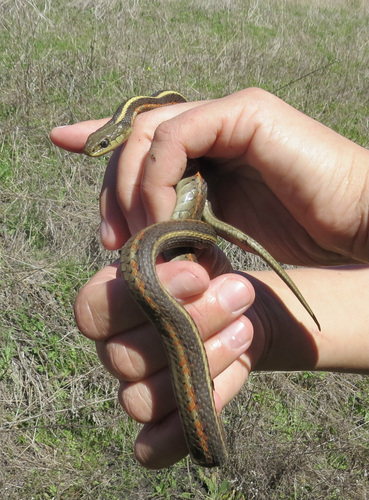 Western Terrestrial Garter SnakeThamnophis elegans
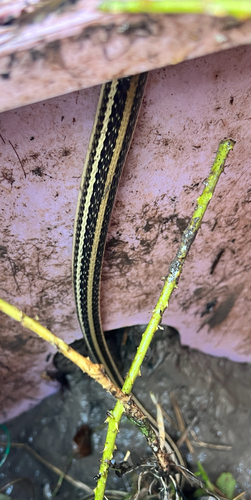 Western Ribbon SnakeThamnophis proximus
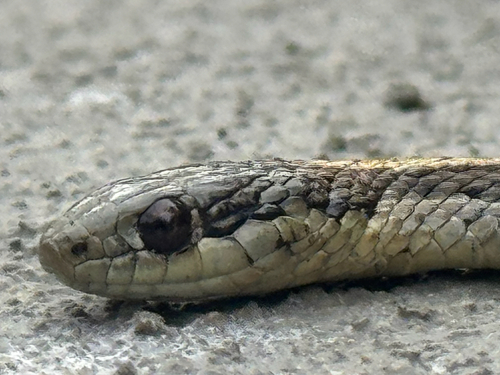 Northwestern Garter SnakeThamnophis ordinoides
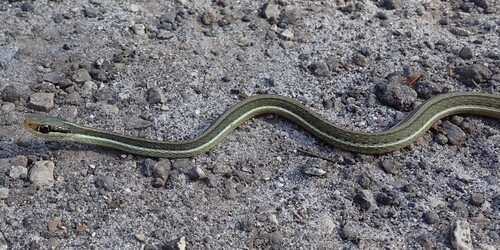 Common Ribbon SnakeThamnophis saurita
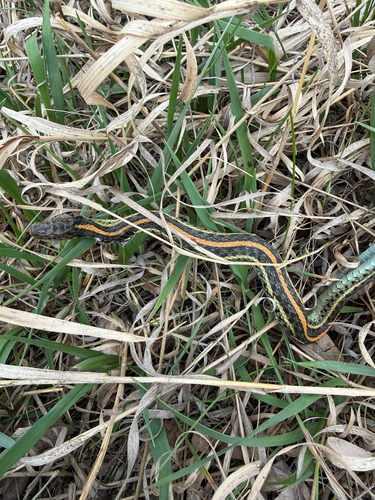 Plains Garter SnakeThamnophis radix
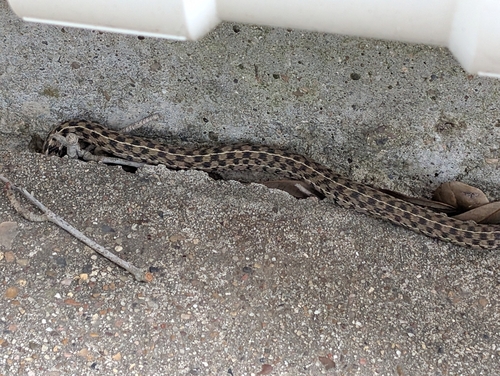 Checkered Garter SnakeThamnophis marcianus
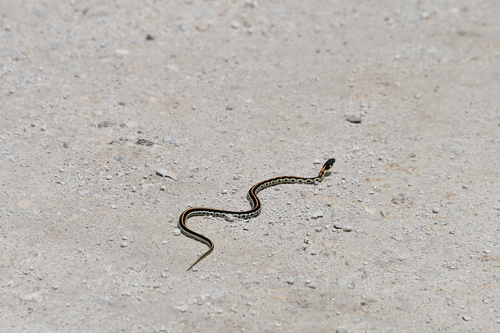 Black-necked Garter SnakeThamnophis cyrtopsis
Classification
How scientists group this snake, from the broadest category down to the exact species. Each step narrows to its closest relatives.
- OrderThe broad group of scaled reptiles: all snakes and lizards
- Squamata
- FamilyA group of related snakes that share key traits
- Colubridae
- GenusA close-knit group of very similar species
- Thamnophis
- SpeciesThis exact snake, named in the two-part scientific name
- Thamnophis gigas
Keep learning
- What to Do If You Find a SnakeFound a snake at home or on a trail? Here is how to stay calm, give it space, identify it safely, and know when to call a professional.
- Venomous vs Nonvenomous: How to Tell the DifferenceThe folk rules for telling venomous snakes apart, where each one fails, and why location-based identification beats guessing by sight.
- What Is a Snake? Anatomy and the BasicsA clear overview of what makes a snake a snake: limbless body plan, anatomy, evolution from lizards, species diversity, and why they are ectothermic.
- How to Keep Snakes Out of Your Yard and HomeA practical guide to keeping snakes out of your yard and home using habitat changes that work, plus what to skip and what to do if one shows up.
Distribution from GBIF & iNaturalist. Venom status per CDC. Background: Wikipedia. Informational only. Never handle a snake to identify it.