
Colubridae
Forsten's Cat Snake
HarmlessBoiga forsteni
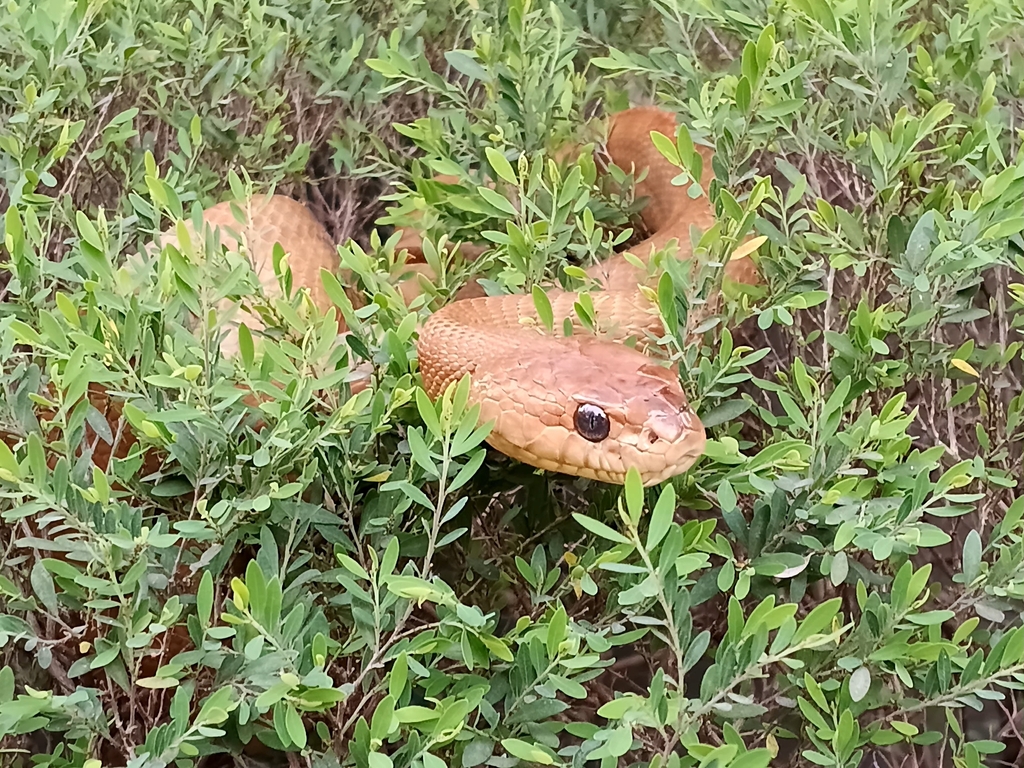
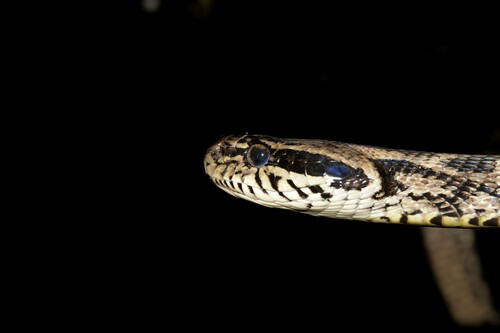
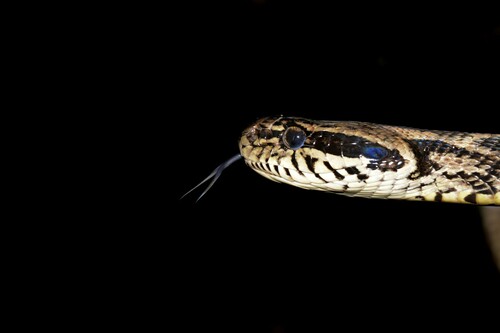
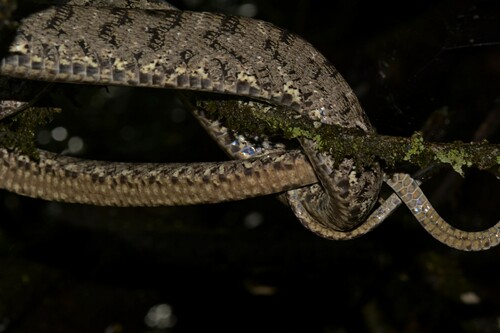
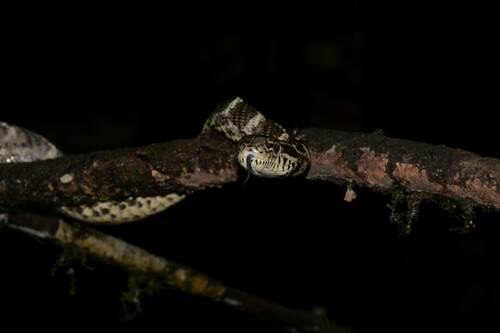
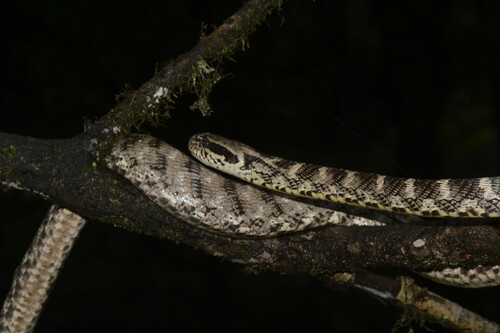
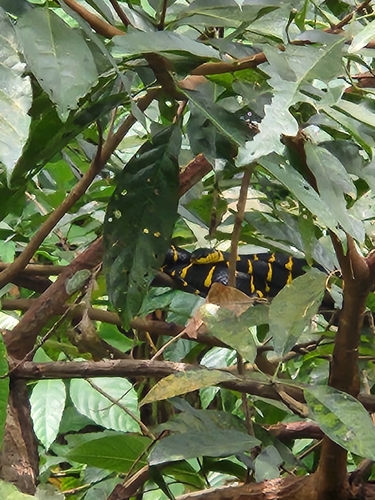
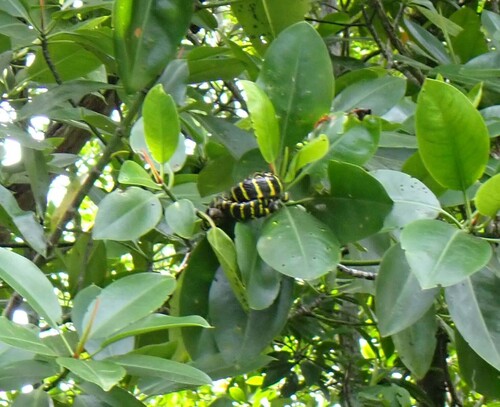
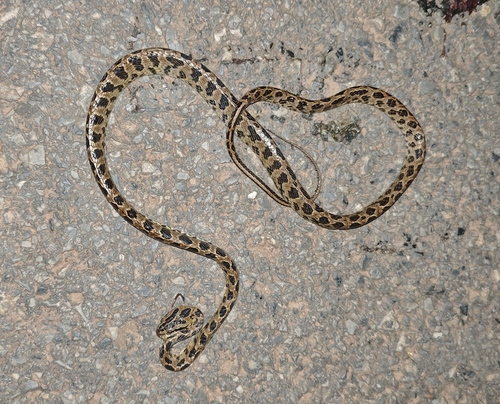
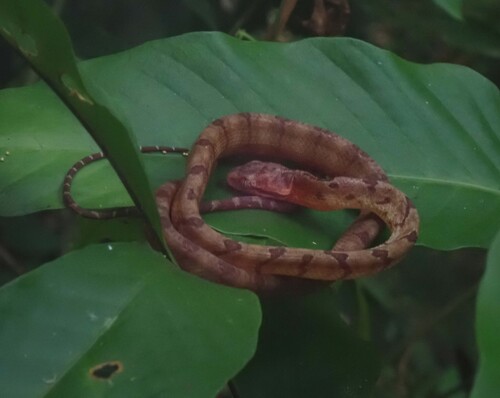
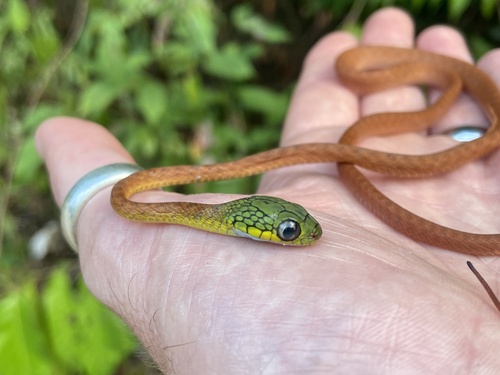
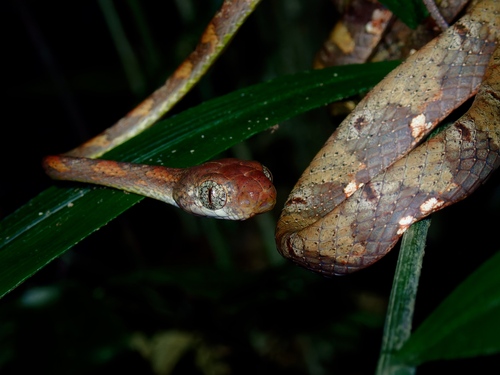
6 photographs of the Forsten's Cat Snake. © Nickson De lira.
The Forsten's Cat Snake (Boiga forsteni) is a rear-fanged, mildly venomous snake in the Colubridae family, recorded in 3 countries.
- Family
- Colubridae
About the Forsten's Cat Snake
Boiga forsteni, also known commonly as Forsten's cat snake, is a species of mildly venomous rear-fanged snake in the family Colubridae. The species is endemic to South Asia.
Geographic range
Boiga forstenii is found in Nepal, Sri Lanka, and India (Sikkim, West Bengal, Maharashtra, Gujarat, Kerala, Uttar Pradesh to Bihar, Madhya Pradesh, Orissa, Andhra Pradesh, Tamil Nadu, southern Rajasthan, Uttarakhand, and Jharkhand).
Etymology
The specific name, forstenii, is in honor of Dutch naturalist Eltio Alegondas Forsten (1811–1843).
Description
See snake scales for terms used
In B. forsteni the anterior palatine and mandibular teeth are considerably larger than the others. The eye is about as long as its distance from the nostril.
The rostral scale is broader than deep, and the internasals are much shorter than the prefrontals. The frontal is nearly as long as its distance from the end of the snout, which is shorter than the parietal scales. The loreal is square or deeper than it is long. There is one preocular scale, extending to the upper surface of the head, and two or three postoculars. The temporal scales are very small and numerous. There are eight to eleven upper labials, with the third, fourth and fifth, or the fourth fifth and sixth entering the eye. There are three or four lower labials, in contact with the anterior chin shields, which are about as long as the posterior. The ventral scales number 259–270, the anal is entire, and the subcaudals number 106–131.
The body is laterally compressed. The dorsal scales are in 25 or 27 rows at midbody, disposed obliquely, and the vertebral row is feebly enlarged. The snake is brown above, with more or less regular angular black crossbars, with or without white spots between them. There is a black band from the frontal shield to the nape and another on each side behind the eye. The lower parts are white, uniform or spotted with brown.
The longest specimen examined by Boulenger in 1890 had a total length of 4 feet 10 inches (1.47 m), including a tail which was 1 ft (30 cm) long. According to Das (2002) maximum snout–vent length (SVL) is 2.3 m (7.5 ft).
Habitat
The preferred habitats of B. forsteni are lowland forests and agricultural areas.
Behavior
B. forsteni is nocturnal and arboreal.
Diet
B. forsteni preys on lizards, snakes, birds, bats, and rodents.
Venom
Like other species of the genus Boiga, B. forsteni possesses a mild venom.
Reproduction
B. forsteni is an oviparous species. Sexually mature females lay 5–10 eggs. In India the eggs are laid in August and September.
Adapted from Wikipedia, available under CC BY-SA.
Frequently asked: Forsten's Cat Snake
- Is the Forsten's Cat Snake venomous?
- The Forsten's Cat Snake (Boiga forsteni) is rear-fanged and only mildly venomous. It is not considered dangerous to humans (its venom is weak and its fangs sit at the back of the mouth) but a bite can cause local swelling or irritation, so it should not be handled.
- Is the Forsten's Cat Snake poisonous?
- Snakes are venomous, not poisonous. "Poisonous" means harmful to eat or touch; "venomous" means injecting toxins through a bite. The Forsten's Cat Snake is neither poisonous nor venomous.
- Is the Forsten's Cat Snake dangerous?
- The Forsten's Cat Snake is not dangerous to humans. It has no medically significant venom and bites only defensively if cornered or handled.
- Where does the Forsten's Cat Snake live?
- The Forsten's Cat Snake has verified records in 3 countries, including India, Sri Lanka, Indonesia. See the distribution section below for its full range.
- What does the Forsten's Cat Snake eat?
- B. forsteni preys on lizards, snakes, birds, bats, and rodents.
- Why is it called the Forsten's Cat Snake?
- The specific name, forstenii, is in honor of Dutch naturalist Eltio Alegondas Forsten (1811–1843).
Where it is found
More Colubridae snakes
Classification
How scientists group this snake, from the broadest category down to the exact species. Each step narrows to its closest relatives.
- OrderThe broad group of scaled reptiles: all snakes and lizards
- Squamata
- FamilyA group of related snakes that share key traits
- Colubridae
- GenusA close-knit group of very similar species
- Boiga
- SpeciesThis exact snake, named in the two-part scientific name
- Boiga forsteni
Keep learning
- What to Do If You Find a SnakeFound a snake at home or on a trail? Here is how to stay calm, give it space, identify it safely, and know when to call a professional.
- Venomous vs Nonvenomous: How to Tell the DifferenceThe folk rules for telling venomous snakes apart, where each one fails, and why location-based identification beats guessing by sight.
- What Is a Snake? Anatomy and the BasicsA clear overview of what makes a snake a snake: limbless body plan, anatomy, evolution from lizards, species diversity, and why they are ectothermic.
- How to Keep Snakes Out of Your Yard and HomeA practical guide to keeping snakes out of your yard and home using habitat changes that work, plus what to skip and what to do if one shows up.
Distribution from GBIF & iNaturalist. Venom status per CDC. Background: Wikipedia. Informational only. Never handle a snake to identify it.