
Elapidae
De Vis' Banded Snake
VenomousDenisonia devisi
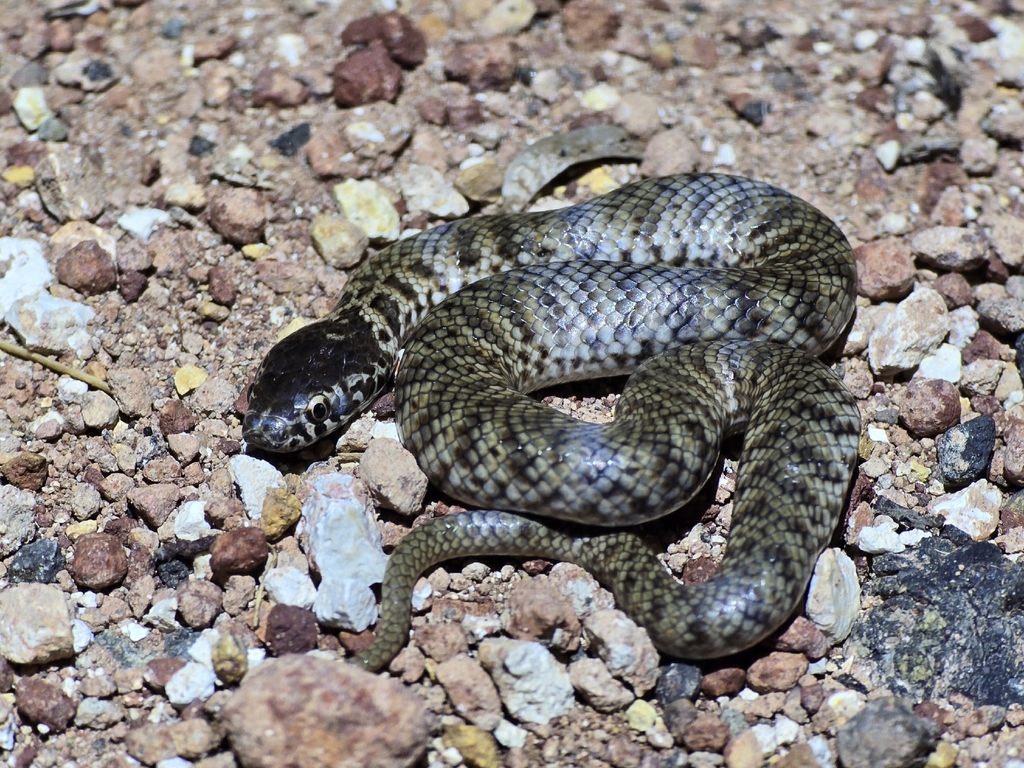
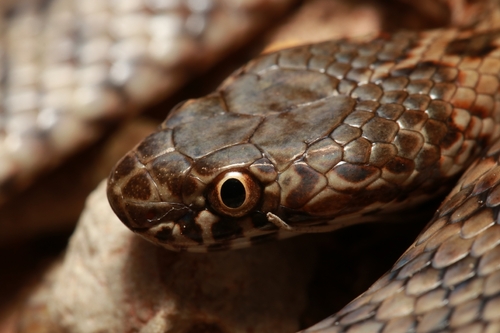
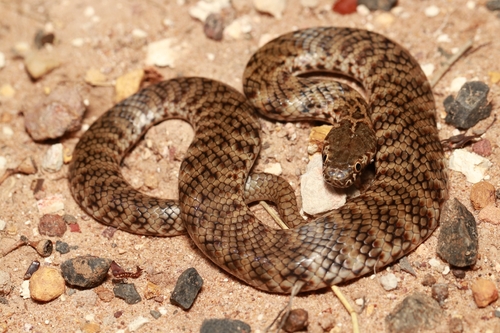
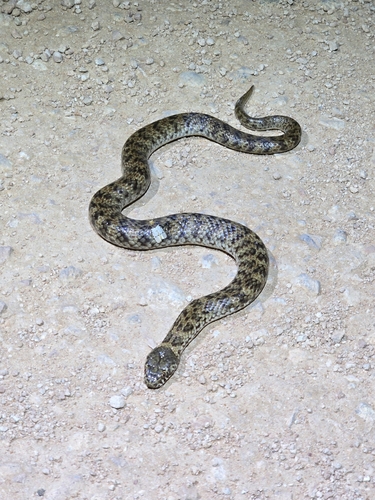
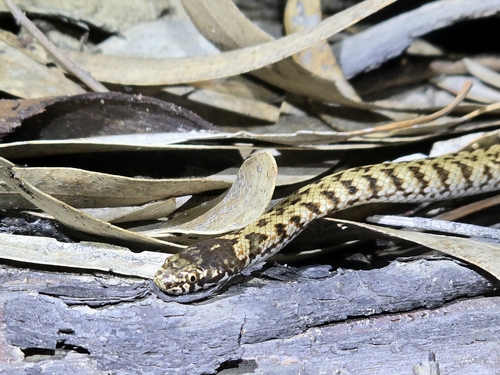
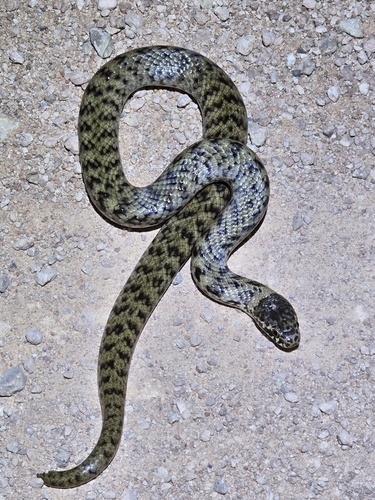
6 photographs of the De Vis' Banded Snake. © Max Tibby.
The De Vis' Banded Snake (Denisonia devisi) is a venomous snake in the Elapidae family, recorded in 1 country.
If you are bitten
This is a venomous snake. Treat any bite as a medical emergency: stay calm, keep the bitten limb still and roughly level with the heart, remove rings and tight clothing, and get to emergency care immediately. Do not apply a tourniquet, cut the wound, apply ice, or try to suck out venom. Call your local emergency number or poison center.
- Family
- Elapidae
- Danger
- high
About the De Vis' Banded Snake
The mud adder (Denisonia devisi), also known commonly as Devis's banded snake, is a species of venomous snake in the family Elapidae. The species is endemic to certain regions of eastern Australia, including South West Queensland, northern New South Wales, north-west Victoria, and (more recently) South Australia. Its scientific and common names refer to Charles Walter De Vis.
Taxonomy
This species was first described by Charles Walter De Vis, the first director of the Queensland Museum, from whom both the scientific name and one of its common names are derived. In 1884 he described it as Hoplocephalus ornatus.
In 1920 Waite and Longman decided to place it in the genus Denisonia. However, since Krefft in 1869 had named a different species Denisonia ornata, that name could not be used. Waite and Longman therefore created the new name Denisonia maculata var. devisi. Subsequently, Cogger in 1983 raised it to full species status as Denisonia devisi.
Description
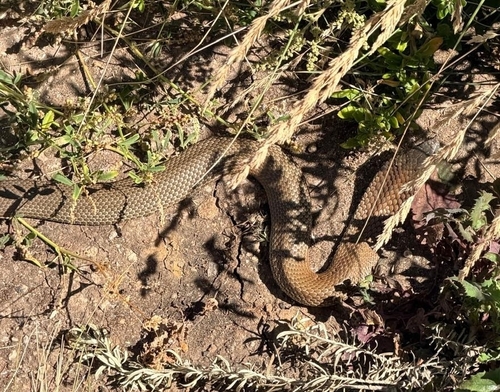
Denisonia devisi is short, thick, and slightly flat. The eyes are set at the top of the head and have a conspicuous iris. The dorsal surface of the body is yellowish-brown to olive-green in colour, broken by irregular, ragged-edged, narrow, dark bands running across the body. De Vis' banded snake is sometimes confused with death adders, as both have thick, banded bodies. The main difference is that the De Vis' banded snake's tail does not taper abruptly, and its head is not broad and triangular.
Distribution and habitat
The De Vis' banded snake was thought to be confined to alluvial flats in Queensland and New South Wales.
However, when mammal expert Peter Menkhorst reported a death adder in north-west Victoria, an expedition was carried out in November 2005 to survey the Wallpolla Islands. Instead of finding a death adder, the survey identified a De Vis' banded snake for the first time in Victoria. Further confirmation of the species' new habitat came with a report on the results of raising water levels for environmental purposes at several sites along the Murray River at the Victoria - New South Wales border, making special note of the snake. The snake was found in Wallpolla Island Park, a 9,800-hectare (24,000-acre) area consisting of floodplain vegetation in the extreme North West, on the Victoria-New South Wales border. It was a designated "Icon Site", an area of high ecological value within the Murray-Darling basin. The new addition to Victorian snakes was probably carried south during a period of flooding in the Darling River. The usually dry habitat had become more suitable over the years as water and biodiversity increased due to environmental water.
Adapted from Wikipedia, available under CC BY-SA.
Local and regional names
The De Vis' Banded Snake is known by these names across the regions where it lives:
- English
- De Vis Banded Snake, De Vis's Banded Snake, Mud Adder
- Italian
- Serpente a bande di De Vis, Serpente fasciato di De Vis
Frequently asked: De Vis' Banded Snake
- Is the De Vis' Banded Snake venomous?
- Yes. The De Vis' Banded Snake (Denisonia devisi) is venomous and belongs to the Elapidae family (cobra, mamba, coral or sea snake). Its bite is considered high risk to people. Treat any bite as a medical emergency.
- Is the De Vis' Banded Snake poisonous?
- Snakes are venomous, not poisonous. "Poisonous" means harmful to eat or touch; "venomous" means injecting toxins through a bite. The De Vis' Banded Snake is venomous, delivering venom through a bite.
- Is the De Vis' Banded Snake dangerous?
- This is a venomous snake. Treat any bite as a medical emergency: stay calm, keep the bitten limb still and roughly level with the heart, remove rings and tight clothing, and get to emergency care immediately. Do not apply a tourniquet, cut the wound, apply ice, or try to suck out venom. Call your local emergency number or poison center.
- Where does the De Vis' Banded Snake live?
- The De Vis' Banded Snake has verified records in 1 country, including Australia. See the distribution section below for its full range.
If you are bitten by the De Vis' Banded Snake
Do
- Get away from the snake and stay calm. Most bites worsen when people panic or try again to handle the snake.
- Call 911 or Poison Control (1-800-222-1222) right away. Antivenom works best when given early.
- Note the time of the bite and, from a safe distance, the snake's color and pattern, a phone photo is enough. Do not chase it.
- Keep the bitten limb still and at roughly heart level. Sit or lie down and limit movement.
- Remove rings, watches, and tight clothing near the bite before swelling starts.
- Gently wash the bite with soap and water and cover it with a clean, dry dressing.
Do not
- Do not cut the wound or try to suck out the venom.
- Do not apply a tourniquet or ice.
- Do not drink alcohol or caffeine.
- Do not take aspirin or ibuprofen, they can worsen bleeding. Acetaminophen is safer for pain.
- Do not try to catch or kill the snake. A dead snake can still bite by reflex.
First-aid guidance adapted from the U.S. Centers for Disease Control and Prevention (CDC NIOSH), Venomous Snakes. Educational only; always follow the instructions of emergency responders.
Where it is found
More Elapidae snakes
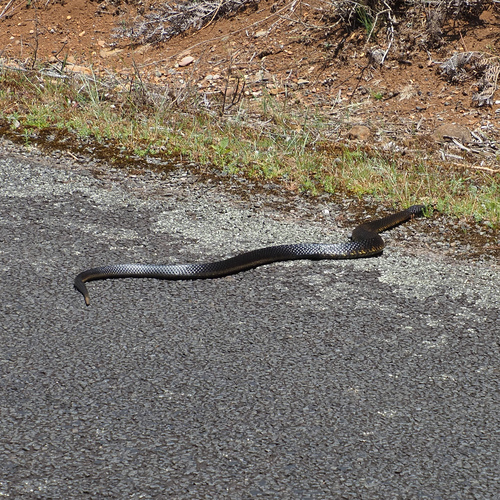
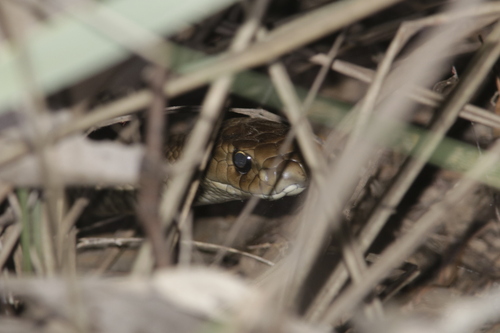
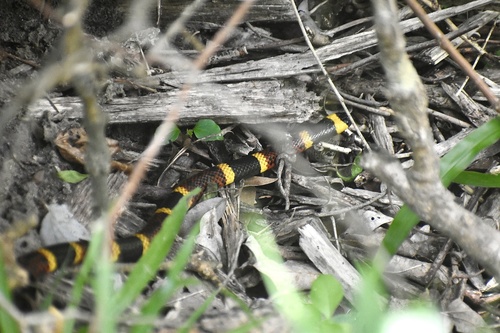
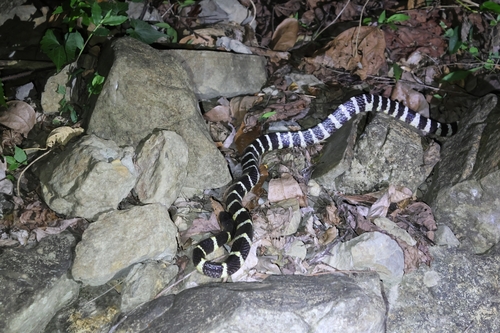
Classification
How scientists group this snake, from the broadest category down to the exact species. Each step narrows to its closest relatives.
Keep learning
- Are Snakes Dangerous? The Real Risk, in PerspectiveMost snakes are harmless and avoid people. Here is the honest picture of snakebite risk worldwide and how to lower your own.
- Snakebite First Aid: What to Do (and What Never to Do)A clear, CDC-based guide to snakebite first aid: the steps that help, the popular myths that hurt, and how to tell a serious bite from a minor one.
- Venomous vs Nonvenomous: How to Tell the DifferenceThe folk rules for telling venomous snakes apart, where each one fails, and why location-based identification beats guessing by sight.
- What to Do If You Find a SnakeFound a snake at home or on a trail? Here is how to stay calm, give it space, identify it safely, and know when to call a professional.
Distribution from GBIF & iNaturalist. Venom status per CDC. Background: Wikipedia. Informational only. Never handle a snake to identify it.