
Genus · Elapidae
Types of banded snakes
2 species make up the genus Denisonia, the snakes commonly called banded snakes. All of them are venomous.
About ornamental snakes
A pair of small, secretive Australian elapids that look mild but carry the front-fanged venom of their dangerous cousins.
Denisonia is a small Australian genus in the family Elapidae, the front-fanged venomous snakes that includes cobras, mambas, sea snakes, and nearly all of Australia's terrestrial venomous species. The genus holds just two recognized species: De Vis' banded snake (Denisonia devisi) and the ornamental snake (Denisonia maculata). Both are modest in size, typically under 50 centimeters, with stout bodies, flattened heads barely distinct from the neck, and the smooth scales and short fixed front fangs characteristic of elapids. They are restricted to eastern Australia, where they favor moist, low-lying country such as floodplains, black-soil cracking clays, and the margins of swamps, lagoons, and gilgai depressions that flood seasonally.
These are cryptic, ground-dwelling snakes that you are unlikely to see without looking. They shelter by day under fallen timber, in soil cracks, and beneath ground debris, emerging at night and after rain to forage. Their diet centers heavily on frogs, which is consistent with their preference for damp, frog-rich habitat, and like many small Australian elapids they give birth to live young rather than laying eggs. Recognizing them in general terms means a small, banded or blotched terrestrial snake from eastern Australian wetland margins, but reliable identification of any small Australian elapid is genuinely difficult and best left to local experts.
Both Denisonia species are venomous front-fanged elapids, not harmless and not rear-fanged. Their small size and modest venom yield mean they are not considered among Australia's deadliest snakes, but venom potency varies and any elapid bite must be taken seriously. Because so many small Australian snakes look alike and some lookalikes are highly dangerous, never assume a small snake is safe and never attempt to handle a wild venomous snake. If a bite occurs, treat it as a medical emergency: keep the person still, do not try to catch or kill the snake, and call your local emergency services. In the United States contact Poison Control at 1-800-222-1222; in Australia call 000.
Denisonia belongs to the Elapidae family (Cobras, mambas, coral & sea snakes). Front-fanged venomous snakes, many with potent neurotoxic venom. Usually slender with a head barely wider than the neck and fixed front fangs (not the folding fangs of vipers). Coral snakes are boldly ringed; sea snakes have a flattened, paddle-like tail.
Danger: All elapids are venomous and the family is responsible for a large share of fatal snakebites worldwide. Many are shy, but bites can be life-threatening. Treat any bite as a medical emergency.
All species (2)
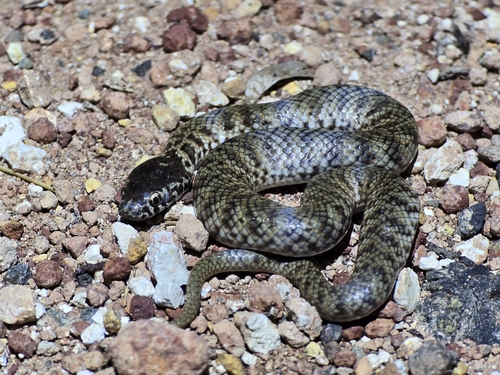
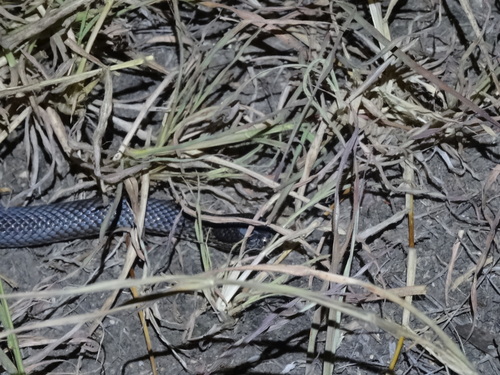
Keep learning
- Venomous vs Nonvenomous: How to Tell the DifferenceThe folk rules for telling venomous snakes apart, where each one fails, and why location-based identification beats guessing by sight.
- Are Snakes Dangerous? The Real Risk, in PerspectiveMost snakes are harmless and avoid people. Here is the honest picture of snakebite risk worldwide and how to lower your own.
- Snake Venom Explained: How It Works and WhyWhat snake venom actually is, why it evolved, the main venom types, fang delivery, how antivenom works, and why ranking the most venomous snake is hard.
- How Snakes Move, Hunt, and EatHow snakes move without legs, hunt as ambushers or active foragers, kill by constriction or venom, and swallow prey wider than their head.