
Colubridae
Costa Rica Water Snake
HarmlessHydromorphus concolor
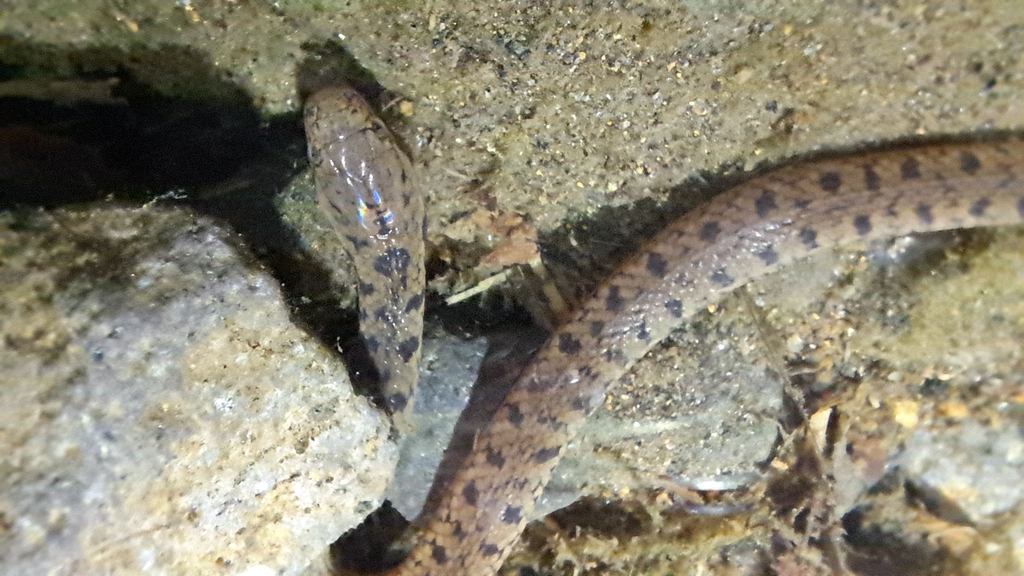
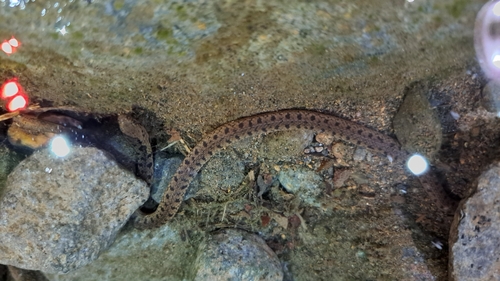
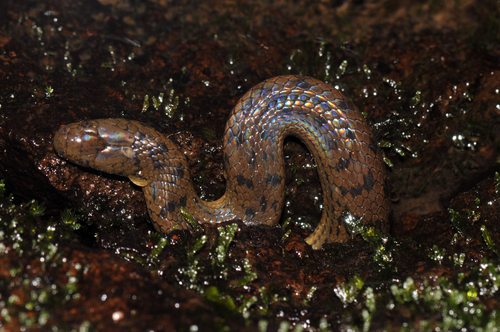
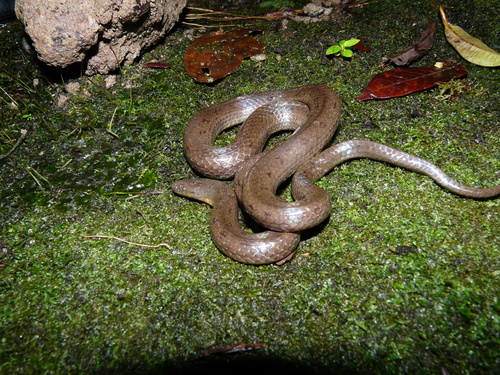
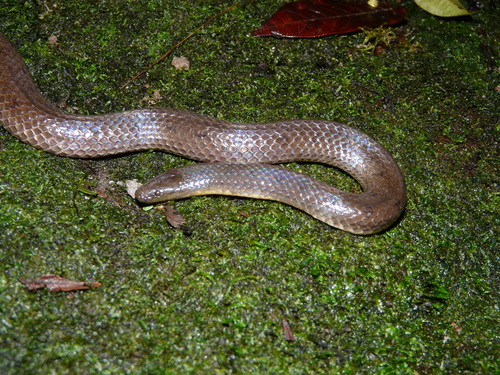
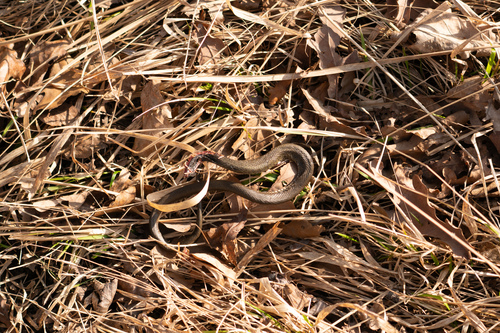
5 photographs of the Costa Rica Water Snake. © Jeffry Cubero.
The Costa Rica Water Snake (Hydromorphus concolor) is a non-venomous snake in the Colubridae family.
- Family
- Colubridae
About the Costa Rica Water Snake
Hydromorphus concolor, also known as the Costa Rica water snake, is a snake of the colubrid family. It is moderately-sized, growing to lengths of 690 mm (27 in) for males and 797 mm (31.4 in) for females. It is widely distributed in Central America from Guatemala south to Panama. It inhabits freshwater rainforest streams in dense lowland and premontane rainforests. It feeds on small crabs, frogs, fish, and Atya shrimp. It is classified as being of least-concern on the IUCN Red List.
Taxonomy
The German naturalist Wilhelm Peters formally described the species Hydromorphus concolor in 1859 based on a specimen from Costa Rica, erecting the genus Hydromorphus for it in the same publication. In 1942, the American herpetologist Emmett Reid Dunn described the species Hydromorphus clarki based on specimens from Panama, but that species was subsequently synonymized with concolor. The specific epithet is derived from the Latin word meaning "uniformly colored", alluding to its unicolor dorsal coloration. It has the common name Costa Rica water snake.
Description
Costa Rica water snakes are moderately-sized, growing to lengths of 690 mm (27 in) for males and 797 mm (31.4 in) for females. It is characterised by having one internasal scale, one loreal scale that touches the eye, a preocular scale above the loreal scale, and one prefrontal shield.
Distribution and ecology
The Costa Rica water snake is widely distributed in Central America from Guatemala south to Panama. It is a semiaquatic species that spend much of its time in freshwater rainforest streams. It is found in dense lowland and premontane rainforests and is mainly a nocturnal species. It has been recorded to elevations of up to 1,500 m (4,900 ft).
The Costa Rica water snake feeds on small crabs, frogs, fish, and Atya shrimp. Both snakes lay eggs to reproduce. In the Costa Rica water snake, eggs are laid in clutches of eight or less and take around 94 days to hatch. The eggs are 33–44 mm (1.3–1.7 in) long and 14–16 mm (0.55–0.63 in) wide and weigh 6.1–6.6 g (0.22–0.23 oz). The Costa Rica water snake has been documented being predated upon by Erythrolamprus bizona. Other potential predators of the genus include turtles, birds, and other snakes such as Micrurus species.
Conservation
The Costa Rica water was classified as being of least-concern on the global IUCN Red List and endangered on the Panamanian Red List as of 2026. A 2026 study of the genera Hydromorphus and Tretanorhinus recommended that the water snake be classified as vulnerable on the national list and least-concern on the global list.
Adapted from Wikipedia, available under CC BY-SA.
Frequently asked: Costa Rica Water Snake
- Is the Costa Rica Water Snake venomous?
- No. The Costa Rica Water Snake (Hydromorphus concolor) is non-venomous and is not considered dangerous to humans. Like most snakes, it will retreat rather than bite when given the chance.
- Is the Costa Rica Water Snake poisonous?
- Snakes are venomous, not poisonous. "Poisonous" means harmful to eat or touch; "venomous" means injecting toxins through a bite. The Costa Rica Water Snake is neither poisonous nor venomous.
- Is the Costa Rica Water Snake dangerous?
- The Costa Rica Water Snake is not dangerous to humans. It has no medically significant venom and bites only defensively if cornered or handled.
More Colubridae snakes
Classification
How scientists group this snake, from the broadest category down to the exact species. Each step narrows to its closest relatives.
- OrderThe broad group of scaled reptiles: all snakes and lizards
- Squamata
- FamilyA group of related snakes that share key traits
- Colubridae
- GenusA close-knit group of very similar species
- Hydromorphus
- SpeciesThis exact snake, named in the two-part scientific name
- Hydromorphus concolor
Keep learning
- What to Do If You Find a SnakeFound a snake at home or on a trail? Here is how to stay calm, give it space, identify it safely, and know when to call a professional.
- Venomous vs Nonvenomous: How to Tell the DifferenceThe folk rules for telling venomous snakes apart, where each one fails, and why location-based identification beats guessing by sight.
- What Is a Snake? Anatomy and the BasicsA clear overview of what makes a snake a snake: limbless body plan, anatomy, evolution from lizards, species diversity, and why they are ectothermic.
- How to Keep Snakes Out of Your Yard and HomeA practical guide to keeping snakes out of your yard and home using habitat changes that work, plus what to skip and what to do if one shows up.
Distribution from GBIF & iNaturalist. Venom status per CDC. Background: Wikipedia. Informational only. Never handle a snake to identify it.