
Regional field guide
Snakes in New Mexico
50+ snake species have verified records in New Mexico, including 11 venomous. Pick your county below to see exactly which snakes live near you.
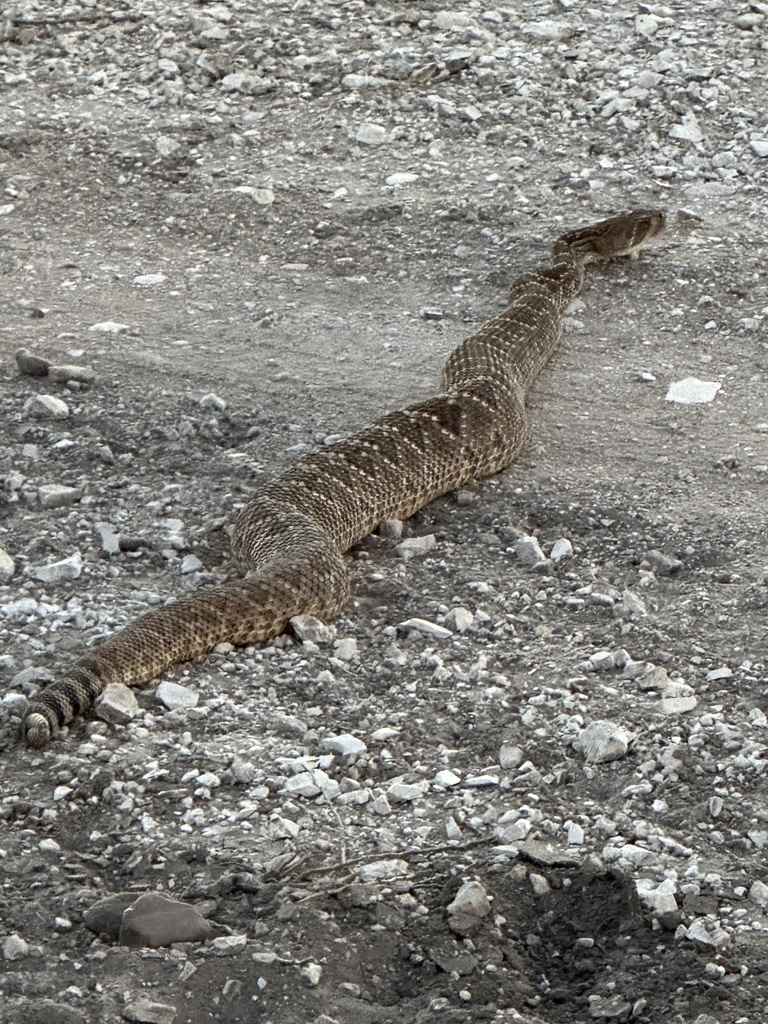
Snakes of New Mexico
New Mexico has a rich snake fauna of about 50+ species, and only 11 of them are venomous. Even so, the overwhelming majority of New Mexico's snakes are harmless and cause no trouble for people. The state is firmly rattlesnake country: nearly all of its venomous species are rattlesnakes, drawn from both the open plains and the rugged mountains and canyons that define the Southwest. Snakes are most active in the warmer months and turn up along trails, around rock outcrops, and on warm roads at dusk, but the great bulk of what you meet poses no danger.
The diversity is driven by an unusual mix of landscapes. Eastern New Mexico is shortgrass and high plains, the south and southwest fall into the Chihuahuan desert with its dry basins and creosote flats, and the center and north rise into the Rocky Mountain foothills, the Rio Grande valley, and isolated sky-island ranges. Those mountains and the deep canyons cutting through them create cool, rocky, forested pockets that hold specialized rattlesnakes you will not find out on the flats. This stack of desert, plains, river valley, and mountain habitat is exactly what fuels the state's heavy rattlesnake diversity.
Rattlesnakes dominate the venomous list. The Western Diamond-backed and Prairie Rattlesnakes are the wide-ranging plains-and-desert species, while the Western and Eastern Black-tailed and the Arizona Black Rattlesnakes favor rockier, brushier ground. The sky-island specialists are the highlights: the Rock Rattlesnake clings to limestone and rocky slopes, and the small Ridge-nosed Rattlesnake lives only in a few of the southwestern mountain ranges. The Mojave Rattlesnake is one to know well because its venom is strongly neurotoxic. The Western and Eastern Massasauga are small, scarce rattlers of the eastern grasslands. The lone non-rattlesnake is the Sonoran Coralsnake, a small, secretive banded elapid of the southwest deserts that stays hidden underground and in litter. The familiar red-and-yellow color rhymes are only a rough US guide and are never a safe way to identify a snake.
Most snakes in New Mexico are harmless desert and prairie colubrids. Bullsnakes and gophersnakes are large, loud bluffers that hiss and shake their tails but cannot harm you, coachwhips race across open ground, and patch-nosed snakes dart through scrub. Kingsnakes are valuable because some eat rattlesnakes, nightsnakes hunt after dark, hognose snakes flatten and play dead, and a long list of small harmless desert species fills out the picture. These are the snakes doing the real pest control, and many are killed only because they get mistaken for something dangerous.
On safety: snakebites do happen in New Mexico, but deaths are very rare when a bite receives prompt antivenom and good medical care. The consistent pattern is that serious bites come from handling, harassing, or trying to kill a snake rather than from simply crossing paths with one. Watch where you put your hands and feet around rocks and brush, and give any snake room to leave. Never assume a wild snake is safe to handle, even a small or still one. If a bite occurs, call Poison Control at 1-800-222-1222 or 911 right away.
Venomous snakes in New Mexico
- Western Diamond-backed RattlesnakeCrotalus atrox Venomous
- Prairie RattlesnakeCrotalus viridis Venomous
- Western Black-tailed RattlesnakeCrotalus molossus Venomous
- Mojave RattlesnakeCrotalus scutulatus Venomous
- Eastern Black-tailed RattlesnakeCrotalus ornatus Venomous
- Rock RattlesnakeCrotalus lepidus Venomous
- Western MassasaugaSistrurus tergeminus Venomous
- Ridge-nosed RattlesnakeCrotalus willardi Venomous
- Arizona Black RattlesnakeCrotalus cerberus Venomous
- Sonoran CoralsnakeMicruroides euryxanthus Venomous
- Eastern MassasaugaSistrurus catenatus Venomous
Most commonly seen
- Western Diamond-backed RattlesnakeCommonly seen
- Gopher SnakeCommonly seen
- Prairie RattlesnakeCommonly seen
- Western Terrestrial Garter SnakeCommonly seen
- Common CoachwhipCommonly seen
- Black-necked Garter SnakeCommonly seen
- Glossy SnakeCommonly seen
- Checkered Garter SnakeCommonly seen
- Pine SnakeCommonly seen
- Long-nosed SnakeCommonly seen
- Striped WhipsnakeCommonly seen
- Western Black-tailed RattlesnakeCommonly seen
Counties in New Mexico
33 listedSnakes in New Mexico: FAQ
- Are there venomous snakes in New Mexico?
- Yes. 11 venomous snake species have verified records in New Mexico, including Western Diamond-backed Rattlesnake, Prairie Rattlesnake, Western Black-tailed Rattlesnake, Mojave Rattlesnake. Most snakes in New Mexico, however, are harmless.
- How many snake species live in New Mexico?
- 50+ snake species have verified records in New Mexico, of which 11 are venomous.
- What is the most commonly seen snake in New Mexico?
- The Western Diamond-backed Rattlesnake is the most frequently reported snake in New Mexico, based on verified wildlife observations.
- What should I do if I see a venomous snake in New Mexico?
- Keep your distance and do not try to catch or kill it. Most bites happen when people handle or corner a snake. If someone is bitten, contact local emergency services or poison control immediately.