
Coachwhip / Whipsnake
Common Coachwhip
HarmlessMasticophis flagellum
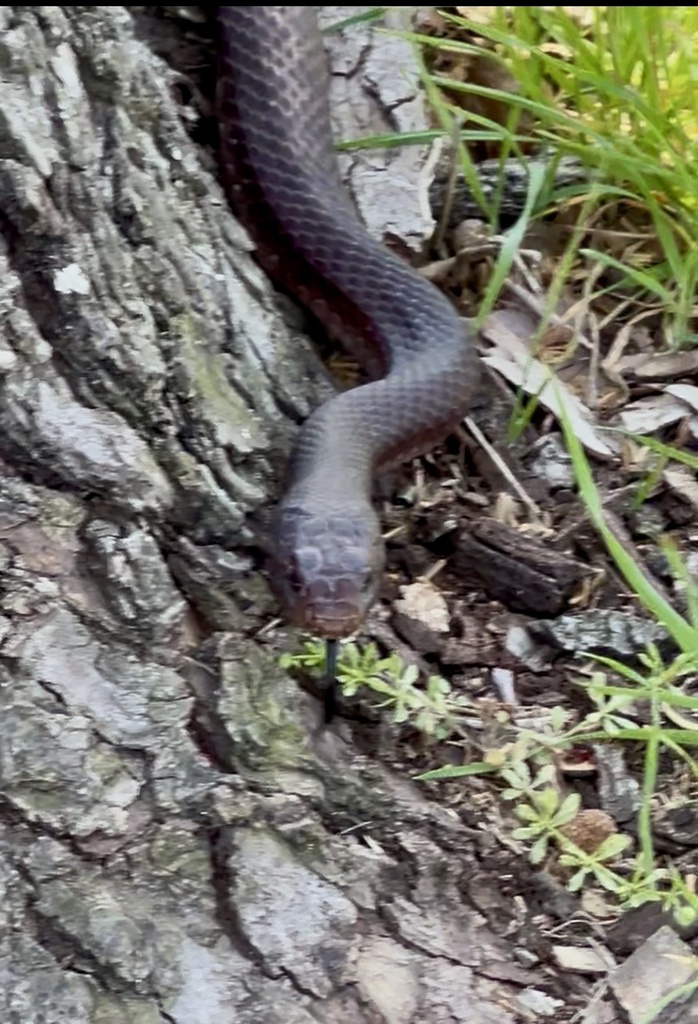
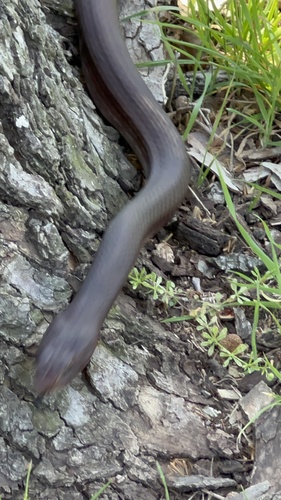
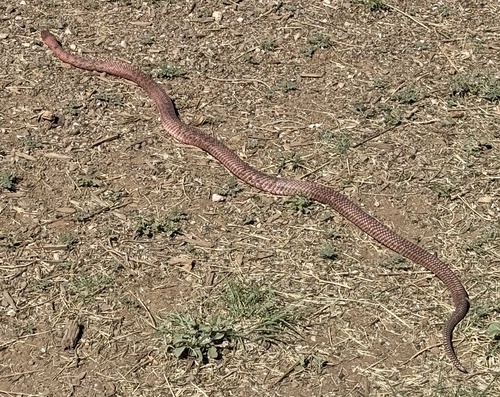
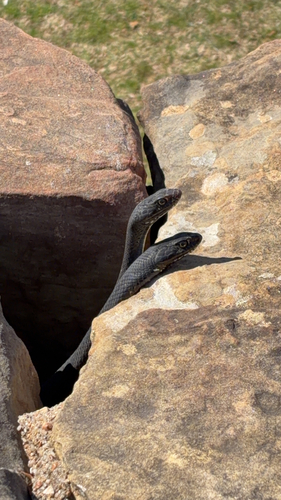
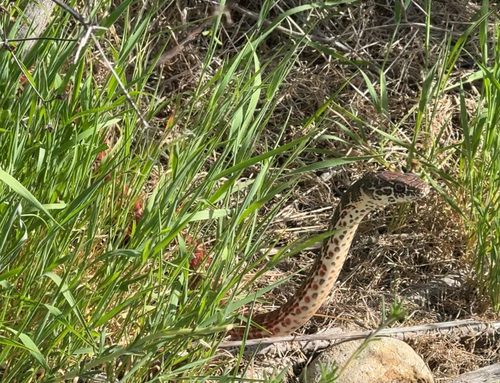
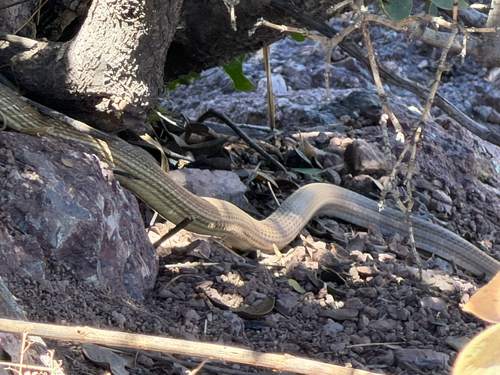
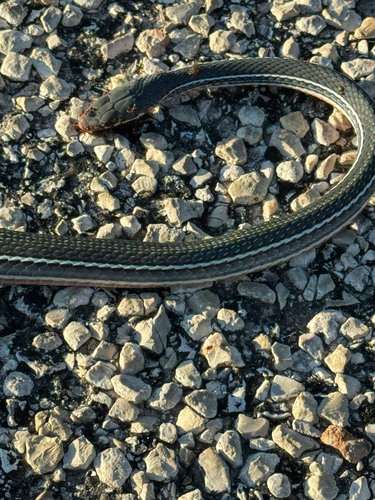
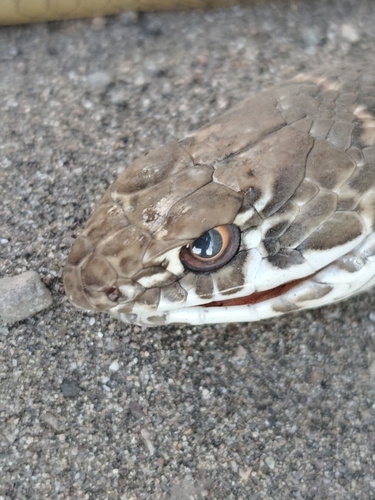
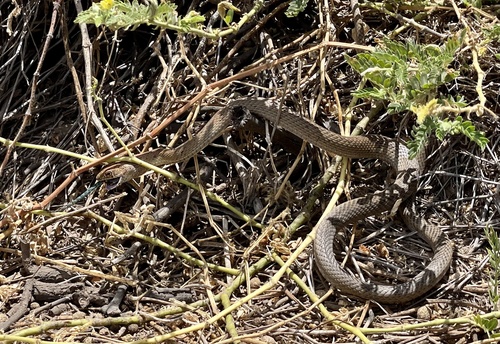
5 photographs of the Common Coachwhip. © Michelle Lopez.
The Common Coachwhip (Masticophis flagellum) is a non-venomous snake in the Colubridae family, recorded in 3 countries.
- Also called
- Coachwhip / Whipsnake
- Family
- Colubridae
- Size
- Very slender, 3–6 ft.
- Habitat
- Open deserts, grasslands, and scrub.
- Behavior
- Fast, alert, day-active visual hunters that flee rapidly when approached.
- Identify
- Long, whip-thin body; coachwhips often show a braided-whip tail pattern.
About the Common Coachwhip
Masticophis flagellum is a species of nonvenomous colubrid snake, commonly referred to as the coachwhip, whip snake or the red racer. It is endemic to the United States and Mexico. Three subspecies are recognized (including the nominotypical subspecies). It is listed as a species of Least Concern by the ICUN.
Taxonomy
Etymology
The generic name Masticophis is derived from the Greek words mastix, meaning "whip", and ophis, meaning "serpent". The specific name flagellum is Latin for "whip". The scientific name was given due to the braided, whip-like appearance of the tail coupled with the length of the snake. Subspecific translations are as follows: lineatulus, (linea) Latin for "line"; testaceus, Latin for "hard covering made of brick or tile", in reference to the scaling pattern of the snake.
Subspecies
Including the nominotypical subspecies, there are three subspecies of Masticophis flagellum that are recognized as being valid. Scientific and common names are listed below.
Nota bene: A trinomial authority in parentheses indicates that the subspecies was originally described in a genus other than Masticophis.
Description
Coachwhips are thin-bodied snakes with small heads and large eyes with round pupils. They vary greatly in color, but most reflect a proper camouflage for their natural habitat. M. f. testaceus is typically a shade of light brown with darker brown flecking, but in the western area of Texas, where the soil color is a shade of pink, the coachwhips are also pink in color. M. f. piceus was given its common name because specimens frequently, but not always, have some red in their coloration. Coachwhip scales are patterned so at first glance, the snake appears braided. Subspecies can be difficult to distinguish in areas where their ranges overlap. Adult sizes of 127–183 cm (50–72 in) in total length (including tail) are common. The record sized specimen, of the eastern coachwhip race, was 259 cm (102 in) in total length. Young specimens, mostly just over 100 cm (40 in) in length, were found to have weighed 180 to 675 g (6+1⁄2 to 24 oz), whereas good-sized mature adults measuring 163 to 235 cm (64 to 93 in) weighed 1.2 to 1.8 kg (2 lb 10 oz to 3 lb 15 oz).
Distribution and habitat
Coachwhips range throughout the southern United States from coast to coast. They are also found in the northern half of Mexico. Coachwhips have one of the largest home ranges of any snake, with some being reported to range across and up to 56 hectares.
Coachwhips are commonly found in open areas with sandy soil, open pine forests, old fields, and prairies. They thrive in sandhill scrub and coastal dunes. However, they prefer oak savannas in eastern Texas.
Adapted from Wikipedia, available under CC BY-SA.
Frequently asked: Common Coachwhip
- Is the Common Coachwhip venomous?
- No. The Common Coachwhip (Masticophis flagellum) is non-venomous and is not considered dangerous to humans. Like most snakes, it will retreat rather than bite when given the chance.
- Is the Common Coachwhip poisonous?
- Snakes are venomous, not poisonous. "Poisonous" means harmful to eat or touch; "venomous" means injecting toxins through a bite. The Common Coachwhip is neither poisonous nor venomous.
- Is the Common Coachwhip dangerous?
- The Common Coachwhip is not dangerous to humans. It has no medically significant venom and bites only defensively if cornered or handled.
- Where does the Common Coachwhip live?
- The Common Coachwhip has verified records in 3 countries, including United States of America, Mexico, Guatemala. See the distribution section below for its full range.
- How do I identify the Common Coachwhip?
- Long, whip-thin body; coachwhips often show a braided-whip tail pattern.
- How big does the Common Coachwhip get?
- Very slender, 3–6 ft.
- What does the Common Coachwhip eat?
- Coachwhips are diurnal, and actively eat different types of prey including other snakes, lizards, frogs, rodents, birds (including hatchlings and eggs), and insects (cicadas, crickets). These snakes have also been found to ingest carrion and, in rare instances, demonstrated cannibalism. They do not discriminate prey size, as they are opportunistic hunters. They have been described as "sit-and-wait" predators or ambush hunters. They utilize both enhanced vision and sensitive chemoreceptors in order to detect nearby prey.
- Why is it called the Common Coachwhip?
- The generic name Masticophis is derived from the Greek words mastix, meaning "whip", and ophis, meaning "serpent". The specific name flagellum is Latin for "whip". The scientific name was given due to the braided, whip-like appearance of the tail coupled with the length of the snake. Subspecific translations are as follows: lineatulus, (linea) Latin for "line"; testaceus, Latin for "hard covering made of brick or tile", in reference to the scaling pattern of the snake.
Where it is found
More Colubridae snakes
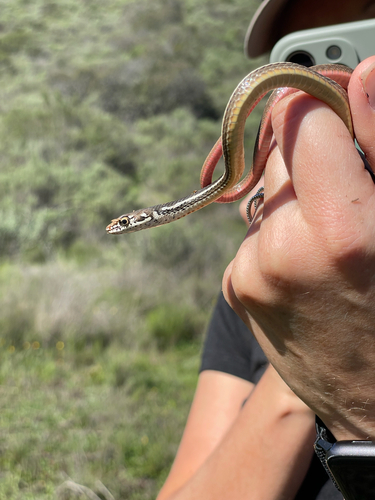 Striped RacerMasticophis lateralis
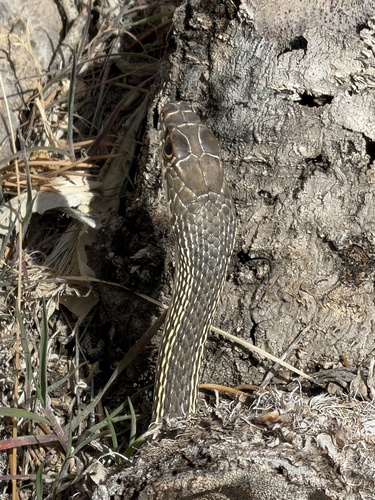 Striped WhipsnakeMasticophis taeniatus
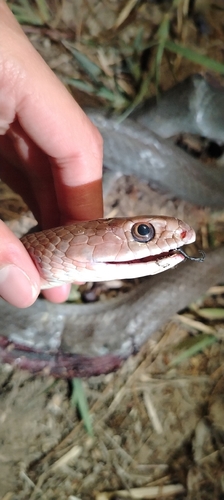 Neotropical Whip SnakeMasticophis mentovarius
 Sonoran WhipsnakeMasticophis bilineatus
 Schott's WhipsnakeMasticophis schotti
 Baja California CoachwhipMasticophis fuliginosus
 Clarion Island Whip SnakeMasticophis anthonyi
 Baja California Striped Whip SnakeMasticophis aurigulus
Classification
How scientists group this snake, from the broadest category down to the exact species. Each step narrows to its closest relatives.
- OrderThe broad group of scaled reptiles: all snakes and lizards
- Squamata
- FamilyA group of related snakes that share key traits
- Colubridae
- GenusA close-knit group of very similar species
- Masticophis
- SpeciesThis exact snake, named in the two-part scientific name
- Masticophis flagellum
Keep learning
- What to Do If You Find a SnakeFound a snake at home or on a trail? Here is how to stay calm, give it space, identify it safely, and know when to call a professional.
- Venomous vs Nonvenomous: How to Tell the DifferenceThe folk rules for telling venomous snakes apart, where each one fails, and why location-based identification beats guessing by sight.
- What Is a Snake? Anatomy and the BasicsA clear overview of what makes a snake a snake: limbless body plan, anatomy, evolution from lizards, species diversity, and why they are ectothermic.
- How to Keep Snakes Out of Your Yard and HomeA practical guide to keeping snakes out of your yard and home using habitat changes that work, plus what to skip and what to do if one shows up.
Distribution from GBIF & iNaturalist. Venom status per CDC. Background: Wikipedia. Informational only. Never handle a snake to identify it.