
Regional field guide
Snakes in Washington
10+ snake species have verified records in Washington, including 2 venomous. Pick your county below to see exactly which snakes live near you.
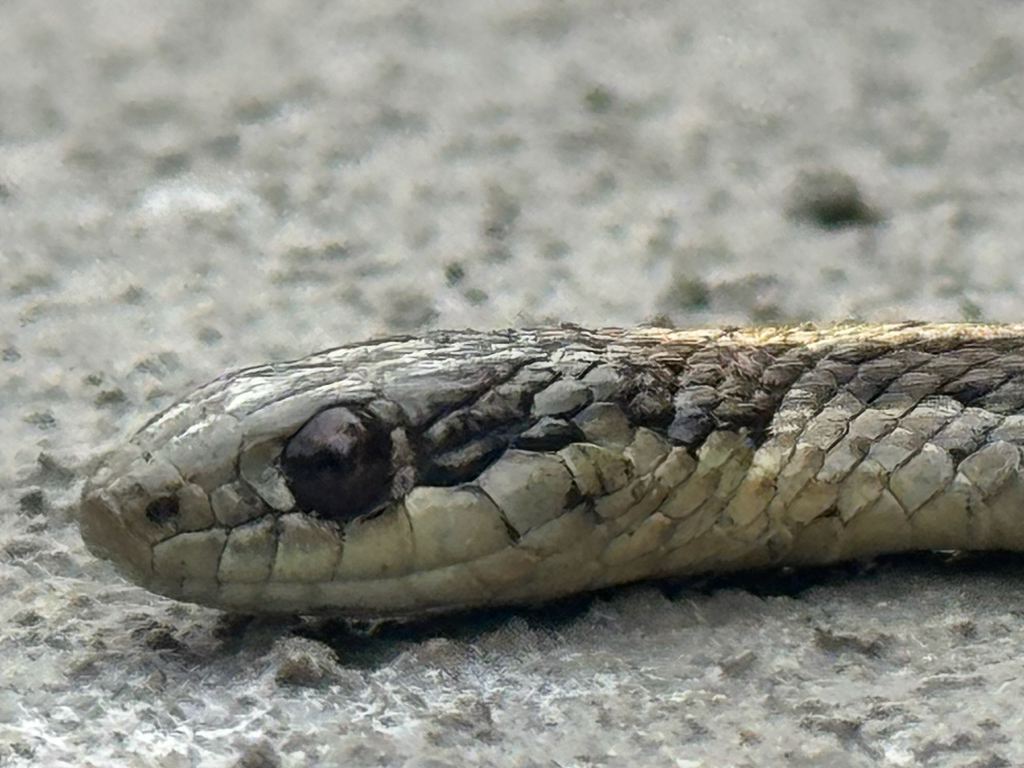
Snakes of Washington
Washington has about 20+ species of snakes, and only 2 of them are venomous. Both are rattlesnakes. There are no copperheads or cottonmouths in Washington or anywhere in the far West, so a venomous snake in Washington always means a rattlesnake. The other 18 species are harmless to people, and across the wet, green western side of the state, dangerous snakes are very scarce.
Washington, like Oregon, is split in two by the Cascade Range. West of the Cascades sit the rainy Puget Sound lowlands, the Coast Range, and the cool wet forests of the Olympic Peninsula, where mild damp conditions favor harmless snakes and rattlesnakes are essentially absent. East of the Cascades the land turns dry: the shrub-steppe and sagebrush of the Columbia Basin, the scablands, rocky canyons, and warm south-facing slopes. That dry eastern country is rattlesnake territory.
Washington records 2 venomous kinds, both rattlesnakes. The Western Rattlesnake (in its northern Pacific form) is the common one, found through the shrub-steppe, river canyons, scablands, and rocky slopes of central and eastern Washington. The Prairie Rattlesnake reaches the southeastern corner near the Idaho and Oregon borders. Both stay tied to warm, dry, rocky ground, so the rainy western forests see them only rarely if at all.
Most snakes Washingtonians actually meet are harmless. The gophersnake is common east of the mountains and a classic rattlesnake mimic, hissing loudly and vibrating its tail to bluff despite having no venom and no rattle. Garter snakes are the snakes most people see statewide, hunting near streams, ponds, lakes, and gardens, and several kinds live here. Racers move fast across open shrub-steppe, and the gentle rubber boa, a slow blunt-tailed burrower, turns up in cooler forests and meadows. Honest safety: nearly every serious snakebite in Washington is a rattlesnake bite, and most happen when someone handles, corners, or surprises one or reaches into rock and brush without looking. Deaths are very rare with antivenom and care. Give rattlesnakes space, watch your hands and feet on warm rocky slopes east of the Cascades, and never handle a wild snake. If a bite happens, call Poison Control at 1-800-222-1222 or 911.
Venomous snakes in Washington
Most commonly seen
- Northwestern Garter SnakeCommonly seen
- Common Garter SnakeCommonly seen
- Western RattlesnakeCommonly seen
- Gopher SnakeCommonly seen
- Western Terrestrial Garter SnakeCommonly seen
- North American RacerCommonly seen
- Northern Rubber BoaCommonly seen
- Prairie RattlesnakeOften seen
- Common Sharp-tailed SnakeOccasionally seen
- Ring-necked SnakeOccasionally seen
- Pine SnakeOccasionally seen
- Desert NightsnakeOccasionally seen
Counties in Washington
39 listed- Adams6
- Asotin8
- Benton7
- Chelan9
- Clallam4
- Clark5
- Columbia8
- Cowlitz4
- Douglas7
- Ferry6
- Franklin5
- Garfield4
- Grant8
- Grays Harbor3
- Island4
- Jefferson3
- King5
- Kitsap3
- Kittitas13
- Klickitat13
- Lewis5
- Lincoln8
- Mason4
- Okanogan7
- Pacific2
- Pend Oreille5
- Pierce8
- San Juan4
- Skagit4
- Skamania9
- Snohomish4
- Spokane7
- Stevens7
- Thurston4
- Wahkiakum2
- Walla Walla9
- Whatcom4
- Whitman8
- Yakima11
Snakes in Washington: FAQ
- Are there venomous snakes in Washington?
- Yes. 2 venomous snake species have verified records in Washington, including Western Rattlesnake, Prairie Rattlesnake. Most snakes in Washington, however, are harmless.
- How many snake species live in Washington?
- 10+ snake species have verified records in Washington, of which 2 are venomous.
- What is the most commonly seen snake in Washington?
- The Northwestern Garter Snake is the most frequently reported snake in Washington, based on verified wildlife observations.
- What should I do if I see a venomous snake in Washington?
- Keep your distance and do not try to catch or kill it. Most bites happen when people handle or corner a snake. If someone is bitten, contact local emergency services or poison control immediately.