
Regional field guide
Snakes in Utah
30+ snake species have verified records in Utah, including 5 venomous. Pick your county below to see exactly which snakes live near you.
Snakes of Utah
Utah has about 40+ species of snakes, and only 5 of them are venomous. All 5 are rattlesnakes. There are no copperheads or cottonmouths in Utah or anywhere in the far West, so a venomous snake in Utah means a rattlesnake and nothing else. The other 37 species are harmless to people, which makes the basic safety question simple: learn to recognize a rattlesnake, and everything else is something you can leave alone without worry.
Utah sits where the Great Basin desert, the Colorado Plateau, and the Rocky Mountains meet, and the snakes track that variety. Sagebrush steppe and high desert cover much of the west and the basins, red-rock canyon country defines the south and east, and the Wasatch and Uinta ranges rise high enough that cold and elevation thin the snakes out near the top. The Western Rattlesnake (in its Great Basin and midget faded forms) is the most widespread, found across sagebrush flats and canyon rims. The Prairie Rattlesnake comes in from the east and northeast. The southern deserts add the Mojave Rattlesnake, the Sidewinder on loose sand near the state's southwest corner, and the Southwestern Speckled Rattlesnake in the rocky Mojave fringe around the Utah-Arizona-Nevada border.
Most snakes Utahns meet are harmless and useful. Gophersnakes are the classic rattlesnake mimics, hissing loudly and vibrating their tails to bluff when cornered, but they carry no venom and no rattle and do real work eating rodents. Kingsnakes prey on rattlesnakes and shrug off their venom. Garter snakes stay near streams, ponds, and irrigation ditches, racers cross open desert at speed, the rubber boa turns up in cooler mountain forests, and nightsnakes hunt small lizards after dark.
Honest safety: nearly every serious snakebite in Utah is a rattlesnake bite, and the great majority happen when someone handles or corners a snake or reaches into rock cracks and brush without looking. Deaths are very rare thanks to antivenom and good medical care. Give any rattlesnake room, watch your hands and feet on slickrock and around woodpiles, and it will usually retreat. No wild snake is safe to handle, even one lying still. If a bite happens, stay calm, keep the limb quiet, and call Poison Control at 1-800-222-1222 or 911.
Venomous snakes in Utah
Most commonly seen
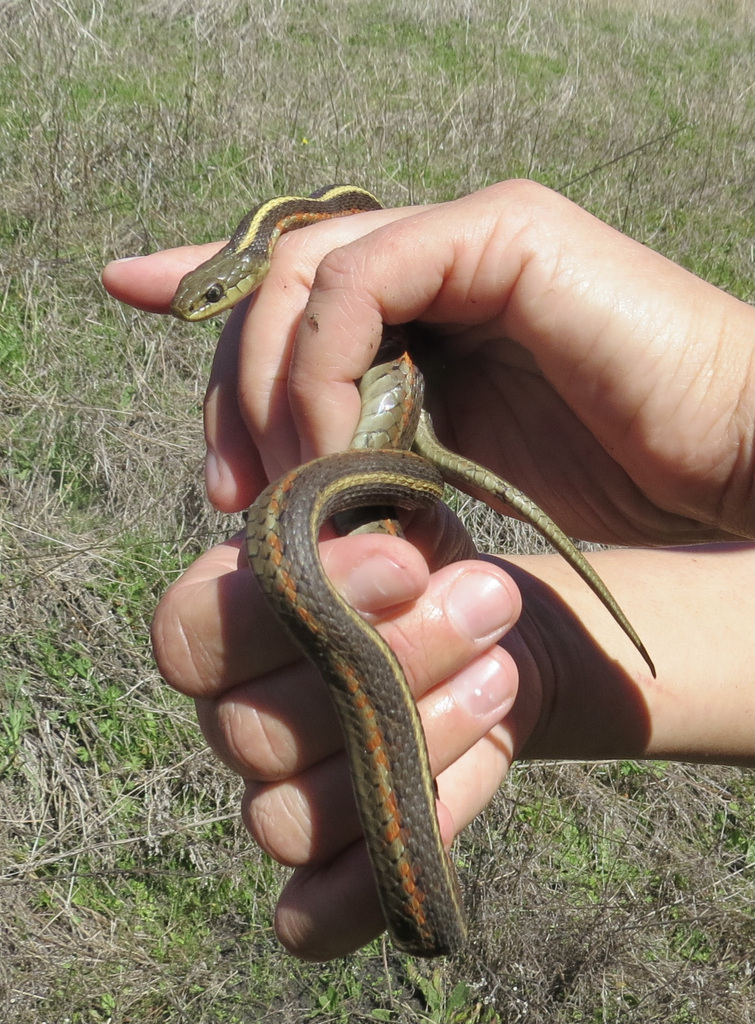
- Western Terrestrial Garter SnakeCommonly seen
- Gopher SnakeCommonly seen
- Western RattlesnakeCommonly seen
- North American RacerCommonly seen
- Striped WhipsnakeCommonly seen
- Common Garter SnakeCommonly seen
- Northern Rubber BoaCommonly seen
- Ground SnakeOften seen
- Prairie RattlesnakeOften seen
- California King SnakeOften seen
- Desert NightsnakeOften seen
- Long-nosed SnakeOften seen
Counties in Utah
29 listedSnakes in Utah: FAQ
- Are there venomous snakes in Utah?
- Yes. 5 venomous snake species have verified records in Utah, including Western Rattlesnake, Prairie Rattlesnake, Sidewinder, Mojave Rattlesnake. Most snakes in Utah, however, are harmless.
- How many snake species live in Utah?
- 30+ snake species have verified records in Utah, of which 5 are venomous.
- What is the most commonly seen snake in Utah?
- The Western Terrestrial Garter Snake is the most frequently reported snake in Utah, based on verified wildlife observations.
- What should I do if I see a venomous snake in Utah?
- Keep your distance and do not try to catch or kill it. Most bites happen when people handle or corner a snake. If someone is bitten, contact local emergency services or poison control immediately.