
Groundsnake
Ground Snake
HarmlessSonora semiannulata
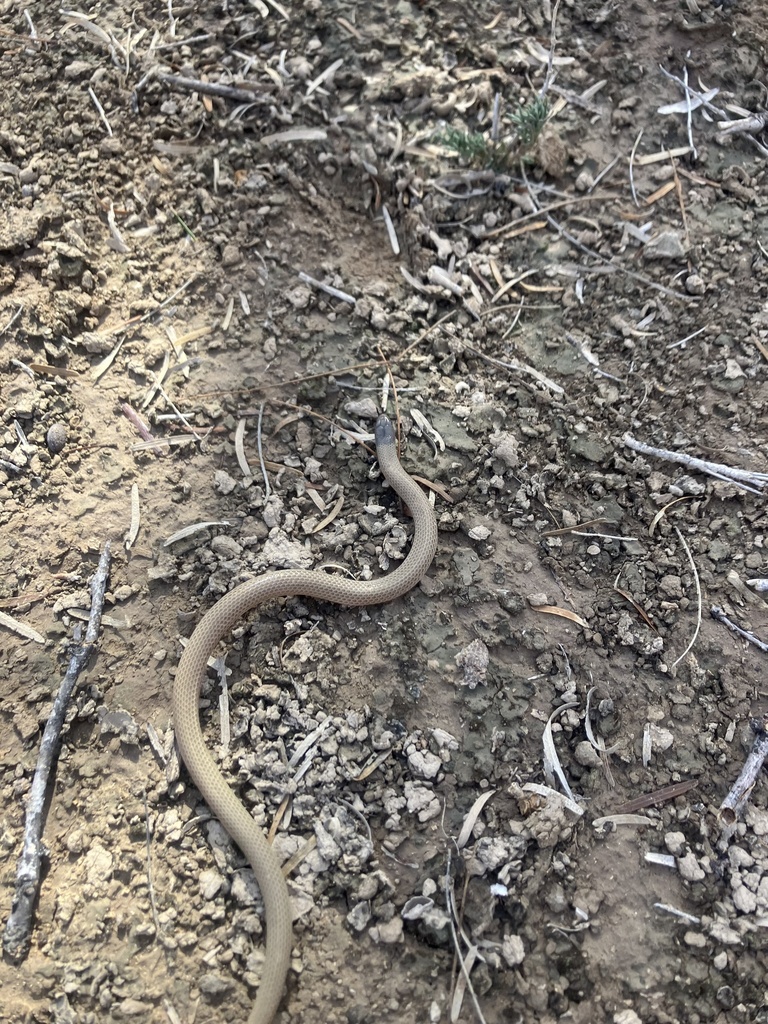
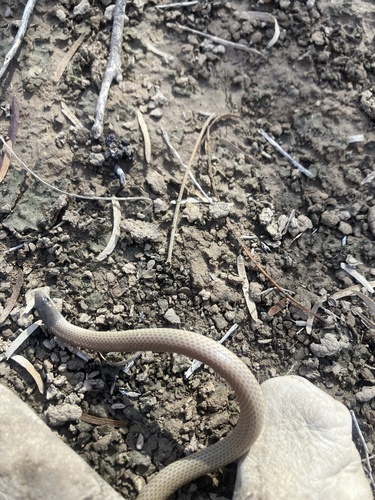
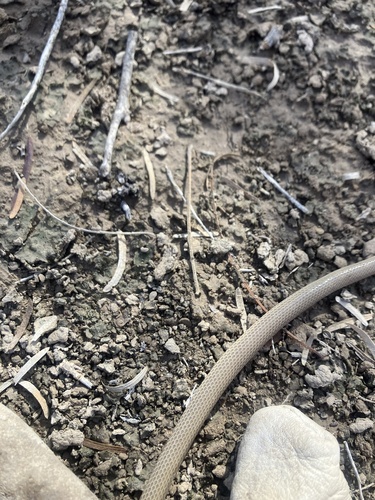
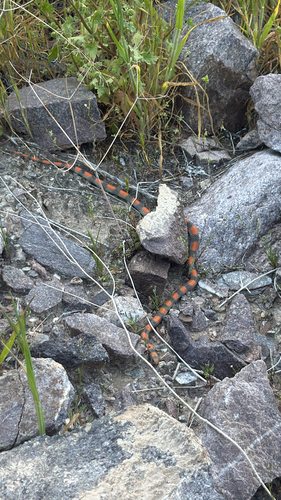
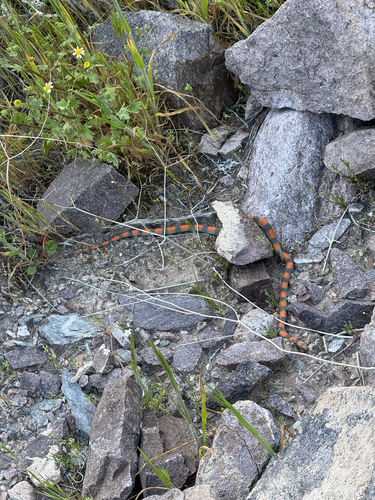
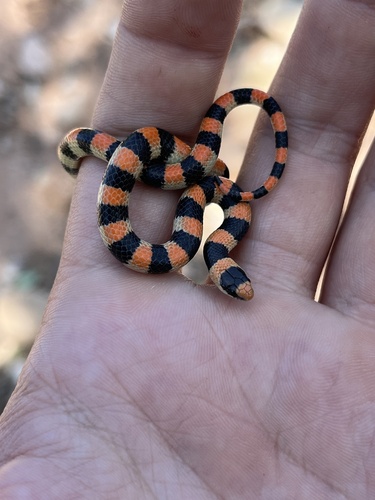
6 photographs of the Ground Snake. © Ricardo Jaimes-López.
The Ground Snake (Sonora semiannulata) is a non-venomous snake in the Colubridae family, recorded in 2 countries.
- Also called
- Groundsnake
- Family
- Colubridae
- Size
- Small, 8–18 in.
- Habitat
- Deserts and arid grasslands with sandy or rocky soils.
- Behavior
- Nocturnal burrowers that feed on invertebrates.
- Identify
- Small and smooth-scaled; highly variable — banded, striped, or plain.
About the Ground Snake
The western ground snake (Sonora semiannulata) is a species of small, harmless colubrid snake. The species is endemic to North America. Its patterning and coloration can vary widely, even within the same geographic region. Another common name is miter snake referring to the head marking which suggests a bishop's miter; the synonym "episcopus " (Latin for "bishop") is a similar allusion.
Geographic range
S. semiannulata is native to the Southwestern United States, in Arizona, Nevada, California, Colorado, Kansas, Missouri, New Mexico, Oklahoma, Oregon, Texas, and Utah, as well as northern Mexico, in Chihuahua, Coahuila, Durango, Nuevo León, and Sonora.
Description
The western ground snake can grow to a total length (including tail) of 8 to 19 inches (20.3 to 48.3 cm). The color and pattern can vary widely. Individuals can be brown, red, or orange, with black banding, orange or brown striping, or be solid-colored. The underside is typically white or gray. It has smooth dorsal scales, a small head, and the pupil of the eye is round.
Habitat
The preferred habitat of S. semiannulata is dry, rocky areas with loose soil.
Behavior
The western ground snake is typically nocturnal and secretive, but it is common throughout its range. It is often found on roadsides, or in dry drainage ditches at night, foraging for food.
Diet
The diet of S. semiannulata consists primarily of invertebrates, such as spiders, scorpions, centipedes, crickets, and insect larvae.
Reproduction
The western ground snake is oviparous, breeding and laying eggs through the summer months.
Taxonomy
Sonora semiannulata was once broken up into five separate subspecies, based on the vast differences in color and patterning that the species displays, but recent research has shown that the various colors and patterns of ground snake interbreed indiscriminately, making distinction between them impossible and thus not warranting subspecies status, though some sources still refer to them, using geography as a basis rather than morphology.
Adapted from Wikipedia, available under CC BY-SA.
Frequently asked: Ground Snake
- Is the Ground Snake venomous?
- No. The Ground Snake (Sonora semiannulata) is non-venomous and is not considered dangerous to humans. Like most snakes, it will retreat rather than bite when given the chance.
- Is the Ground Snake poisonous?
- Snakes are venomous, not poisonous. "Poisonous" means harmful to eat or touch; "venomous" means injecting toxins through a bite. The Ground Snake is neither poisonous nor venomous.
- Is the Ground Snake dangerous?
- The Ground Snake is not dangerous to humans. It has no medically significant venom and bites only defensively if cornered or handled.
- Where does the Ground Snake live?
- The Ground Snake has verified records in 2 countries, including United States of America, Mexico. See the distribution section below for its full range.
- How do I identify the Ground Snake?
- Small and smooth-scaled; highly variable — banded, striped, or plain.
- How big does the Ground Snake get?
- Small, 8–18 in.
- What does the Ground Snake eat?
- The diet of S. semiannulata consists primarily of invertebrates, such as spiders, scorpions, centipedes, crickets, and insect larvae.
Where it is found
More Colubridae snakes
 Great Plains Ground SnakeSonora episcopa
 Colorado Desert Shovelnose SnakeSonora annulata
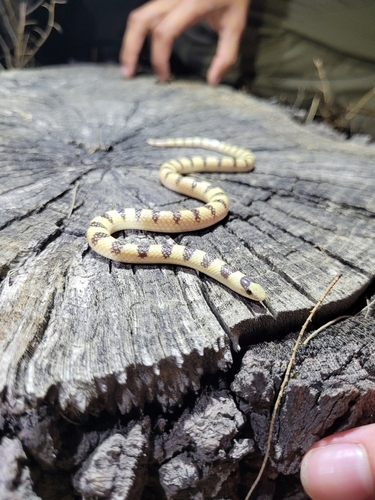 Mojave Shovelnose SnakeSonora occipitalis
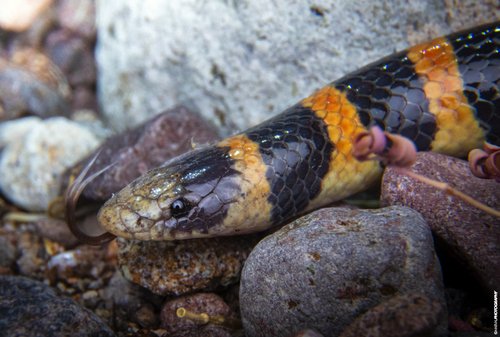 Banded Sand SnakeSonora cincta
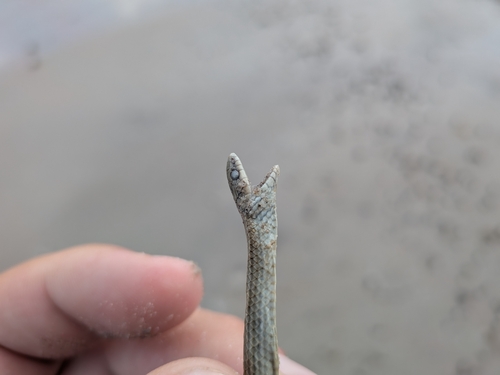 Taylor’s Ground SnakeSonora taylori
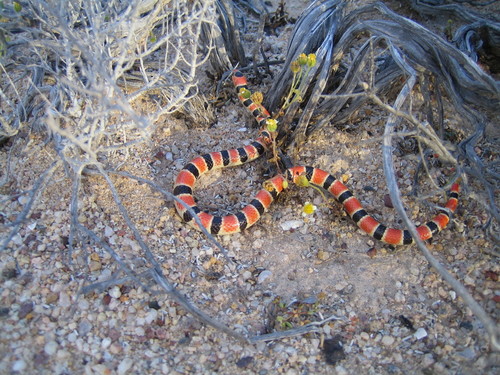 Sonoran Shovel-nosed SnakeSonora palarostris
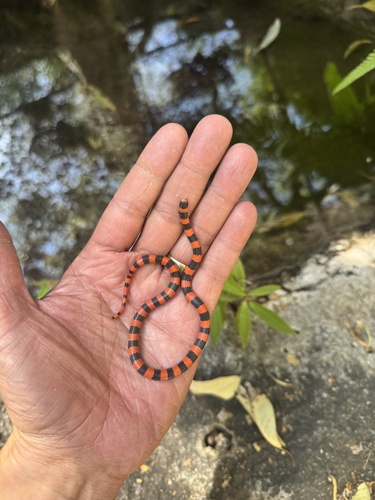 Mexican GroundsnakeSonora mutabilis
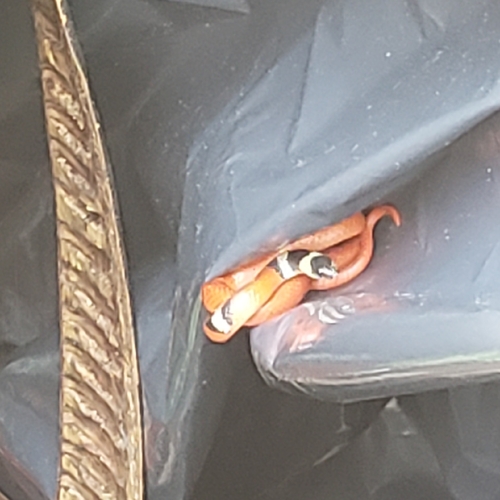 Michoacán Ground SnakeSonora michoacanensis
Classification
How scientists group this snake, from the broadest category down to the exact species. Each step narrows to its closest relatives.
- OrderThe broad group of scaled reptiles: all snakes and lizards
- Squamata
- FamilyA group of related snakes that share key traits
- Colubridae
- GenusA close-knit group of very similar species
- Sonora
- SpeciesThis exact snake, named in the two-part scientific name
- Sonora semiannulata
Keep learning
- What to Do If You Find a SnakeFound a snake at home or on a trail? Here is how to stay calm, give it space, identify it safely, and know when to call a professional.
- Venomous vs Nonvenomous: How to Tell the DifferenceThe folk rules for telling venomous snakes apart, where each one fails, and why location-based identification beats guessing by sight.
- What Is a Snake? Anatomy and the BasicsA clear overview of what makes a snake a snake: limbless body plan, anatomy, evolution from lizards, species diversity, and why they are ectothermic.
- How to Keep Snakes Out of Your Yard and HomeA practical guide to keeping snakes out of your yard and home using habitat changes that work, plus what to skip and what to do if one shows up.
Distribution from GBIF & iNaturalist. Venom status per CDC. Background: Wikipedia. Informational only. Never handle a snake to identify it.