
Prosymnidae
South-western African Shovel-snout
HarmlessProsymna frontalis
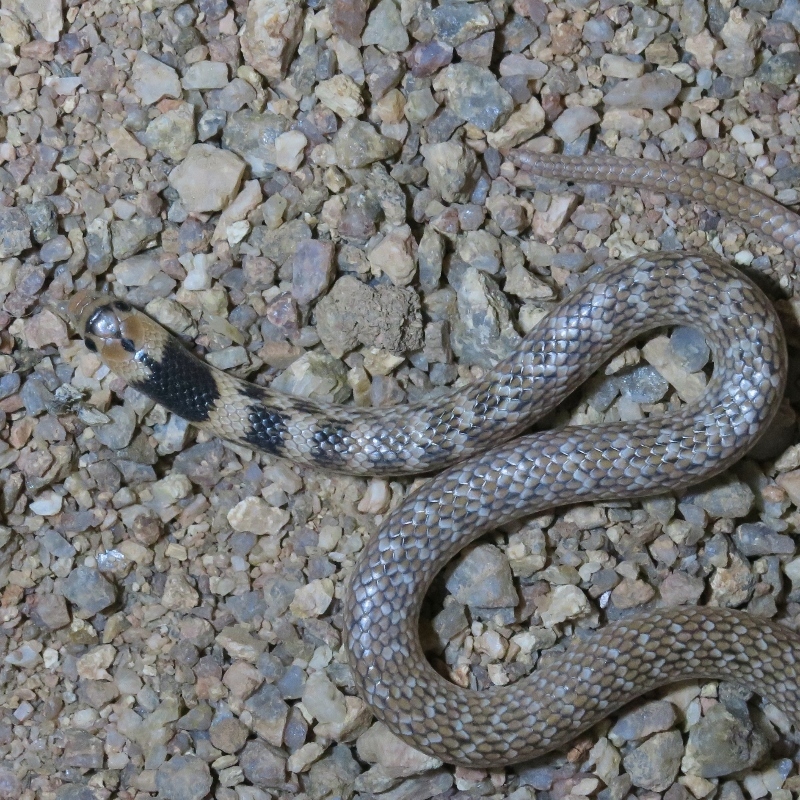
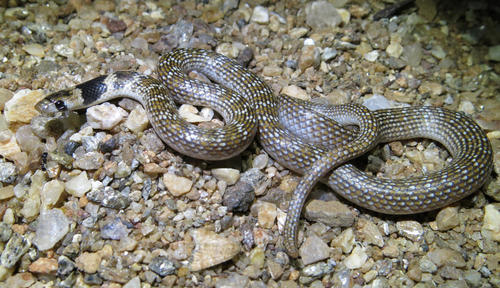
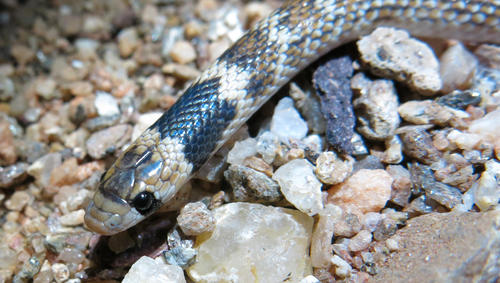
3 photographs of the South-western African Shovel-snout. © Kevin Murray.
The South-western African Shovel-snout (Prosymna frontalis) is a non-venomous snake in the Prosymnidae family, recorded in 3 countries.
- Family
- Prosymnidae
About the South-western African Shovel-snout
Prosymna frontalis, commonly known as the south-western shovel-snout, is a species of snake native to rocky areas in South Africa, Namibia, and possibly southern Angola.
Etymology
Prosymna frontalis was first described as Temnorhynchus frontalis in 1867 by Wilhelm Peters, a German naturalist and explorer. Peters named the species for the particularly large scales on its nose and head when compared to other species of shovel-snouts.
As a member of the family Prosymnidae, this species is among 19 other shovel-snouts found globally, all of which are burrowing snakes whose diet primarily consists of eggs and small lizards.
Description
Prosymna frontalis adults typically measure from 20–30 cm (7.9–11.8 in), with a pattern of speckled tans, oranges, and light greys. Most individuals have thick black banding towards the head, which is flat with larger scaling seen in many burrowing snakes. These scales are somewhat reduced in P. frontalis.
Habitat and activity
Notably, P. frontalis have been observed to be less fossorial than other members of their genus and more associated with rocky outcrops. They are typically active at night and after rain. These snakes are slow but effective climbers of the rocky terrain in which they live.
Reproduction
Females generally lay small clutches of 2-3 elongated eggs during mid-summer, when the weather in southern Africa is hot and sunny with frequent thunderstorms. Little else is known regarding breeding habits of this species.
Diet
Like other Prosymna, P. frontalis feeds largely on the eggs of snakes and lizards, most of which have soft, leathery shells. Because P. frontalis is more closely associated with rocky habitats than other Prosymna, where many geckos lay their hard-shelled eggs, they may have lost their anterior maxillary teeth to allow them to feed more easily on gecko eggs.
Adapted from Wikipedia, available under CC BY-SA.
Frequently asked: South-western African Shovel-snout
- Is the South-western African Shovel-snout venomous?
- No. The South-western African Shovel-snout (Prosymna frontalis) is non-venomous and is not considered dangerous to humans. Like most snakes, it will retreat rather than bite when given the chance.
- Is the South-western African Shovel-snout poisonous?
- Snakes are venomous, not poisonous. "Poisonous" means harmful to eat or touch; "venomous" means injecting toxins through a bite. The South-western African Shovel-snout is neither poisonous nor venomous.
- Is the South-western African Shovel-snout dangerous?
- The South-western African Shovel-snout is not dangerous to humans. It has no medically significant venom and bites only defensively if cornered or handled.
- Where does the South-western African Shovel-snout live?
- The South-western African Shovel-snout has verified records in 3 countries, including Namibia, South Africa, Angola. See the distribution section below for its full range.
- What does the South-western African Shovel-snout eat?
- Like other Prosymna, P. frontalis feeds largely on the eggs of snakes and lizards, most of which have soft, leathery shells. Because P. frontalis is more closely associated with rocky habitats than other Prosymna, where many geckos lay their hard-shelled eggs, they may have lost their anterior maxillary teeth to allow them to feed more easily on gecko eggs.
- Why is it called the South-western African Shovel-snout?
- Prosymna frontalis was first described as Temnorhynchus frontalis in 1867 by Wilhelm Peters, a German naturalist and explorer. Peters named the species for the particularly large scales on its nose and head when compared to other species of shovel-snouts. As a member of the family Prosymnidae, this species is among 19 other shovel-snouts found globally, all of which are burrowing snakes whose diet primarily consists of eggs and small lizards.
Where it is found
More Prosymnidae snakes
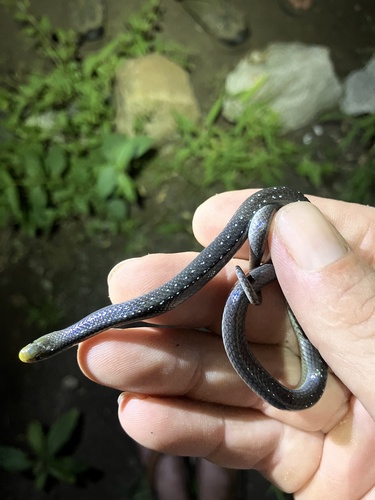 East African Shovel-SnoutProsymna stuhlmanni
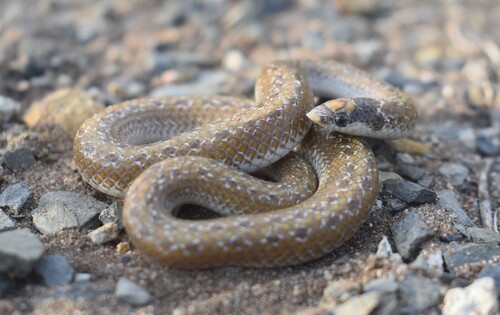 South African Shovel-snoutProsymna sundevalli
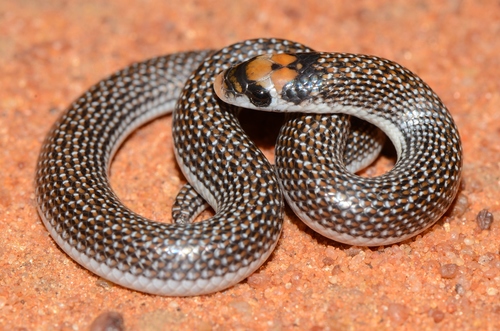 Lineolate Shovel-snoutProsymna lineata
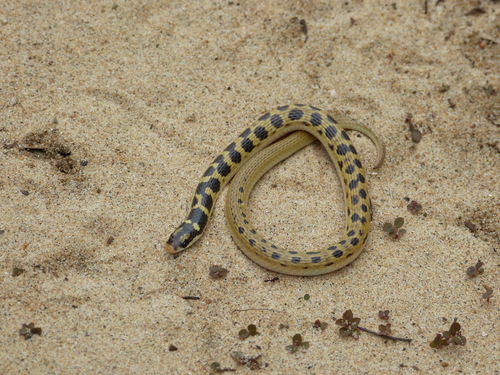 Mozambique Shovel-snoutProsymna janii
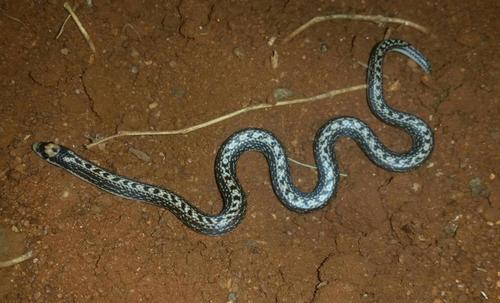 Twin-striped Shovel-snoutProsymna bivittata
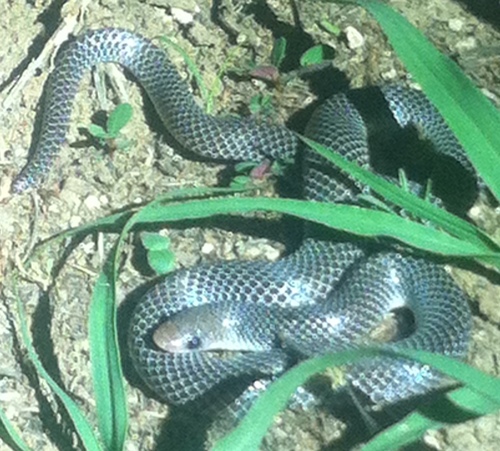 Ruspoli's Shovelsnout SnakeProsymna ruspolii
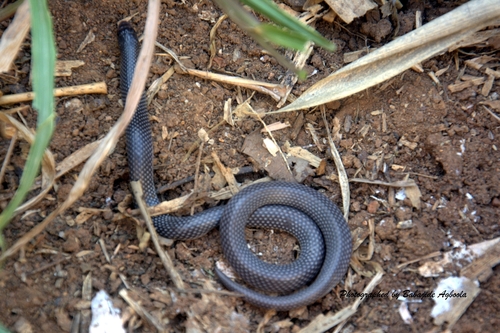 Ghana Shovel-snoutProsymna meleagris
 Angola Shovel-snoutProsymna angolensis
Classification
How scientists group this snake, from the broadest category down to the exact species. Each step narrows to its closest relatives.
- OrderThe broad group of scaled reptiles: all snakes and lizards
- Squamata
- FamilyA group of related snakes that share key traits
- Prosymnidae
- GenusA close-knit group of very similar species
- Prosymna
- SpeciesThis exact snake, named in the two-part scientific name
- Prosymna frontalis
Keep learning
- What to Do If You Find a SnakeFound a snake at home or on a trail? Here is how to stay calm, give it space, identify it safely, and know when to call a professional.
- Venomous vs Nonvenomous: How to Tell the DifferenceThe folk rules for telling venomous snakes apart, where each one fails, and why location-based identification beats guessing by sight.
- What Is a Snake? Anatomy and the BasicsA clear overview of what makes a snake a snake: limbless body plan, anatomy, evolution from lizards, species diversity, and why they are ectothermic.
- How to Keep Snakes Out of Your Yard and HomeA practical guide to keeping snakes out of your yard and home using habitat changes that work, plus what to skip and what to do if one shows up.
Distribution from GBIF & iNaturalist. Venom status per CDC. Background: Wikipedia. Informational only. Never handle a snake to identify it.