
Colubridae
South American Elegant Racer
HarmlessPseudalsophis elegans
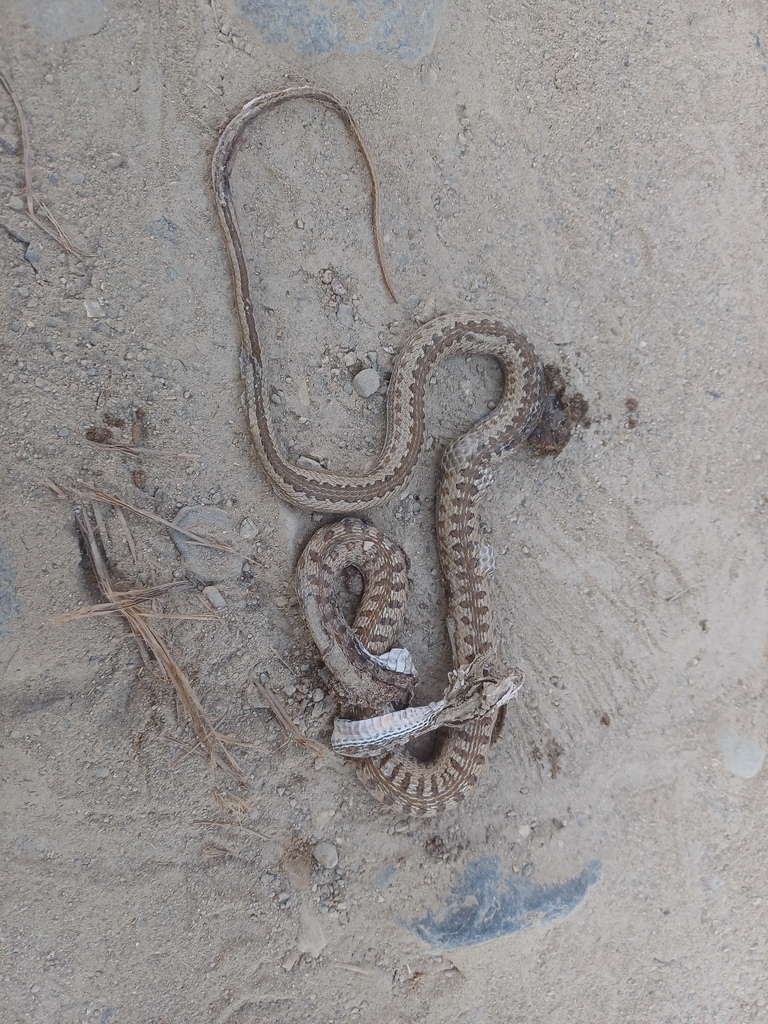
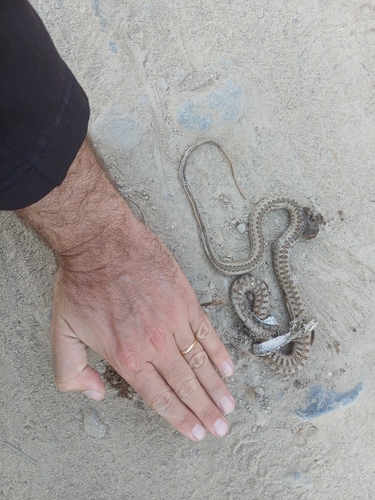
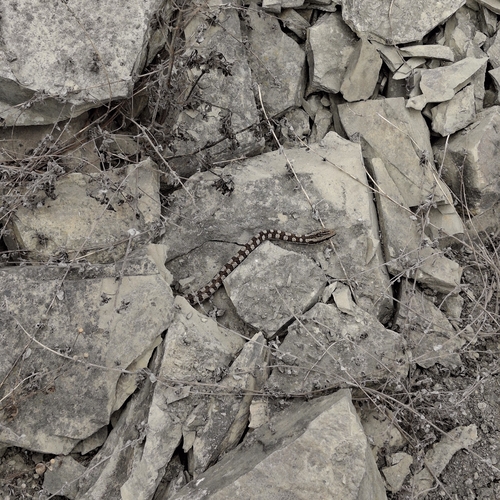
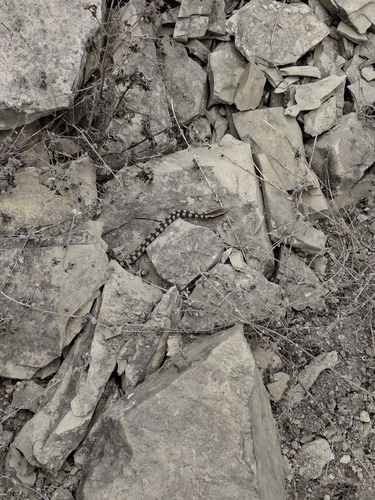
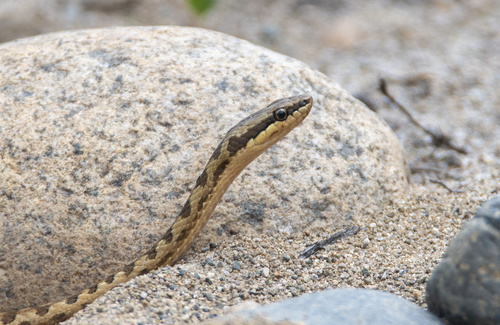
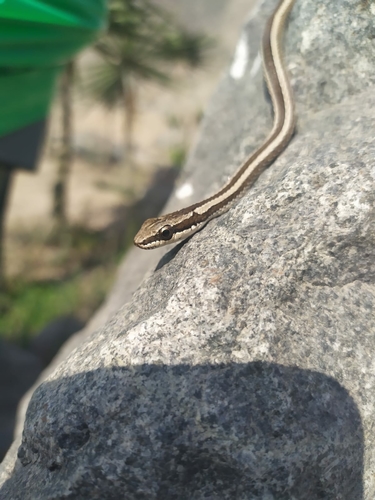
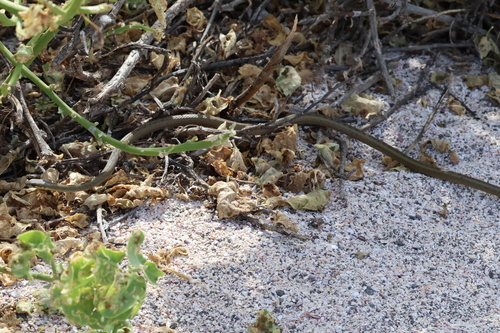
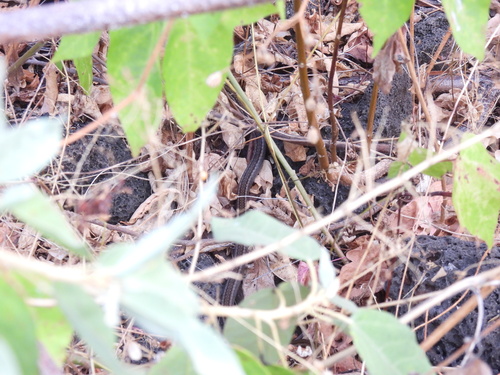
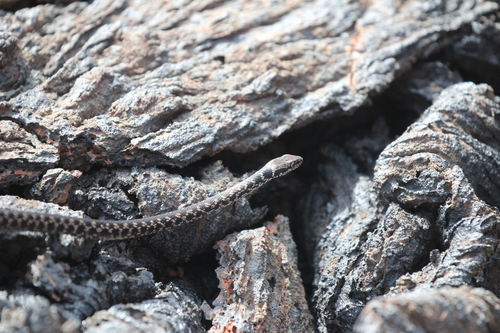
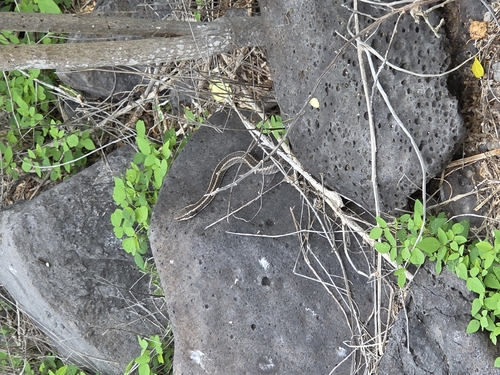
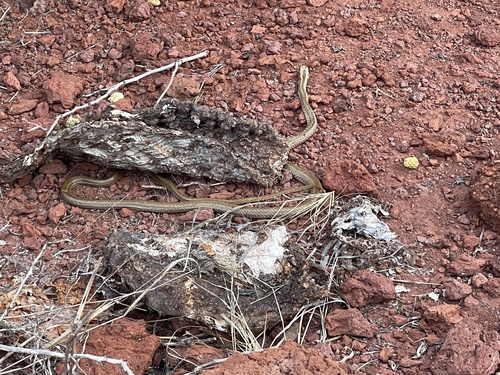
6 photographs of the South American Elegant Racer. © David F. Belmonte.
The South American Elegant Racer (Pseudalsophis elegans) is a non-venomous snake in the Colubridae family, recorded in 5 countries.
- Family
- Colubridae
About the South American Elegant Racer
Pseudalsophis elegans is a species of snake of the family Colubridae. Common names include South American elegant racer and Guayaquil racer. It is the only snake species of the genus Pseudalsophis not found in the Galapagos Islands.
Morphology
Pseudalsophis elegans is a small-to-medium-sized snake. The maximum reported snout-vent length is 41.5 cm for males and 99.1 cm for females.
The dorsal scales are smooth and in 19 rows near the head and at midbody, and 15 or 17 rows near the tail. There are 187−213 ventral scales and 87-119 subcaudal scales. On the head, there are usually 8 supralabials, 10 infralabials, 1 preocular and 2 postocular scales.
Taxonomy
Etymology
The specific epithet elegans (Latin for "elegant") refers to the dorsal pattern, a dark longitudinal stripe with undulating margins toward the head, changing to straight-edged and unbroken toward the tail.
Nomenclatural history
This snake was redescribed four times as a new species, which Schmidt and Walker (1943) thought was related "to the variable coloration and to the differences between the juvenile and adult, as well as to the fallibility of taxonomists".
Phylogenetic relationships
All recent analyses support a sister relationship between P. elegans and the species of Pseudalsophis in the Galapagos.
Distribution and habitat
Geographic range
This snake is found in the southwestern part of mainland Ecuador, as well as in coastal Peru and northern Chile, west of the Andes Mountains.
Biogeography
Molecular evidence suggests that P. elegans diverged from the ancestor of the Galapagos species of Pseudalsophis about 6.9 million years ago. Because the oldest of the Galapagos Islands is a little under 4 million years old, the ancestors of the Galapagos Pseudalsophis must have initially colonized Proto-Galapagos Islands that have since subsided beneath the ocean. At the time, the colonists probably would have been considered conspecific with P. elegans, but have since diversified into 9 species, whereas the mainland lineage has remained a single species.
Habitat
This species is terrestrial and can be found in deserts, shrublands, and seasonally dry forests.
Biology
Diet
There are no detailed studies of the diet of P. elegans. They have been reported to feed on lizards, including the cercosaurine gymnophthalmid Macropholidus ruthveni and the teiid Dicrodon guttulatum.
Venom
Snakes of the genus Pseudalsophis are opisthoglyphous and mildly venomous, but not dangerous to humans.
Reproduction
A wild-caught female from Lambayeque, Peru, laid 6 eggs in March. No other information about reproduction has been reported.
Adapted from Wikipedia, available under CC BY-SA.
Frequently asked: South American Elegant Racer
- Is the South American Elegant Racer venomous?
- No. The South American Elegant Racer (Pseudalsophis elegans) is non-venomous and is not considered dangerous to humans. Like most snakes, it will retreat rather than bite when given the chance.
- Is the South American Elegant Racer poisonous?
- Snakes are venomous, not poisonous. "Poisonous" means harmful to eat or touch; "venomous" means injecting toxins through a bite. The South American Elegant Racer is neither poisonous nor venomous.
- Is the South American Elegant Racer dangerous?
- The South American Elegant Racer is not dangerous to humans. It has no medically significant venom and bites only defensively if cornered or handled.
- Where does the South American Elegant Racer live?
- The South American Elegant Racer has verified records in 5 countries, including Peru, Chile, Ecuador. See the distribution section below for its full range.
- What does the South American Elegant Racer eat?
- There are no detailed studies of the diet of P. elegans. They have been reported to feed on lizards, including the cercosaurine gymnophthalmid Macropholidus ruthveni and the teiid Dicrodon guttulatum.
- Why is it called the South American Elegant Racer?
- The specific epithet elegans (Latin for "elegant") refers to the dorsal pattern, a dark longitudinal stripe with undulating margins toward the head, changing to straight-edged and unbroken toward the tail.
Where it is found
More Colubridae snakes
 Fernandina RacerPseudalsophis occidentalis
 Painted RacerPseudalsophis steindachneri
 Santa Cruz RacerPseudalsophis dorsalis
 Galápagos RacerPseudalsophis biserialis
 Darwin's RacerPseudalsophis darwini
 Española RacerPseudalsophis hoodensis
 Thomas's RacerPseudalsophis thomasi
 Santiago RacerPseudalsophis hephaestus
Classification
How scientists group this snake, from the broadest category down to the exact species. Each step narrows to its closest relatives.
- OrderThe broad group of scaled reptiles: all snakes and lizards
- Squamata
- FamilyA group of related snakes that share key traits
- Colubridae
- GenusA close-knit group of very similar species
- Pseudalsophis
- SpeciesThis exact snake, named in the two-part scientific name
- Pseudalsophis elegans
Keep learning
- What to Do If You Find a SnakeFound a snake at home or on a trail? Here is how to stay calm, give it space, identify it safely, and know when to call a professional.
- Venomous vs Nonvenomous: How to Tell the DifferenceThe folk rules for telling venomous snakes apart, where each one fails, and why location-based identification beats guessing by sight.
- What Is a Snake? Anatomy and the BasicsA clear overview of what makes a snake a snake: limbless body plan, anatomy, evolution from lizards, species diversity, and why they are ectothermic.
- How to Keep Snakes Out of Your Yard and HomeA practical guide to keeping snakes out of your yard and home using habitat changes that work, plus what to skip and what to do if one shows up.
Distribution from GBIF & iNaturalist. Venom status per CDC. Background: Wikipedia. Informational only. Never handle a snake to identify it.