
Colubridae
Galápagos Racer
HarmlessPseudalsophis biserialis
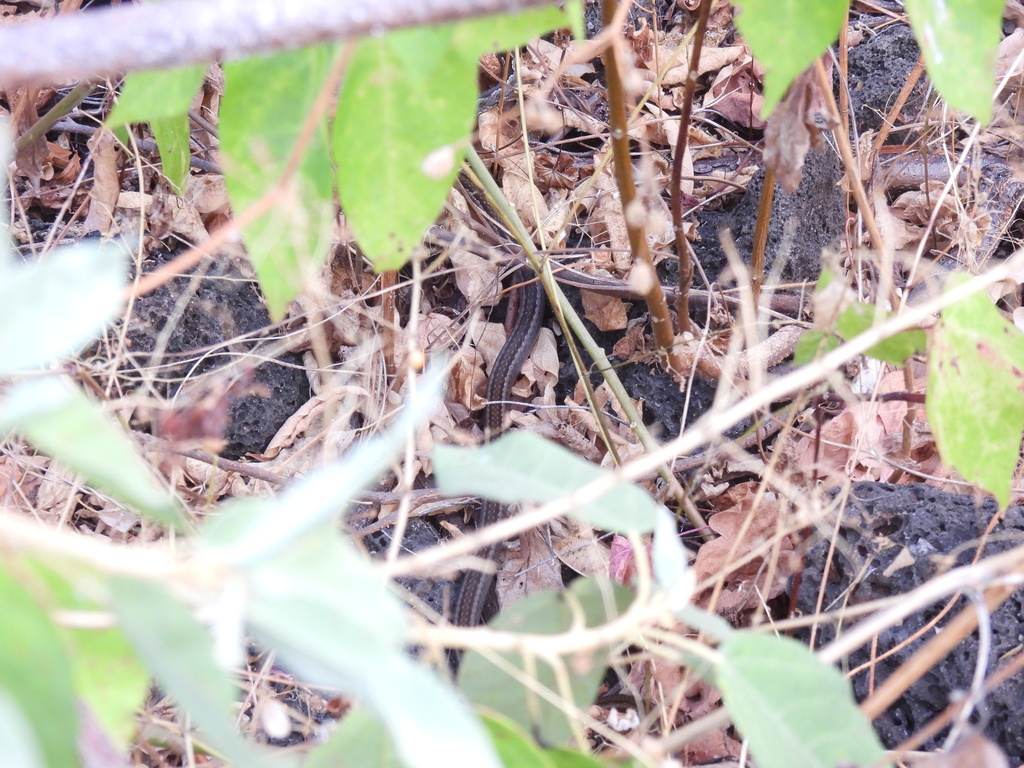
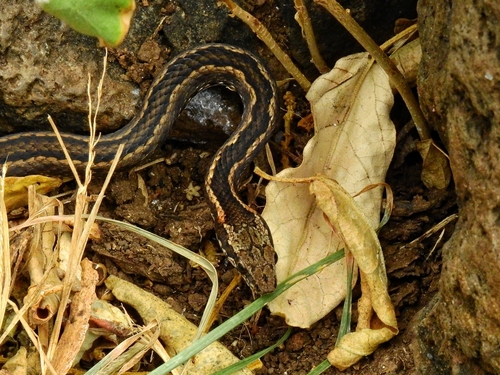
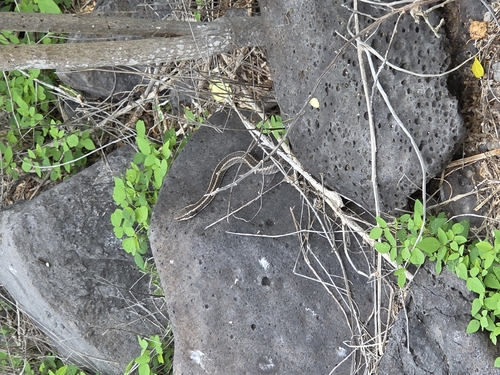
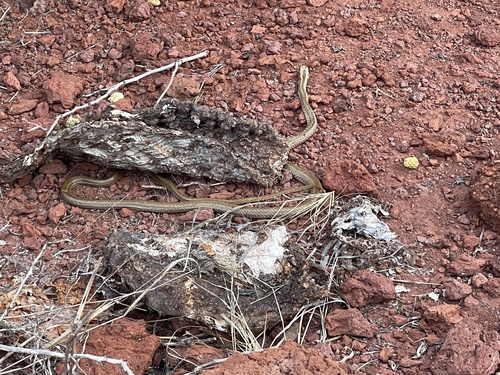
3 photographs of the Galápagos Racer. © novvictan.
The Galápagos Racer (Pseudalsophis biserialis) is a non-venomous snake in the Colubridae family, recorded in 1 country.
- Family
- Colubridae
About the Galápagos Racer
The Galápagos racer (Pseudalsophis biserialis) is a colubrid snake in the genus Pseudalsophis that is endemic to the Galápagos Islands. It is a mildly venomous constrictor but it is not considered aggressive or harmful to humans. The two subspecies are the eastern and western racers, the latter being larger, longer, and darker than the former. The western subspecies specializes in hunting fish, while both subspecies eat small reptiles, eggs, rodents, and bird hatchlings. The Galapagos racer is near threatened due to recently introduced species that feed on snake eggs, including pigs, rats, mice, and cats. It is one of only three species of snakes on the Galápagos Islands, and it was first described in 1860. In November 2016, a video clip from the BBC series Planet Earth II showing a group of Galápagos racers hunting marine iguana hatchlings became a viral trend.
Description
The snake is the only snake that occurs in the islets around the Floreana Island in Galápagos. The average sizes of males and females are respectively 129 and 126 cm. The snake is mildly venomous, with venom impacting the snake's small prey, but without effect on humans. Their diet includes small lizards, invertebrates, and birds.
Taxonomy and etymology
Originally classified as Herpetodryas biserialis by Albert Günther in 1860, this species has been renamed numerous times since then. The generic names have included Dromicus, Orpheomorphus, and Oraphis.
Adapted from Wikipedia, available under CC BY-SA.
Frequently asked: Galápagos Racer
- Is the Galápagos Racer venomous?
- No. The Galápagos Racer (Pseudalsophis biserialis) is non-venomous and is not considered dangerous to humans. Like most snakes, it will retreat rather than bite when given the chance.
- Is the Galápagos Racer poisonous?
- Snakes are venomous, not poisonous. "Poisonous" means harmful to eat or touch; "venomous" means injecting toxins through a bite. The Galápagos Racer is neither poisonous nor venomous.
- Is the Galápagos Racer dangerous?
- The Galápagos Racer is not dangerous to humans. It has no medically significant venom and bites only defensively if cornered or handled.
- Where does the Galápagos Racer live?
- The Galápagos Racer has verified records in 1 country, including Ecuador. See the distribution section below for its full range.
- Why is it called the Galápagos Racer?
- Originally classified as Herpetodryas biserialis by Albert Günther in 1860, this species has been renamed numerous times since then. The generic names have included Dromicus, Orpheomorphus, and Oraphis.
Where it is found
More Colubridae snakes
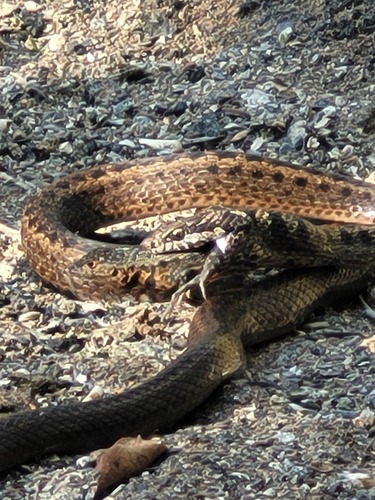 Fernandina RacerPseudalsophis occidentalis
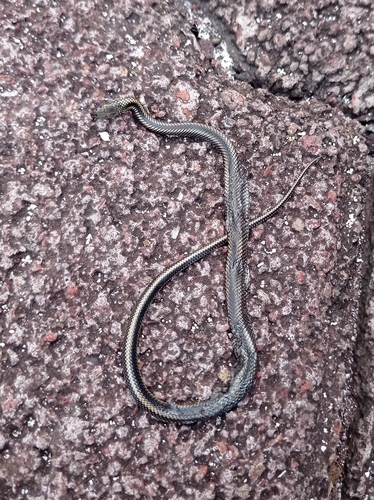 Painted RacerPseudalsophis steindachneri
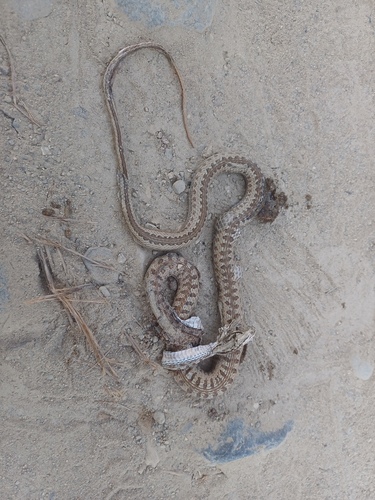 South American Elegant RacerPseudalsophis elegans
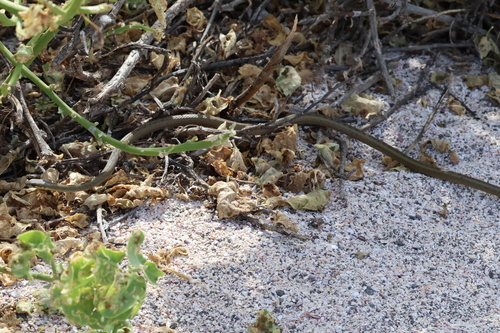 Santa Cruz RacerPseudalsophis dorsalis
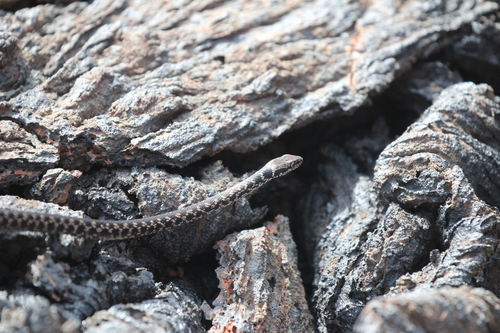 Darwin's RacerPseudalsophis darwini
 Española RacerPseudalsophis hoodensis
 Thomas's RacerPseudalsophis thomasi
 Santiago RacerPseudalsophis hephaestus
Classification
How scientists group this snake, from the broadest category down to the exact species. Each step narrows to its closest relatives.
- OrderThe broad group of scaled reptiles: all snakes and lizards
- Squamata
- FamilyA group of related snakes that share key traits
- Colubridae
- GenusA close-knit group of very similar species
- Pseudalsophis
- SpeciesThis exact snake, named in the two-part scientific name
- Pseudalsophis biserialis
Keep learning
- What to Do If You Find a SnakeFound a snake at home or on a trail? Here is how to stay calm, give it space, identify it safely, and know when to call a professional.
- Venomous vs Nonvenomous: How to Tell the DifferenceThe folk rules for telling venomous snakes apart, where each one fails, and why location-based identification beats guessing by sight.
- What Is a Snake? Anatomy and the BasicsA clear overview of what makes a snake a snake: limbless body plan, anatomy, evolution from lizards, species diversity, and why they are ectothermic.
- How to Keep Snakes Out of Your Yard and HomeA practical guide to keeping snakes out of your yard and home using habitat changes that work, plus what to skip and what to do if one shows up.
Distribution from GBIF & iNaturalist. Venom status per CDC. Background: Wikipedia. Informational only. Never handle a snake to identify it.