
Genus · Colubridae
Types of racers
10 species make up the genus Pseudalsophis, the snakes commonly called racers. None are considered dangerous to humans.
About Galapagos and South American racers
Fast, slender, day-active colubrids best known as the Galapagos racers, the snakes that ambush marine iguana hatchlings on volcanic shores.
Pseudalsophis is a genus of colubrid snakes, members of the huge family Colubridae that accounts for most of the world's snake species. Within that family they sit among the New World racer-type colubrids, slim and quick ground hunters rather than heavy ambush predators. Our database lists 10 species in the genus. The best known of these are the Galapagos racers, a cluster of species found only on the Galapagos archipelago, alongside a handful of mainland South American relatives such as the Painted Racer and the South American Elegant Racer.
The genus is centered on western South America and the Galapagos Islands. On the Galapagos, individual species are often tied to single islands or island groups, including forms like the Fernandina Racer and the Santa Cruz Racer, where long isolation has produced distinct local populations. They live in dry and arid habitats: lava fields, rocky coastal zones, scrub, and open ground where they can move and bask in the open. Mainland species occupy comparable dry to semi-arid country in parts of Peru, Ecuador, and Chile.
In general terms these are typical racers. They are slender, with a fairly long body, a head only modestly distinct from the neck, and relatively large eyes with round pupils that fit a daytime, sight-driven hunting style. Coloration tends toward browns, grays, and tans, frequently with stripes, spots, or a mottled pattern that breaks up the outline against rock and soil. They are alert and quick to flee, which is the usual racer behavior when approached.
Pseudalsophis are rear-fanged colubrids. They have enlarged teeth toward the back of the upper jaw and produce a mild venom used to subdue small prey, not a front-fanged, medically significant venom system like that of vipers or elapids. For people they are considered harmless and are not regarded as dangerous, since the venom is weak and the fangs are positioned to work on small animals rather than to deliver a serious defensive bite. Even so, no wild snake should be handled. If any wild snake bites someone and the species is uncertain, treat it as a medical matter and contact US Poison Control at 1-800-222-1222 or local emergency services.
Ecologically these racers are active diurnal predators of small vertebrates and invertebrates, including lizards, small rodents, insects, and the young of other animals. The Galapagos racers are famous for hunting marine iguana hatchlings on the beaches, sometimes in coordinated-looking groups as the young iguanas race for the rocks, a behavior widely filmed in nature documentaries. Like most colubrids in this lineage they are egg-laying. Several Galapagos species have small, island-bound ranges, which makes them vulnerable to introduced predators and habitat change and a conservation concern on the islands.
Pseudalsophis belongs to the Colubridae family (Colubrids). The largest snake family, and the one most snakes you meet belong to. Typically round pupils, a head only slightly wider than the neck, and no heat-sensing facial pit or rattle. Scales may be smooth and glossy or keeled and matte depending on the species.
Danger: Almost all colubrids are harmless. A small number are rear-fanged with medically significant venom, the boomslang and the twig (vine) snakes of Africa being the dangerous exceptions. Most colubrids will flee or bluff rather than bite.
All species (10)
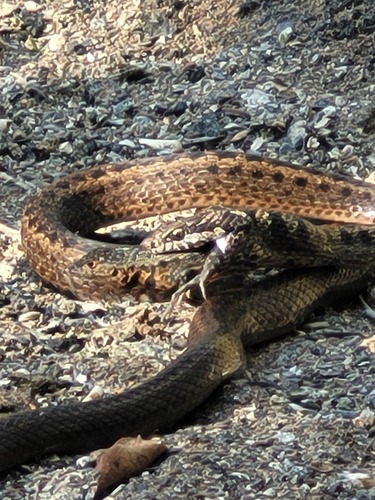 Fernandina RacerPseudalsophis occidentalisHarmless
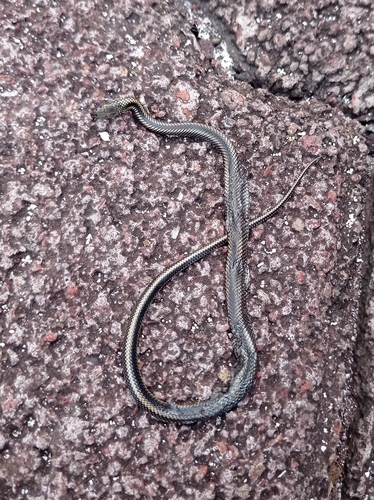 Painted RacerPseudalsophis steindachneriHarmless
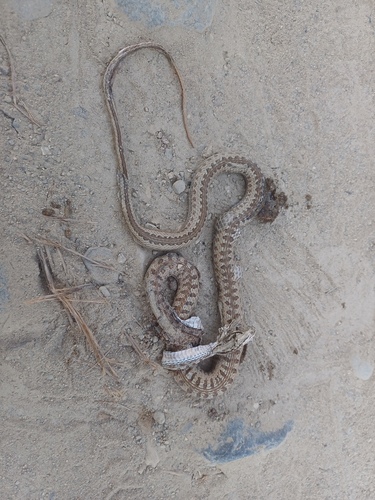 South American Elegant RacerPseudalsophis elegansHarmless
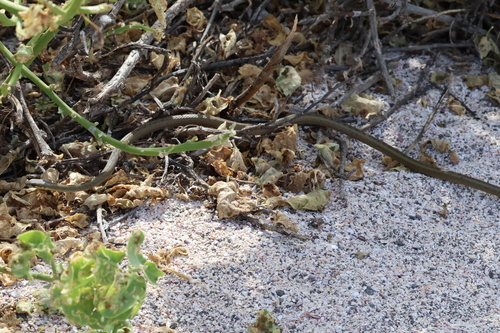 Santa Cruz RacerPseudalsophis dorsalisHarmless
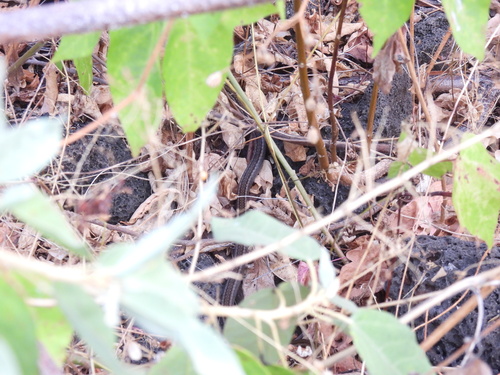 Galápagos RacerPseudalsophis biserialisHarmless
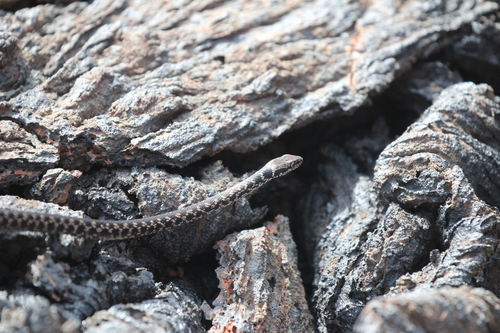 Darwin's RacerPseudalsophis darwiniHarmless
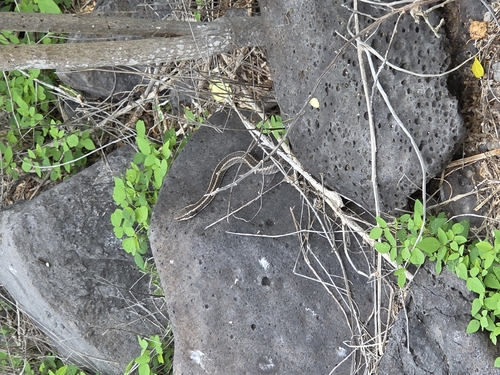 Española RacerPseudalsophis hoodensisHarmless
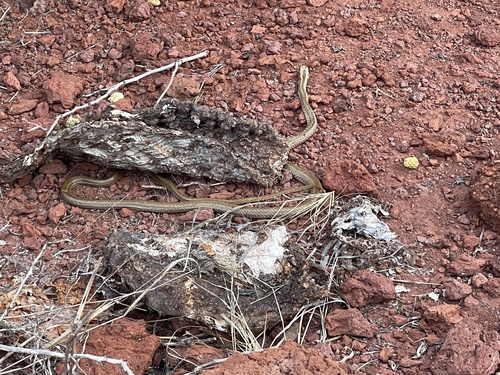 Thomas's RacerPseudalsophis thomasiHarmless
 Santiago RacerPseudalsophis hephaestusHarmless
 Pinzón RacerPseudalsophis sleviniHarmless
Keep learning
- What Is a Snake? Anatomy and the BasicsA clear overview of what makes a snake a snake: limbless body plan, anatomy, evolution from lizards, species diversity, and why they are ectothermic.
- How Snakes Move, Hunt, and EatHow snakes move without legs, hunt as ambushers or active foragers, kill by constriction or venom, and swallow prey wider than their head.
- What Do Snakes Eat?All snakes are carnivores. Learn what snakes eat, how diet changes with size and age, how often they feed, and how they hunt and swallow prey.
- Venomous vs Nonvenomous: How to Tell the DifferenceThe folk rules for telling venomous snakes apart, where each one fails, and why location-based identification beats guessing by sight.