
Loxocemidae
Mexican Burrowing Python
HarmlessLoxocemus bicolor
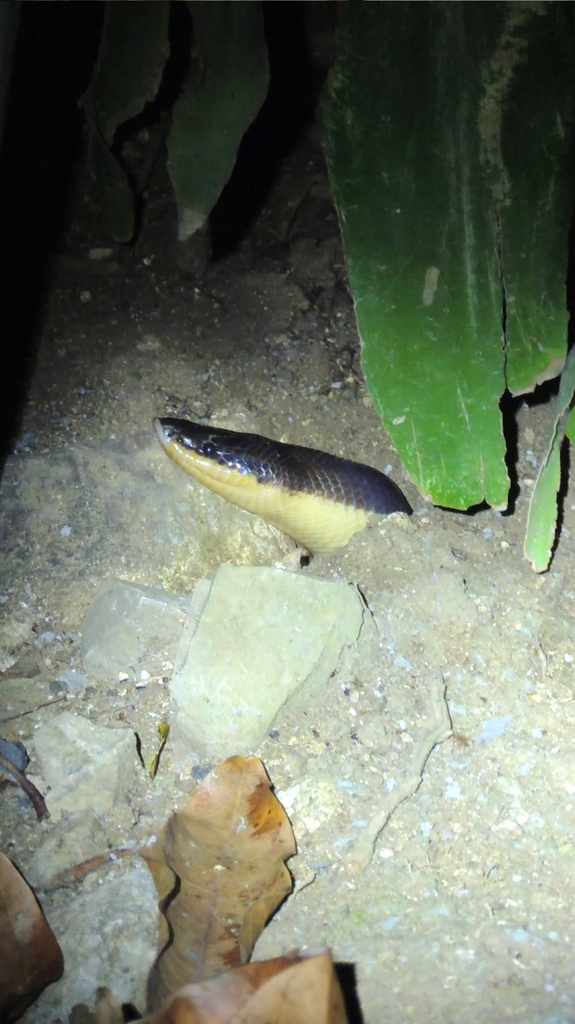
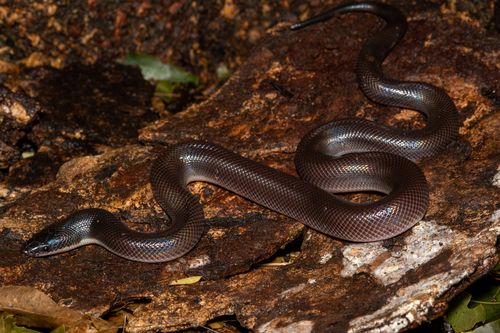
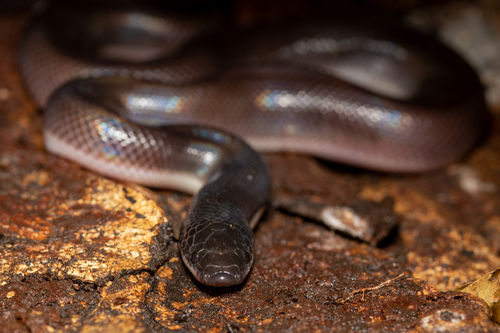
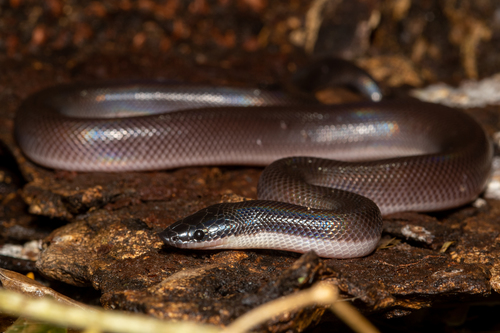
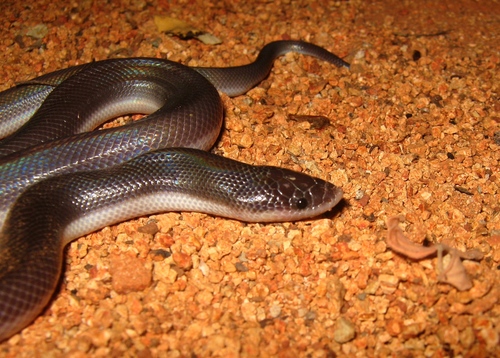
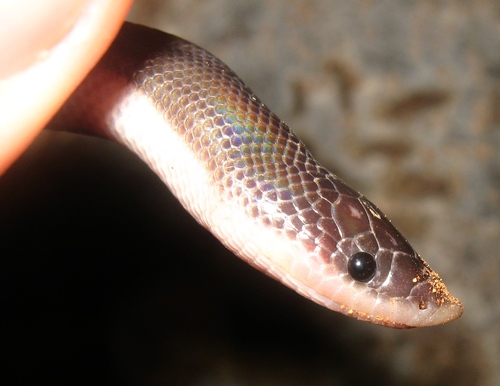
6 photographs of the Mexican Burrowing Python. © Anthony Mora Aguilar.
The Mexican Burrowing Python (Loxocemus bicolor) is a non-venomous snake in the Loxocemidae family, recorded in 6 countries.
- Family
- Loxocemidae
About the Mexican Burrowing Python
Loxocemus bicolor, the sole member of the monotypic family Loxocemidae and commonly known as the Mexican python, Mexican burrowing python and Mexican burrowing snake, is a species of python-like snake found in Mexico and Central America. No subspecies are currently recognized. Analyses of DNA show that Loxocemus is most closely related to the true pythons and the sunbeam snakes.
Description
Adults grow to a maximum of 1.57 m (62 in) in length. On average this snake grows to roughly 91 cm (2.99 ft). The body is stout and very muscular. The snout is shovel-shaped, with a narrow head and small eyes to facilitate burrowing. It has been observed that both male and females have various scent glands on their bodies that secrete fatty acids and alcohols to deter nuisance arthropods, such as ants or other burrowing insects. The species is described as terrestrial and semi-fossorial, which makes them hard to observe and study. The color pattern is usually dark with patches of white scales, although occasionally after shedding all pigment will disappear, resulting in a white snake with only a small dark patch on its head. Scale coloring can also vary between pinkish-brown and reddish-brown, a source of camouflage depending on the soil type of the region an individual typically inhabits.
Distribution and habitat
It is found along the Mexican Pacific versant at low to moderate elevations in the states of Nayarit, Jalisco, Colima, Michoacán, Morelos, Guerrero, Oaxaca, and Chiapas. From there, its range extends south through Guatemala, Honduras, El Salvador, Nicaragua, and Costa Rica. The type locality given is "La Unión, San Salvador" (in El Salvador).
Life cycle
They are found in a variety of habitats, including tropical, moist, and dry forests. In Honduras and Guatemala, they also occur in dry inland valleys that drain into the Caribbean. Their diet is believed to consist of rodents and lizards. In addition, they prey on arthropods, such as underground insects and centipedes, as well as worms. They have also been observed eating iguana eggs, in addition to having been observed to eat sea turtle eggs and hatchlings when food is scarce. They are oviparous, laying small clutches of two to four eggs. In order to consume eggs, individuals have been observed to wrap two to three loops of its anterior trunk to pressurize and pierce an egg before swallowing the yolk whole.
Adapted from Wikipedia, available under CC BY-SA.
Frequently asked: Mexican Burrowing Python
- Is the Mexican Burrowing Python venomous?
- No. The Mexican Burrowing Python (Loxocemus bicolor) is non-venomous and is not considered dangerous to humans. Like most snakes, it will retreat rather than bite when given the chance.
- Is the Mexican Burrowing Python poisonous?
- Snakes are venomous, not poisonous. "Poisonous" means harmful to eat or touch; "venomous" means injecting toxins through a bite. The Mexican Burrowing Python is neither poisonous nor venomous.
- Is the Mexican Burrowing Python dangerous?
- The Mexican Burrowing Python is not dangerous to humans. It has no medically significant venom and bites only defensively if cornered or handled.
- Where does the Mexican Burrowing Python live?
- The Mexican Burrowing Python has verified records in 6 countries, including Mexico, Costa Rica, Guatemala. See the distribution section below for its full range.
Where it is found
Classification
How scientists group this snake, from the broadest category down to the exact species. Each step narrows to its closest relatives.
- OrderThe broad group of scaled reptiles: all snakes and lizards
- Squamata
- FamilyA group of related snakes that share key traits
- Loxocemidae
- GenusA close-knit group of very similar species
- Loxocemus
- SpeciesThis exact snake, named in the two-part scientific name
- Loxocemus bicolor
Keep learning
- What to Do If You Find a SnakeFound a snake at home or on a trail? Here is how to stay calm, give it space, identify it safely, and know when to call a professional.
- Venomous vs Nonvenomous: How to Tell the DifferenceThe folk rules for telling venomous snakes apart, where each one fails, and why location-based identification beats guessing by sight.
- What Is a Snake? Anatomy and the BasicsA clear overview of what makes a snake a snake: limbless body plan, anatomy, evolution from lizards, species diversity, and why they are ectothermic.
- How to Keep Snakes Out of Your Yard and HomeA practical guide to keeping snakes out of your yard and home using habitat changes that work, plus what to skip and what to do if one shows up.
Distribution from GBIF & iNaturalist. Venom status per CDC. Background: Wikipedia. Informational only. Never handle a snake to identify it.