
Colubridae
Grand Cayman Racer
HarmlessCubophis caymanus
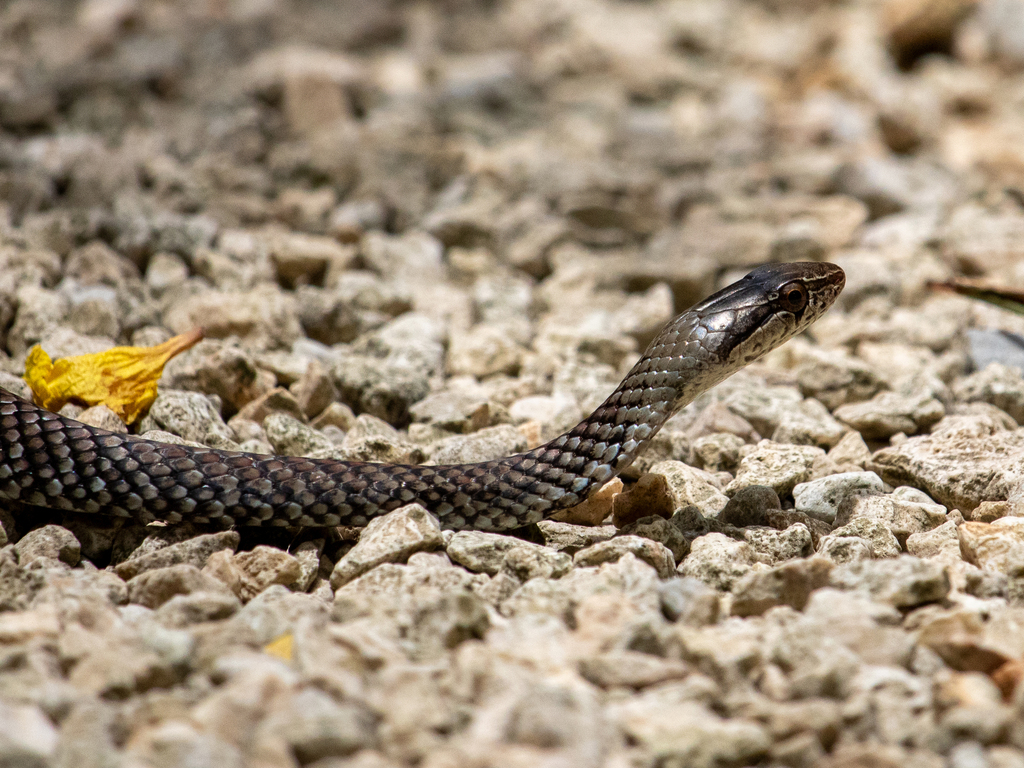
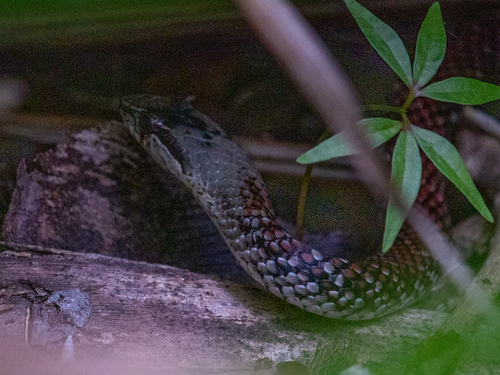
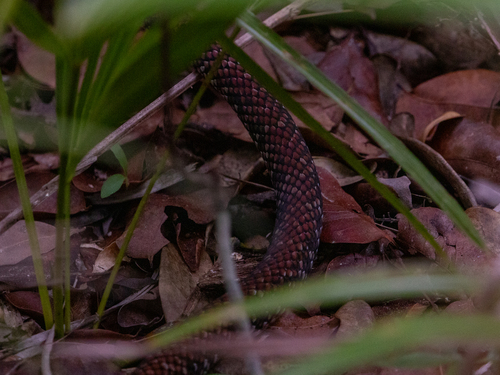
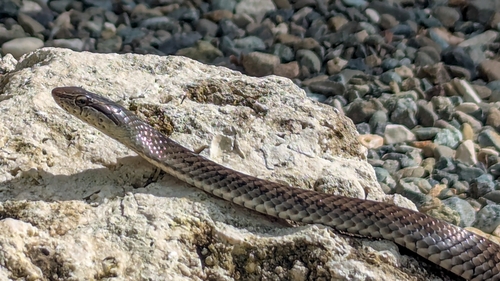
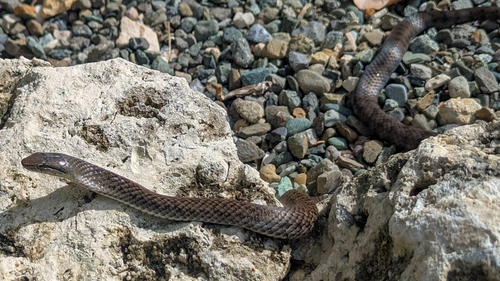
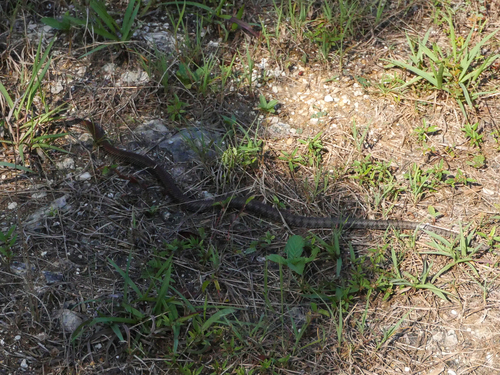
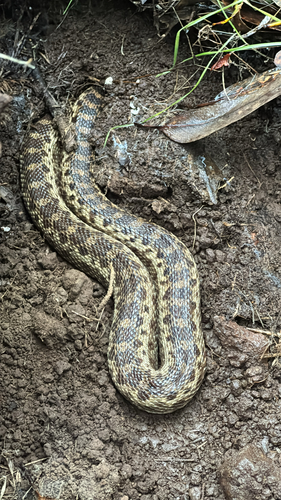
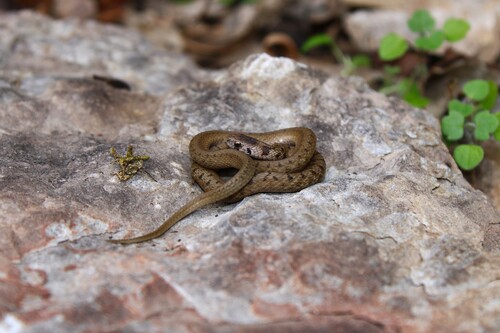
6 photographs of the Grand Cayman Racer. © Dan Schofield.
The Grand Cayman Racer (Cubophis caymanus) is a non-venomous snake in the Colubridae family, recorded in 2 countries.
- Family
- Colubridae
About the Grand Cayman Racer
Cubophis caymanus, the Grand Cayman racer, is a diurnal species of snake in the family Colubridae. The species is native to Grand Cayman Island. Its length typically ranges from 500–860 mm (20–34 in). The body is grey in color, with more distinct black, red and pink scales toward the head.
Distribution and habitat
Like its name suggests, the Grand Cayman racer can be found only on Grand Cayman Island, the largest of the three Cayman Islands.
Morphology
This species of snake is long and slim. Its length typically ranges from 500–860 mm (20–34 in). The length of its grey body is banded with black and red or pink colors. Females of C. caymanus are generally larger than males. The largest Grand Cayman racer to be recorded was a female specimen that measured 1,190 mm (47 in) long and weighed 1.25 kg (2.8 lb).
This species uniformly has a darkened head that includes a stripe which runs from the tip of the nostrils to the temporal scales. This species has a divided anal scale. The number of ventral scales is 171-177 for males and 174-178 for females.
Many individuals of this species are missing pieces of their tails, which might be a result of attacks from avian predators or interactions with land crabs.
Diet and behavior
The diet of Cubophis caymanus is known to consist of the greenhouse frog (Eleutherodactylus planirostris), the green iguana (Iguana iguana) and local species of anole (Anolis spp.).
This species likely opportunistically consumes many small animals found on the island, as it is colloquially known to commonly prey on the Cuban tree frog (Osteopilus septentrionalis), young nestling birds, and small rats.
C. caymanus has a weak venom used to subdue prey. However, C. caymanus often uses constriction as well. This species is both terrestrial and arboreal in nature, allowing it to pursue prey that likewise encompass both strata, such as the green iguana.
Threat display
When threatened, C. caymanus will expand its throat on either side. This works to flatten and enlarge its head to appear more threatening. In addition, these snakes may exhibit musking behaviors in their attempts to deter predators. The musk of these snakes is described as having a smell similar to that of garbage or a dumpster.
Reproduction
This species is known to be oviparous. Clutches laid by C. caymanus may include 8-9 eggs. Nesting lasts for about 4 months. laying begins in May, and the eggs will begin hatching from August until around the end of September.
Threats & conservation
Not much has been officially documented regarding the threats and conservation of this species on the island. However, because the island is populated by people this species will face human threats including the presence of pets and cars.
Adapted from Wikipedia, available under CC BY-SA.
Frequently asked: Grand Cayman Racer
- Is the Grand Cayman Racer venomous?
- No. The Grand Cayman Racer (Cubophis caymanus) is non-venomous and is not considered dangerous to humans. Like most snakes, it will retreat rather than bite when given the chance.
- Is the Grand Cayman Racer poisonous?
- Snakes are venomous, not poisonous. "Poisonous" means harmful to eat or touch; "venomous" means injecting toxins through a bite. The Grand Cayman Racer is neither poisonous nor venomous.
- Is the Grand Cayman Racer dangerous?
- The Grand Cayman Racer is not dangerous to humans. It has no medically significant venom and bites only defensively if cornered or handled.
- Where does the Grand Cayman Racer live?
- The Grand Cayman Racer has verified records in 2 countries, including Cayman Islands, Cuba. See the distribution section below for its full range.
- What does the Grand Cayman Racer eat?
- The diet of Cubophis caymanus is known to consist of the greenhouse frog (Eleutherodactylus planirostris), the green iguana (Iguana iguana) and local species of anole (Anolis spp.). This species likely opportunistically consumes many small animals found on the island, as it is colloquially known to commonly prey on the Cuban tree frog (Osteopilus septentrionalis), young nestling birds, and small rats. C. caymanus has a weak venom used to subdue prey. However, C. caymanus often uses constriction as well.
Where it is found
More Colubridae snakes
Classification
How scientists group this snake, from the broadest category down to the exact species. Each step narrows to its closest relatives.
- OrderThe broad group of scaled reptiles: all snakes and lizards
- Squamata
- FamilyA group of related snakes that share key traits
- Colubridae
- GenusA close-knit group of very similar species
- Cubophis
- SpeciesThis exact snake, named in the two-part scientific name
- Cubophis caymanus
Keep learning
- What to Do If You Find a SnakeFound a snake at home or on a trail? Here is how to stay calm, give it space, identify it safely, and know when to call a professional.
- Venomous vs Nonvenomous: How to Tell the DifferenceThe folk rules for telling venomous snakes apart, where each one fails, and why location-based identification beats guessing by sight.
- What Is a Snake? Anatomy and the BasicsA clear overview of what makes a snake a snake: limbless body plan, anatomy, evolution from lizards, species diversity, and why they are ectothermic.
- How to Keep Snakes Out of Your Yard and HomeA practical guide to keeping snakes out of your yard and home using habitat changes that work, plus what to skip and what to do if one shows up.
Distribution from GBIF & iNaturalist. Venom status per CDC. Background: Wikipedia. Informational only. Never handle a snake to identify it.