
Genus · Colubridae
Types of racers
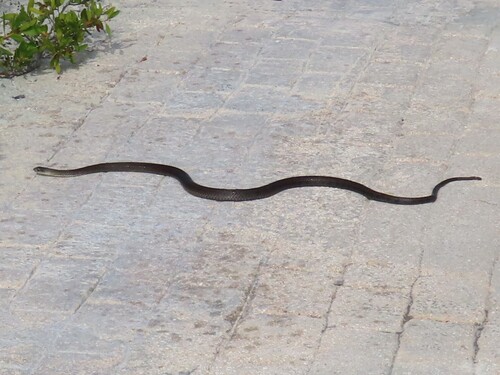
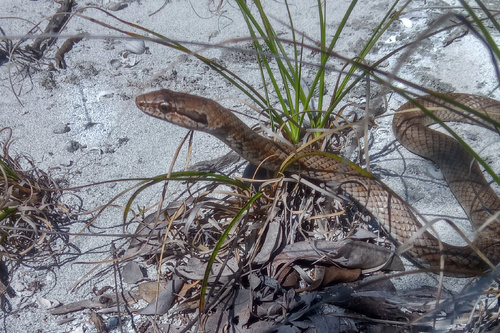
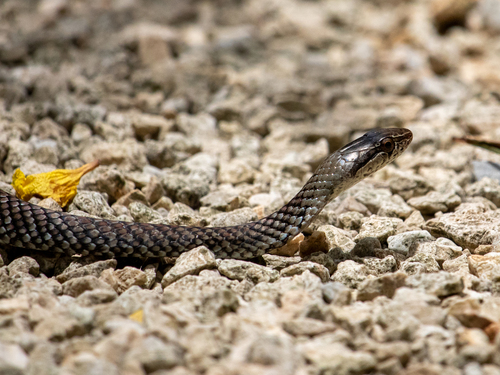
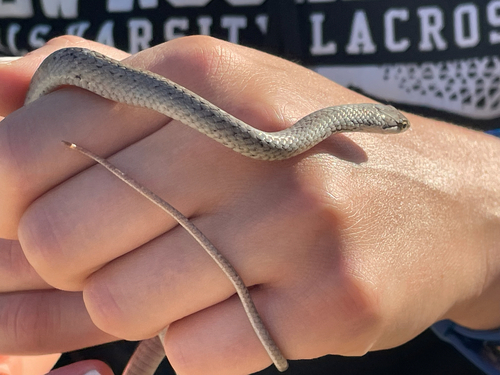
5 species make up the genus Cubophis, the snakes commonly called racers. None are considered dangerous to humans.
About West Indian racers
Fast, slender colubrid racers native to Cuba, the Bahamas, the Cayman Islands, and nearby West Indian waters.
Cubophis is a genus of colubrid snakes endemic to the Caribbean, with members spread across Cuba, the Bahamas, the Cayman Islands, and a few smaller island groups. Our database holds five species. They belong to the family Colubridae, the largest and most diverse snake family worldwide, and to the broadly New World group of West Indian racers that radiated across these islands. Several were once lumped into the catch-all genus Alsophis before island racers were sorted into finer groupings.
These are typical racers in build: long, slim-bodied, fast-moving, ground-dwelling snakes with a clearly defined head, large eyes, and good vision suited to active daytime hunting. Coloration tends toward browns, grays, and olive tones, often with darker striping, mottling, or a paler underside, which helps them blend into leaf litter and dry brush. Sizes are moderate for the family, generally a few feet in total length rather than large constrictors.
Habitat across the genus is varied but tracks island terrain: dry coastal scrub, rocky limestone, pine and broadleaf woodland, agricultural edges, and the margins of human settlement. As alert, agile foragers they are usually seen moving by day and retreating quickly when approached. They are not constrictors in the heavy-bodied sense, relying instead on speed and a quick strike to subdue prey.
Diet is generalist for a racer of this size: lizards (especially anoles and other small island reptiles), frogs, smaller snakes, and small mammals or nestlings where available. Like most colubrids in the group they are egg-layers (oviparous), depositing clutches in sheltered spots. Behaviorally they are wary and flee-first rather than aggressive, though a cornered racer may flatten, strike, or release musk in defense.
On safety: Cubophis racers are rear-fanged, meaning they have enlarged grooved teeth toward the back of the upper jaw and a mild salivary toxin (Duvernoy secretion) used to help subdue small prey. They are not considered dangerous to people, and bites from these and similar West Indian racers typically cause only minor local irritation. Even so, no wild snake should be handled, and a rear-fanged bite that chews or causes an unusual reaction warrants medical attention. If a bite causes more than trivial symptoms, contact emergency services or, in the US, Poison Control at 1-800-222-1222.
Cubophis belongs to the Colubridae family (Colubrids). The largest snake family, and the one most snakes you meet belong to. Typically round pupils, a head only slightly wider than the neck, and no heat-sensing facial pit or rattle. Scales may be smooth and glossy or keeled and matte depending on the species.
Danger: Almost all colubrids are harmless. A small number are rear-fanged with medically significant venom, the boomslang and the twig (vine) snakes of Africa being the dangerous exceptions. Most colubrids will flee or bluff rather than bite.
All species (5)
Keep learning
- What Is a Snake? Anatomy and the BasicsA clear overview of what makes a snake a snake: limbless body plan, anatomy, evolution from lizards, species diversity, and why they are ectothermic.
- How Snakes Move, Hunt, and EatHow snakes move without legs, hunt as ambushers or active foragers, kill by constriction or venom, and swallow prey wider than their head.
- What Do Snakes Eat?All snakes are carnivores. Learn what snakes eat, how diet changes with size and age, how often they feed, and how they hunt and swallow prey.
- Venomous vs Nonvenomous: How to Tell the DifferenceThe folk rules for telling venomous snakes apart, where each one fails, and why location-based identification beats guessing by sight.