
Ratsnake
Eastern Foxsnake
HarmlessPantherophis vulpinus
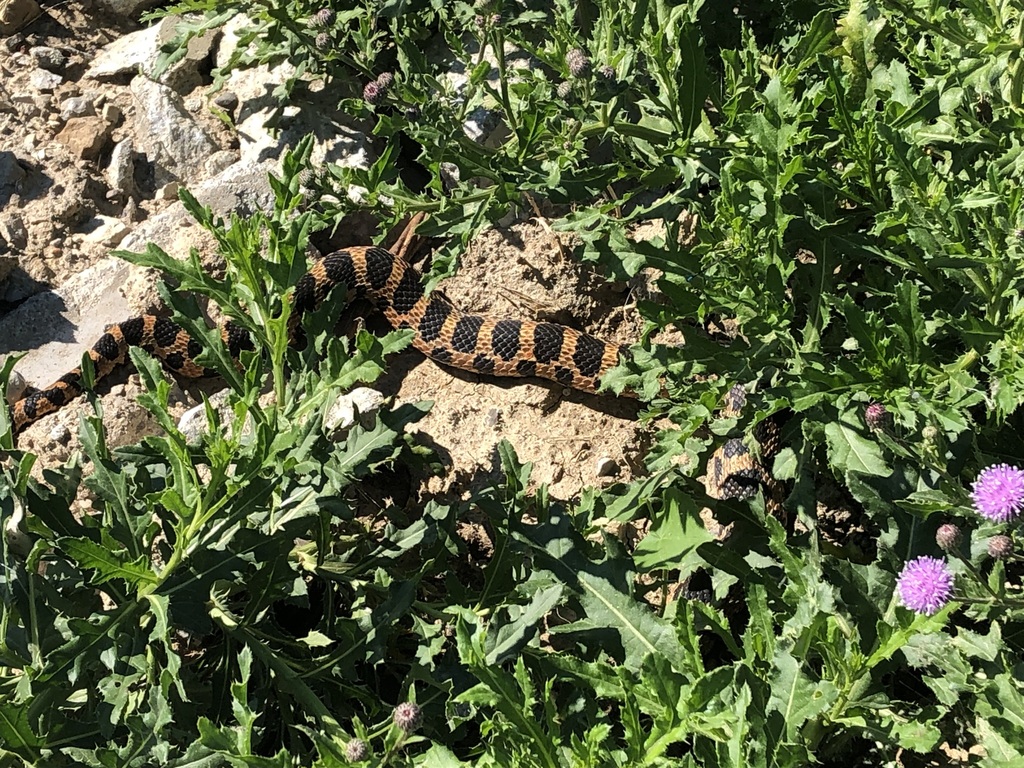
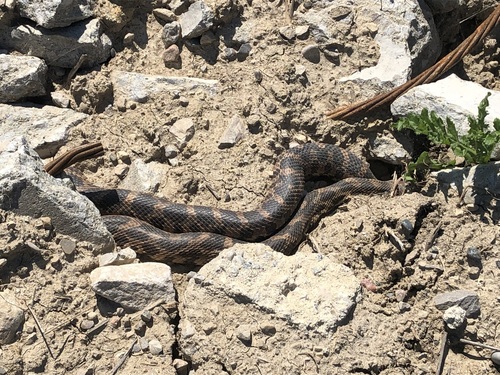
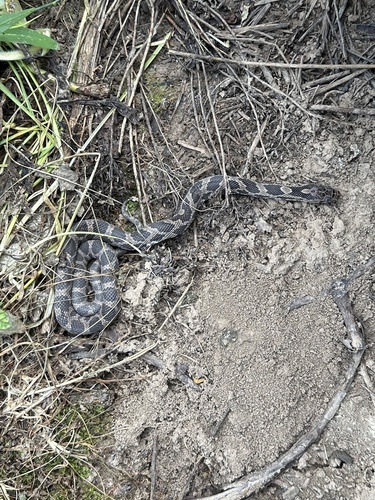
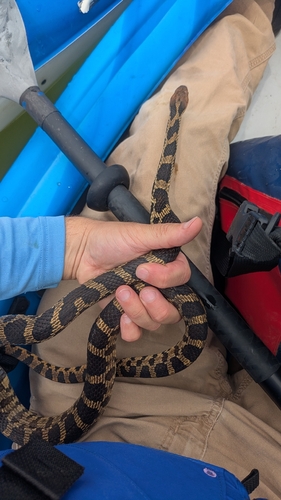
4 photographs of the Eastern Foxsnake. (c) Nodnarb Nedloh, some rights reserved (CC BY-SA).
The Eastern Foxsnake (Pantherophis vulpinus) is a non-venomous snake in the Colubridae family, recorded in 2 countries.
- Also called
- Ratsnake
- Family
- Colubridae
- Size
- 3–6 ft — among the largest U.S. snakes.
- Habitat
- Forests, farmland, barns, and suburbs; excellent climbers.
- Behavior
- Constrictors that control rodents; may vibrate the tail in leaves to mimic a rattlesnake.
- Identify
- Long-bodied with weakly keeled scales; blotched, striped, or solid depending on species.
About the Eastern Foxsnake
Pantherophis vulpinus, commonly known as the foxsnake or the eastern fox snake, is a species of nonvenomous rat snake in the family Colubridae. The species is native to North America.
Taxonomy
Between about 1990 and 2011, foxsnakes were sometimes divided into two species, with P. vulpinus as the western foxsnake, and P. gloydi as the eastern foxsnake. A 2011 paper by Crother, White, Savage, Eckstut, Graham and Gardner proposed instead that the Mississippi River be established as the species boundary between two species of foxsnakes, and that those found to its east be considered P. vulpinus (including those previously known as P. gloydi) and those found to its west be given the new name P. ramspotti. This proposed that P. vulpinus, which had been known as the western foxsnake, become known as the eastern foxsnake, and the new P. ramspotti become known as the western foxsnake. Thus, P. vulpinus is sometimes called the western foxsnake and sometimes called the eastern foxsnake.
Etymology
The specific name, vulpinus, (meaning "fox-like") is in honor of Rev. Charles Fox (1815–1854), collector of the holotype, an academic play on words.
The specific name for the junior synonym gloydi is in honor of American herpetologist Howard K. Gloyd.
Common names
Other common names for P. vulpinus include eastern foxsnake, foxsnake, and fox snake.
Description
Adult eastern foxsnakes are 3 to 6 feet (0.91 to 1.83 m) in total length (including tail) and have a short, flattened snout. Dorsally, they are usually light golden brown with dark brown spots and they have a yellow checkerboard pattern on the belly.
Like most North American snakes, foxsnakes are not venomous. Foxsnakes earned their name because the musk they give off when threatened smells similar to a fox.
Geographic range
P. vulpinus is found in the upper midwestern United States east of the Mississippi River.
The geographic range of the closely related western fox snake (Pantherophis ramspotti) is west of the Mississippi River. Although the two species do overlap along the eastern side of the Mississippi River, there is no intergrade zone.
P. v. gloydi is found in the eastern Great Lakes region. Both P. v. gloydi and P. v. vulpinus live in the state of Michigan. P. v. vulpinus lives in the Upper Peninsula of Michigan, where it is sometimes known as the pine snake, and P. v. gloydi lives in the Lower Peninsula of Michigan. P. v. gloydi can also be found in Ohio in the United States, and in Western Ontario in Canada.
Habitat
The preferred natural habitats of P. vulpinus are varied, including open woodland, prairie, farmland, pastures, and marshlands.
Behavior
Strong and agile, fox snakes are excellent climbers, but are more often found on the ground. Fox snakes are diurnal, but may hunt at night during the hot summer months. Like all snakes, fox snakes are cold-blooded and cannot adjust their own body temperature; so these snakes often hide in burrows or under logs or rocks to stay safe from extremely hot or cold weather. In winter, they brumate underground, where they can avoid freezing temperatures.
Adapted from Wikipedia, available under CC BY-SA.
Frequently asked: Eastern Foxsnake
- Is the Eastern Foxsnake venomous?
- No. The Eastern Foxsnake (Pantherophis vulpinus) is non-venomous and is not considered dangerous to humans. Like most snakes, it will retreat rather than bite when given the chance.
- Is the Eastern Foxsnake poisonous?
- Snakes are venomous, not poisonous. "Poisonous" means harmful to eat or touch; "venomous" means injecting toxins through a bite. The Eastern Foxsnake is neither poisonous nor venomous.
- Is the Eastern Foxsnake dangerous?
- The Eastern Foxsnake is not dangerous to humans. It has no medically significant venom and bites only defensively if cornered or handled.
- Where does the Eastern Foxsnake live?
- The Eastern Foxsnake has verified records in 2 countries, including United States of America, Canada. See the distribution section below for its full range.
- How do I identify the Eastern Foxsnake?
- Long-bodied with weakly keeled scales; blotched, striped, or solid depending on species.
- How big does the Eastern Foxsnake get?
- 3–6 ft — among the largest U.S. snakes.
- Why is it called the Eastern Foxsnake?
- The specific name, vulpinus, (meaning "fox-like") is in honor of Rev. Charles Fox (1815–1854), collector of the holotype, an academic play on words. The specific name for the junior synonym gloydi is in honor of American herpetologist Howard K. Gloyd.
Where it is found
Snakes it is confused with
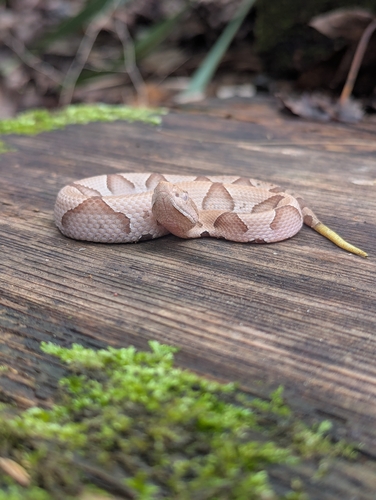 Eastern CopperheadVenomous
Often confused with the venomous copperhead, but this snake is harmless, with round pupils and no facial pit.
Eastern Foxsnake vs Eastern Copperhead→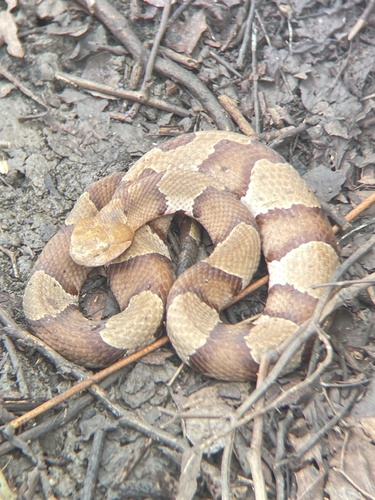
More Colubridae snakes
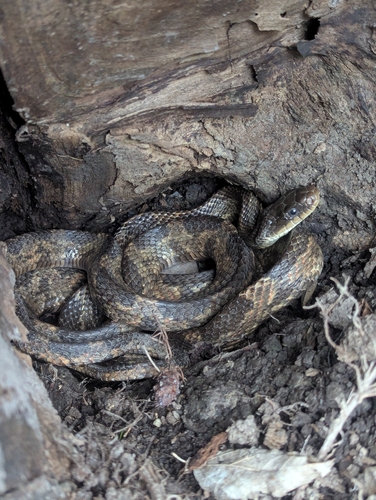 Western RatsnakePantherophis obsoletus
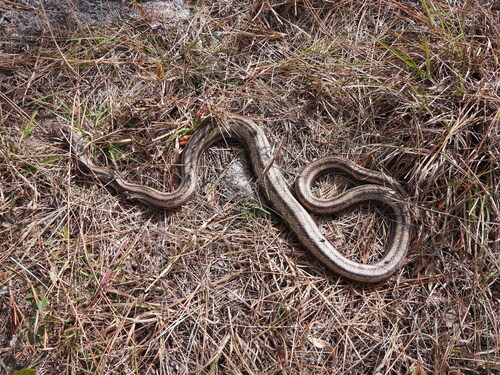 Eastern RatsnakePantherophis alleghaniensis
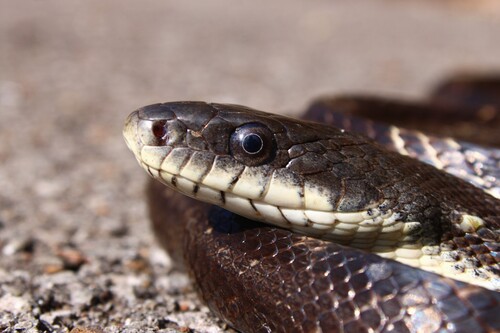 Gray RatsnakePantherophis spiloides
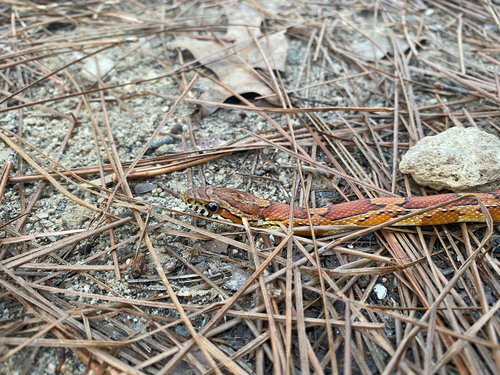 Red CornsnakePantherophis guttatus
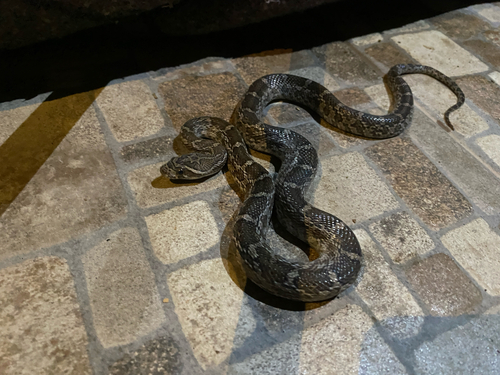 Great Plains RatsnakePantherophis emoryi
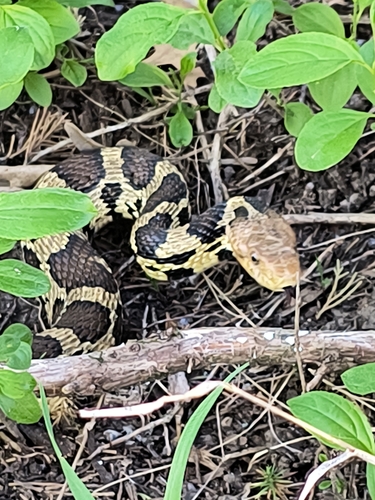 Western FoxsnakePantherophis ramspotti
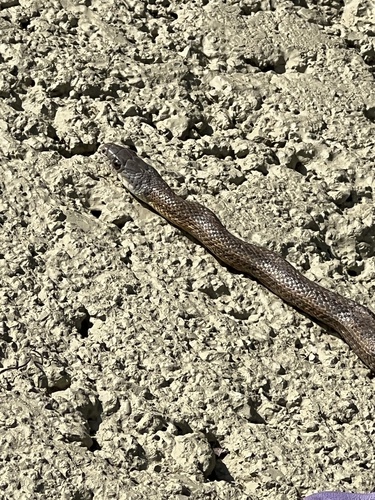 Baird's RatsnakePantherophis bairdi
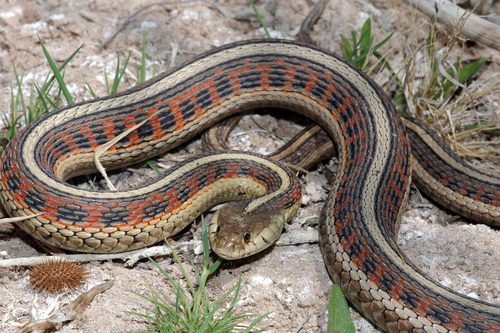 Common Garter SnakeThamnophis sirtalis
Classification
How scientists group this snake, from the broadest category down to the exact species. Each step narrows to its closest relatives.
- OrderThe broad group of scaled reptiles: all snakes and lizards
- Squamata
- FamilyA group of related snakes that share key traits
- Colubridae
- GenusA close-knit group of very similar species
- Pantherophis
- SpeciesThis exact snake, named in the two-part scientific name
- Pantherophis vulpinus
Keep learning
- What to Do If You Find a SnakeFound a snake at home or on a trail? Here is how to stay calm, give it space, identify it safely, and know when to call a professional.
- Venomous vs Nonvenomous: How to Tell the DifferenceThe folk rules for telling venomous snakes apart, where each one fails, and why location-based identification beats guessing by sight.
- What Is a Snake? Anatomy and the BasicsA clear overview of what makes a snake a snake: limbless body plan, anatomy, evolution from lizards, species diversity, and why they are ectothermic.
- How to Keep Snakes Out of Your Yard and HomeA practical guide to keeping snakes out of your yard and home using habitat changes that work, plus what to skip and what to do if one shows up.
Distribution from GBIF & iNaturalist. Venom status per CDC. Background: Wikipedia. Informational only. Never handle a snake to identify it.