
Genus · Colubridae
Masticophis
11 species make up the genus Masticophis. None are considered dangerous to humans.
About Coachwhips and whipsnakes
Long, slender, fast-moving North American racers built to chase down prey in the open.
Masticophis is a genus of nonvenomous colubrid snakes, the large family Colubridae that holds the majority of the world's living snake species. Within Colubridae, Masticophis belongs to the racer and whipsnake group, alongside the closely related genus Coluber. Many authorities now treat the two as a single lineage, and you will sometimes see coachwhips and whipsnakes listed under Coluber. Either way, these are the classic North American speed snakes: thin, alert, and active by day.
The genus is centered on North America, ranging across the southern and western United States and into Mexico, with a few members reaching Central and South America. Typical habitat is open and dry: deserts, scrub, grasslands, chaparral, rocky hillsides, and the edges of woodlands. These are terrestrial snakes that also climb readily into shrubs and low trees, and they favor warm, sunny country where they can move and hunt in the open.
Members of Masticophis are easy to recognize as a group even when the species is uncertain. They are long and very slender with a narrow head, large eyes, and smooth scales. Adults commonly reach 4 to 6 feet, and some coachwhips exceed 7 feet. The Common Coachwhip often shows a braided, whip-like look toward the tail, the Striped Whipsnake and Striped Racer (also called the California whipsnake) carry crisp pale stripes down a dark body, and the Neotropical Whip Snake fits the same fast, thin, long-tailed pattern farther south.
These snakes are nonvenomous and not dangerous to people. They are not constrictors in the boa or python sense and they do not have medically significant venom. A cornered whipsnake may flatten, vibrate the tail, strike repeatedly, and bite, and a bite can break skin, but the animal poses no toxic threat. The best response is to give it room and let it move on. As with any wild snake, do not handle or harass it; clean any bite and seek normal medical care if needed.
Ecologically, Masticophis are visual, active foragers rather than ambush hunters. They cruise their range with the head raised, using keen eyesight to find prey, then run it down at high speed and swallow it alive or after a brief pin. The diet is broad: lizards, small mammals, birds and eggs, frogs, insects, and other snakes. They are egg layers, depositing clutches of roughly 4 to 20 eggs in summer that hatch later in the season. Wary and quick to flee, they are far more often seen disappearing into cover than sitting still.
Masticophis belongs to the Colubridae family (Colubrids). The largest snake family, and the one most snakes you meet belong to. Typically round pupils, a head only slightly wider than the neck, and no heat-sensing facial pit or rattle. Scales may be smooth and glossy or keeled and matte depending on the species.
Danger: Almost all colubrids are harmless. A small number are rear-fanged with medically significant venom, the boomslang and the twig (vine) snakes of Africa being the dangerous exceptions. Most colubrids will flee or bluff rather than bite.
All species (11)
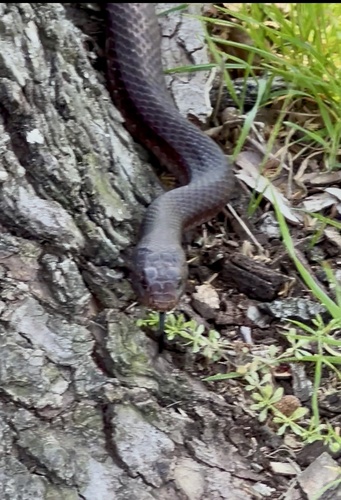 Common CoachwhipMasticophis flagellumHarmless
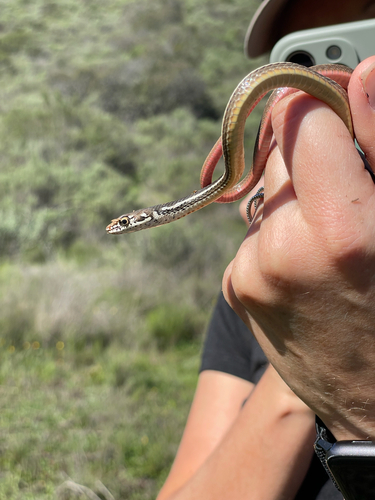 Striped RacerMasticophis lateralisHarmless
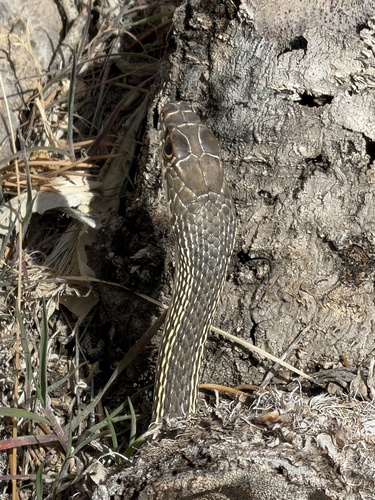 Striped WhipsnakeMasticophis taeniatusHarmless
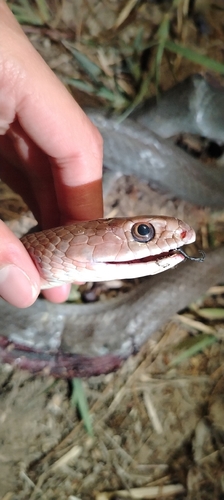 Neotropical Whip SnakeMasticophis mentovariusHarmless
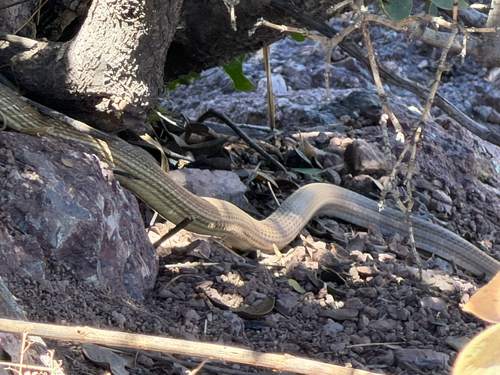 Sonoran WhipsnakeMasticophis bilineatusHarmless
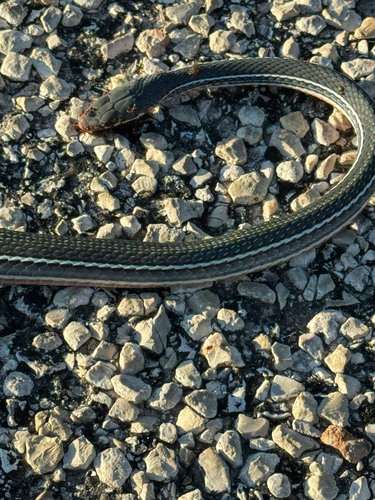 Schott's WhipsnakeMasticophis schottiHarmless
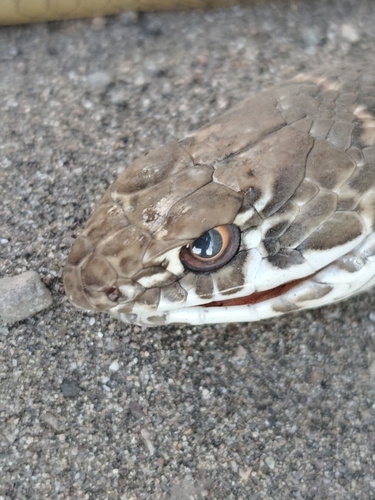 Baja California CoachwhipMasticophis fuliginosusHarmless
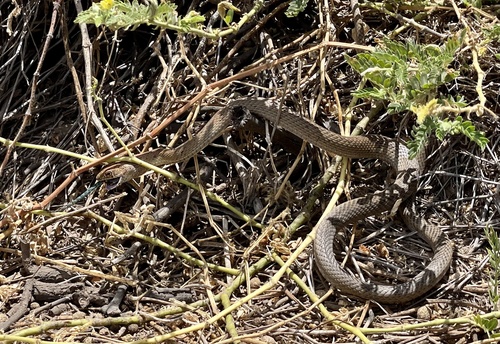 Clarion Island Whip SnakeMasticophis anthonyiHarmless
 Baja California Striped Whip SnakeMasticophis aurigulusHarmless
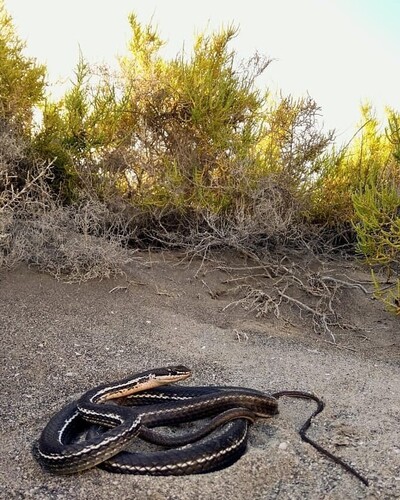 Espiritu Santo Striped WhipsnakeMasticophis barbouriHarmless
- No photoMexican Whip SnakeMasticophis lineatusHarmless
Keep learning
- What Is a Snake? Anatomy and the BasicsA clear overview of what makes a snake a snake: limbless body plan, anatomy, evolution from lizards, species diversity, and why they are ectothermic.
- How Snakes Move, Hunt, and EatHow snakes move without legs, hunt as ambushers or active foragers, kill by constriction or venom, and swallow prey wider than their head.
- What Do Snakes Eat?All snakes are carnivores. Learn what snakes eat, how diet changes with size and age, how often they feed, and how they hunt and swallow prey.
- Venomous vs Nonvenomous: How to Tell the DifferenceThe folk rules for telling venomous snakes apart, where each one fails, and why location-based identification beats guessing by sight.