
Colubridae
Clark's Ground Snake
HarmlessAtractus clarki
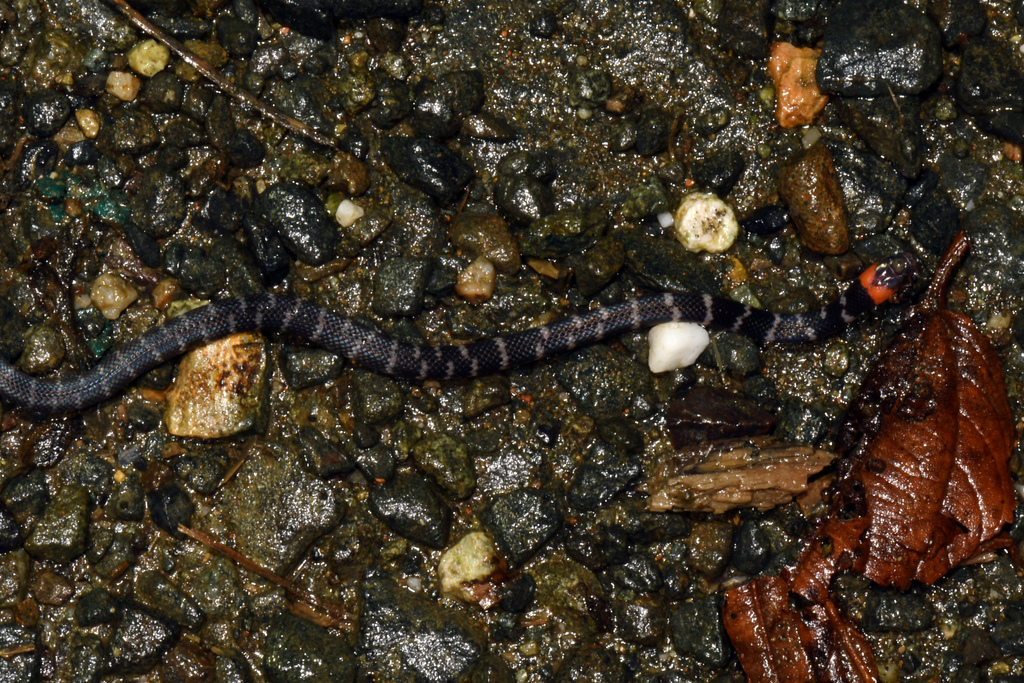
The Clark's Ground Snake (Atractus clarki) is a non-venomous snake in the Colubridae family, recorded in 4 countries.
- Family
- Colubridae
About the Clark's Ground Snake
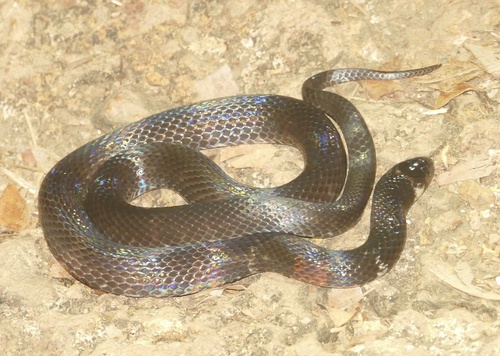
Atractus clarki, Clark's ground snake, is a rare species of snake in the family Colubridae. It is one of only five species of the very diverse (>150 species) genus Atractus that enters political North America.
Distribution
The species can be found in extreme southern Panama, the Pacific coast of Colombia and northwestern Ecuador. The species was first collected in 1938 from Santa Cruz de Cana, a 16th century gold mine on the eastern flank of the Serranía de Pirre mountains close to the Colombian border. A second specimen from adjacent Colombia was collected in 1919 but not correctly identified until 2003. The species is now known from numerous records in Ecuador and Colombia.
Biology
Atractus clarki is a small, nocturnal species that preys mainly on soil-dwelling invertebrates like earthworms. This snake is characterized by its brown dorsal pattern and lighter ventral side, with a bright red collar around its neck and head that they rely on as a defense tactic towards predators. Atractus clarki may represent a relatively ancestral form based on the shape of its reproductive organs. The specific physical appearance of Atractus clarki differs between male and female. Females are typically larger than males, with males having slightly different dorsal patterns. The species is found in warm, humid climates among soil and leaf litter. It is oviparous.
Conservation status
The International Union for Conservation of Nature (IUCN) has classified this species as Least Concern because of its stable population in the lowlands of valley regions.
Etymology
It is named in honor of Herbert C. Clark, instigator of the Panamanian snake census and first director of the Gorgas Memorial Laboratory.
Adapted from Wikipedia, available under CC BY-SA.
Frequently asked: Clark's Ground Snake
- Is the Clark's Ground Snake venomous?
- No. The Clark's Ground Snake (Atractus clarki) is non-venomous and is not considered dangerous to humans. Like most snakes, it will retreat rather than bite when given the chance.
- Is the Clark's Ground Snake poisonous?
- Snakes are venomous, not poisonous. "Poisonous" means harmful to eat or touch; "venomous" means injecting toxins through a bite. The Clark's Ground Snake is neither poisonous nor venomous.
- Is the Clark's Ground Snake dangerous?
- The Clark's Ground Snake is not dangerous to humans. It has no medically significant venom and bites only defensively if cornered or handled.
- Where does the Clark's Ground Snake live?
- The Clark's Ground Snake has verified records in 4 countries, including Colombia, Ecuador, Costa Rica. See the distribution section below for its full range.
- Why is it called the Clark's Ground Snake?
- It is named in honor of Herbert C. Clark, instigator of the Panamanian snake census and first director of the Gorgas Memorial Laboratory.
Where it is found
More Colubridae snakes
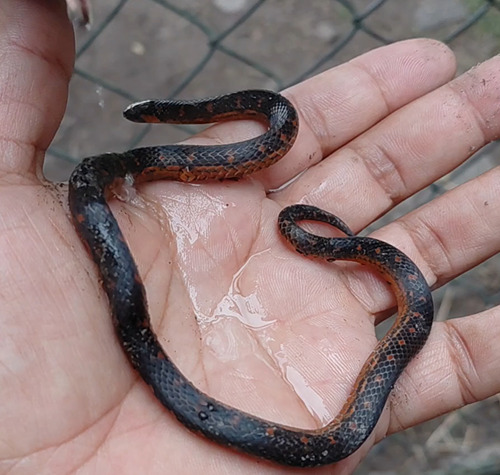 Thickhead Ground SnakeAtractus crassicaudatus
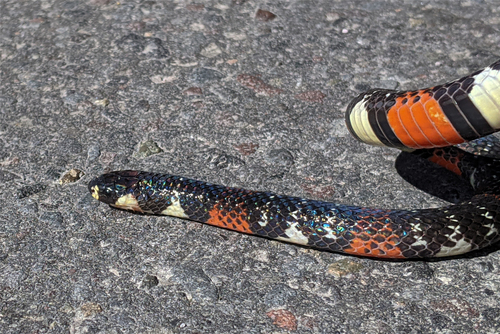 Black Ground SnakeAtractus elaps
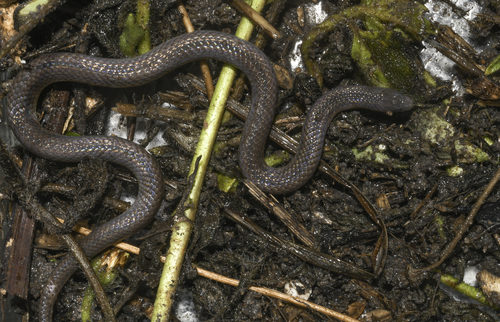 Three-lined Ground SnakeAtractus trilineatus
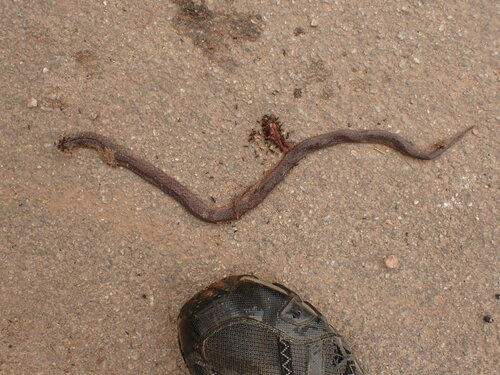 Atractus pantostictusAtractus pantostictus
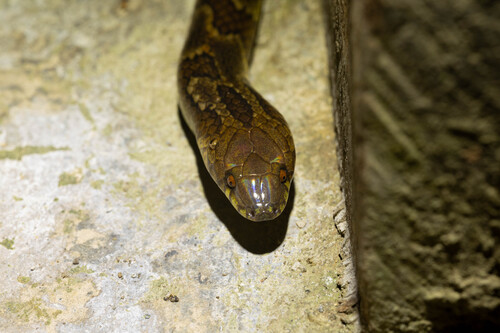 Big Ground SnakeAtractus major
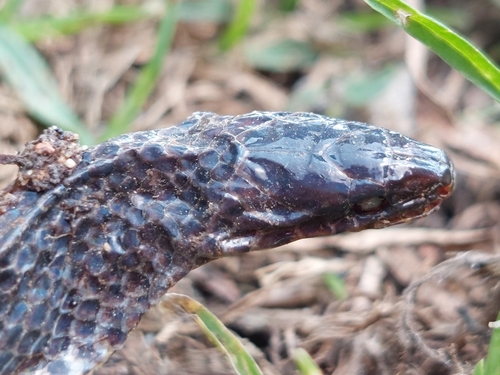 Lasalle's Ground SnakeAtractus lasallei
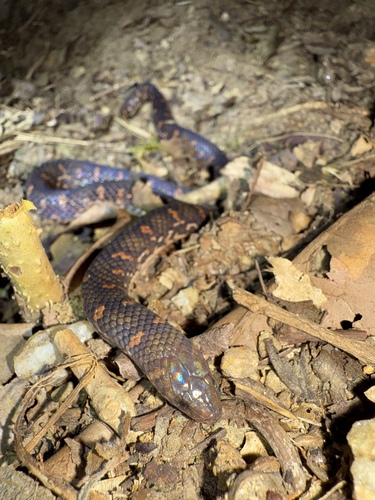 St. Marta's Ground SnakeAtractus sanctaemartae
 Boie's Ground SnakeAtractus badius
Classification
How scientists group this snake, from the broadest category down to the exact species. Each step narrows to its closest relatives.
- OrderThe broad group of scaled reptiles: all snakes and lizards
- Squamata
- FamilyA group of related snakes that share key traits
- Colubridae
- GenusA close-knit group of very similar species
- Atractus
- SpeciesThis exact snake, named in the two-part scientific name
- Atractus clarki
Keep learning
- What to Do If You Find a SnakeFound a snake at home or on a trail? Here is how to stay calm, give it space, identify it safely, and know when to call a professional.
- Venomous vs Nonvenomous: How to Tell the DifferenceThe folk rules for telling venomous snakes apart, where each one fails, and why location-based identification beats guessing by sight.
- What Is a Snake? Anatomy and the BasicsA clear overview of what makes a snake a snake: limbless body plan, anatomy, evolution from lizards, species diversity, and why they are ectothermic.
- How to Keep Snakes Out of Your Yard and HomeA practical guide to keeping snakes out of your yard and home using habitat changes that work, plus what to skip and what to do if one shows up.
Distribution from GBIF & iNaturalist. Venom status per CDC. Background: Wikipedia. Informational only. Never handle a snake to identify it.