
Colubridae
Boie's Keelback
HarmlessTropidonophis spilogaster
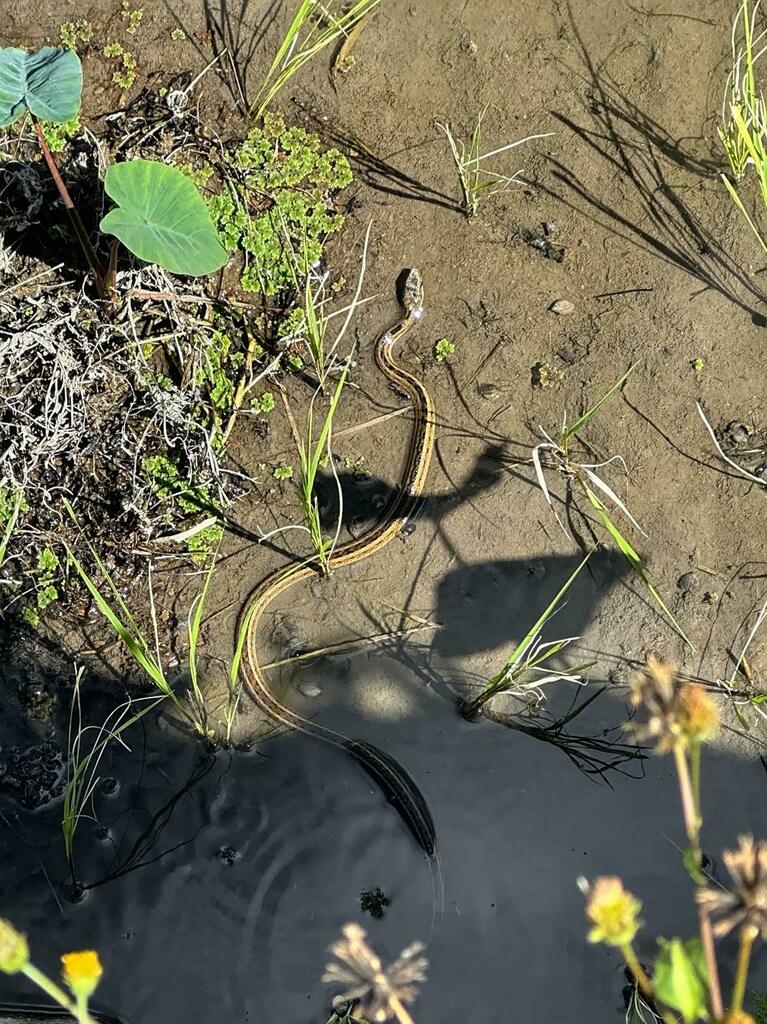
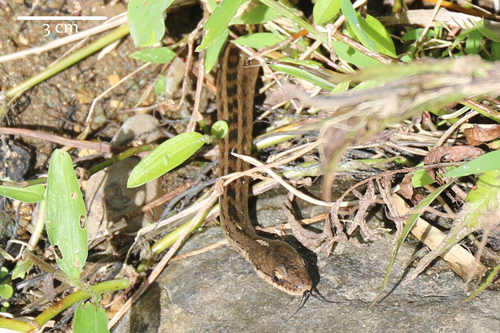
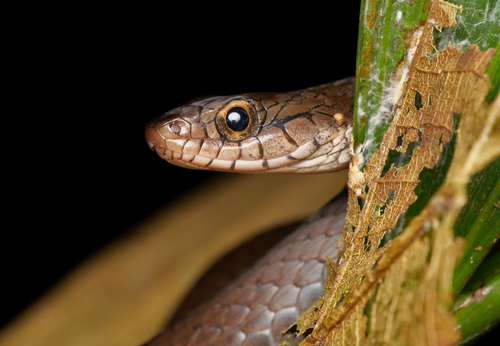
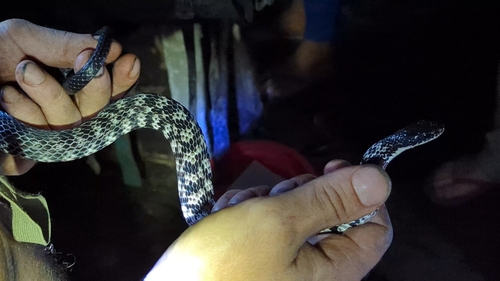
2 photographs of the Boie's Keelback. (c) Slunky, some rights reserved (CC BY).
The Boie's Keelback (Tropidonophis spilogaster) is a non-venomous snake in the Colubridae family, recorded in 5 countries.
Boie's keelback (Tropidonophis spilogaster), also called the northern water snake, is a keelback in the family Colubridae found in the Philippines, with records from Catanduanes, Polillo, Calayan and Bataan province on Luzon. It is not venomous and is not considered dangerous to people.
- Family
- Colubridae
How to identify the Boie's Keelback
Look for a water-associated Philippine snake with rough, ridged body scales and round pupils. A spotted belly, which is what the name spilogaster refers to, helps confirm it.
- Scales
- Each body scale has a raised ridge, or keel, which gives the snake a rough, matte look rather than a glossy one.
- Eyes
- The pupils are round, as in other keelbacks.
- Belly
- The scientific name means spotted belly, so check the underside for dark spotting.
- Setting
- It is usually seen in or near water, which fits its other common name, northern water snake.
- Range
- In the Philippines it is known from Catanduanes, Polillo, Calayan and Bataan province on Luzon, so location is a strong clue.
Have a photo? Identify it from your photo and location.
Is the Boie's Keelback dangerous?
Not venomous
Boie's keelback is not venomous and poses no meaningful medical risk to people. A bite from any wild snake can still break the skin, so leave it alone.
If you find one
- Stop and give the snake room to move away.
- Keep children and pets back until it has left.
- Do not try to pick it up or move it by hand.
Habitat and behavior
- Habitat
- This snake lives in the Philippines, where records come from the islands of Catanduanes, Polillo and Calayan and from Bataan province on Luzon. As a water snake, it is most likely to be found near streams, ponds and other wet places.
- Behavior
- Like most keelbacks it is shy and will usually try to escape, often into water, when approached. Any wild snake may bite if grabbed or cornered, so watch it from a distance and do not try to handle it.
Further reading: Boie's Keelback on Wikipedia.
Frequently asked: Boie's Keelback
- Is Boie's keelback venomous?
- No. It is not venomous and is not considered a danger to people. You should still never handle a wild snake.
- Where does Boie's keelback live?
- It is found in the Philippines. Known records include the islands of Catanduanes, Polillo and Calayan, plus Bataan province on Luzon.
- Why is it called a keelback?
- Its body scales each carry a raised ridge called a keel. This gives the snake a rough texture that is a useful identification clue.
- Is this the same as the northern water snake in North America?
- No. Boie's keelback is sometimes called the northern water snake, but it is a Philippine species in the genus Tropidonophis. The North American snake with that name is a different species.
- Is the Boie's Keelback venomous?
- No. The Boie's Keelback (Tropidonophis spilogaster) is non-venomous and is not considered dangerous to humans. Like most snakes, it will retreat rather than bite when given the chance.
- Is the Boie's Keelback poisonous?
- Snakes are venomous, not poisonous. "Poisonous" means harmful to eat or touch; "venomous" means injecting toxins through a bite. The Boie's Keelback is neither poisonous nor venomous.
- Is the Boie's Keelback dangerous?
- The Boie's Keelback is not dangerous to humans. It has no medically significant venom and bites only defensively if cornered or handled.
Where it is found
More Colubridae snakes
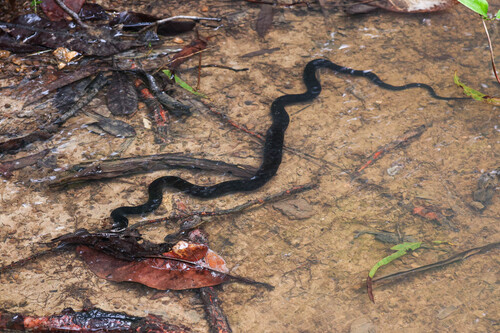 Common keelbackTropidonophis mairii
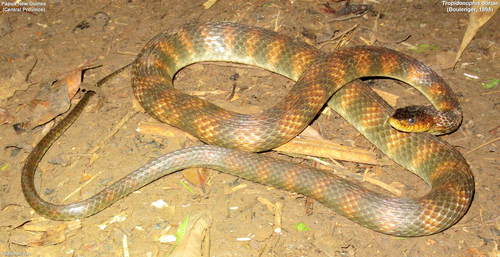 Barred keelbackTropidonophis doriae
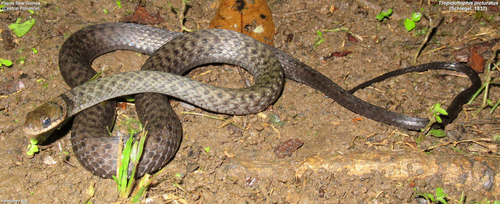 Painted keelbackTropidonophis picturatus
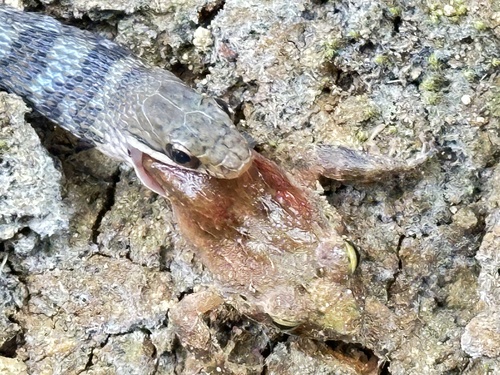 Spotted Water SnakeTropidonophis dendrophiops
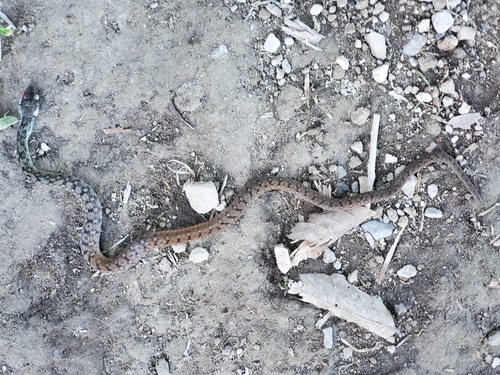 Negros Spotted Water SnakeTropidonophis negrosensis
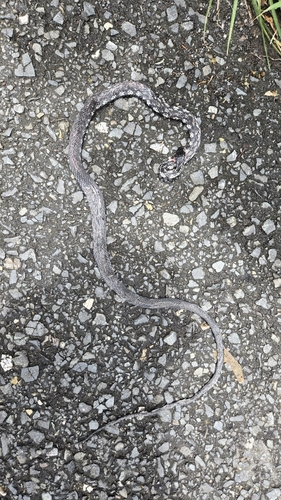 Tropidonophis halmahericusTropidonophis halmahericus
 Many-scaled keelbackTropidonophis multiscutellatus
 Halmahera KeelbackTropidonophis punctiventris
Classification
How scientists group this snake, from the broadest category down to the exact species. Each step narrows to its closest relatives.
- OrderThe broad group of scaled reptiles: all snakes and lizards
- Squamata
- FamilyA group of related snakes that share key traits
- Colubridae
- GenusA close-knit group of very similar species
- Tropidonophis
- SpeciesThis exact snake, named in the two-part scientific name
- Tropidonophis spilogaster
Keep learning
- What to Do If You Find a SnakeFound a snake at home or on a trail? Here is how to stay calm, give it space, identify it safely, and know when to call a professional.
- Venomous vs Nonvenomous: How to Tell the DifferenceThe folk rules for telling venomous snakes apart, where each one fails, and why location-based identification beats guessing by sight.
- What Is a Snake? Snake Facts, Body Plan and How They Differ From LizardsA clear overview of what makes a snake a snake: limbless body plan, anatomy, evolution from lizards, species diversity, and why they are ectothermic.
- How to Keep Snakes Out of Your Yard and HomeA practical guide to keeping snakes out of your yard and home using habitat changes that work, plus what to skip and what to do if one shows up.
Distribution from GBIF & iNaturalist. Venom status per CDC. Background: Wikipedia. Informational only. Never handle a snake to identify it.