
Colubridae
Boettger's Sipo
HarmlessChironius flavolineatus
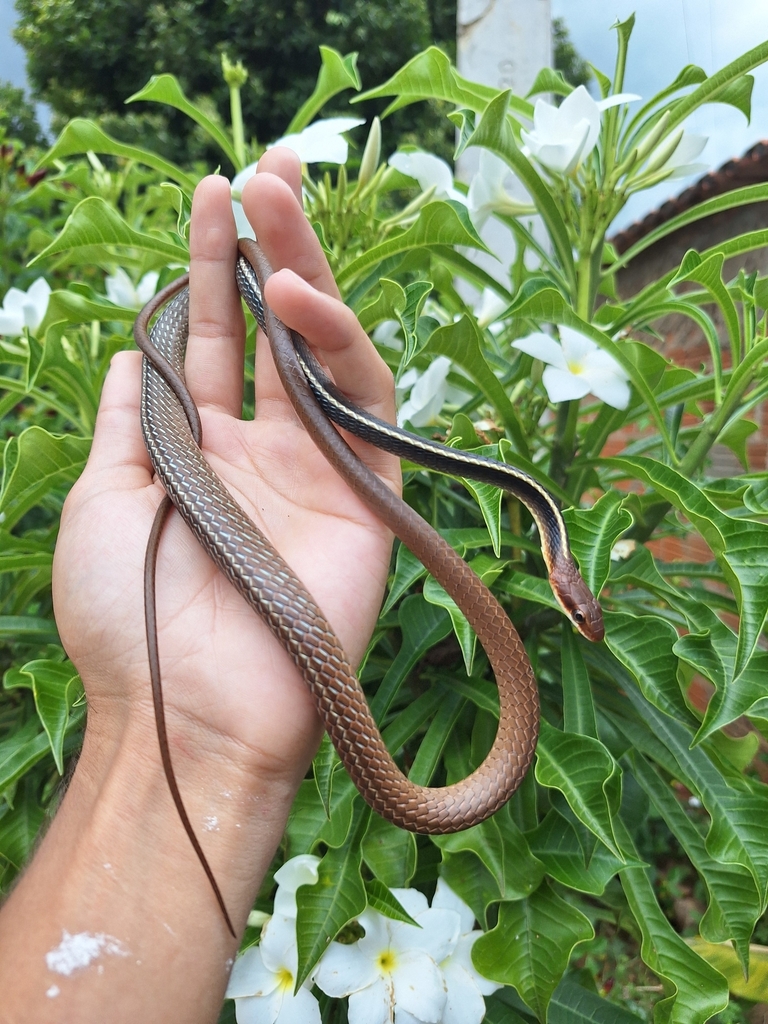
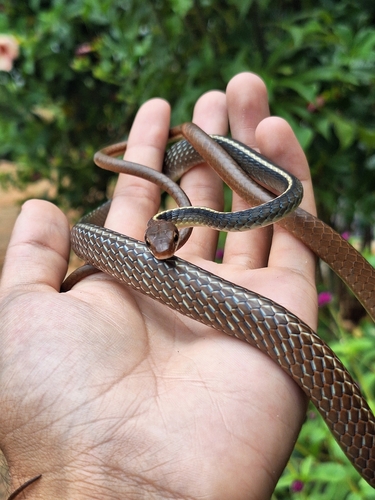
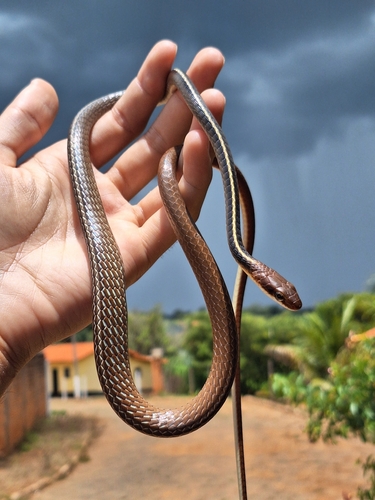
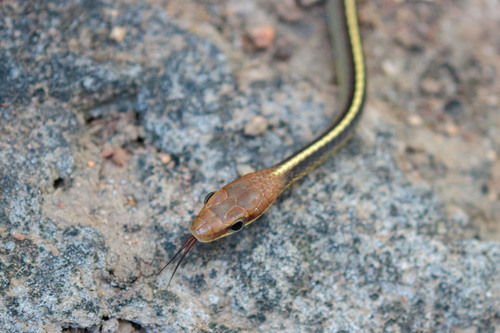
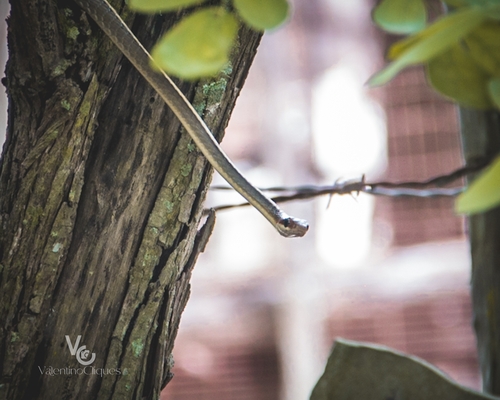
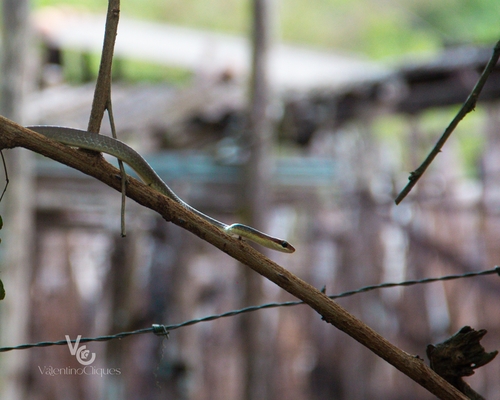
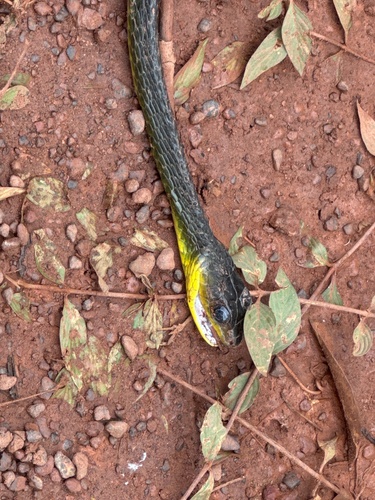
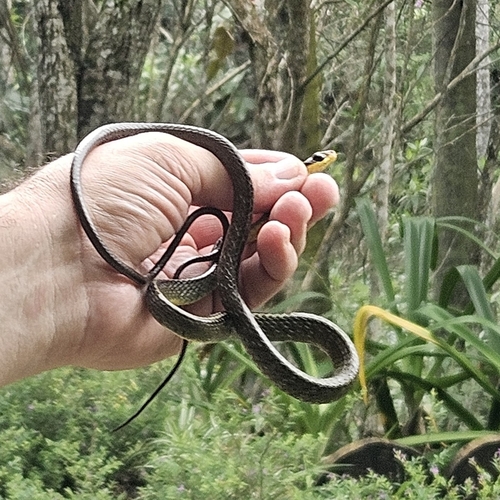
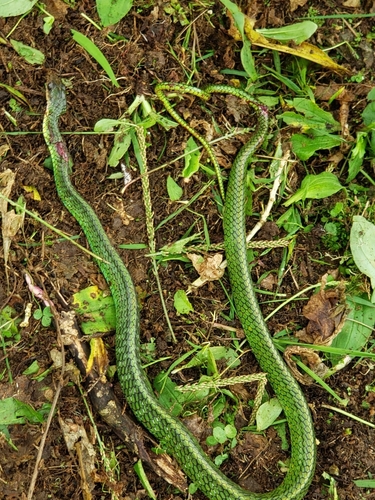
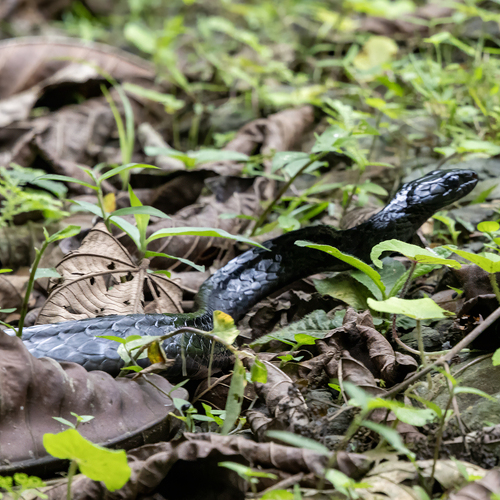
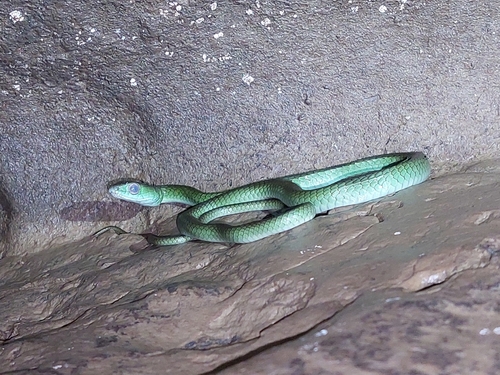
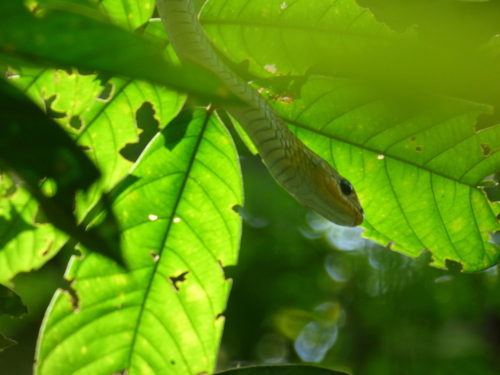
6 photographs of the Boettger's Sipo. © Jefferson Ferreira.
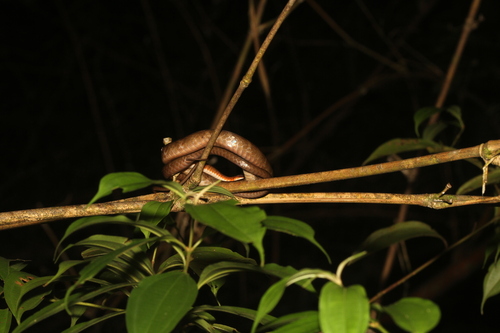
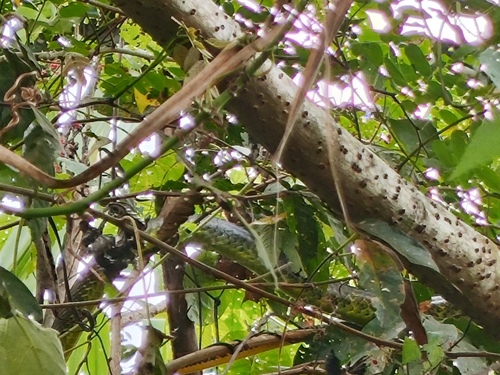
The Boettger's Sipo (Chironius flavolineatus) is a non-venomous snake in the Colubridae family, recorded in 5 countries.
- Family
- Colubridae
About the Boettger's Sipo
Chironius flavolineatus, also known as Boettger's sipo, is a vine snake species in the family Colubridae, endemic to savannas and semiarboreal biomes in Brazil, and much of South America. It is listed as least concern on the IUCN Red List since 2014. It is a member of the Genus Chironius which is composed of twenty-two other described snake species. It is nonvenomous, using camouflage or burrowing as a form of defense.
Description
The Chironius flavolineatus's distinguishing trait is a yellow or cream white vertebral stripe that extends for nearly the entire length of the snake's body. On either side of the stripe, black sides that begin after the first row of scales lie anteriorly. The back of the Chironius flavolineatus's head ranges in color from tan to brown and is distinct from the superior third of the body, which is black or dark gray. The Chironius flavolineatus usually has a single posterior temporalis muscle, a divided cloacal shield, and white, unpigmented ventral and subcaudal scales. Chironinus flavolineatus also features 0-4 rows of keeled dorsal scales in its midbody and a static color pattern throughout its lifetime
Studies indicate that Chironius flavolineatus is sexually dimorphic. Adult females tend to be larger than males, with an average weight around 81 g (2.9 oz) and an approximate total length of about 1.16 m (3 ft 10 in). Adult males weigh approximately 60 g (2.1 oz) and reach a total length of around 1.10 m (3 ft 7 in). Males tend to have long tails and larger eyes than their female counterparts, while no dimorphism is seen in the head size of the sexes. The smaller size of males indicates that there is limited male to male combat for mating. The differences in eye diameter, which has been observed in other members of the Chironius genus that live in the Atlantic Forests, is often linked to male-exclusive activities such as searching for females. Females members of the Chironius flavolineatus only begin to reproduce when their body is large enough to carry their eggs. This likely creates the selective pressure that leads to females being larger than males throughout the species. The thin body and long tails of the Chironius flavolineatus indicate that they have arboreal tendencies when in savanna environments. This speculation has been reinforced in natural studies, which show Chironius flavolineatus members foraging on the ground before resting at night in above-ground vegetation.
Distribution & habitat
Chironius flavolineatus has no specific locality and has been reported in São Paulo, Amazonas, Rio Grande do Sul, Pernambuco, Rio Grande do Norte and many other regions in South America. It is found predominantly in Brazil, but is also found in Paraguay, Bolivia and Peru. Chironius flavolineatus is commonly found in areas that are between 100 and 400 meters above sea level in biomes such as semiarboreal forests and grass steppes.
Behavior and ecology
Adapted from Wikipedia, available under CC BY-SA.
Frequently asked: Boettger's Sipo
- Is the Boettger's Sipo venomous?
- No. The Boettger's Sipo (Chironius flavolineatus) is non-venomous and is not considered dangerous to humans. Like most snakes, it will retreat rather than bite when given the chance.
- Is the Boettger's Sipo poisonous?
- Snakes are venomous, not poisonous. "Poisonous" means harmful to eat or touch; "venomous" means injecting toxins through a bite. The Boettger's Sipo is neither poisonous nor venomous.
- Is the Boettger's Sipo dangerous?
- The Boettger's Sipo is not dangerous to humans. It has no medically significant venom and bites only defensively if cornered or handled.
- Where does the Boettger's Sipo live?
- The Boettger's Sipo has verified records in 5 countries, including Brazil, Bolivia (Plurinational State of), French Guiana. See the distribution section below for its full range.
- What does the Boettger's Sipo eat?
- The diet of C. flavolineatus like other snakes in the Chironius genus consists fairly exclusively on frogs. The specific frog family preferred by these snakes is Hylidae which consists of a wide range of tree frogs. C. flavolineatus also have a taste for various small prey that they may find around their environment. These snakes are very active foragers as they roam the ground or arboreal substrates to acquire most of their diet. Likewise, their diet is also composed of nocturnal prey considering they are diurnal active foragers.
Where it is found
More Colubridae snakes
Classification
How scientists group this snake, from the broadest category down to the exact species. Each step narrows to its closest relatives.
- OrderThe broad group of scaled reptiles: all snakes and lizards
- Squamata
- FamilyA group of related snakes that share key traits
- Colubridae
- GenusA close-knit group of very similar species
- Chironius
- SpeciesThis exact snake, named in the two-part scientific name
- Chironius flavolineatus
Keep learning
- What to Do If You Find a SnakeFound a snake at home or on a trail? Here is how to stay calm, give it space, identify it safely, and know when to call a professional.
- Venomous vs Nonvenomous: How to Tell the DifferenceThe folk rules for telling venomous snakes apart, where each one fails, and why location-based identification beats guessing by sight.
- What Is a Snake? Anatomy and the BasicsA clear overview of what makes a snake a snake: limbless body plan, anatomy, evolution from lizards, species diversity, and why they are ectothermic.
- How to Keep Snakes Out of Your Yard and HomeA practical guide to keeping snakes out of your yard and home using habitat changes that work, plus what to skip and what to do if one shows up.
Distribution from GBIF & iNaturalist. Venom status per CDC. Background: Wikipedia. Informational only. Never handle a snake to identify it.