
Elapidae
Blue Malaysian Coralsnake
VenomousCalliophis bivirgatus
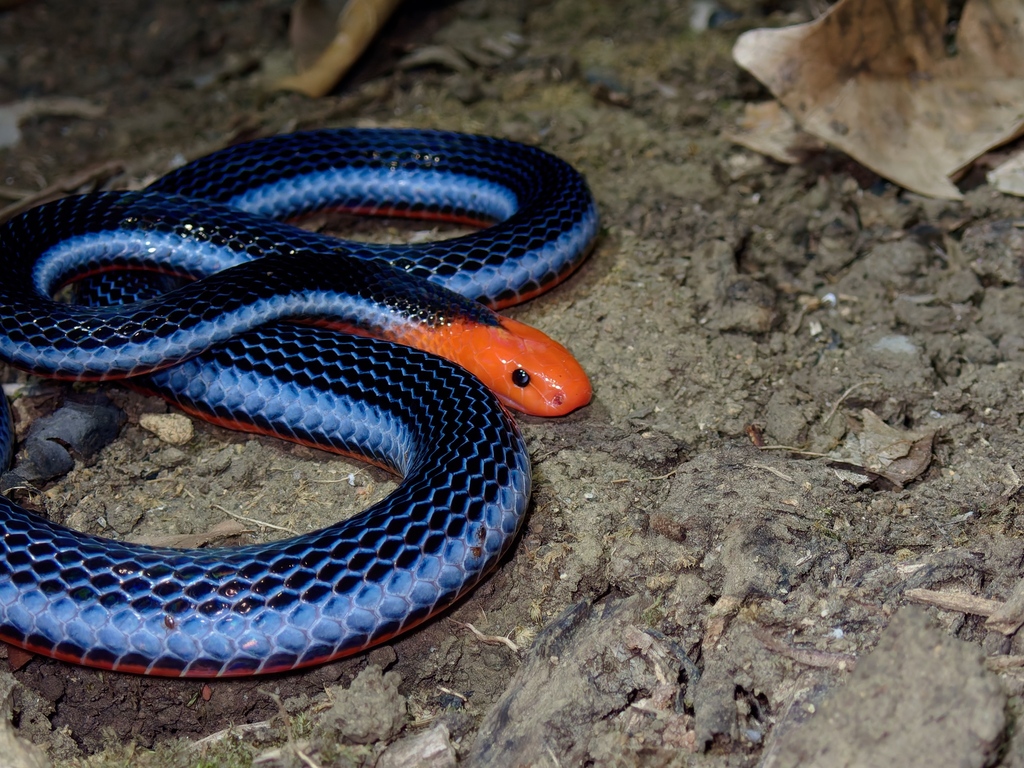
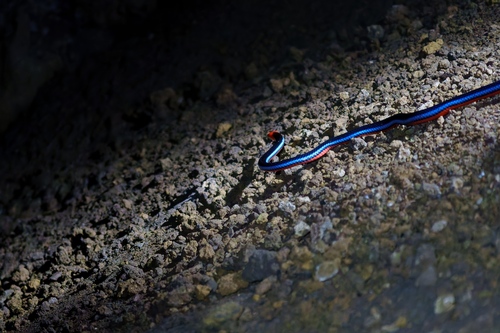
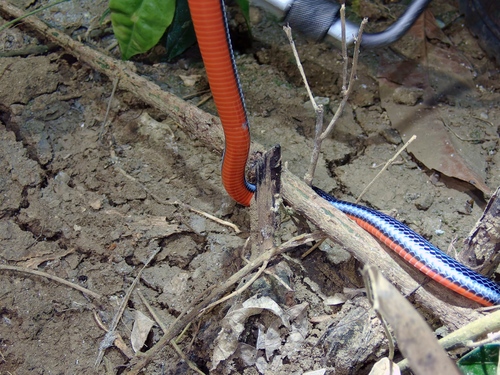
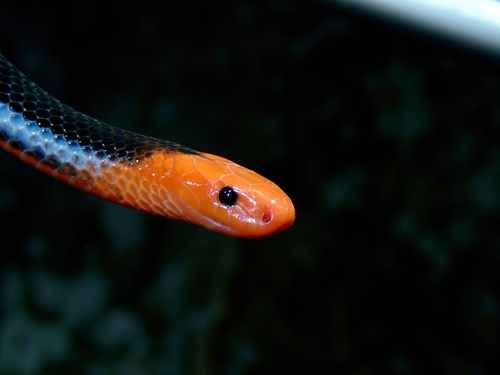
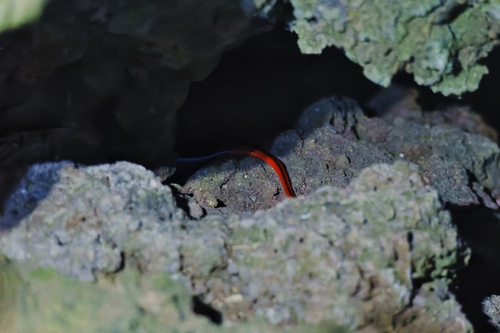
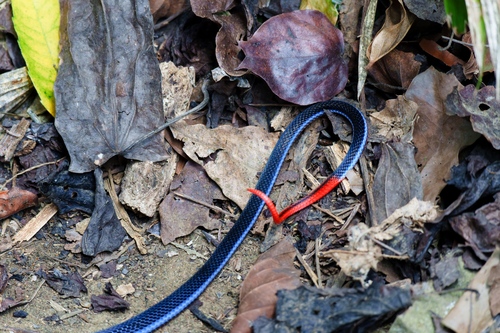
6 photographs of the Blue Malaysian Coralsnake. © Jay Paroline.
The Blue Malaysian Coralsnake (Calliophis bivirgatus) is a venomous snake in the Elapidae family, recorded in 6 countries.
If you are bitten
This is a venomous snake. Treat any bite as a medical emergency: stay calm, keep the bitten limb still and roughly level with the heart, remove rings and tight clothing, and get to emergency care immediately. Do not apply a tourniquet, cut the wound, apply ice, or try to suck out venom. Call your local emergency number or poison center.
- Family
- Elapidae
- Danger
- high
About the Blue Malaysian Coralsnake
Calliophis bivirgatus is a species of snake in the family Elapidae known commonly as the blue coral snake or blue Malayan coral snake. It is native to Southeast Asia.
Geographic range and distribution
This terrestrial snake occurs in Brunei, Indonesia, Malaysia, Singapore, Thailand, and Burma. It lives at 100 to 1,100 metres (300 to 3,600 ft) in elevation.
There are three subspecies:
C. b. bivirgatus – Indonesia
C. b. flaviceps – Indonesia, Malaysia, Thailand, Singapore, Burma
C. b. tetrataenia – Indonesia, Malaysia, Brunei
Description
This species was assigned to the new world coral snake genus Maticora until phylogenetic studies revealed this species to be nested within the tropical coral snake species clade Calliophis and sister species to Calliophis intestinalis, the banded Malaysian coral snake.
This is a medium-sized coral snake with a slender body. The adult can reach 1.8 metres (5 ft 11 in) long. It has a red head, tail and belly. The back is dark blue or black in colour, and it usually has a large blue or white stripe on each flank.
The snake, especially when juvenile, is often confused with the pink-headed reed snake (Calamaria schlegeli) as they share similar habitat and appearance. But the latter is much smaller, reaching a maximum length of 50 cm (20 in). The reed snake is nonvenomous, while the coral snake is potentially lethal. They also are very similar to another venomous snake, the red-headed krait (Bungarus flaviceps).
Biology
This uncommon snake is considered semi-fossorial and is found in the leaf litter of primary and secondary forests. It preys on other snakes. When threatened it usually flees, but it may remain in place with its red tail erect as a defensive message.
Venom
Blue coral snake venom has only occasionally caused human deaths. This species has unusually long venom glands, extending to 25% of the length of the body. The venom contains a neurotoxin, Calliotoxin, that causes near instantaneous paralysis by delaying inactivation of the prey's sodium channels. This effect has not been observed in humans. The venom also contains phosphodiesterases, which promote the release of adenosine, causing in turn hypotension, inflammation, and neurotransmitter blockade in prey items and other bite victims. This ability is especially important as their prey consists mostly of other venomous snakes.
In humans, local effects of a bite self-resolve without complication and systemic effects are rare.
There is hope that the venom may eventually prove useful in the management of chronic pain in humans.
Adapted from Wikipedia, available under CC BY-SA.
Local and regional names
The Blue Malaysian Coralsnake is known by these names across the regions where it lives:
- Chinese
- 爪哇麗紋蛇
- Czech
- bungarec dvoupruhý
- Danish
- Blå Koralslange
- English
- Blue Coral Snake, Blue Malayan Coral Snake, Blue Malaysian Coral Snake
- German
- Blaue Bauchdrüsenotter, Blaue Korallenotter, Blaue Korallenschlange, Rotbäuchige Bauchdrüsenotter
- Italian
- Serpente corallo blu, Serpente corallo blu della Malesia, Serpente corallo blu malese
- Russian
- Двухполосая желёзистая змея
- Spanish
- coral malaya azul
- Thai
- งูพริกท้องแดง
Frequently asked: Blue Malaysian Coralsnake
- Is the Blue Malaysian Coralsnake venomous?
- Yes. The Blue Malaysian Coralsnake (Calliophis bivirgatus) is venomous and belongs to the Elapidae family (cobra, mamba, coral or sea snake). Its bite is considered high risk to people. Treat any bite as a medical emergency.
- Is the Blue Malaysian Coralsnake poisonous?
- Snakes are venomous, not poisonous. "Poisonous" means harmful to eat or touch; "venomous" means injecting toxins through a bite. The Blue Malaysian Coralsnake is venomous, delivering venom through a bite.
- Is the Blue Malaysian Coralsnake dangerous?
- This is a venomous snake. Treat any bite as a medical emergency: stay calm, keep the bitten limb still and roughly level with the heart, remove rings and tight clothing, and get to emergency care immediately. Do not apply a tourniquet, cut the wound, apply ice, or try to suck out venom. Call your local emergency number or poison center.
- Where does the Blue Malaysian Coralsnake live?
- The Blue Malaysian Coralsnake has verified records in 6 countries, including Malaysia, Singapore, Indonesia. See the distribution section below for its full range.
If you are bitten by the Blue Malaysian Coralsnake
Do
- Get away from the snake and stay calm. Most bites worsen when people panic or try again to handle the snake.
- Call 911 or Poison Control (1-800-222-1222) right away. Antivenom works best when given early.
- Note the time of the bite and, from a safe distance, the snake's color and pattern, a phone photo is enough. Do not chase it.
- Keep the bitten limb still and at roughly heart level. Sit or lie down and limit movement.
- Remove rings, watches, and tight clothing near the bite before swelling starts.
- Gently wash the bite with soap and water and cover it with a clean, dry dressing.
Do not
- Do not cut the wound or try to suck out the venom.
- Do not apply a tourniquet or ice.
- Do not drink alcohol or caffeine.
- Do not take aspirin or ibuprofen, they can worsen bleeding. Acetaminophen is safer for pain.
- Do not try to catch or kill the snake. A dead snake can still bite by reflex.
First-aid guidance adapted from the U.S. Centers for Disease Control and Prevention (CDC NIOSH), Venomous Snakes. Educational only; always follow the instructions of emergency responders.
Where it is found
More Elapidae snakes
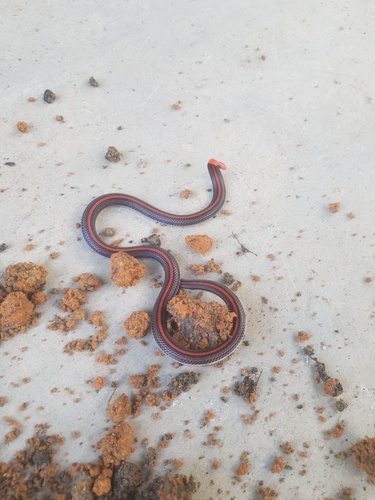 Banded Malaysian CoralsnakeCalliophis intestinalis
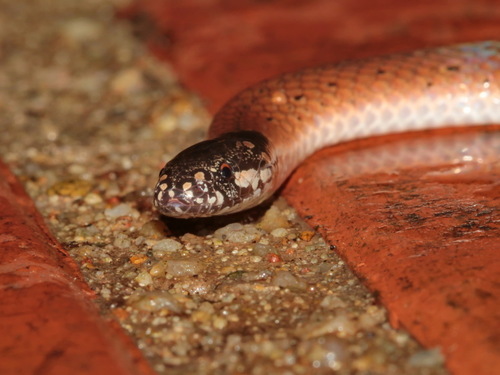 Speckled CoralsnakeCalliophis maculiceps
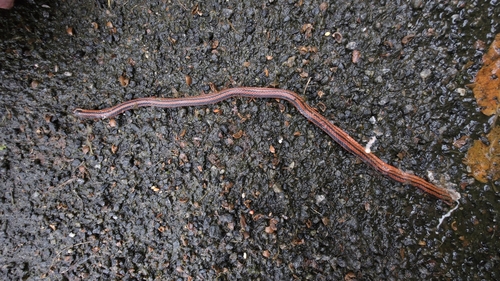 Black CoralsnakeCalliophis nigrescens
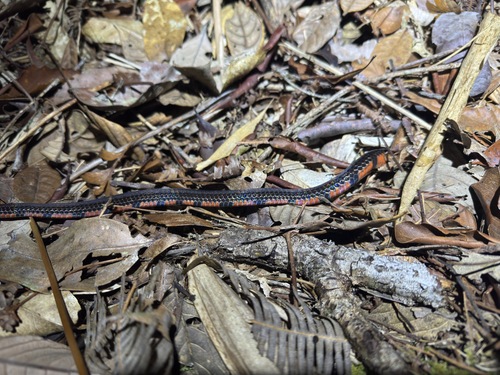 Calliophis nigrotaeniatusCalliophis nigrotaeniatus
 Slender CoralsnakeCalliophis melanurus
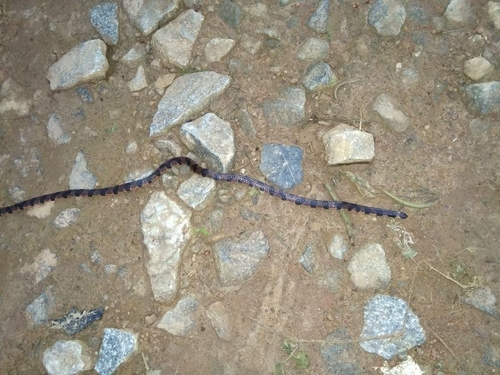 Bibron's Slender CoralsnakeCalliophis bibroni
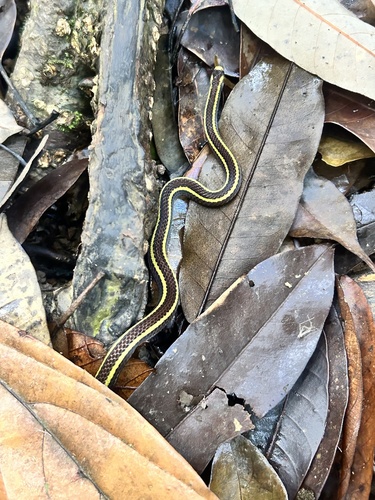 Calliophis bilineatusCalliophis bilineatus
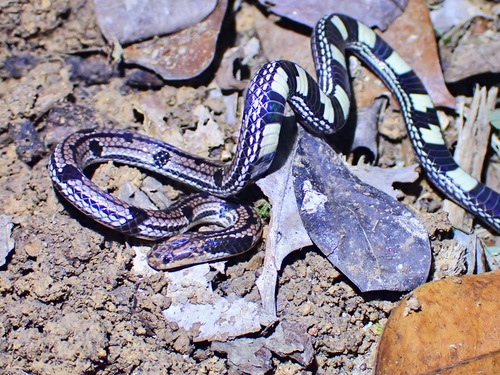 Grey CoralsnakeCalliophis gracilis
Classification
How scientists group this snake, from the broadest category down to the exact species. Each step narrows to its closest relatives.
- OrderThe broad group of scaled reptiles: all snakes and lizards
- Squamata
- FamilyA group of related snakes that share key traits
- Elapidae
- GenusA close-knit group of very similar species
- Calliophis
- SpeciesThis exact snake, named in the two-part scientific name
- Calliophis bivirgatus
Keep learning
- Are Snakes Dangerous? The Real Risk, in PerspectiveMost snakes are harmless and avoid people. Here is the honest picture of snakebite risk worldwide and how to lower your own.
- Snakebite First Aid: What to Do (and What Never to Do)A clear, CDC-based guide to snakebite first aid: the steps that help, the popular myths that hurt, and how to tell a serious bite from a minor one.
- Venomous vs Nonvenomous: How to Tell the DifferenceThe folk rules for telling venomous snakes apart, where each one fails, and why location-based identification beats guessing by sight.
- What to Do If You Find a SnakeFound a snake at home or on a trail? Here is how to stay calm, give it space, identify it safely, and know when to call a professional.
Distribution from GBIF & iNaturalist. Venom status per CDC. Background: Wikipedia. Informational only. Never handle a snake to identify it.