
Elapidae
Black Coralsnake
VenomousCalliophis nigrescens
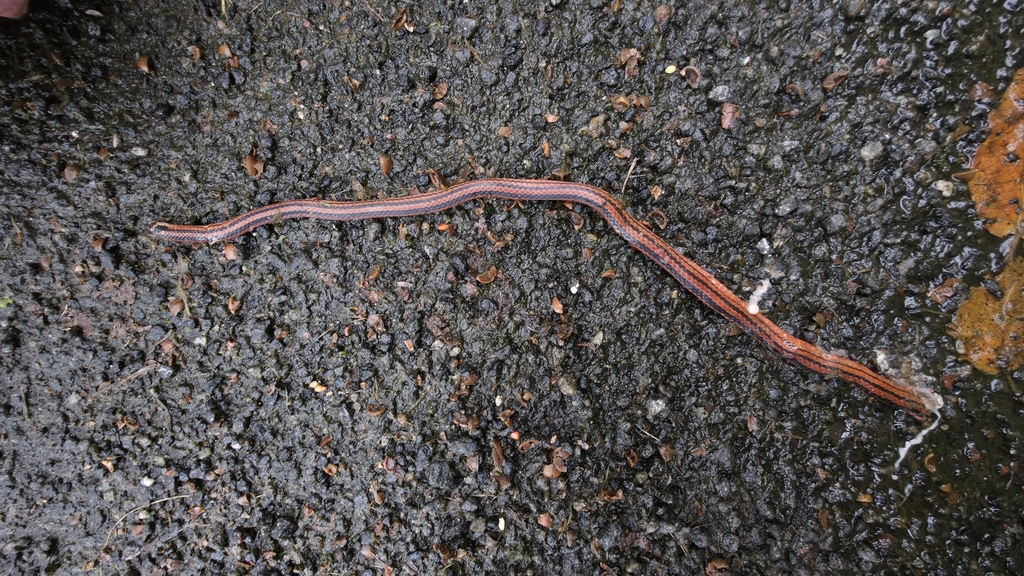
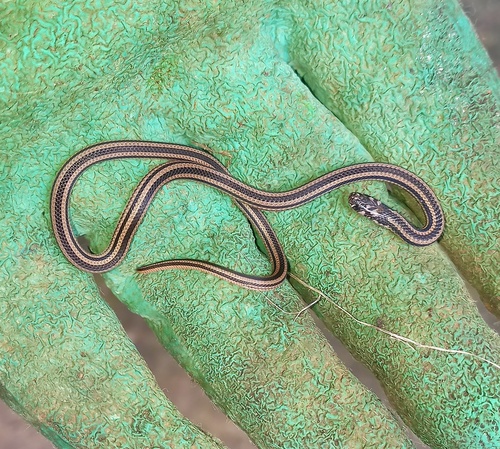
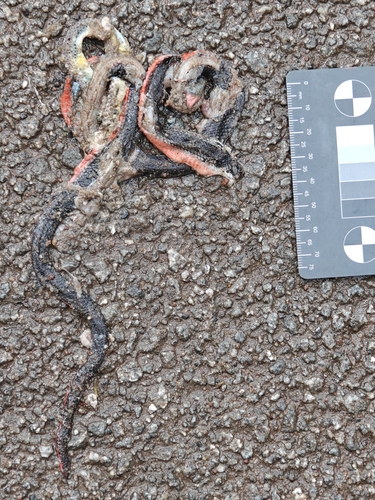
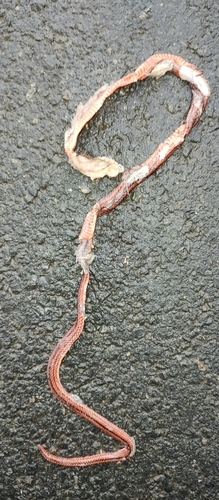
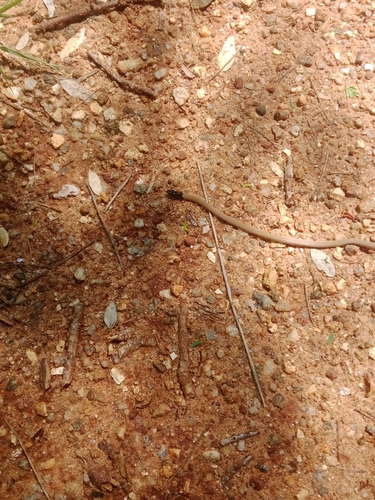
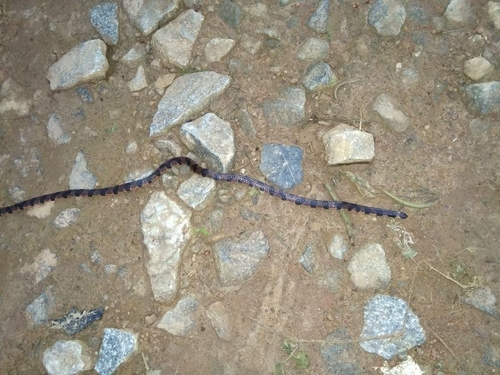
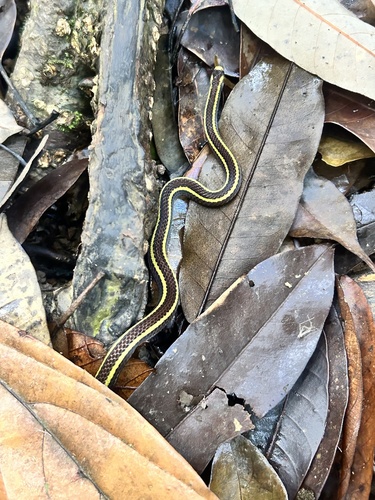
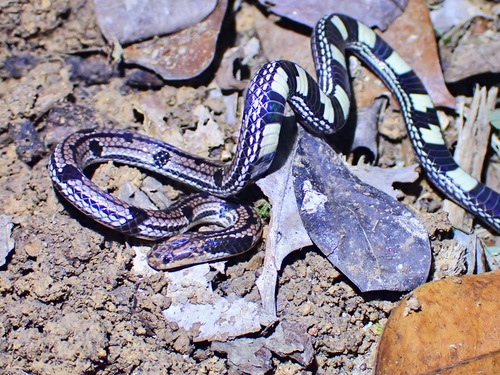
4 photographs of the Black Coralsnake. (c) Ronith Urs, some rights reserved (CC BY).
The Black Coralsnake (Calliophis nigrescens) is a venomous snake in the Elapidae family, recorded in 1 country.
If you are bitten
This is a venomous snake. Treat any bite as a medical emergency: stay calm, keep the bitten limb still and roughly level with the heart, remove rings and tight clothing, and get to emergency care immediately. Do not apply a tourniquet, cut the wound, apply ice, or try to suck out venom. Call your local emergency number or poison center.
- Family
- Elapidae
- Danger
- high
About the Black Coralsnake
Calliophis nigriscens, commonly known as the black coral snake or striped coral snake, is a species of venomous elapid snake endemic to the Western Ghats, India.
Geographic range
It is found in India in the Western Ghats, Karwar, Wayanad, Nilgiris, Anamalai, and the Travancore hills at 4,000–6,000 feet (1,200–1,800 m).
Description
See snake scales for terms used.
Rostral broader than long; frontal as long as its distance from the end of the snout, much shorter than the parietals; one preocular and two postoculars; a single temporal; seven upper labials, third and fourth entering the eye; anterior chin shields as long as the posterior or a little shorter, in contact with four labials.
Dorsal scales in 13 rows. Ventrals 232–261; anal usually divided; subcaudals 33–44.
This species comprises several colour varieties, which are connected by insensible gradations; in all the head and nape are black, with an oblique yellow band, sometimes broken up into spots, on each side from the parietals to behind the angle of the mouth, and the upper lip is yellow in front of and behind the eye; lower parts uniform red.
Color variations include the following:
A. Dark purplish brown above, with three or five longitudinal series of black, light-edged spots.
B. The spots confluent and forming three longitudinal black bands edged with whitish.
C. Intermediate between A and B.
D. Dark purplish brown above, with three or five more or less distinct black stripes, which are not light-edged.
E. Pale reddish brown or red above, with five black stripes.
Total length 110 cm (43 in); tail 11.5 cm (4+1⁄2 in).
Adapted from Wikipedia, available under CC BY-SA.
Local and regional names
The Black Coralsnake is known by these names across the regions where it lives:
- Chinese
- 黑珊瑚蛇
- English
- Black Coral Snake, Striped Coral Snake
- Italian
- Serpente corallo nero, Serpente corallo striato
- Marathi
- पट्टेरी पोवळा
Frequently asked: Black Coralsnake
- Is the Black Coralsnake venomous?
- Yes. The Black Coralsnake (Calliophis nigrescens) is venomous and belongs to the Elapidae family (cobra, mamba, coral or sea snake). Its bite is considered high risk to people. Treat any bite as a medical emergency.
- Is the Black Coralsnake poisonous?
- Snakes are venomous, not poisonous. "Poisonous" means harmful to eat or touch; "venomous" means injecting toxins through a bite. The Black Coralsnake is venomous, delivering venom through a bite.
- Is the Black Coralsnake dangerous?
- This is a venomous snake. Treat any bite as a medical emergency: stay calm, keep the bitten limb still and roughly level with the heart, remove rings and tight clothing, and get to emergency care immediately. Do not apply a tourniquet, cut the wound, apply ice, or try to suck out venom. Call your local emergency number or poison center.
- Where does the Black Coralsnake live?
- The Black Coralsnake has verified records in 1 country, including India. See the distribution section below for its full range.
If you are bitten by the Black Coralsnake
Do
- Get away from the snake and stay calm. Most bites worsen when people panic or try again to handle the snake.
- Call 911 or Poison Control (1-800-222-1222) right away. Antivenom works best when given early.
- Note the time of the bite and, from a safe distance, the snake's color and pattern, a phone photo is enough. Do not chase it.
- Keep the bitten limb still and at roughly heart level. Sit or lie down and limit movement.
- Remove rings, watches, and tight clothing near the bite before swelling starts.
- Gently wash the bite with soap and water and cover it with a clean, dry dressing.
Do not
- Do not cut the wound or try to suck out the venom.
- Do not apply a tourniquet or ice.
- Do not drink alcohol or caffeine.
- Do not take aspirin or ibuprofen, they can worsen bleeding. Acetaminophen is safer for pain.
- Do not try to catch or kill the snake. A dead snake can still bite by reflex.
First-aid guidance adapted from the U.S. Centers for Disease Control and Prevention (CDC NIOSH), Venomous Snakes. Educational only; always follow the instructions of emergency responders.
Where it is found
More Elapidae snakes
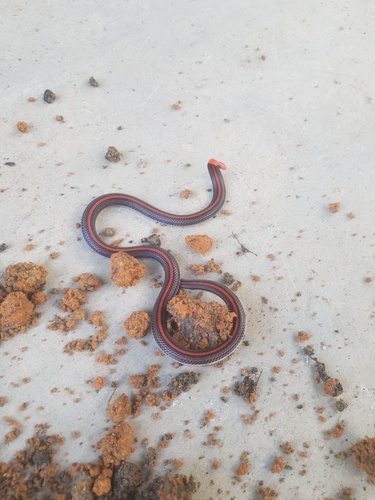 Banded Malaysian CoralsnakeCalliophis intestinalis
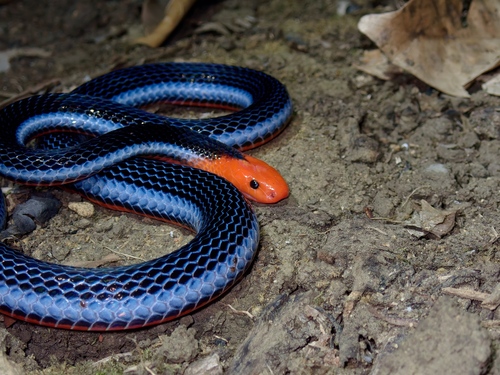 Blue Malaysian CoralsnakeCalliophis bivirgatus
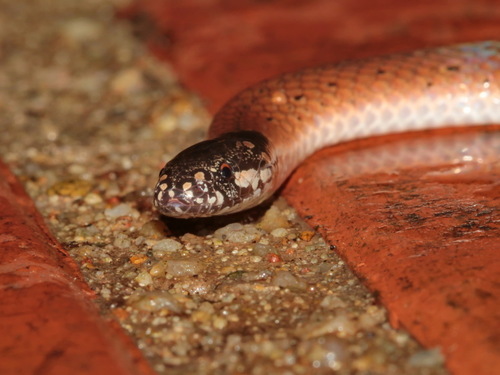 Speckled CoralsnakeCalliophis maculiceps
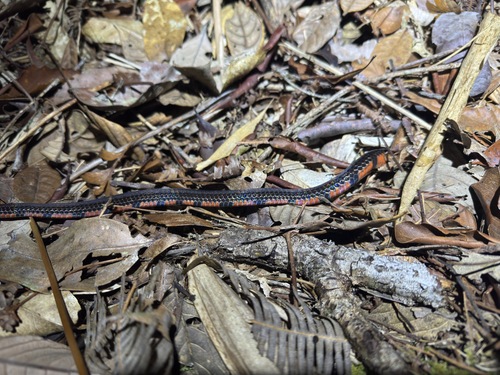 Calliophis nigrotaeniatusCalliophis nigrotaeniatus
 Slender CoralsnakeCalliophis melanurus
 Bibron's Slender CoralsnakeCalliophis bibroni
 Calliophis bilineatusCalliophis bilineatus
 Grey CoralsnakeCalliophis gracilis
Classification
How scientists group this snake, from the broadest category down to the exact species. Each step narrows to its closest relatives.
- OrderThe broad group of scaled reptiles: all snakes and lizards
- Squamata
- FamilyA group of related snakes that share key traits
- Elapidae
- GenusA close-knit group of very similar species
- Calliophis
- SpeciesThis exact snake, named in the two-part scientific name
- Calliophis nigrescens
Keep learning
- Are Snakes Dangerous? The Real Risk, in PerspectiveMost snakes are harmless and avoid people. Here is the honest picture of snakebite risk worldwide and how to lower your own.
- Snakebite First Aid: What to Do (and What Never to Do)A clear, CDC-based guide to snakebite first aid: the steps that help, the popular myths that hurt, and how to tell a serious bite from a minor one.
- Venomous vs Nonvenomous: How to Tell the DifferenceThe folk rules for telling venomous snakes apart, where each one fails, and why location-based identification beats guessing by sight.
- What to Do If You Find a SnakeFound a snake at home or on a trail? Here is how to stay calm, give it space, identify it safely, and know when to call a professional.
Distribution from GBIF & iNaturalist. Venom status per CDC. Background: Wikipedia. Informational only. Never handle a snake to identify it.