
Regional field guide
Snakes in Montana
10+ snake species have verified records in Montana, including 1 venomous. Pick your county below to see exactly which snakes live near you.
Snakes of Montana
Montana has only about 10+ species of snakes, and just 1 of them is venomous: the Prairie Rattlesnake. There are no copperheads or cottonmouths in Montana or anywhere in the far West, so the state's single dangerous snake is a rattlesnake, and once you can recognize it, every other snake in Montana is harmless to people. That is a short, manageable list for such a large state.
Montana's snake list is small because so much of it is high, cold, and mountainous. The western third is dominated by the Rocky Mountains, where elevation and long winters keep snakes scarce, and rattlesnakes are essentially absent from the high country. The snakes live where it is warmer and lower: the eastern plains, the prairie grasslands, the river breaks, and the dry rocky coulees and badlands. This is shortgrass and mixed-grass prairie country, and it is where nearly all of Montana's snake activity happens.
The Prairie Rattlesnake is the only venomous snake in the state, and it belongs to the eastern and central plains, the river valleys, and the rocky outcrops and prairie dog towns where it hunts rodents. It is genuinely uncommon to encounter in the mountainous west. Across the open eastern country it is the one snake worth knowing on sight, but even there it would rather avoid you and will usually buzz a warning and retreat if given the chance.
Most snakes Montanans actually see are harmless. The gophersnake (often called bullsnake) is big, common, and the classic rattlesnake impersonator, hissing loudly and vibrating its tail to bluff even though it has no venom and no rattle, which gets many of them killed by mistake. Garter snakes are the snakes most people meet, hunting near water and gardens, and the hognose snake puts on a famous bluff-and-play-dead act when bothered. Honest safety: nearly every serious snakebite in Montana is a rattlesnake bite, and most happen when someone handles, corners, or surprises one or reaches blindly into rock and brush. Deaths are very rare with antivenom and prompt care. Give rattlesnakes space, watch your hands and feet in prairie rock and coulees, and never handle a wild snake. If a bite happens, call Poison Control at 1-800-222-1222 or 911.
Venomous snakes in Montana
Most commonly seen
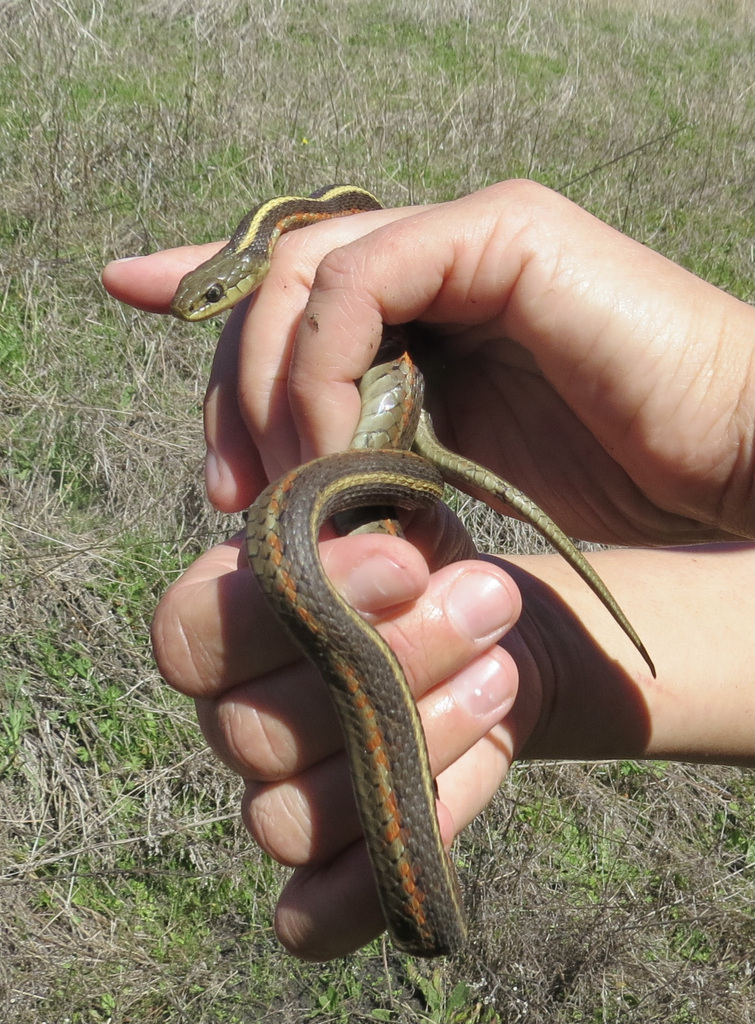
- Western Terrestrial Garter SnakeCommonly seen
- Prairie RattlesnakeCommonly seen
- Gopher SnakeCommonly seen
- North American RacerCommonly seen
- Common Garter SnakeOften seen
- Northern Rubber BoaOften seen
- Plains Garter SnakeOften seen
- Plains Hognose SnakeOccasionally seen
- Eastern MilksnakeOccasionally seen
- Western MilksnakeOccasionally seen
- Pine SnakeOccasionally seen
- Smooth GreensnakeRarely seen
Counties in Montana
56 listed- Beaverhead3
- Big Horn7
- Blaine3
- Broadwater4
- Carbon7
- Carter4
- Cascade7
- Chouteau6
- Custer6
- Daniels1
- Dawson5
- Deer Lodge1
- Fallon1
- Fergus7
- Flathead4
- Gallatin6
- Garfield6
- Glacier2
- Golden Valley3
- Granite3
- Hill3
- Jefferson4
- Judith Basin1
- Lake6
- Lewis and Clark6
- Liberty1
- Lincoln3
- Madison5
- McCone1
- Meagher1
- Mineral4
- Missoula5
- Musselshell1
- Park5
- Petroleum1
- Phillips5
- Pondera1
- Powder River6
- Powell2
- Prairie2
- Ravalli6
- Richland5
- Roosevelt2
- Rosebud7
- Sanders6
- Sheridan2
- Silver Bow1
- Stillwater4
- Sweet Grass5
- Teton4
- Toole4
- Treasure1
- Valley3
- Wheatland3
- Wibaux1
- Yellowstone8
Snakes in Montana: FAQ
- Are there venomous snakes in Montana?
- Yes. 1 venomous snake species has verified records in Montana, including Prairie Rattlesnake. Most snakes in Montana, however, are harmless.
- How many snake species live in Montana?
- 10+ snake species have verified records in Montana, of which 1 is venomous.
- What is the most commonly seen snake in Montana?
- The Western Terrestrial Garter Snake is the most frequently reported snake in Montana, based on verified wildlife observations.
- What should I do if I see a venomous snake in Montana?
- Keep your distance and do not try to catch or kill it. Most bites happen when people handle or corner a snake. If someone is bitten, contact local emergency services or poison control immediately.