
Regional field guide
Snakes in Kansas
50+ snake species have verified records in Kansas, including 8 venomous. Pick your county below to see exactly which snakes live near you.
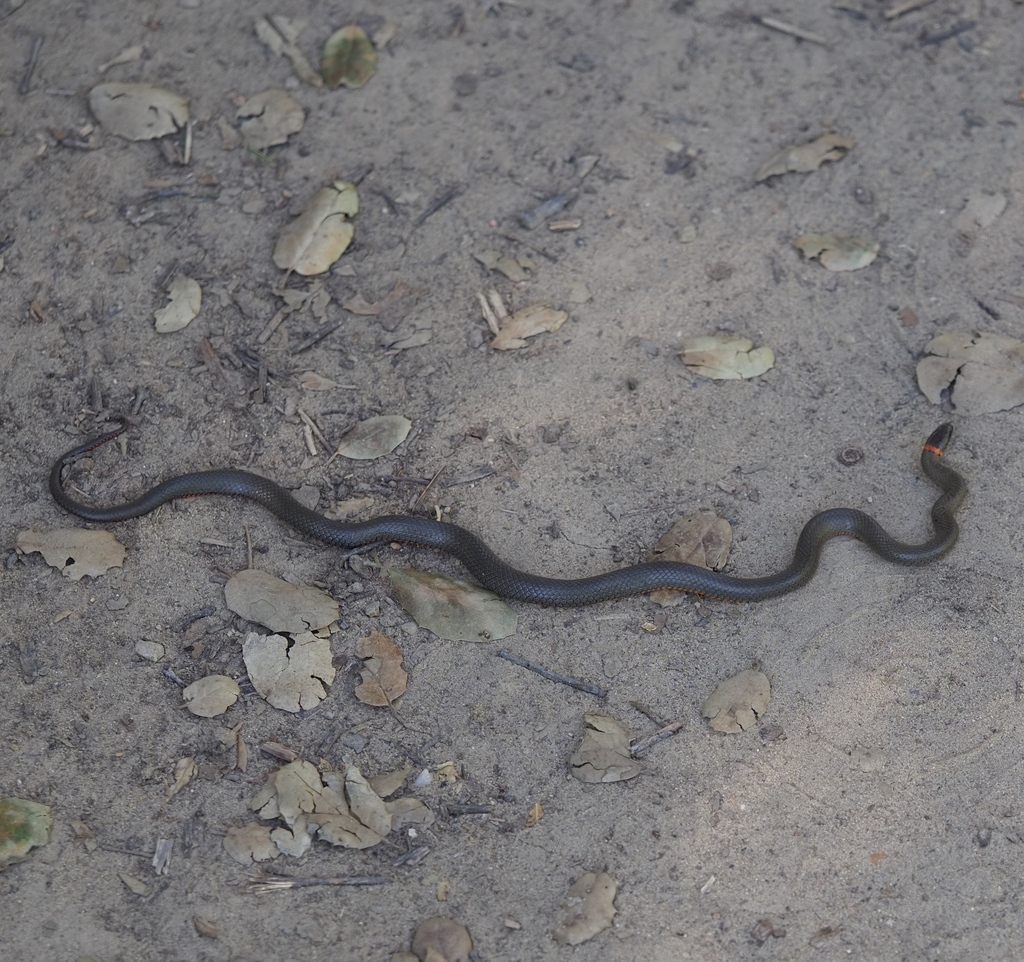
Snakes of Kansas
Kansas has one of the larger snake faunas in the Midwest, about 50+ species, and only 8 of them are venomous. Even with that count, the great majority of snakes in Kansas are harmless and useful, eating rodents and insects across prairie and farmland. The state spans a strong east-to-west gradient, from wetter woodland in the east to dry shortgrass plains in the west, and the snakes change with it.
That gradient drives the diversity. Eastern Kansas has tallgrass prairie, oak woodlands, and river valleys with wetter, more wooded country. The central mixed-grass region and the dry western shortgrass plains are open, arid, and rocky in places, favoring drought-tolerant species. Rivers like the Arkansas and the Cimarron, along with the Red Hills and Gypsum Hills, add canyons, breaks, and rocky outcrops that hold their own snakes.
Kansas records 8 venomous species across these zones. The Western Diamond-backed Rattlesnake and the Prairie Rattlesnake favor the dry western and southern plains and rocky breaks. The Eastern Copperhead and Broad-banded Copperhead live in wooded and rocky eastern and central country. The Northern Cottonmouth haunts wet lowlands and streams in the southeast. The Timber Rattlesnake holds on in eastern woodlands. The Eastern Massasauga and Western Massasauga are small, secretive wetland rattlesnakes of marshes and wet prairie, now declined and of conservation concern. All are reclusive and avoid people.
Most snakes Kansans see are harmless. Garter snakes are common statewide, bullsnakes (gophersnakes) hiss loudly and rattle their tails to mimic a rattlesnake and are killed needlessly even though they are superb rodent hunters, and watersnakes patrol ponds and rivers where they are mistaken for cottonmouths. Plains hognose snakes flatten and bluff dramatically but are no threat. Bites are uncommon and rarely fatal thanks to antivenom, and most happen when people try to handle or kill a snake. Never assume a wild snake is safe to handle, and if a bite happens, call Poison Control at 1-800-222-1222 or 911.
Venomous snakes in Kansas
- Eastern CopperheadAgkistrodon contortrix Venomous
- Western MassasaugaSistrurus tergeminus Venomous
- Prairie RattlesnakeCrotalus viridis Venomous
- Timber RattlesnakeCrotalus horridus Venomous
- Broad-banded CopperheadAgkistrodon laticinctus Venomous
- Eastern MassasaugaSistrurus catenatus Venomous
- Western Diamond-backed RattlesnakeCrotalus atrox Venomous
- Northern CottonmouthAgkistrodon piscivorus Venomous
Most commonly seen
- Ring-necked SnakeCommonly seen
- Common WatersnakeCommonly seen
- North American RacerCommonly seen
- Common Garter SnakeCommonly seen
- Western RatsnakeCommonly seen
- Gopher SnakeCommonly seen
- Flat-headed SnakeCommonly seen
- Eastern CopperheadCommonly seen
- DeKay's BrownsnakeCommonly seen
- Western MassasaugaCommonly seen
- Prairie RattlesnakeCommonly seen
- Plains Garter SnakeCommonly seen
Counties in Kansas
105 listed- Allen20
- Anderson24
- Atchison14
- Barber30
- Barton17
- Bourbon21
- Brown9
- Butler22
- Chase24
- Chautauqua27
- Cherokee25
- Cheyenne8
- Clark25
- Clay9
- Cloud12
- Coffey12
- Comanche22
- Cowley33
- Crawford24
- Decatur3
- Dickinson15
- Doniphan14
- Douglas30
- Edwards7
- Elk25
- Ellis22
- Ellsworth21
- Finney15
- Ford15
- Franklin26
- Geary20
- Gove9
- Graham8
- Grant8
- Gray9
- Greeley6
- Greenwood26
- Hamilton12
- Harper20
- Harvey12
- Haskell4
- Hodgeman10
- Jackson10
- Jefferson19
- Jewell13
- Johnson23
- Kearny11
- Kingman16
- Kiowa24
- Labette16
- Lane8
- Leavenworth21
- Lincoln15
- Linn23
- Logan15
- Lyon21
- Marion7
- Marshall18
- McPherson13
- Meade23
- Miami21
- Mitchell11
- Montgomery23
- Morris12
- Morton13
- Nemaha6
- Neosho19
- Ness8
- Norton5
- Osage20
- Osborne10
- Ottawa11
- Pawnee6
- Phillips4
- Pottawatomie24
- Pratt19
- Rawlins6
- Reno19
- Republic10
- Rice10
- Riley27
- Rooks17
- Rush12
- Russell25
- Saline19
- Scott12
- Sedgwick16
- Seward15
- Shawnee18
- Sheridan6
- Sherman6
- Smith9
- Stafford17
- Stanton8
- Stevens4
- Sumner24
- Thomas4
- Trego18
- Wabaunsee20
- Wallace7
- Washington16
- Wichita5
- Wilson24
- Woodson19
- Wyandotte15
Snakes in Kansas: FAQ
- Are there venomous snakes in Kansas?
- Yes. 8 venomous snake species have verified records in Kansas, including Eastern Copperhead, Western Massasauga, Prairie Rattlesnake, Timber Rattlesnake. Most snakes in Kansas, however, are harmless.
- How many snake species live in Kansas?
- 50+ snake species have verified records in Kansas, of which 8 are venomous.
- What is the most commonly seen snake in Kansas?
- The Ring-necked Snake is the most frequently reported snake in Kansas, based on verified wildlife observations.
- What should I do if I see a venomous snake in Kansas?
- Keep your distance and do not try to catch or kill it. Most bites happen when people handle or corner a snake. If someone is bitten, contact local emergency services or poison control immediately.