
Genus · Pseudaspididae
Pythonodipsas
The genus Pythonodipsas contains a single species. It is not considered dangerous to humans.
About Western keeled snake
A single, viper-mimicking desert snake from southwestern Africa that is closely related to the mole snakes.
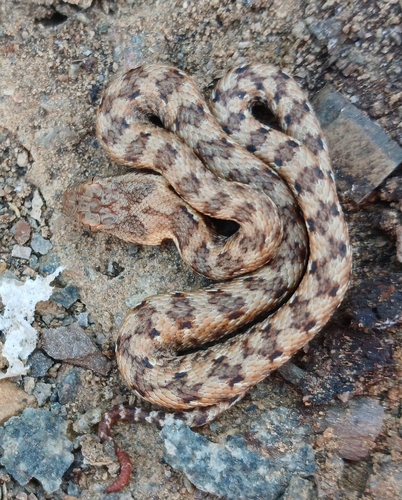
Pythonodipsas is a small genus that contains just one recognized species, the Western Keeled Snake (Pythonodipsas carinata). It belongs to the family Pseudaspididae, a small African lineage that also includes the mole snakes (Pseudaspis) and the keeled snake (Pythonodipsas was at times grouped near them). These are non-front-fanged snakes, distinct from the cobras, mambas, and vipers, and they sit on a branch of the larger advanced-snake radiation that is centered on Africa.
The Western Keeled Snake lives in the arid west of southern Africa, across parts of Namibia and adjoining dry regions, where it favors rocky desert and semi-desert terrain. It is named for its strongly keeled body scales, which give it a rough texture, and it has a broad, somewhat triangular head and a patterned body that together produce a strong resemblance to a viper. This look is widely interpreted as mimicry, a defensive disguise that may deter predators by suggesting the snake is more dangerous than it is. It is nocturnal and most active in the cooler hours, sheltering by day among rocks and crevices.
Despite the viper-like appearance, the Western Keeled Snake is not a front-fanged venomous species and is not considered dangerous to people; like many small African colubroid snakes it is best described as harmless to humans in terms of medically significant bites. As a rule, wild snakes should not be handled, and a snake should be identified by an expert rather than by appearance alone, because viper mimics can be confused with the genuinely venomous animals they imitate. If anyone is bitten by an unidentified snake, treat it as a medical issue, stay calm, and seek emergency care promptly; in the United States contact Poison Control at 1-800-222-1222, and elsewhere call local emergency services. Its diet centers on small desert vertebrates such as lizards, and like its relatives in the family it reproduces by laying eggs or, in some related forms, giving live birth, with details for this obscure species still poorly documented.
Pythonodipsas belongs to the Pseudaspididae family (Mole snakes & allies). Robust African burrowers and their relatives. Mole snakes are heavy-bodied with a pointed snout; coloration varies widely.
Danger: Non-venomous, though a large mole snake can deliver a strong bite if cornered.
All species (1)
Keep learning
- What Is a Snake? Anatomy and the BasicsA clear overview of what makes a snake a snake: limbless body plan, anatomy, evolution from lizards, species diversity, and why they are ectothermic.
- How Snakes Move, Hunt, and EatHow snakes move without legs, hunt as ambushers or active foragers, kill by constriction or venom, and swallow prey wider than their head.
- What Do Snakes Eat?All snakes are carnivores. Learn what snakes eat, how diet changes with size and age, how often they feed, and how they hunt and swallow prey.
- Venomous vs Nonvenomous: How to Tell the DifferenceThe folk rules for telling venomous snakes apart, where each one fails, and why location-based identification beats guessing by sight.