
Elapidae
Southern Death Adder
VenomousAcanthophis antarcticus
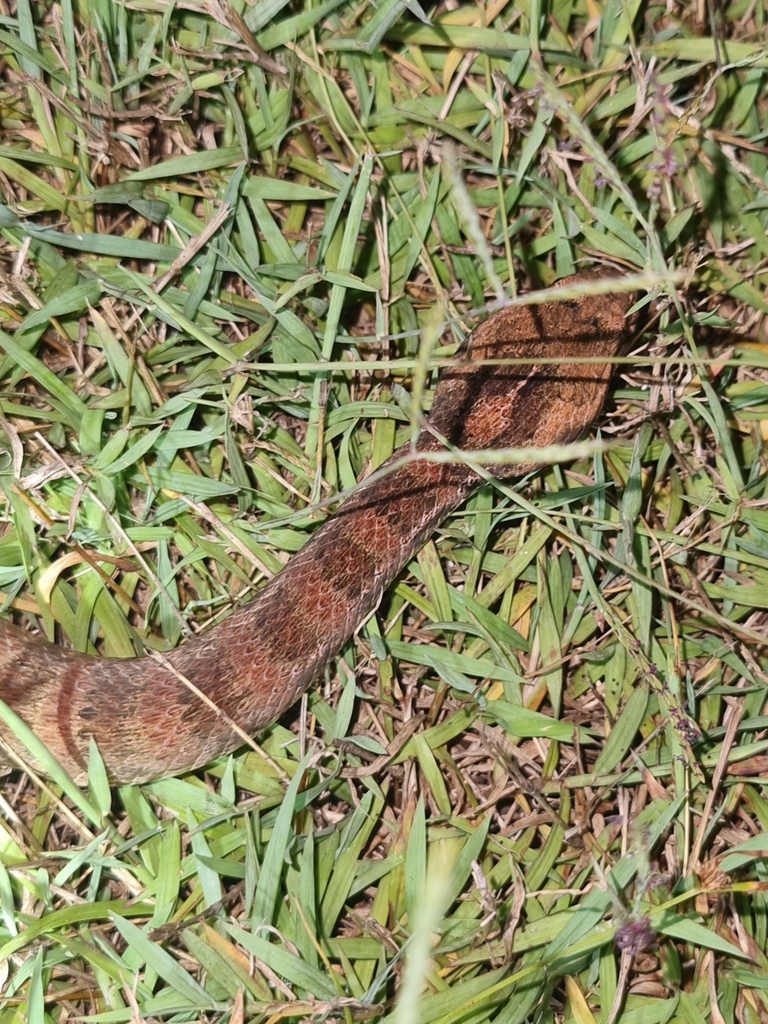
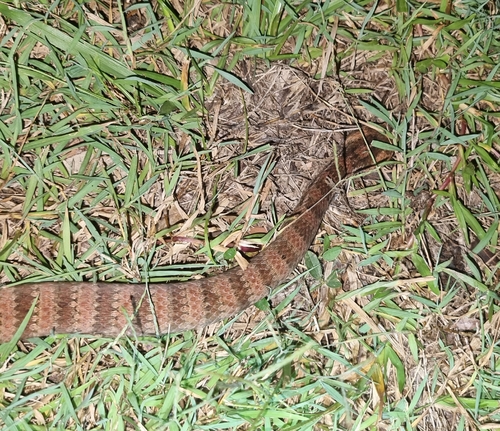
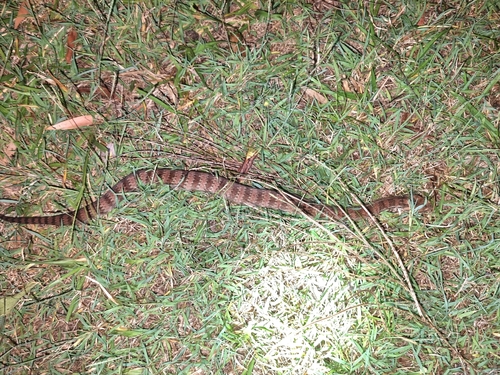
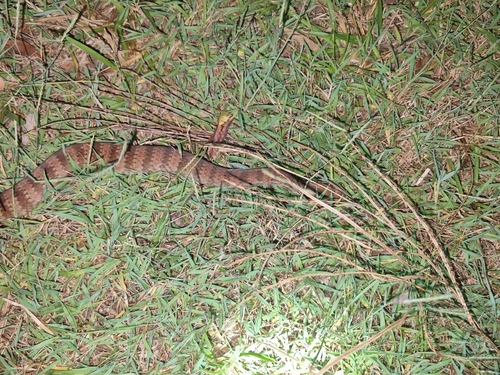
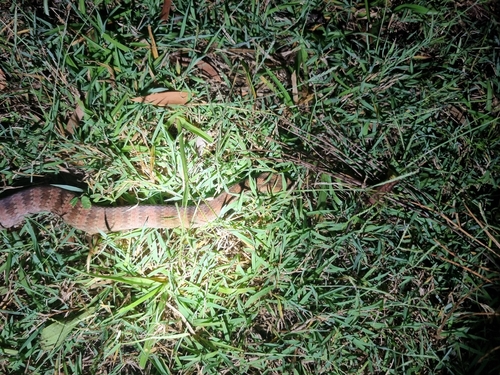
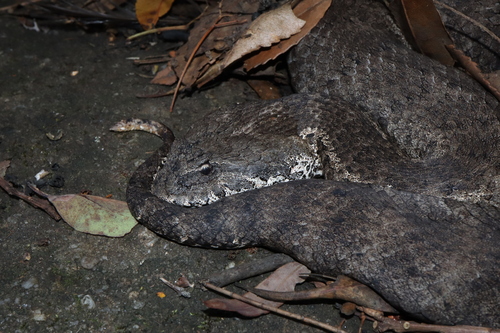
6 photographs of the Southern Death Adder. © Nadine Gaffney.
The Southern Death Adder (Acanthophis antarcticus) is a venomous snake in the Elapidae family, recorded in 3 countries.
If you are bitten
This is a venomous snake. Treat any bite as a medical emergency: stay calm, keep the bitten limb still and roughly level with the heart, remove rings and tight clothing, and get to emergency care immediately. Do not apply a tourniquet, cut the wound, apply ice, or try to suck out venom. Call your local emergency number or poison center.
- Family
- Elapidae
- Danger
- high
About the Southern Death Adder
The common death adder (Acanthophis antarcticus) is a species of death adder native to Australia. It is one of the most venomous land snakes in Australia and globally. While it remains widespread (unlike related species), it is facing increased threat from the ongoing Australian cane toad invasion.
Taxonomy
The common death adder was first described in 1802. The common death adder feeds on frogs, lizards and birds and, unlike most Australian venomous snakes that actively search for prey, this snake sits in one place and waits for prey to come to it.
Description
The common death adder has a broad flattened, triangular head and a thick body with bands of red, brown and black with a grey, cream or pink belly. It's known to reach a maximum body length of 70–100 centimetres (2.3–3.3 ft). Unlike the common or European adder (Vipera berus), the common death adder is a member of the snake family Elapidae, rather than the family Viperidae, which are not found in Australia.
Distribution and habitat
The common death adder occurs over much of eastern and coastal southern Australia – Queensland, New South Wales and South Australia. It is more scarce in the Northern Territory, Western Australia and the west parts of South Australia, and is no longer found in Victoria. It is also native to Papua.
Common death adders are found in forests, woodlands, grasslands and heaths of the eastern coast of Australia. Thanks to its band stripes, the death adder is a master of camouflage, hiding beneath loose leaf litter and debris in woodland, shrubland and grassland.
Concerns
Habitat loss and the spread of invasive cane toads are a concern. The toad eats young death adders and adult death adders that eat the toads are poisoned by the toxic glands on their skin.
Diet
Common death adders eat small mammals and birds as a primary diet. Unlike other elapids, a common death adder lies in wait for its prey (often for many days) until a meal passes. It covers itself with leaves—making itself inconspicuous—and lies coiled in ambush, twitching its grub-like tail close to its head as a lure. When an animal approaches to investigate the movement, the death adder quickly strikes, injecting its venom and then waiting for the victim to die before eating it. Death adders are not aggressive, yet their ambush hunting technique and reliance on camouflage rather than flight to avoid threats render them more dangerous than other elapids to humans who venture into bushland habitats.
Reproduction
Unlike most snakes, death adders produce litters of live young. In the late summer, a female death adder will produce a litter of live offspring, approximately 3–20; however, over 30 young have been recorded in a single litter.
Adapted from Wikipedia, available under CC BY-SA.
Local and regional names
The Southern Death Adder is known by these names across the regions where it lives:
- Chinese
- 死亡蛇
- Czech
- smrtonoš zmijí
- English
- Common Death Adder, Death Adder
- French
- Vipère de la mort
- German
- Todesotter
- Hungarian
- déli halálkígyó
- Italian
- Vipera della morte comune
- Japanese
- コモンデスアダー
- Polish
- zdradnica śmiercionośna
- Russian
- Гадюкообразная смертельная змея
- Swedish
- Dödsorm
Frequently asked: Southern Death Adder
- Is the Southern Death Adder venomous?
- Yes. The Southern Death Adder (Acanthophis antarcticus) is venomous and belongs to the Elapidae family (cobra, mamba, coral or sea snake). Its bite is considered high risk to people. Treat any bite as a medical emergency.
- Is the Southern Death Adder poisonous?
- Snakes are venomous, not poisonous. "Poisonous" means harmful to eat or touch; "venomous" means injecting toxins through a bite. The Southern Death Adder is venomous, delivering venom through a bite.
- Is the Southern Death Adder dangerous?
- This is a venomous snake. Treat any bite as a medical emergency: stay calm, keep the bitten limb still and roughly level with the heart, remove rings and tight clothing, and get to emergency care immediately. Do not apply a tourniquet, cut the wound, apply ice, or try to suck out venom. Call your local emergency number or poison center.
- Where does the Southern Death Adder live?
- The Southern Death Adder has verified records in 3 countries, including Australia, Papua New Guinea, Indonesia. See the distribution section below for its full range.
- What does the Southern Death Adder eat?
- Common death adders eat small mammals and birds as a primary diet. Unlike other elapids, a common death adder lies in wait for its prey (often for many days) until a meal passes. It covers itself with leaves—making itself inconspicuous—and lies coiled in ambush, twitching its grub-like tail close to its head as a lure. When an animal approaches to investigate the movement, the death adder quickly strikes, injecting its venom and then waiting for the victim to die before eating it.
If you are bitten by the Southern Death Adder
Do
- Get away from the snake and stay calm. Most bites worsen when people panic or try again to handle the snake.
- Call 911 or Poison Control (1-800-222-1222) right away. Antivenom works best when given early.
- Note the time of the bite and, from a safe distance, the snake's color and pattern, a phone photo is enough. Do not chase it.
- Keep the bitten limb still and at roughly heart level. Sit or lie down and limit movement.
- Remove rings, watches, and tight clothing near the bite before swelling starts.
- Gently wash the bite with soap and water and cover it with a clean, dry dressing.
Do not
- Do not cut the wound or try to suck out the venom.
- Do not apply a tourniquet or ice.
- Do not drink alcohol or caffeine.
- Do not take aspirin or ibuprofen, they can worsen bleeding. Acetaminophen is safer for pain.
- Do not try to catch or kill the snake. A dead snake can still bite by reflex.
First-aid guidance adapted from the U.S. Centers for Disease Control and Prevention (CDC NIOSH), Venomous Snakes. Educational only; always follow the instructions of emergency responders.
Where it is found
More Elapidae snakes
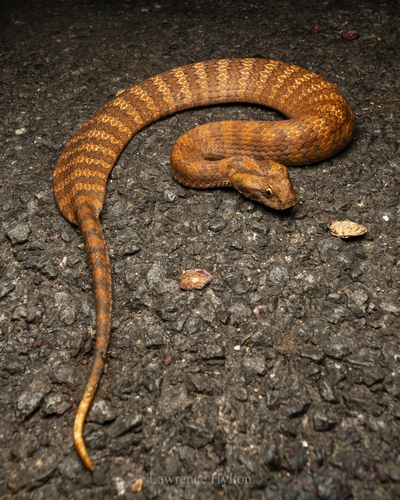 Northern Death AdderAcanthophis praelongus
 Rough-scaled Death AdderAcanthophis rugosus
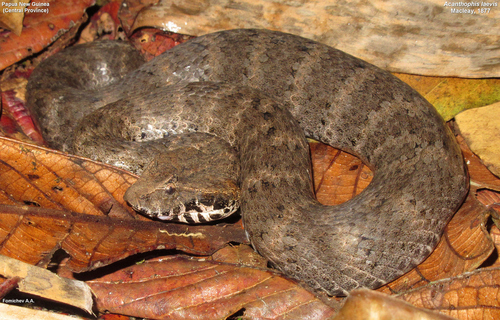 New Guinea Death AdderAcanthophis laevis
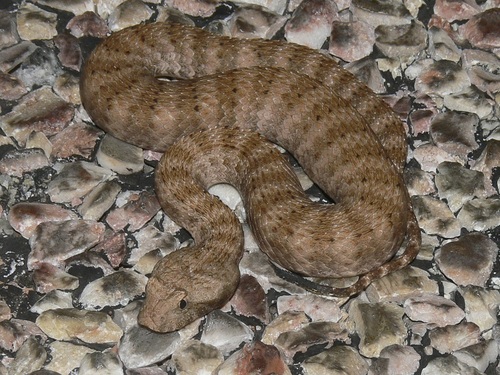 Pilbara Death AdderAcanthophis wellsi
 Plains Death AdderAcanthophis hawkei
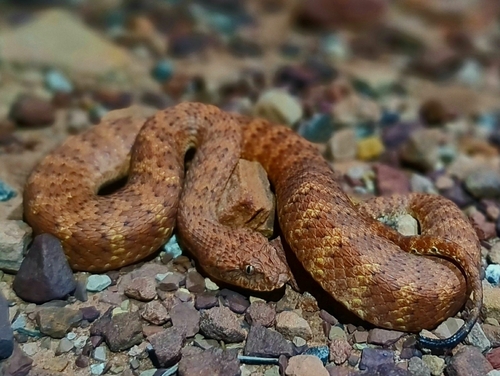 Desert Death AdderAcanthophis pyrrhus
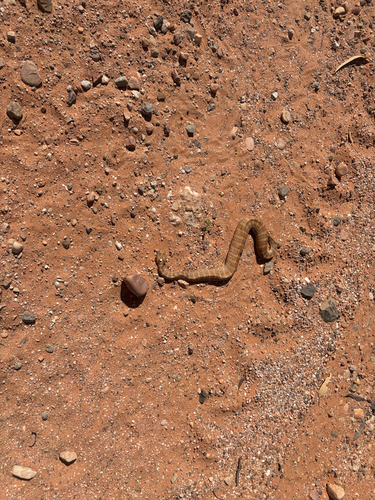 Kimberley Death AdderAcanthophis cryptamydros
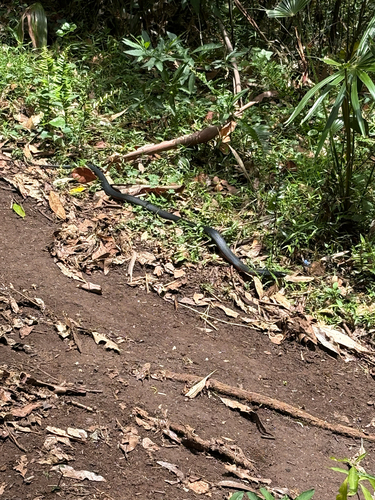 Red-bellied Black SnakePseudechis porphyriacus
Classification
How scientists group this snake, from the broadest category down to the exact species. Each step narrows to its closest relatives.
- OrderThe broad group of scaled reptiles: all snakes and lizards
- Squamata
- FamilyA group of related snakes that share key traits
- Elapidae
- GenusA close-knit group of very similar species
- Acanthophis
- SpeciesThis exact snake, named in the two-part scientific name
- Acanthophis antarcticus
Keep learning
- Are Snakes Dangerous? The Real Risk, in PerspectiveMost snakes are harmless and avoid people. Here is the honest picture of snakebite risk worldwide and how to lower your own.
- Snakebite First Aid: What to Do (and What Never to Do)A clear, CDC-based guide to snakebite first aid: the steps that help, the popular myths that hurt, and how to tell a serious bite from a minor one.
- Venomous vs Nonvenomous: How to Tell the DifferenceThe folk rules for telling venomous snakes apart, where each one fails, and why location-based identification beats guessing by sight.
- What to Do If You Find a SnakeFound a snake at home or on a trail? Here is how to stay calm, give it space, identify it safely, and know when to call a professional.
Distribution from GBIF & iNaturalist. Venom status per CDC. Background: Wikipedia. Informational only. Never handle a snake to identify it.