
Elapidae
Northern Death Adder
VenomousAcanthophis praelongus
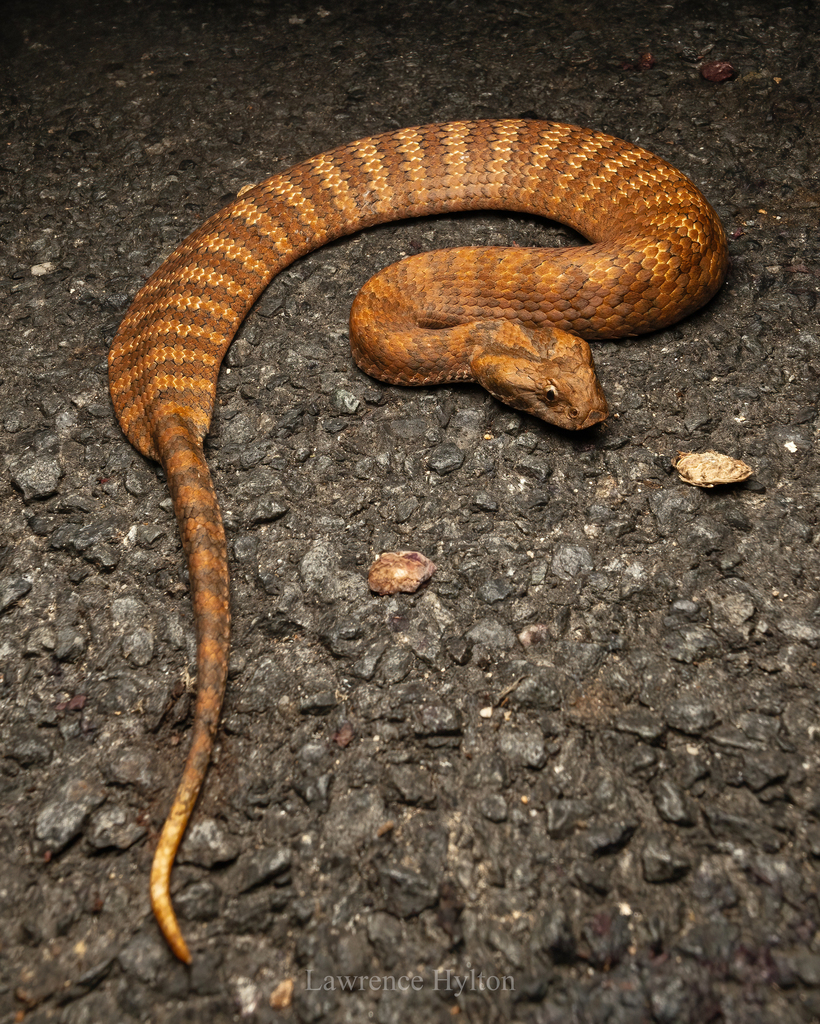
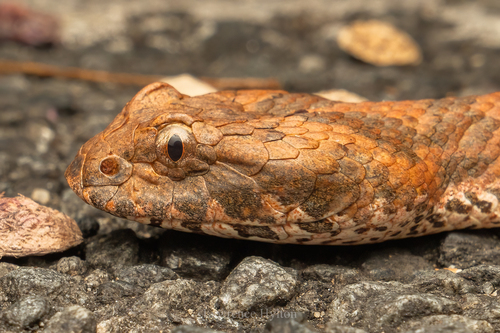
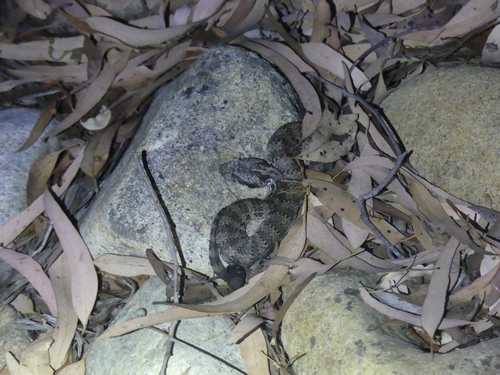
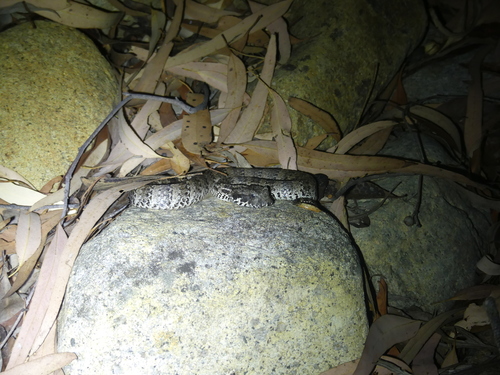
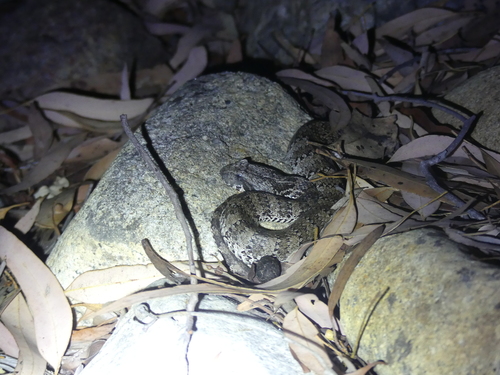
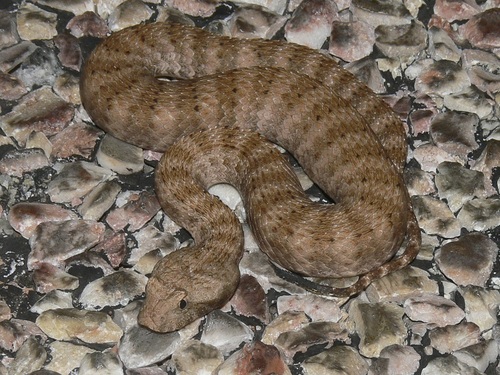
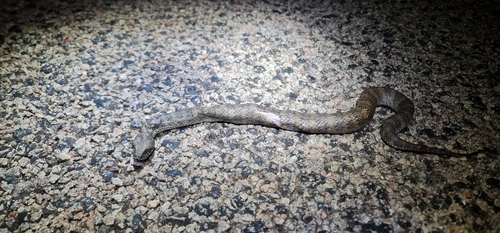
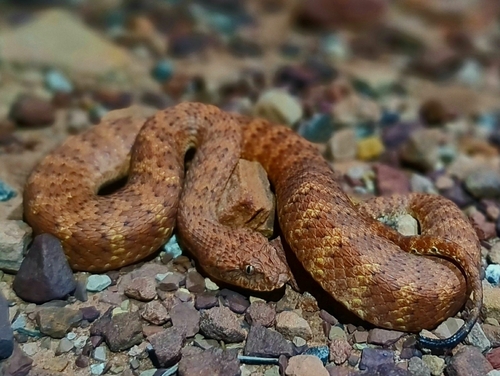
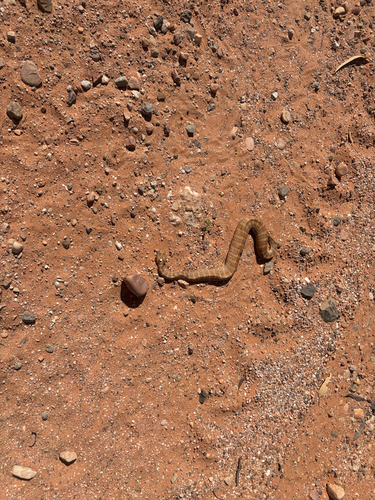
5 photographs of the Northern Death Adder. © Lawrence Hylton.
The Northern Death Adder (Acanthophis praelongus) is a venomous snake in the Elapidae family, recorded in 2 countries.
If you are bitten
This is a venomous snake. Treat any bite as a medical emergency: stay calm, keep the bitten limb still and roughly level with the heart, remove rings and tight clothing, and get to emergency care immediately. Do not apply a tourniquet, cut the wound, apply ice, or try to suck out venom. Call your local emergency number or poison center.
- Family
- Elapidae
- Danger
- high
About the Northern Death Adder
The northern death adder (Acanthophis praelongus) is a species of venomous snake in the family Elapidae.
The northern death adder lives in Australia and Papua New Guinea. It hunts birds, amphibians, and small mammals both by day and night. Though it resembles a viper, it belongs to the elapid family, which also includes cobras and mambas.
Venom
The venom of the northern death adder is highly potent against the human organism. It contains pre- and postsynaptic neurotoxins, possibly myotoxins and anticoagulants as well. An envenoming by this snake is very dangerous, and all bites should be treated as medical emergencies. Main effects include local pain and flaccid paralysis, death can be caused by respiratory failure. In the case of systemic effects of envenoming key treatment is based on antivenom applications ('Polyvalent Snake Antivenom (Australia - New Guinea)' CSL Limited, 'Death Adder Antivenom', CSL Limited).
Habitat
Northern death adders can be found in a wide range of habitats, including mangroves, tropical and subtropical moist broadleaf forests, tropical and subtropical grasslands, savannas, and shrubland.
Adapted from Wikipedia, available under CC BY-SA.
Local and regional names
The Northern Death Adder is known by these names across the regions where it lives:
- Chinese
- 北部棘蛇
- Czech
- smrtonoš severní
- German
- Nördliche Todesotter
- Hungarian
- északi halálkígyó
- Italian
- Vipera della morte settentrionale
- Spanish
- Víbora de la muerte del norte, Víbora venenosa australiana
Frequently asked: Northern Death Adder
- Is the Northern Death Adder venomous?
- Yes. The Northern Death Adder (Acanthophis praelongus) is venomous and belongs to the Elapidae family (cobra, mamba, coral or sea snake). Its bite is considered high risk to people. Treat any bite as a medical emergency.
- Is the Northern Death Adder poisonous?
- Snakes are venomous, not poisonous. "Poisonous" means harmful to eat or touch; "venomous" means injecting toxins through a bite. The Northern Death Adder is venomous, delivering venom through a bite.
- Is the Northern Death Adder dangerous?
- This is a venomous snake. Treat any bite as a medical emergency: stay calm, keep the bitten limb still and roughly level with the heart, remove rings and tight clothing, and get to emergency care immediately. Do not apply a tourniquet, cut the wound, apply ice, or try to suck out venom. Call your local emergency number or poison center.
- Where does the Northern Death Adder live?
- The Northern Death Adder has verified records in 2 countries, including Australia, Papua New Guinea. See the distribution section below for its full range.
If you are bitten by the Northern Death Adder
Do
- Get away from the snake and stay calm. Most bites worsen when people panic or try again to handle the snake.
- Call 911 or Poison Control (1-800-222-1222) right away. Antivenom works best when given early.
- Note the time of the bite and, from a safe distance, the snake's color and pattern, a phone photo is enough. Do not chase it.
- Keep the bitten limb still and at roughly heart level. Sit or lie down and limit movement.
- Remove rings, watches, and tight clothing near the bite before swelling starts.
- Gently wash the bite with soap and water and cover it with a clean, dry dressing.
Do not
- Do not cut the wound or try to suck out the venom.
- Do not apply a tourniquet or ice.
- Do not drink alcohol or caffeine.
- Do not take aspirin or ibuprofen, they can worsen bleeding. Acetaminophen is safer for pain.
- Do not try to catch or kill the snake. A dead snake can still bite by reflex.
First-aid guidance adapted from the U.S. Centers for Disease Control and Prevention (CDC NIOSH), Venomous Snakes. Educational only; always follow the instructions of emergency responders.
Where it is found
More Elapidae snakes
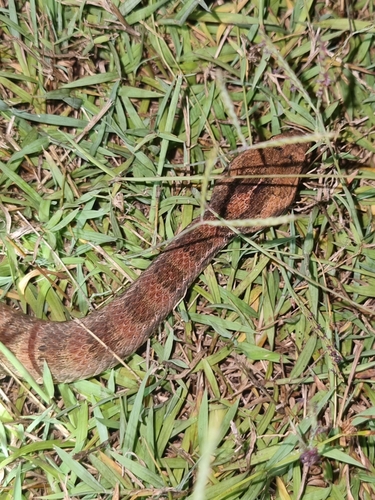 Southern Death AdderAcanthophis antarcticus
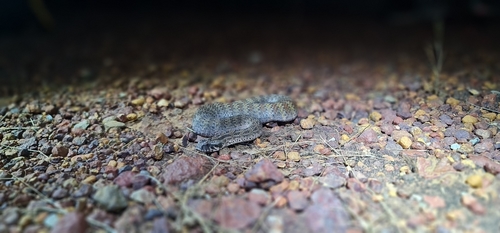 Rough-scaled Death AdderAcanthophis rugosus
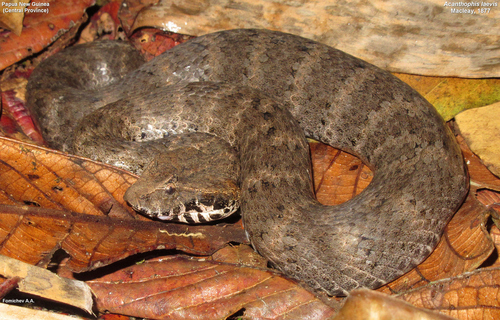 New Guinea Death AdderAcanthophis laevis
 Pilbara Death AdderAcanthophis wellsi
 Plains Death AdderAcanthophis hawkei
 Desert Death AdderAcanthophis pyrrhus
 Kimberley Death AdderAcanthophis cryptamydros
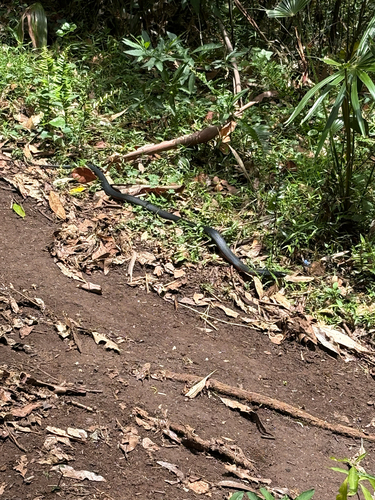 Red-bellied Black SnakePseudechis porphyriacus
Classification
How scientists group this snake, from the broadest category down to the exact species. Each step narrows to its closest relatives.
- OrderThe broad group of scaled reptiles: all snakes and lizards
- Squamata
- FamilyA group of related snakes that share key traits
- Elapidae
- GenusA close-knit group of very similar species
- Acanthophis
- SpeciesThis exact snake, named in the two-part scientific name
- Acanthophis praelongus
Keep learning
- Are Snakes Dangerous? The Real Risk, in PerspectiveMost snakes are harmless and avoid people. Here is the honest picture of snakebite risk worldwide and how to lower your own.
- Snakebite First Aid: What to Do (and What Never to Do)A clear, CDC-based guide to snakebite first aid: the steps that help, the popular myths that hurt, and how to tell a serious bite from a minor one.
- Venomous vs Nonvenomous: How to Tell the DifferenceThe folk rules for telling venomous snakes apart, where each one fails, and why location-based identification beats guessing by sight.
- What to Do If You Find a SnakeFound a snake at home or on a trail? Here is how to stay calm, give it space, identify it safely, and know when to call a professional.
Distribution from GBIF & iNaturalist. Venom status per CDC. Background: Wikipedia. Informational only. Never handle a snake to identify it.