
Typhlopidae
Prong-snouted Blind Snake
HarmlessAnilios bituberculatus
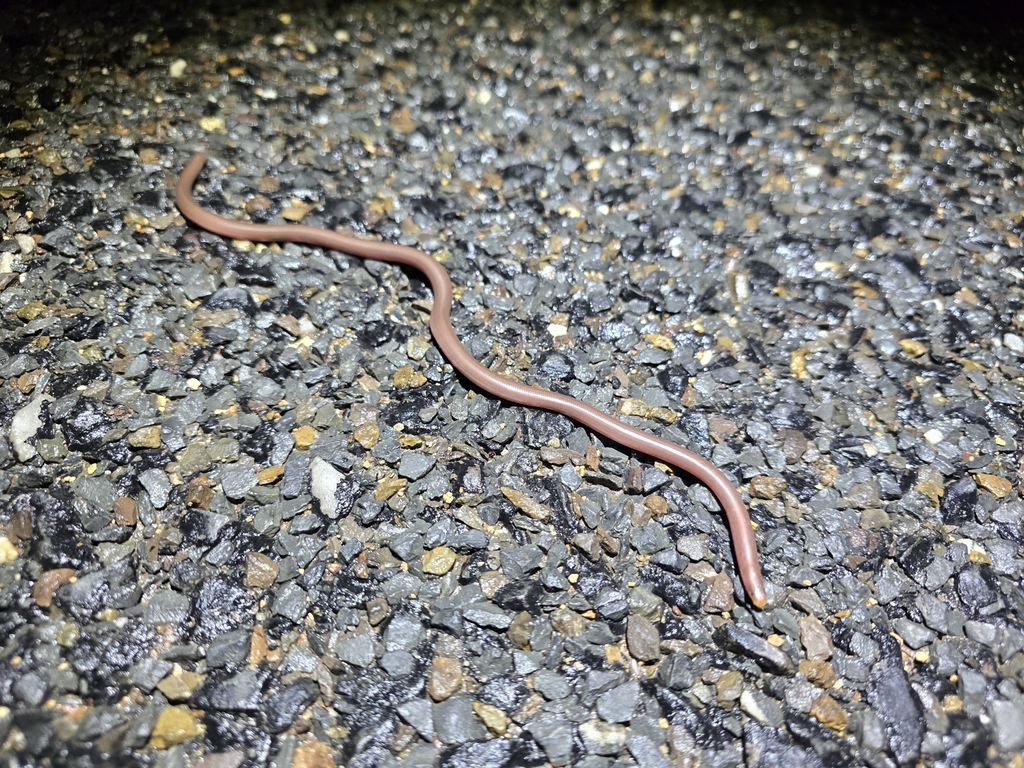
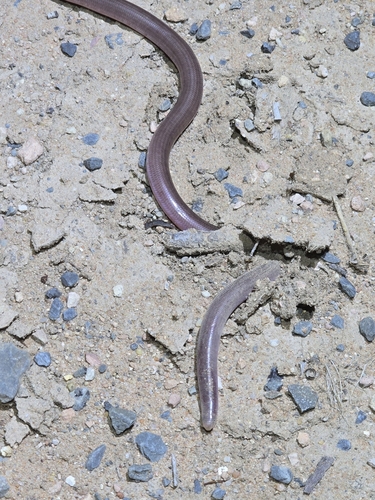
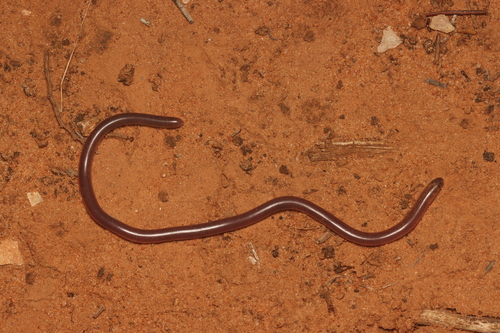
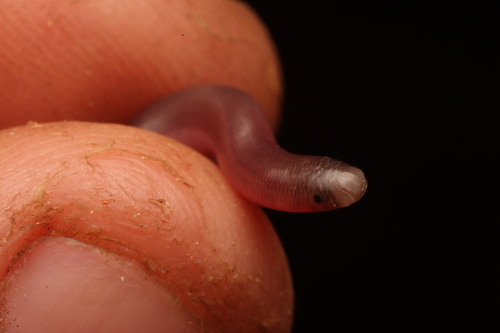
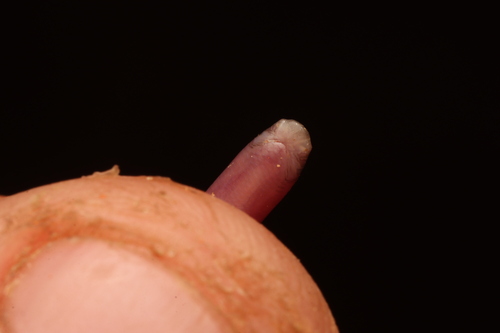
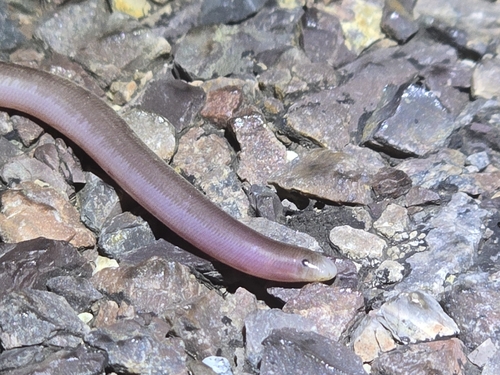
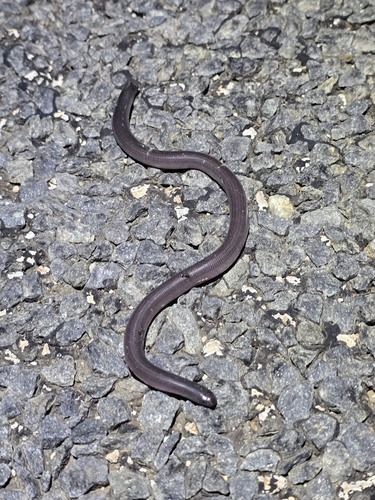
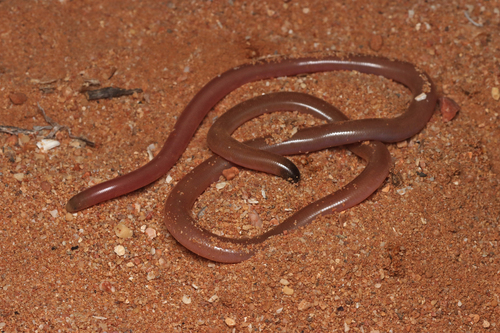
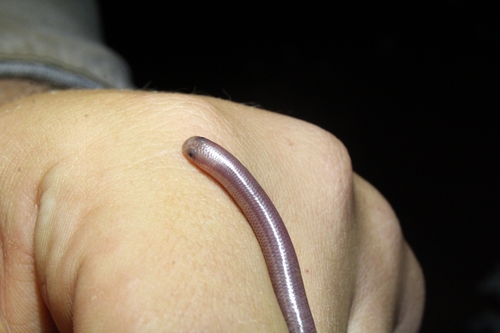
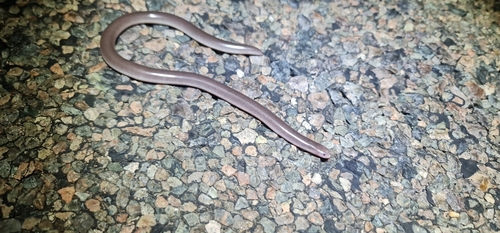
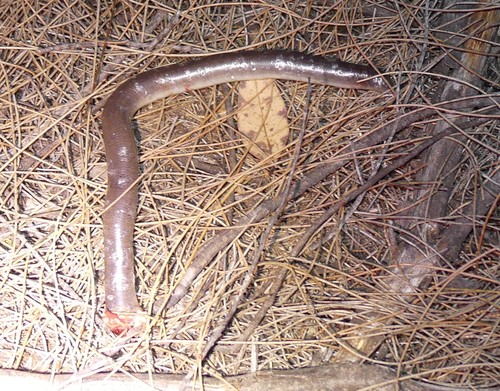
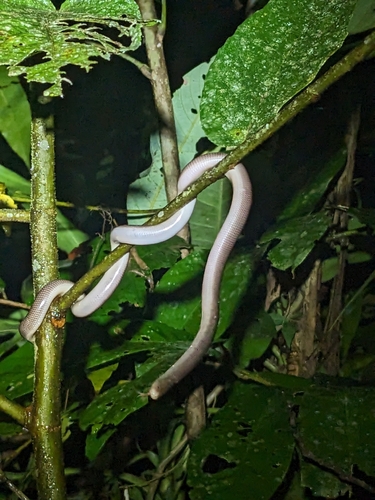
6 photographs of the Prong-snouted Blind Snake. © Max Tibby.
The Prong-snouted Blind Snake (Anilios bituberculatus) is a non-venomous snake in the Typhlopidae family, recorded in 2 countries.
- Family
- Typhlopidae
About the Prong-snouted Blind Snake
The prong-snouted blind snake (Anilios bituberculatus) is a species of non-venomous worm-like burrowing snakes belonging to the Typhlopidae family. It is endemic to central southern, continental Australia.
Description
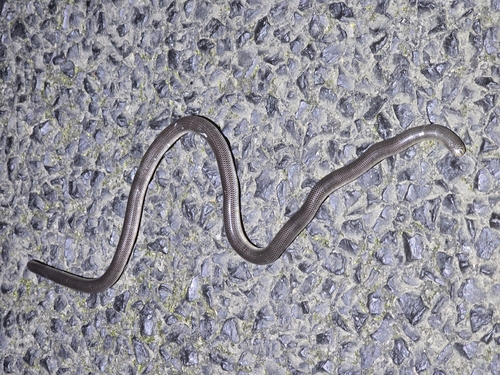
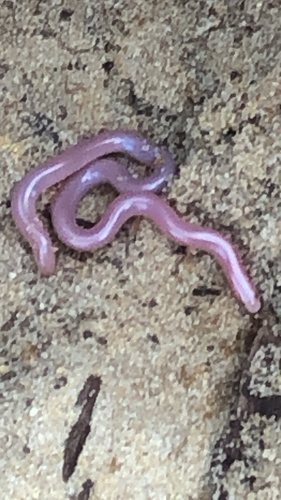
A small, thin, shiny-scaled snake with a total length averaging around 30 cm to a maximum of 45 cm (18 in). Dorsally, it appears brown to black, while ventrally it is creamy white to pink white. The body is uniform along its thickness, ending in a very short, conical spine. There are 20 mid-body dorsal scale rows, 414 to 485 ventrals and 11 to 18 sub-caudal scales. The nasal cleft, which is not visible from above does not divide the nasal openings and connects the second labial scale below. The eyes are small, dark dots under the head scales. The mouth is small and curved, behind and below the end of the snout, akin to that of a shark. The snout from above has three lobes with an angular profile.
Taxonomy
A. bituberculatus is one of 46 species of blind snakes belonging to the genus Anilios (previously Ramphlotyphops) in Australia. It is recognised by several synonyms, but A. bituberculatus is the most recent.
Distribution, habitat and ecology
Due to the snake's cryptic behaviour, geographical distributions are virtually incomplete. It is an arid adapted species, occurring in varied habitats from coastal areas to drier parts of southern Australia, stretching across from inland NSW to WA. It is found in the states of New South Wales, Northern Territory, Queensland, South Australia, Victoria and Western Australia. Blind snakes such as A. bituberculatus are usually found when dug up from termite or ant nests. The snakes move underground through the tunnels made by these insects. They may also be seen moving along the surface of the ground at nighttime, particularly after rain and/or warm weather. When disturbed, they may emit a strong, foul odour from well-developed anal glands.
Reproduction
The prong-snouted blind snake is oviparous. Females produce a clutch ranging from two to nine eggs, with six eggs produced on average. The young when hatched, fend for themselves. Males have solid eversible awned hemipenes able to be retracted into the tail in a helical pattern and retrocloacal sacs.
Diet
Due to A. bituberculatus being fossorial, it feeds predominantly on the eggs, larvae and pupae of ants and termites. The snake uses its top jaw to rake food into its mouth which it swallows whole.
Conservation
Presently, there are no specific conservation plans in place, however A. bituberculatus does occur in several protected areas. Nocturnal birds of prey such as owls, eat blind snakes, as well as feral cats, foxes and some snakes, most notably the bandy bandy. The prong-snouted blind snake has not been identified to be under threat. Some localised parts of its range are at risk of being degraded or cleared for human development.
Adapted from Wikipedia, available under CC BY-SA.
Frequently asked: Prong-snouted Blind Snake
- Is the Prong-snouted Blind Snake venomous?
- No. The Prong-snouted Blind Snake (Anilios bituberculatus) is non-venomous and is not considered dangerous to humans. Like most snakes, it will retreat rather than bite when given the chance.
- Is the Prong-snouted Blind Snake poisonous?
- Snakes are venomous, not poisonous. "Poisonous" means harmful to eat or touch; "venomous" means injecting toxins through a bite. The Prong-snouted Blind Snake is neither poisonous nor venomous.
- Is the Prong-snouted Blind Snake dangerous?
- The Prong-snouted Blind Snake is not dangerous to humans. It has no medically significant venom and bites only defensively if cornered or handled.
- Where does the Prong-snouted Blind Snake live?
- The Prong-snouted Blind Snake has verified records in 2 countries, including Australia, Japan. See the distribution section below for its full range.
- What does the Prong-snouted Blind Snake eat?
- Due to A. bituberculatus being fossorial, it feeds predominantly on the eggs, larvae and pupae of ants and termites. The snake uses its top jaw to rake food into its mouth which it swallows whole.
Where it is found
More Typhlopidae snakes
Classification
How scientists group this snake, from the broadest category down to the exact species. Each step narrows to its closest relatives.
- OrderThe broad group of scaled reptiles: all snakes and lizards
- Squamata
- FamilyA group of related snakes that share key traits
- Typhlopidae
- GenusA close-knit group of very similar species
- Anilios
- SpeciesThis exact snake, named in the two-part scientific name
- Anilios bituberculatus
Keep learning
- What to Do If You Find a SnakeFound a snake at home or on a trail? Here is how to stay calm, give it space, identify it safely, and know when to call a professional.
- Venomous vs Nonvenomous: How to Tell the DifferenceThe folk rules for telling venomous snakes apart, where each one fails, and why location-based identification beats guessing by sight.
- What Is a Snake? Anatomy and the BasicsA clear overview of what makes a snake a snake: limbless body plan, anatomy, evolution from lizards, species diversity, and why they are ectothermic.
- How to Keep Snakes Out of Your Yard and HomeA practical guide to keeping snakes out of your yard and home using habitat changes that work, plus what to skip and what to do if one shows up.
Distribution from GBIF & iNaturalist. Venom status per CDC. Background: Wikipedia. Informational only. Never handle a snake to identify it.