
Typhlopidae
Interior Blind Snake
HarmlessAnilios endoterus
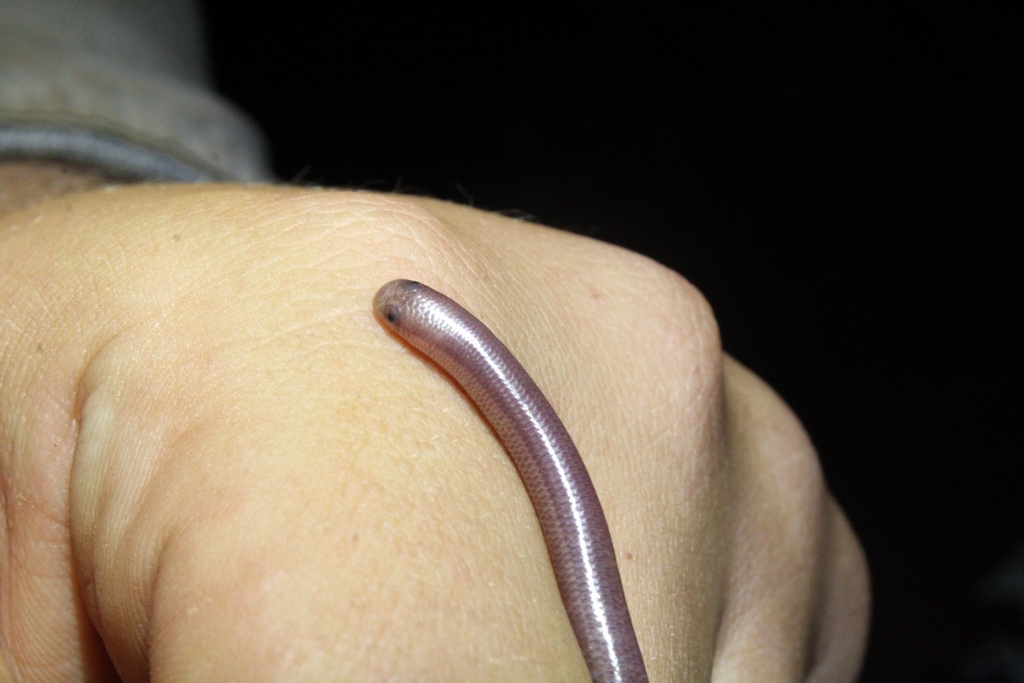
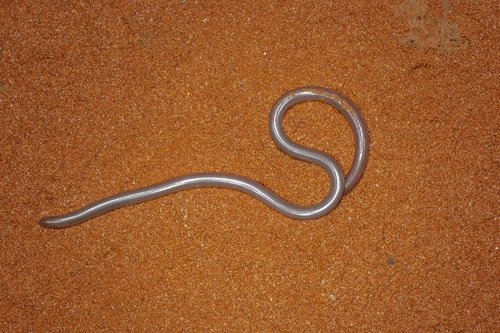
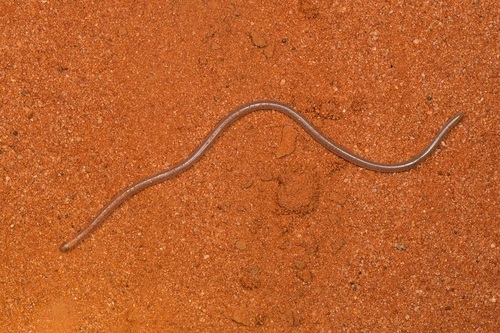
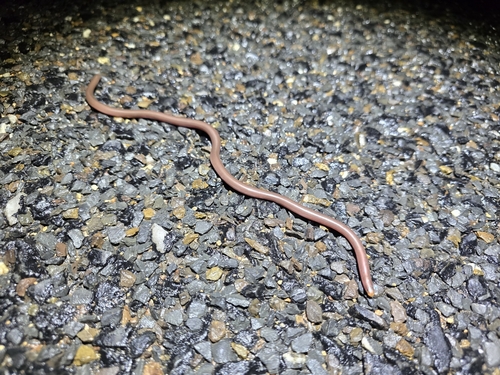
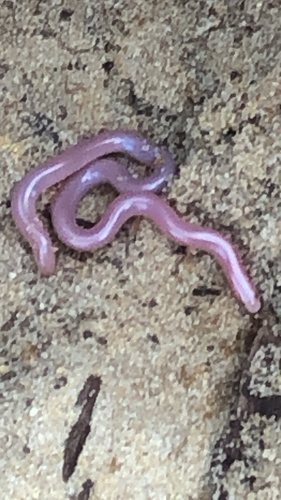
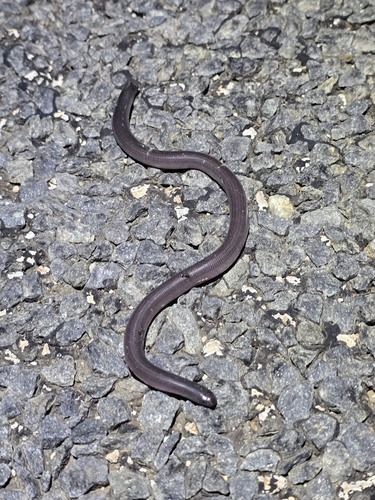
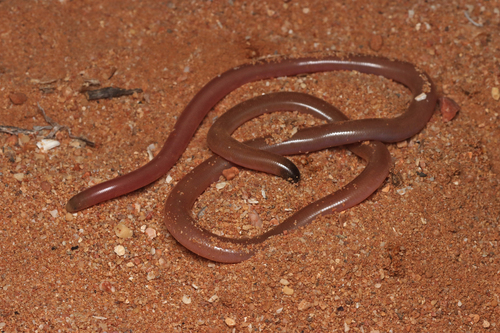
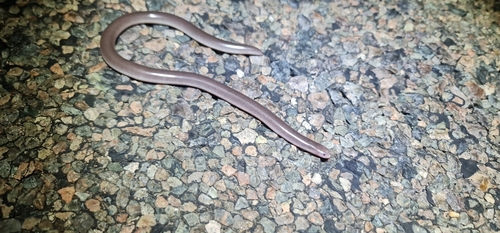
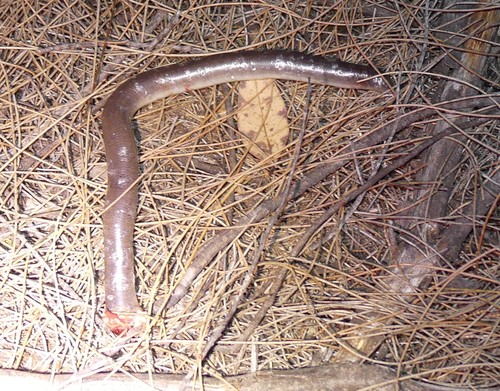
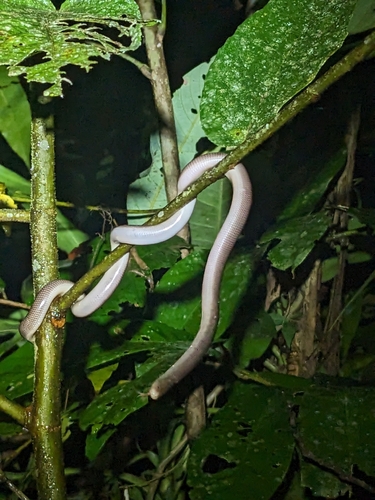
3 photographs of the Interior Blind Snake. no rights reserved.
The Interior Blind Snake (Anilios endoterus) is a non-venomous snake in the Typhlopidae family, recorded in 1 country.
- Family
- Typhlopidae
About the Interior Blind Snake
Anilios endoterus is commonly known as the interior blind snake. It is one of 42 species of snake in the genus Anilios (Ramphotyphlops) from the Typhlopidae family living in Australia. These snakes appear to be blind, having vestigial eyes that are extremely sensitive to light. It is a cryptic burrowing snake that lives in tunnels underground, living mainly on a diet of ants. They are found in arid and semi-arid desert regions of central Australia and are considered endangered in New South Wales (NSW).
Description
Anilios endoterus is a terrestrial subterranean species of burrowing snake that has a worm-like appearance. Like many other snakes in the Typhlopidae family, the eyes of the interior blind snake are vestigial and appear like small, dark eye-spots under the scales of their head and are mainly used to detect light.
The dorsal side is brown or reddish-brown with a paler coloured snout, and its underbelly has a white or creamish appearance. The body is covered in smooth, tight-fitting shiny scales that are similar in size and are thick to help protect them from the stings and bites from ants. The tail is typically short with a small spur at the end that helps with anchorage and to push itself forward in the soil and tunnels underground. These snakes are moderately slender and uniform in thickness that grow to an average of 25 cm to a maximum of approximately 40 cm.
They are distinguishable from the 22 scales around the middle of the body, and they have between 406 and 438 ventral (belly) scales. the snout is weakly trilobed from above and bluntly angular in profile, and its mouth is small and is beneath the overhanging snout. The nasal clefts also extend from preocular scale to nostril, or to rostral scale.
Ecological studies
The genus Anilios is recognized as the most diverse and species rich genus in the Typhlopidae family, and the most abundant genus of Australian snakes. However, blind snakes in general, remain poorly studied and understood in Australia. Detecting and observing the interior blind snake in the wild is challenging for scientists. Their cryptic nature, low densities, similar appearance to other species within the genus, and the fact that this snake spends most of its time underground, have all led to this species remaining one of the most elusive vertebrates in the world.
Studies in behaviour and basic biological functions, such as courtship and mating, have still not been comprehensively documented. Consequently, assumptions about this species is based on the observations of others within the genus. For example, females in this genus tend to be much longer and thicker than the males. We also know that this species has nocturnal habits, as it is extremely sensitive to light, and they are mostly seen above ground at night foraging for food. They have also been observed on the surface at night after heavy rain.
Taxonomy
Adapted from Wikipedia, available under CC BY-SA.
Frequently asked: Interior Blind Snake
- Is the Interior Blind Snake venomous?
- No. The Interior Blind Snake (Anilios endoterus) is non-venomous and is not considered dangerous to humans. Like most snakes, it will retreat rather than bite when given the chance.
- Is the Interior Blind Snake poisonous?
- Snakes are venomous, not poisonous. "Poisonous" means harmful to eat or touch; "venomous" means injecting toxins through a bite. The Interior Blind Snake is neither poisonous nor venomous.
- Is the Interior Blind Snake dangerous?
- The Interior Blind Snake is not dangerous to humans. It has no medically significant venom and bites only defensively if cornered or handled.
- Where does the Interior Blind Snake live?
- The Interior Blind Snake has verified records in 1 country, including Australia. See the distribution section below for its full range.
Where it is found
More Typhlopidae snakes
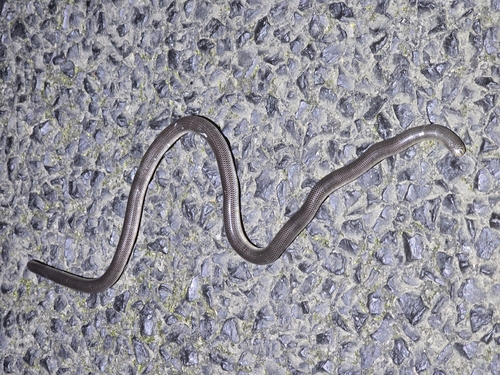 Blackish Blind SnakeAnilios nigrescens
 Prong-snouted Blind SnakeAnilios bituberculatus
 Southern Blind SnakeAnilios australis
 Dark-spined Blind SnakeAnilios bicolor
 Long-beaked Blind SnakeAnilios grypus
 Robust Blind SnakeAnilios ligatus
 Rotund Blind SnakeAnilios pinguis
 North-eastern Blind SnakeAnilios torresianus
Classification
How scientists group this snake, from the broadest category down to the exact species. Each step narrows to its closest relatives.
- OrderThe broad group of scaled reptiles: all snakes and lizards
- Squamata
- FamilyA group of related snakes that share key traits
- Typhlopidae
- GenusA close-knit group of very similar species
- Anilios
- SpeciesThis exact snake, named in the two-part scientific name
- Anilios endoterus
Keep learning
- What to Do If You Find a SnakeFound a snake at home or on a trail? Here is how to stay calm, give it space, identify it safely, and know when to call a professional.
- Venomous vs Nonvenomous: How to Tell the DifferenceThe folk rules for telling venomous snakes apart, where each one fails, and why location-based identification beats guessing by sight.
- What Is a Snake? Anatomy and the BasicsA clear overview of what makes a snake a snake: limbless body plan, anatomy, evolution from lizards, species diversity, and why they are ectothermic.
- How to Keep Snakes Out of Your Yard and HomeA practical guide to keeping snakes out of your yard and home using habitat changes that work, plus what to skip and what to do if one shows up.
Distribution from GBIF & iNaturalist. Venom status per CDC. Background: Wikipedia. Informational only. Never handle a snake to identify it.