
Elapidae
Narrow-headed Whipsnake
VenomousDemansia angusticeps
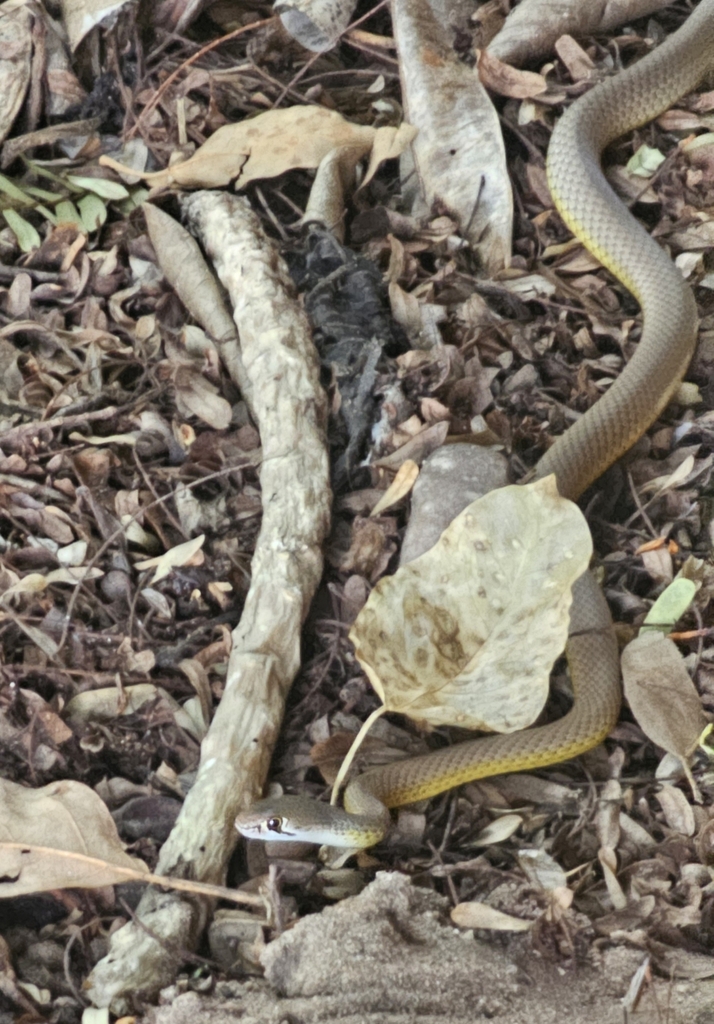
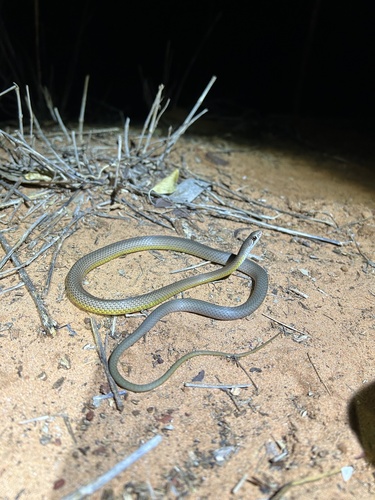
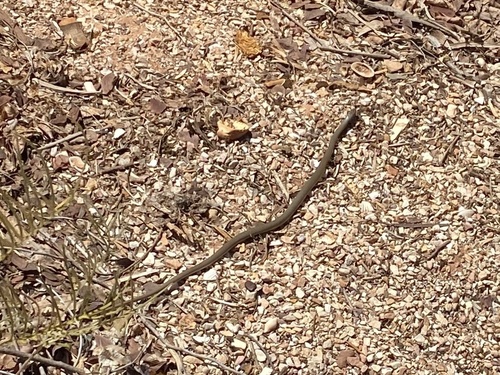
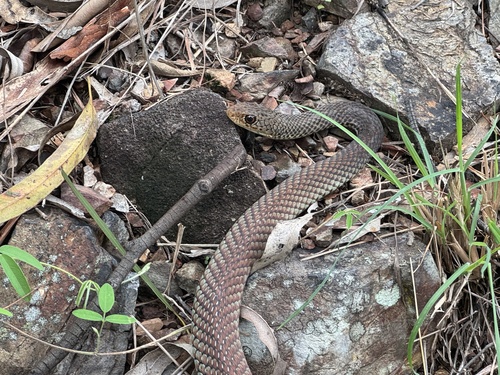
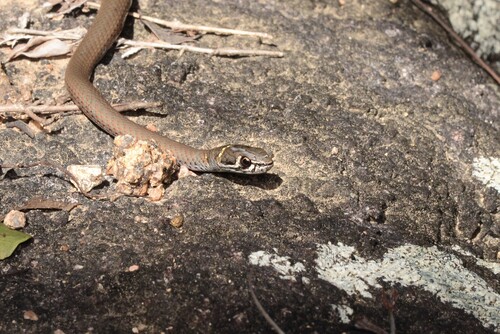
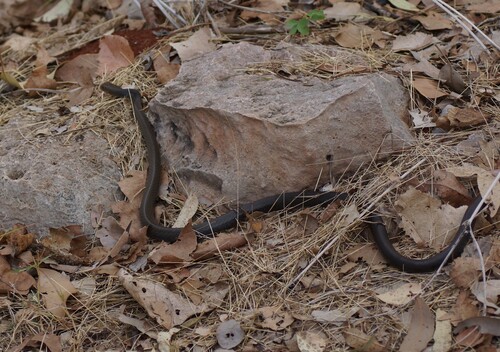
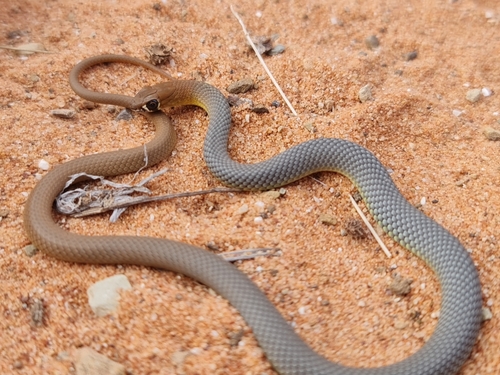
3 photographs of the Narrow-headed Whipsnake. (c) Micaela Mardones, some rights reserved (CC BY-NC).
The Narrow-headed Whipsnake (Demansia angusticeps) is a venomous snake in the Elapidae family, recorded in 1 country.
If you are bitten
This is a venomous snake. Treat any bite as a medical emergency: stay calm, keep the bitten limb still and roughly level with the heart, remove rings and tight clothing, and get to emergency care immediately. Do not apply a tourniquet, cut the wound, apply ice, or try to suck out venom. Call your local emergency number or poison center.
- Family
- Elapidae
- Danger
- high
About the Narrow-headed Whipsnake
The narrow-headed whipsnake (Demansia angusticeps) is a species of venomous snake in the family Elapidae native to Western Australia.
Adapted from Wikipedia, available under CC BY-SA.
Local and regional names
The Narrow-headed Whipsnake is known by these names across the regions where it lives:
- Italian
- Serpente a frusta dal muso stretto, Serpente a frusta dalla testa stretta, Serpente a frusta muso stretto, Serpente a frusta testa stretta
Frequently asked: Narrow-headed Whipsnake
- Is the Narrow-headed Whipsnake venomous?
- Yes. The Narrow-headed Whipsnake (Demansia angusticeps) is venomous and belongs to the Elapidae family (cobra, mamba, coral or sea snake). Its bite is considered high risk to people. Treat any bite as a medical emergency.
- Is the Narrow-headed Whipsnake poisonous?
- Snakes are venomous, not poisonous. "Poisonous" means harmful to eat or touch; "venomous" means injecting toxins through a bite. The Narrow-headed Whipsnake is venomous, delivering venom through a bite.
- Is the Narrow-headed Whipsnake dangerous?
- This is a venomous snake. Treat any bite as a medical emergency: stay calm, keep the bitten limb still and roughly level with the heart, remove rings and tight clothing, and get to emergency care immediately. Do not apply a tourniquet, cut the wound, apply ice, or try to suck out venom. Call your local emergency number or poison center.
- Where does the Narrow-headed Whipsnake live?
- The Narrow-headed Whipsnake has verified records in 1 country, including Australia. See the distribution section below for its full range.
If you are bitten by the Narrow-headed Whipsnake
Do
- Get away from the snake and stay calm. Most bites worsen when people panic or try again to handle the snake.
- Call 911 or Poison Control (1-800-222-1222) right away. Antivenom works best when given early.
- Note the time of the bite and, from a safe distance, the snake's color and pattern, a phone photo is enough. Do not chase it.
- Keep the bitten limb still and at roughly heart level. Sit or lie down and limit movement.
- Remove rings, watches, and tight clothing near the bite before swelling starts.
- Gently wash the bite with soap and water and cover it with a clean, dry dressing.
Do not
- Do not cut the wound or try to suck out the venom.
- Do not apply a tourniquet or ice.
- Do not drink alcohol or caffeine.
- Do not take aspirin or ibuprofen, they can worsen bleeding. Acetaminophen is safer for pain.
- Do not try to catch or kill the snake. A dead snake can still bite by reflex.
First-aid guidance adapted from the U.S. Centers for Disease Control and Prevention (CDC NIOSH), Venomous Snakes. Educational only; always follow the instructions of emergency responders.
Where it is found
More Elapidae snakes
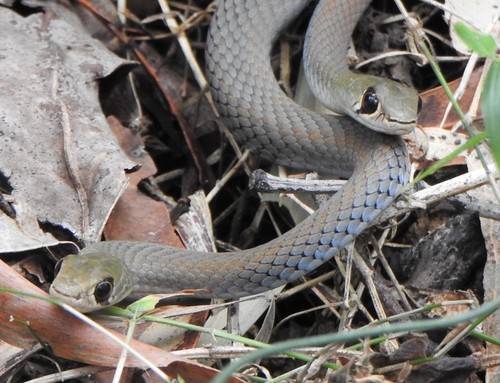 Yellow-faced WhipsnakeDemansia psammophis
 Lesser Black WhipsnakeDemansia vestigiata
 Collared WhipsnakeDemansia torquata
 Greater Black WhipsnakeDemansia papuensis
 Central WhipsnakeDemansia cyanochasma
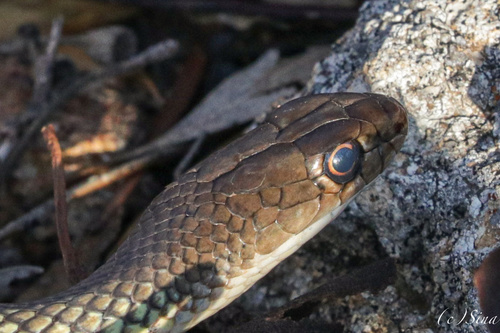 Reticulated WhipsnakeDemansia reticulata
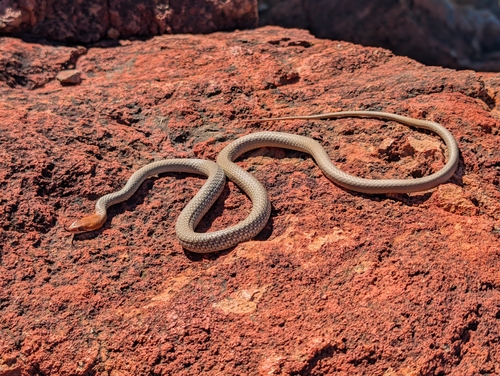 Sombre WhipsnakeDemansia quaesitor
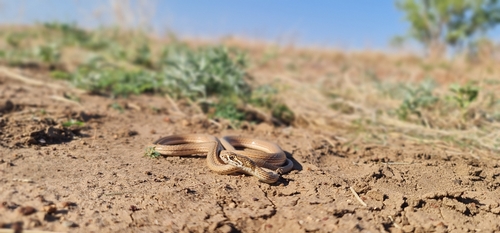 Crack-dwelling WhipsnakeDemansia rimicola
Classification
How scientists group this snake, from the broadest category down to the exact species. Each step narrows to its closest relatives.
Keep learning
- Are Snakes Dangerous? The Real Risk, in PerspectiveMost snakes are harmless and avoid people. Here is the honest picture of snakebite risk worldwide and how to lower your own.
- Snakebite First Aid: What to Do (and What Never to Do)A clear, CDC-based guide to snakebite first aid: the steps that help, the popular myths that hurt, and how to tell a serious bite from a minor one.
- Venomous vs Nonvenomous: How to Tell the DifferenceThe folk rules for telling venomous snakes apart, where each one fails, and why location-based identification beats guessing by sight.
- What to Do If You Find a SnakeFound a snake at home or on a trail? Here is how to stay calm, give it space, identify it safely, and know when to call a professional.
Distribution from GBIF & iNaturalist. Venom status per CDC. Background: Wikipedia. Informational only. Never handle a snake to identify it.